This article explores AWS Secrets Manager, a service for managing, retrieving, and rotating sensitive credentials like database passwords and API keys.
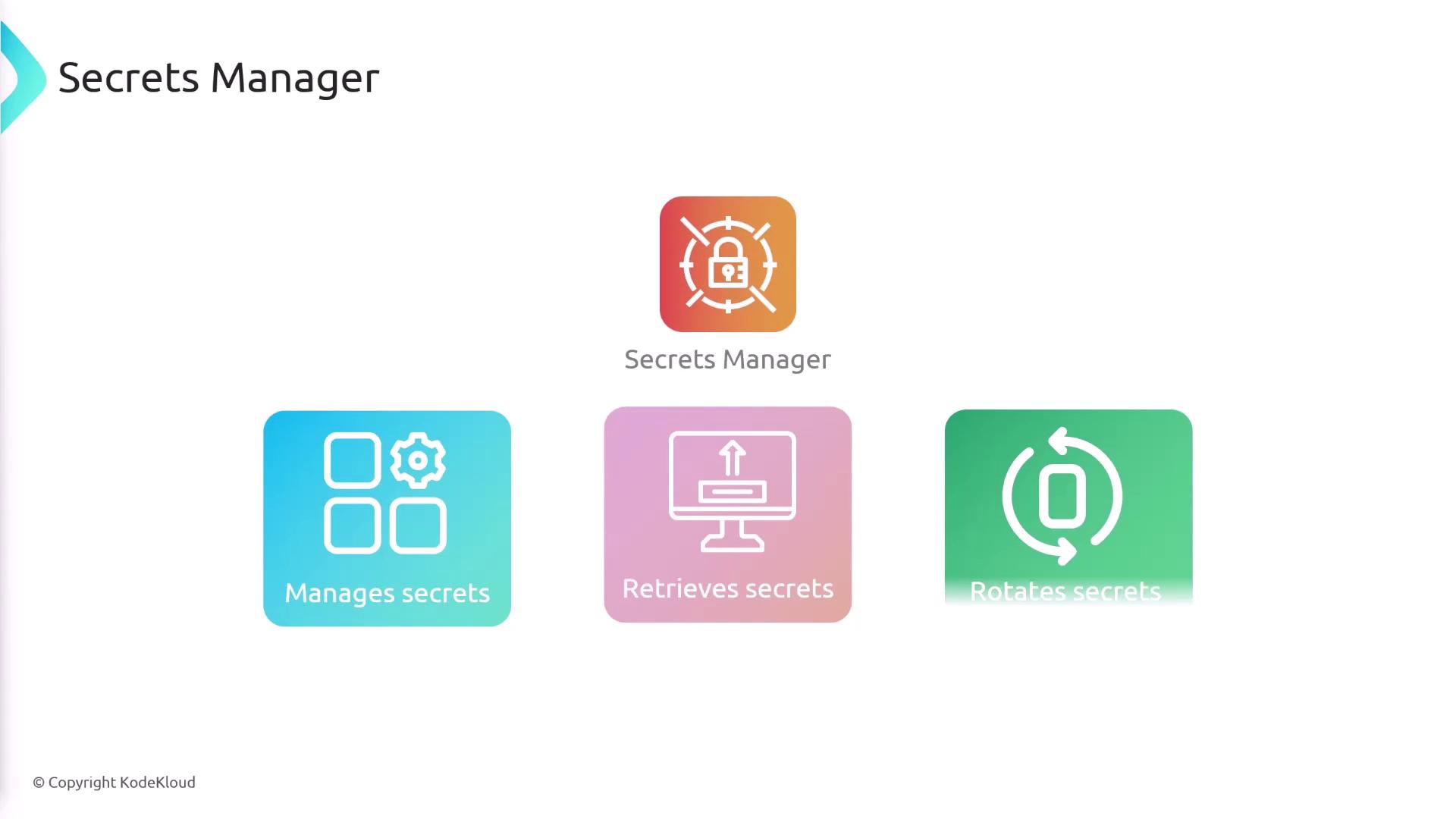
In this lesson, we explore AWS Secrets Manager—a crucial service designed for managing, retrieving, and rotating sensitive credentials such as database passwords and API keys.
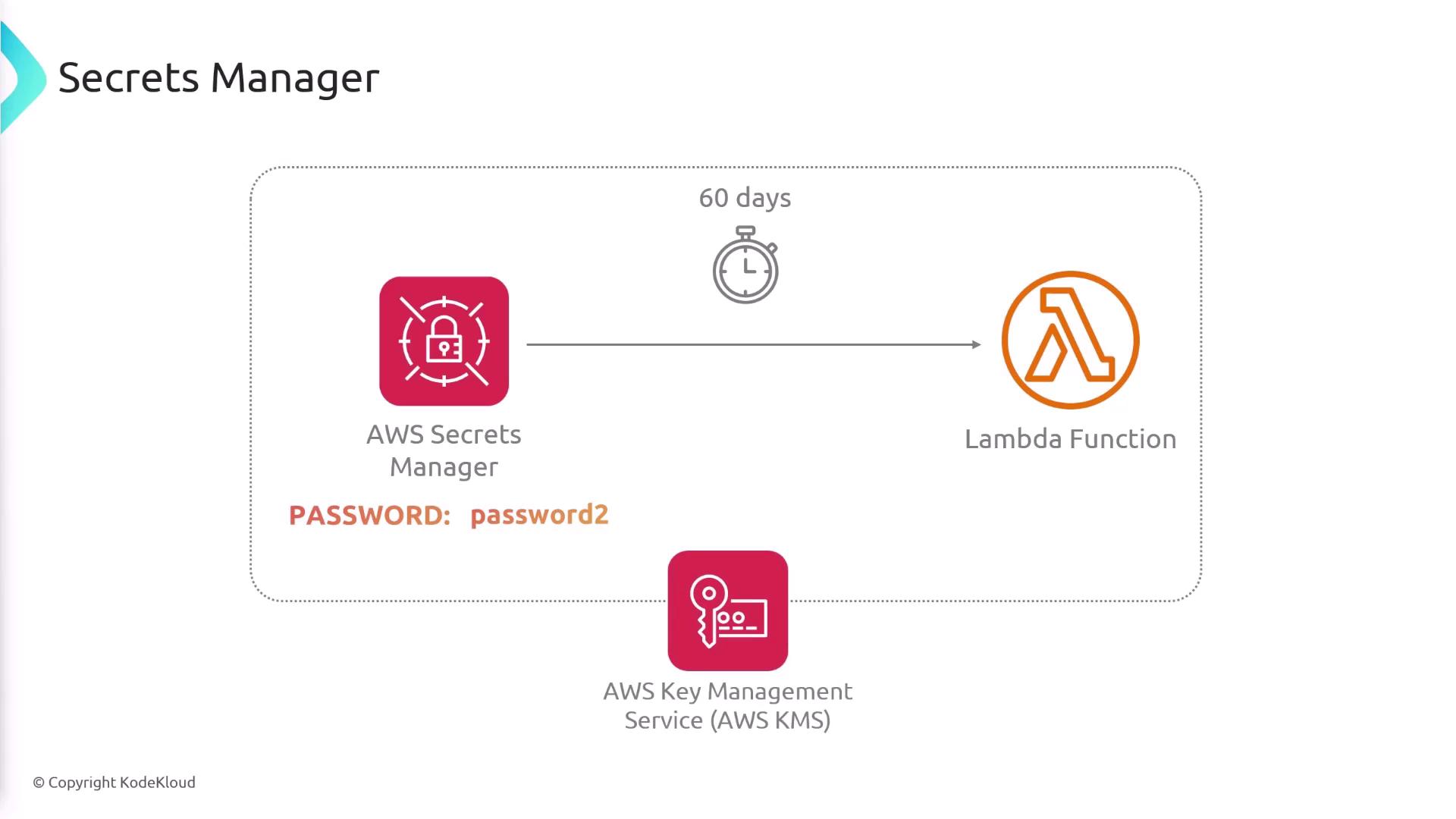
AWS Secrets Manager offers a major advantage over similar services like Parameter Store by providing automatic secret rotation. For instance, you can configure Secrets Manager to rotate your secrets every 60 days using a Lambda function. Additionally, all secrets are encrypted by default with AWS Key Management Service (KMS), ensuring robust security.
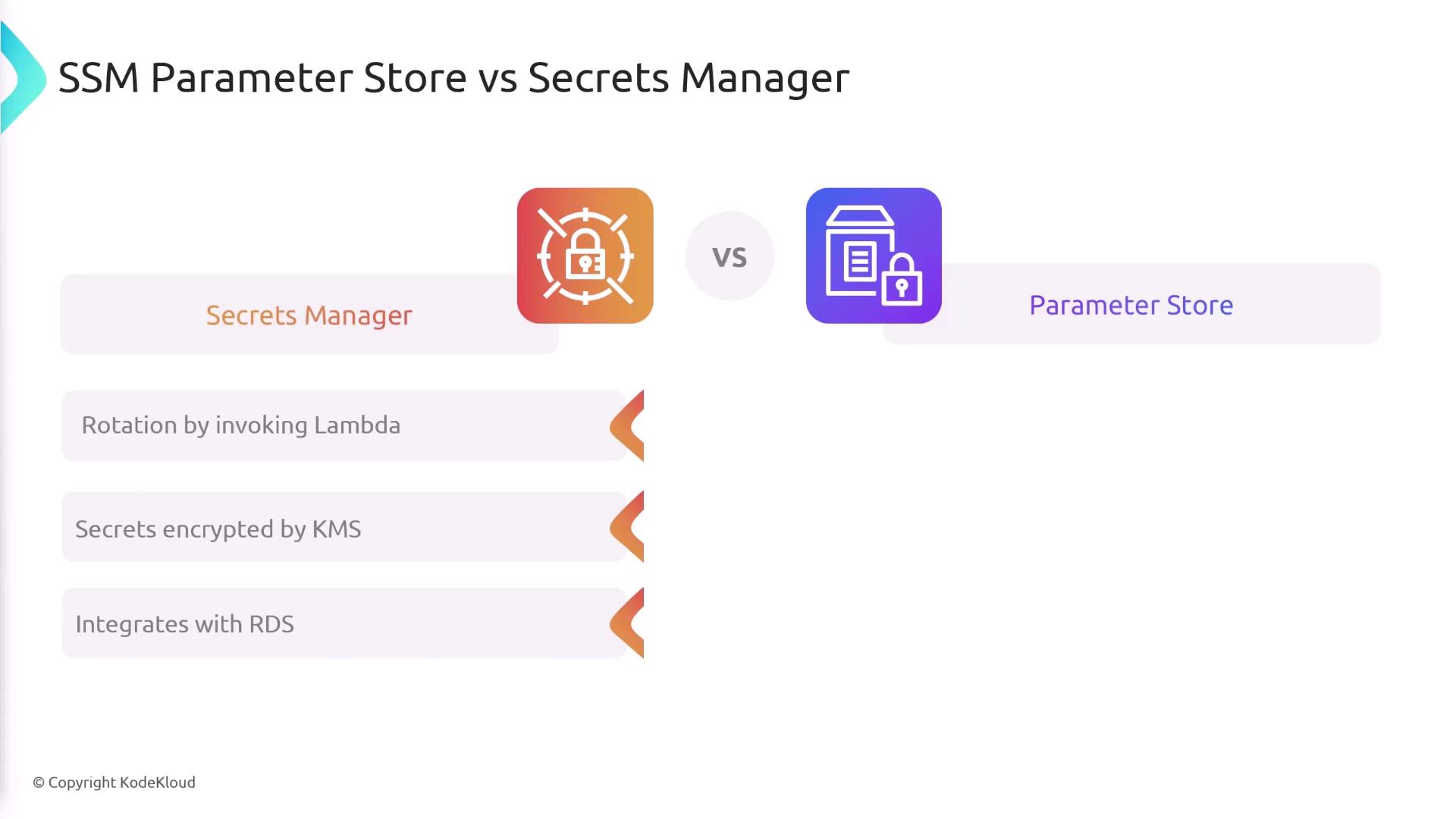
When choosing between AWS Systems Manager Parameter Store and Secrets Manager, always consider the sensitivity of your data. For sensitive information that requires regular rotation and enhanced security, Secrets Manager is typically the preferred service.
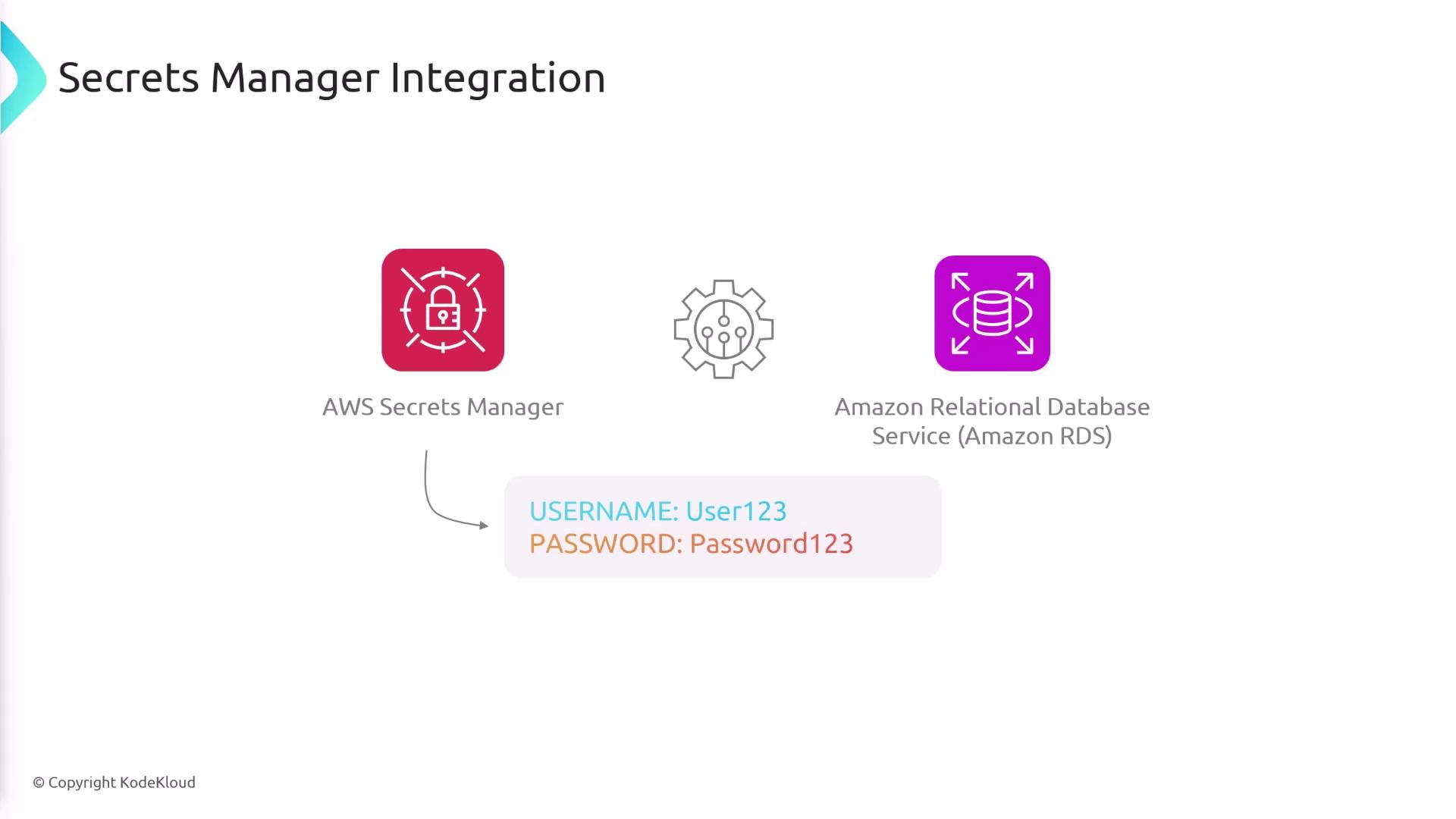
Secrets Manager not only manages secrets but also integrates seamlessly with Amazon Relational Database Service (RDS). It can automatically configure initial credentials for new RDS instances, eliminating the need to manually set usernames and passwords.
Below is a summary table that highlights the key features and benefits of using AWS Secrets Manager over Parameter Store:
Feature
AWS Secrets Manager
Parameter Store
Automatic Rotation
Supports automatic rotation via Lambda functions
Does not support automatic rotation
Default Encryption
Encrypts secrets automatically using KMS
Can be configured to encrypt, but not by default
Integration with RDS
Integrates seamlessly to manage database credentials
Typically used for non-sensitive configuration data
Automatic rotation of secrets enhances security and reduces manual overhead.
Default encryption with KMS provides strong protection against unauthorized access.
Integration with RDS simplifies credential management and boosts operational efficiency.
In summary, AWS Secrets Manager is an ideal solution for managing and rotating sensitive credentials including database credentials and API keys. Its advanced features—such as automatic Lambda-based rotation, default KMS encryption, and smooth integration with services like RDS—make it the preferred choice for handling sensitive information in AWS environments.