This lesson demonstrates how to create and manage an Aurora cluster using the AWS RDS console through a step-by-step guide.
In this lesson, we demonstrate how to create an Aurora cluster using the AWS RDS console. Follow this step-by-step guide to learn how to deploy an Aurora database, configure its settings, and manage cluster operations.
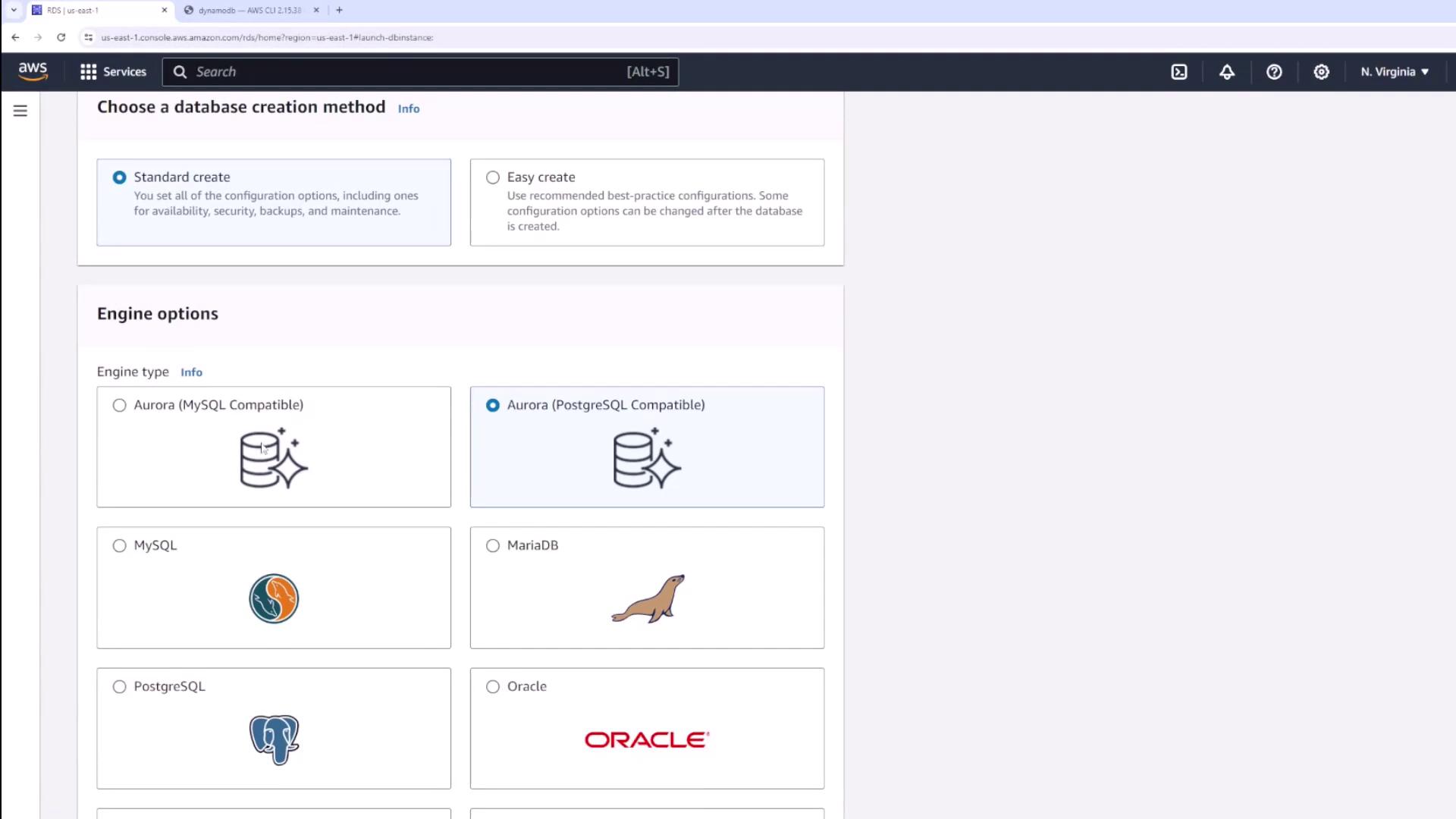
Begin by navigating to the RDS page and clicking on Databases. Next, click Create Database. Under engine options, choose Aurora by selecting one of the compatible database engines.
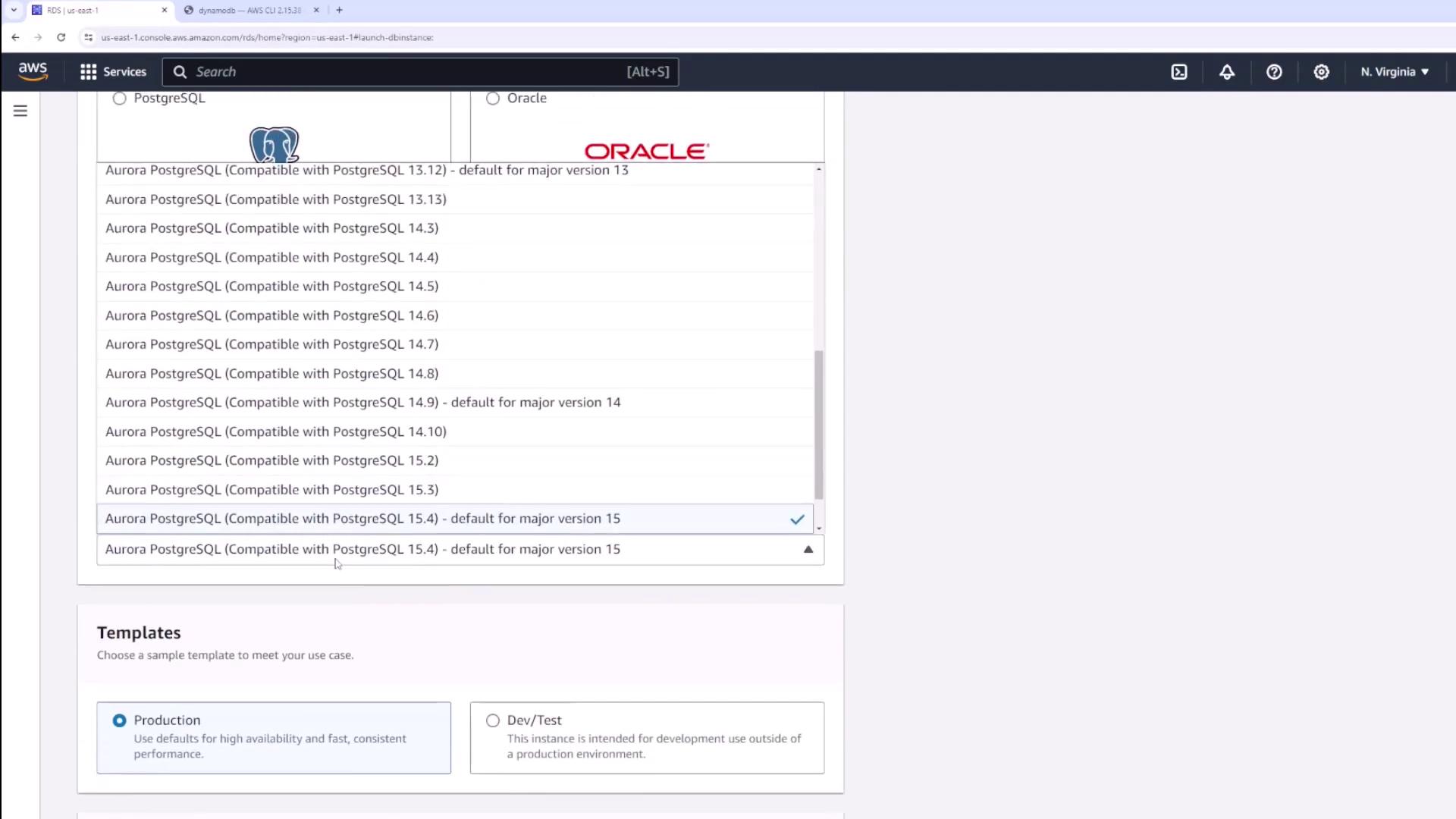
Aurora supports both MySQL and PostgreSQL compatibility. Select your preferred engine and choose the specific version you require. For instance, you can choose from PostgreSQL versions such as 15.4, 15.3, 15.2, etc.
For this demonstration, the default version is selected. Then, choose a template for database deployment. Options include a production template or a dev/test environment. In this example, we select the production deployment template.
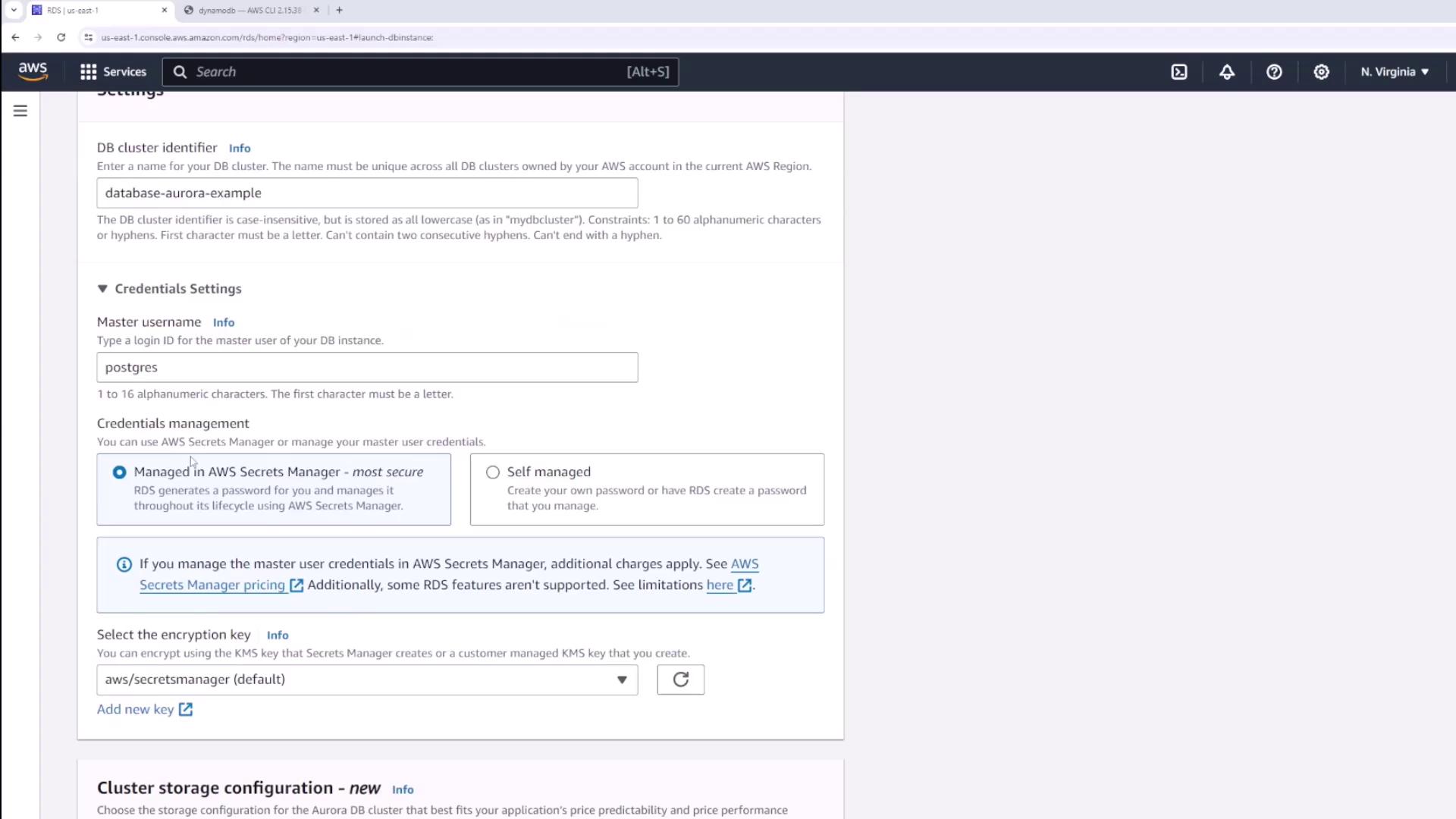
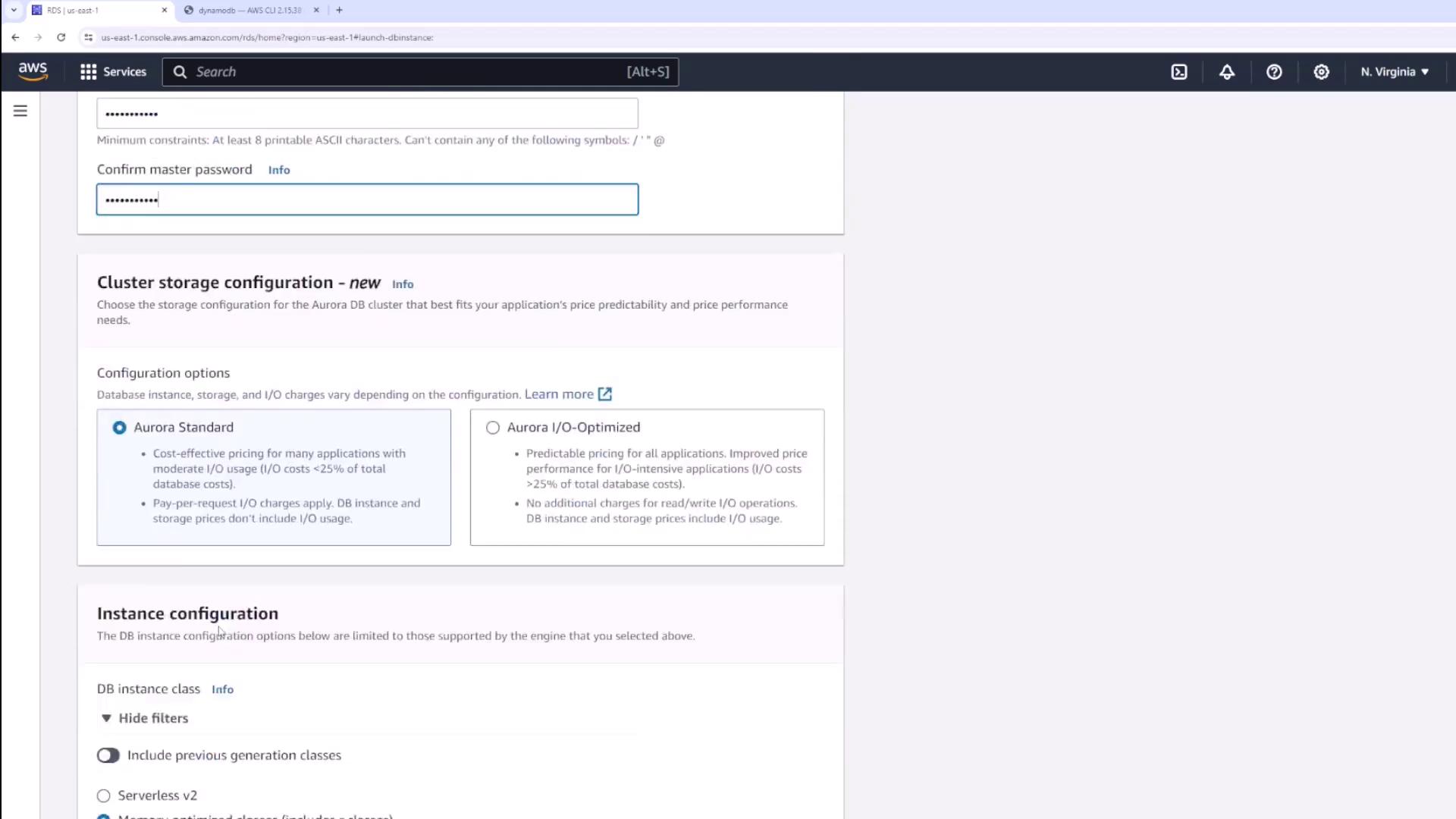
Enter a name for your database (for example, “Database Aurora Example”) and set your credentials. You can use the provided master username and decide between letting Secrets Manager generate a password or manually inputting one. In the demonstration, we manually input the password.
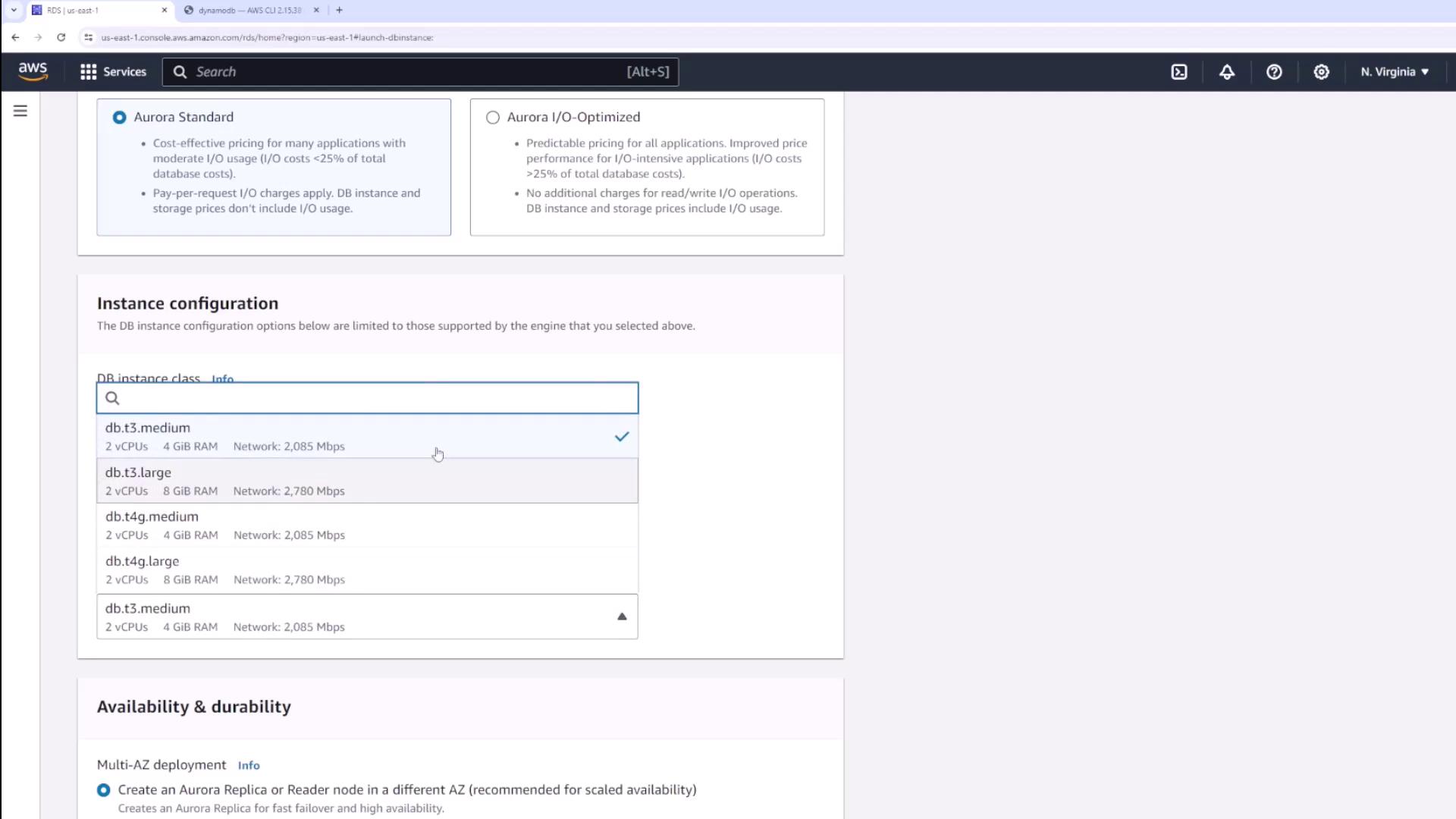
Select whether to establish an Aurora replica or a separate reader node in a different Availability Zone. For high availability, enable the multi-AZ deployment option.
Network Type: Choose IPv4 or dual stack (IPv4 and IPv6).
VPC: Use the default VPC for this example.
Subnet Group: Select the appropriate subnet group across Availability Zones.
Public Accessibility: Enable only if necessary for demonstration (avoid in production environments).
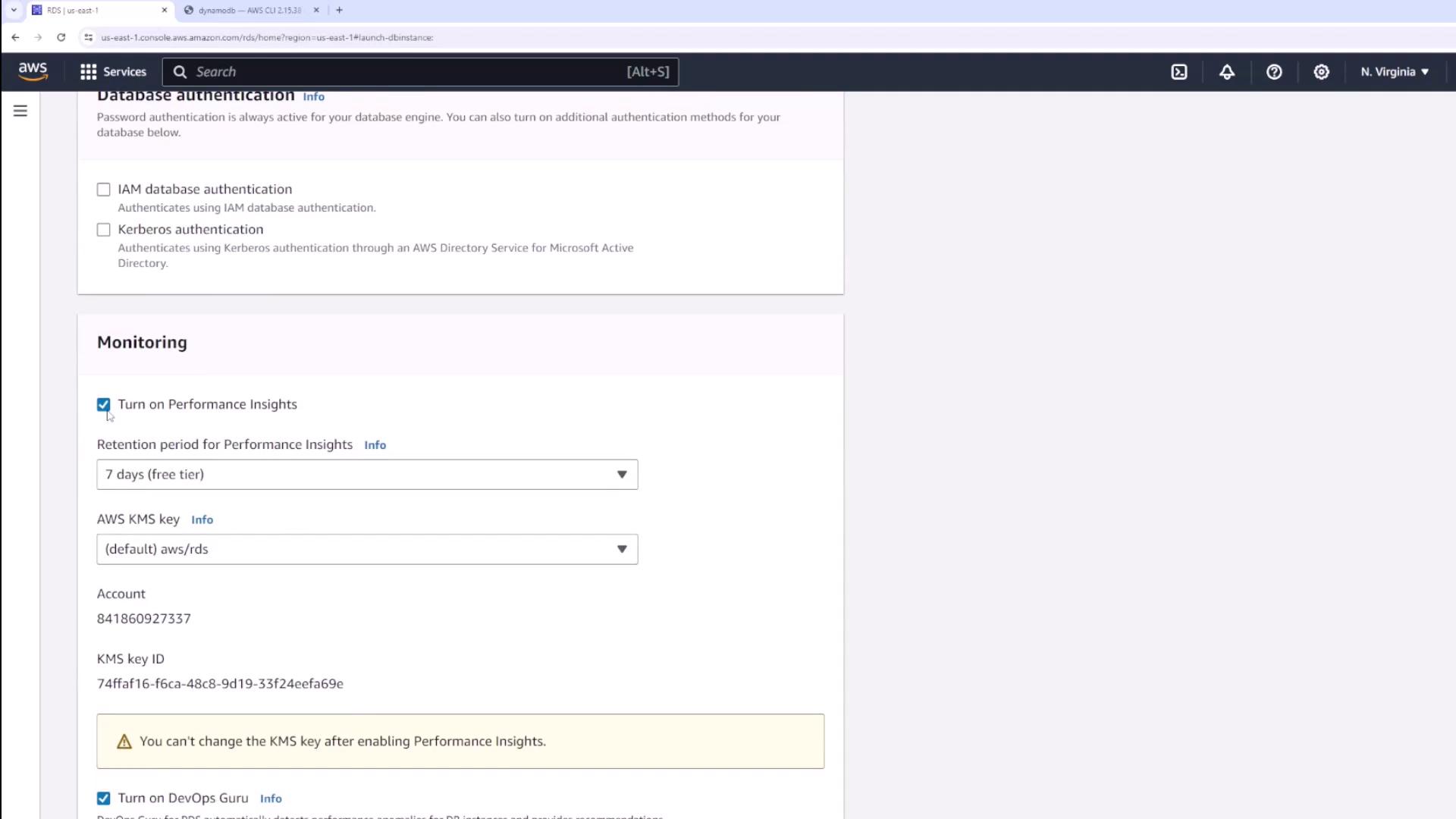
Select or create a security group as needed, and consider adding an RDS proxy if required. In the Additional Configurations section, specify the listening port (default for PostgreSQL is typically used) and choose the authentication method (e.g., IAM or Kerberos).
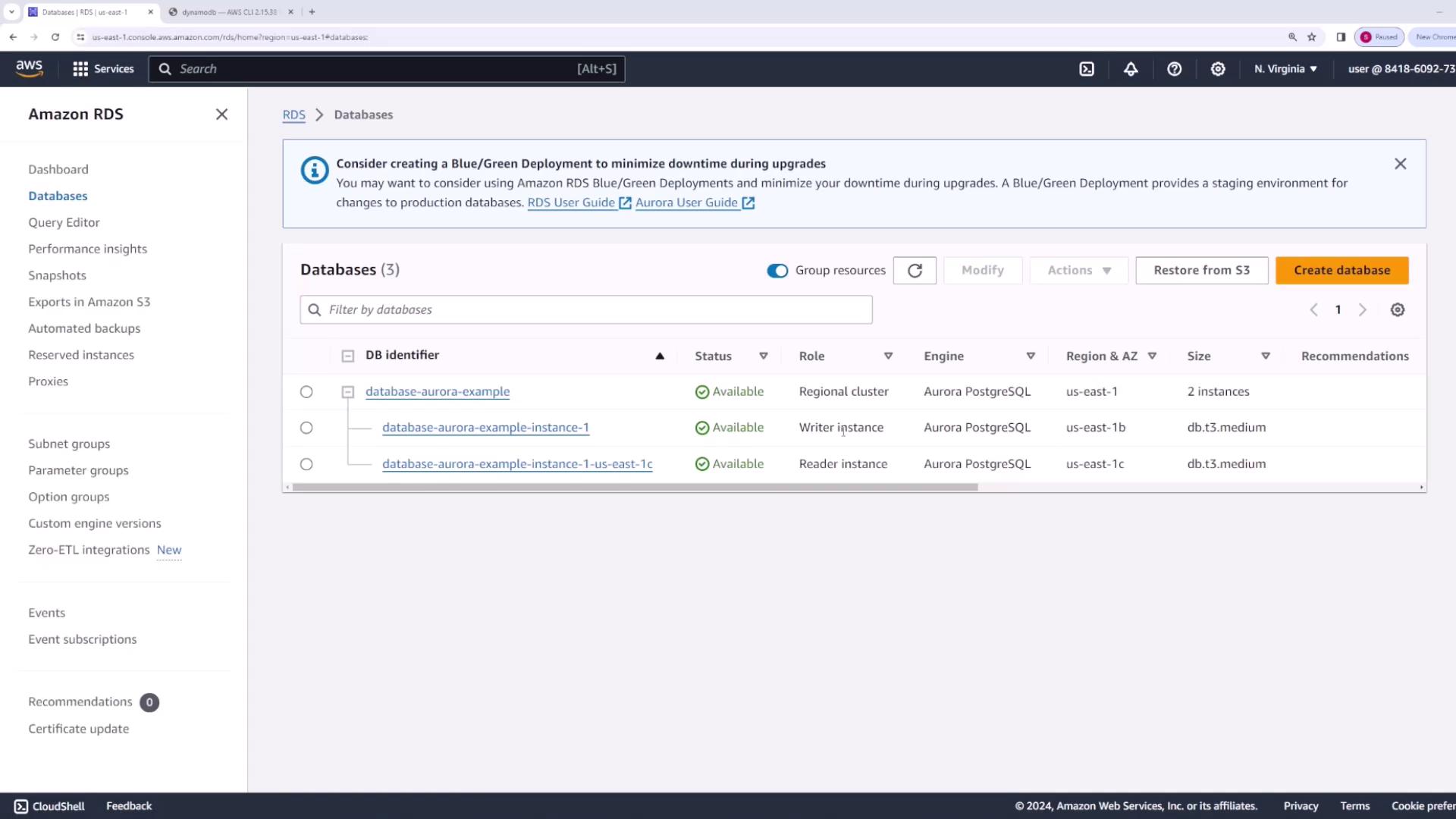
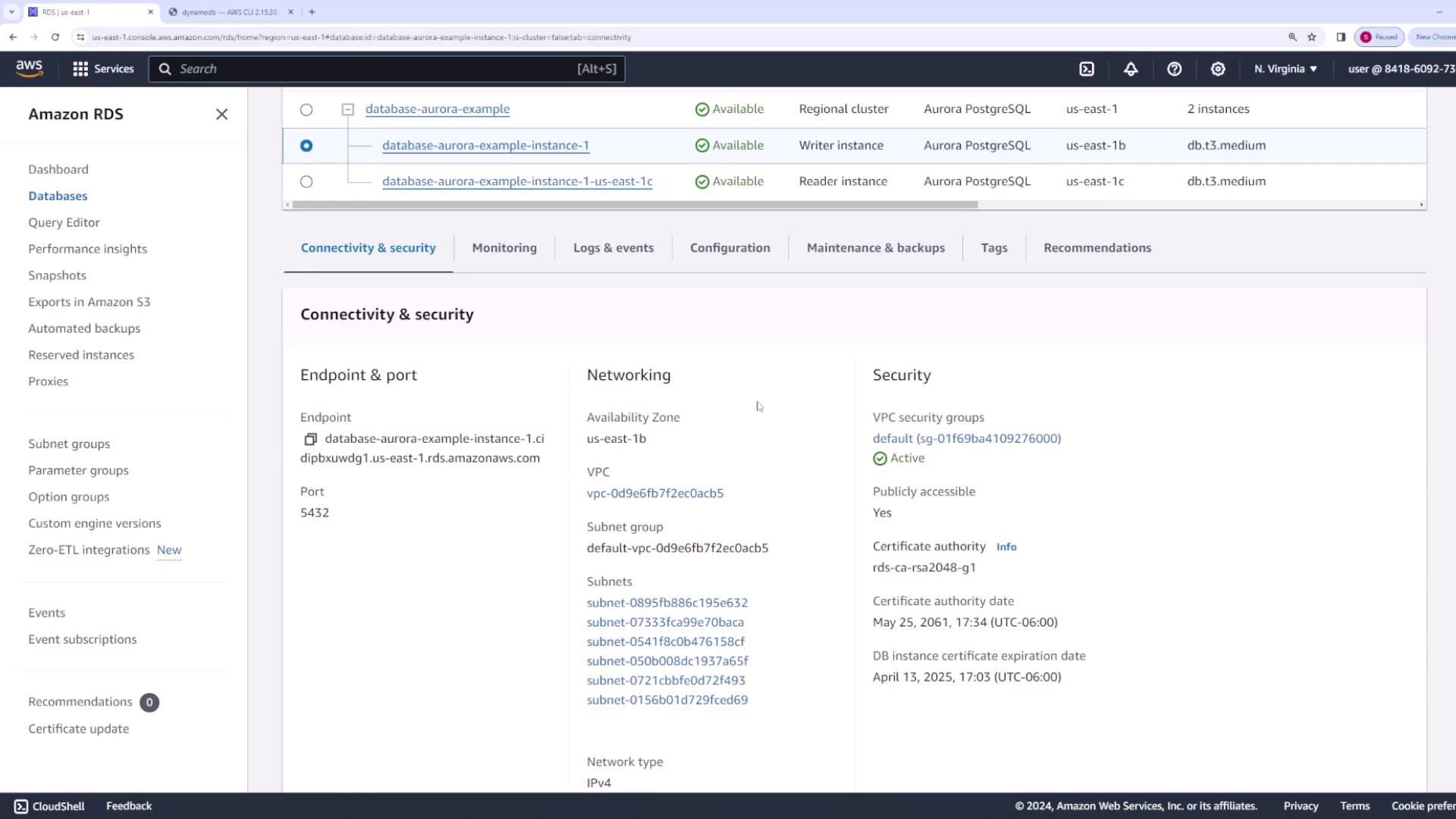
After creation, your database “Database Aurora Example” appears with two instances:
Writer Instance: For forwarding write requests.
Reader Instance: For forwarding read requests.
Selecting the “Database Aurora Example” cluster reveals two endpoints: the writer endpoint for write operations and the reader endpoint for read operations. Additionally, clicking on an individual instance shows a direct endpoint along with detailed EC2 and networking information.
For demonstration purposes, follow these steps to delete the Aurora cluster:
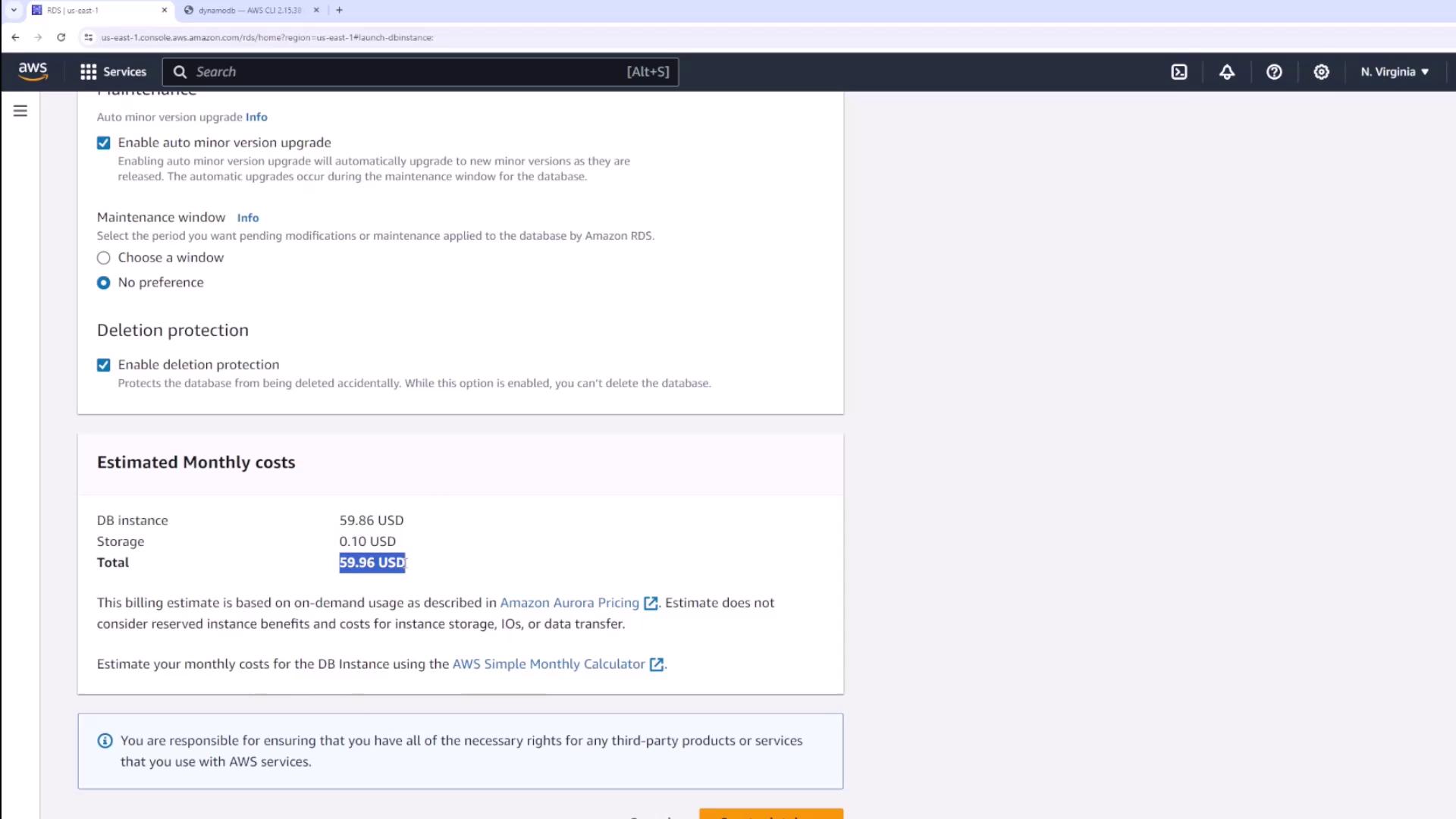
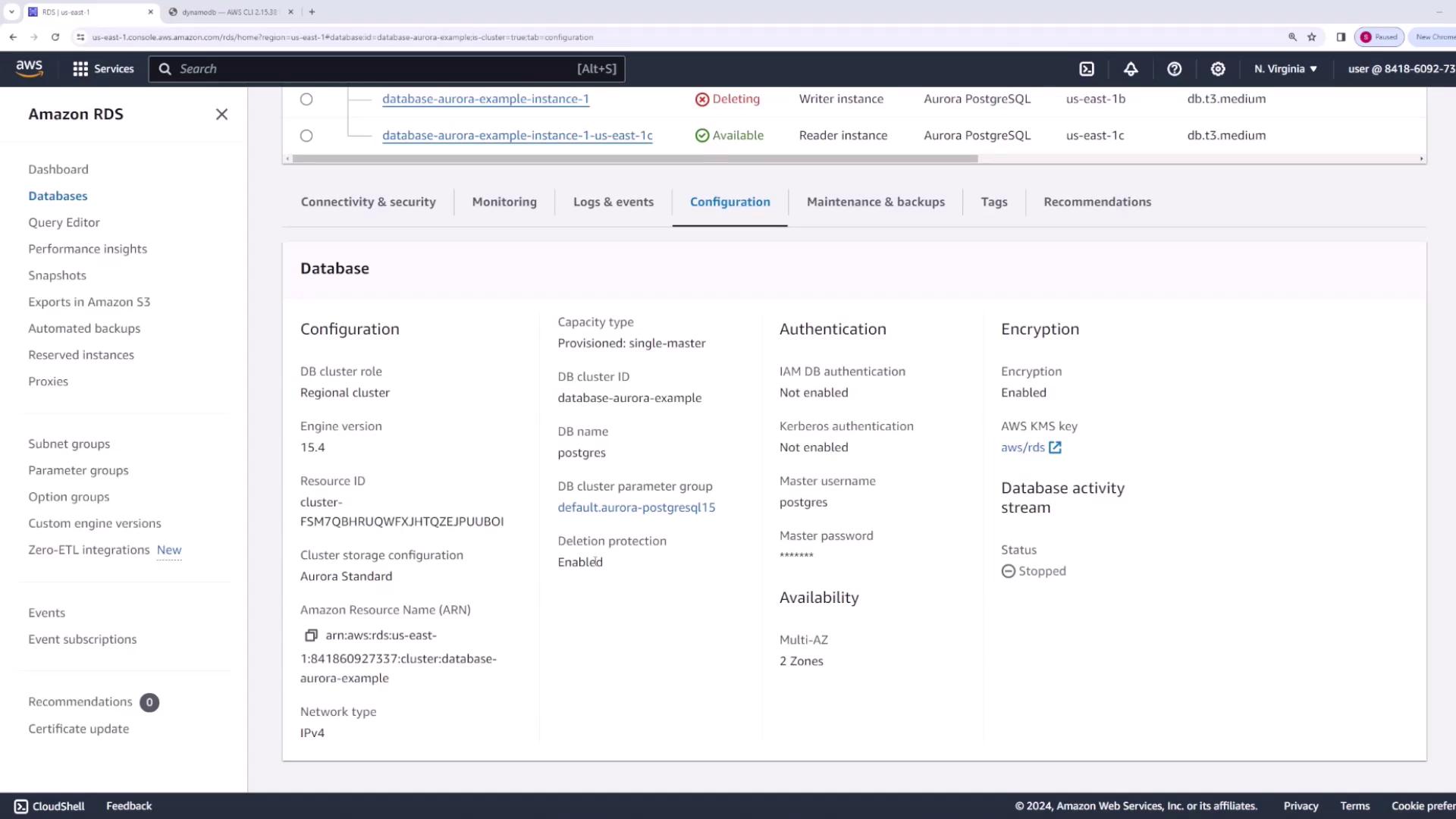
Navigate to Actions. You might notice that deletion is disabled because instances must be deleted individually first.
Delete each instance. If prompted, disable deletion protection for the final instance by following these steps:
Go to the main cluster and select Configuration.
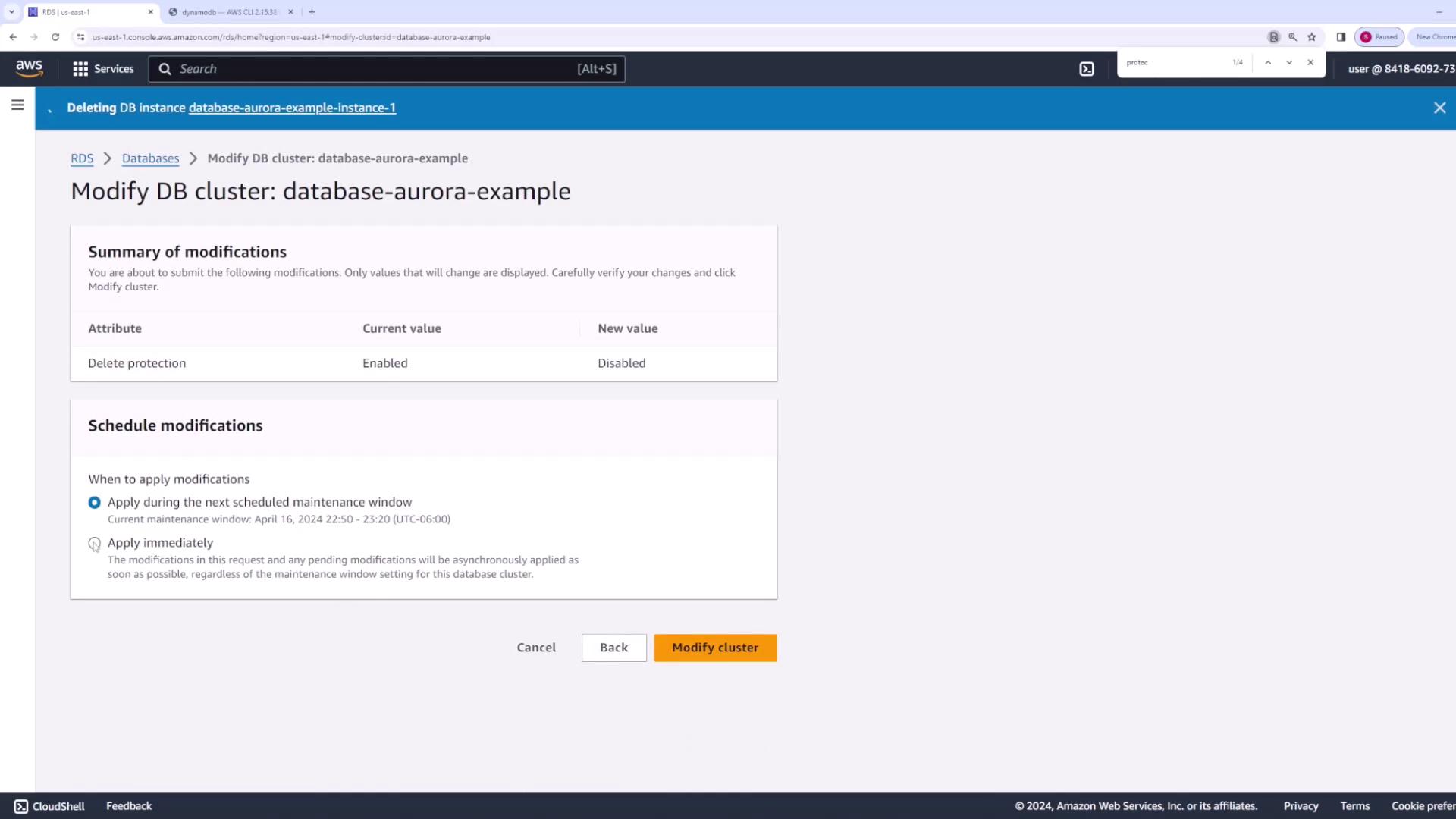
2. Under Protection settings, disable deletion protection.
3. Click Continue and then Modify Cluster to apply the changes immediately.
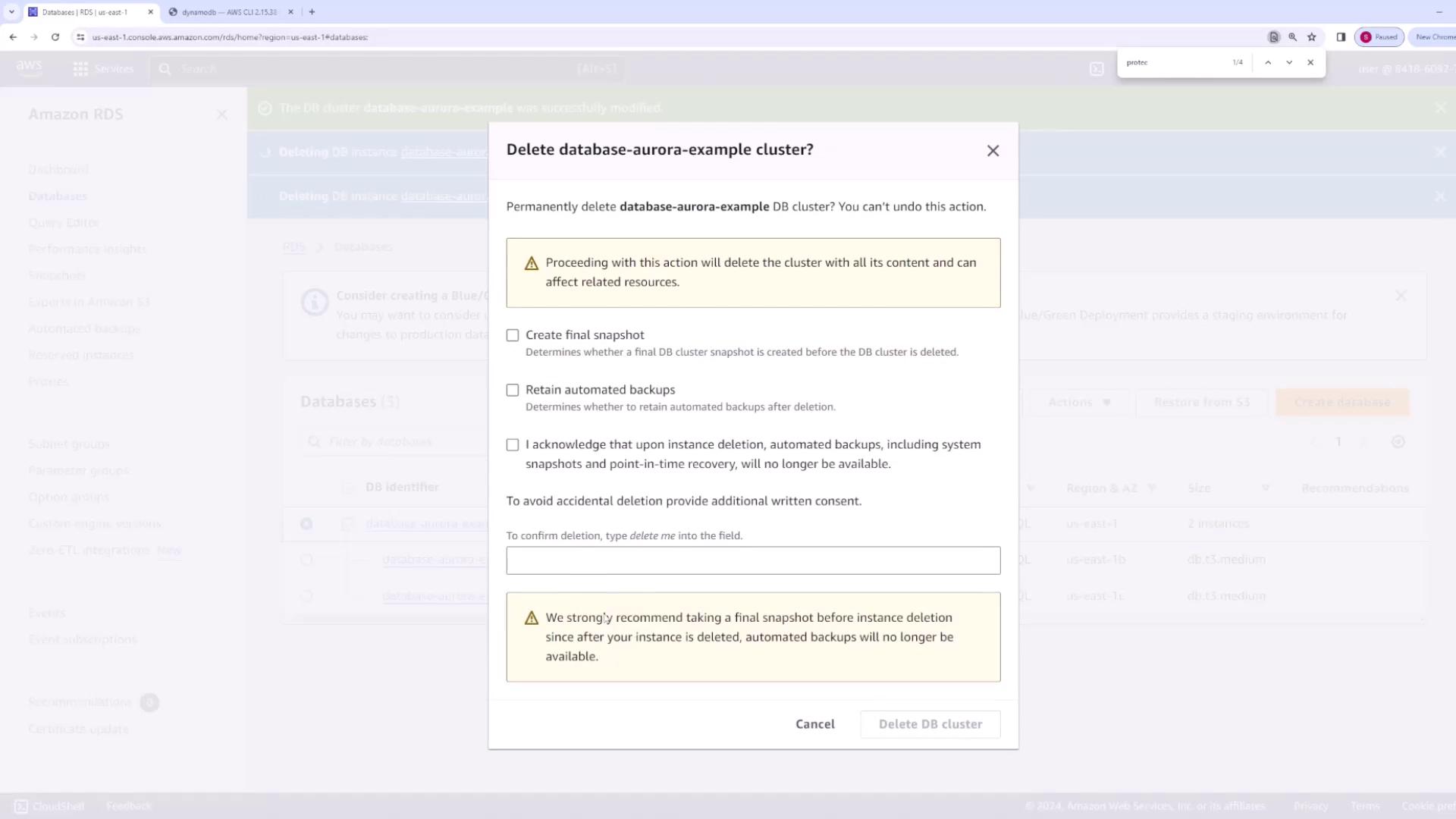
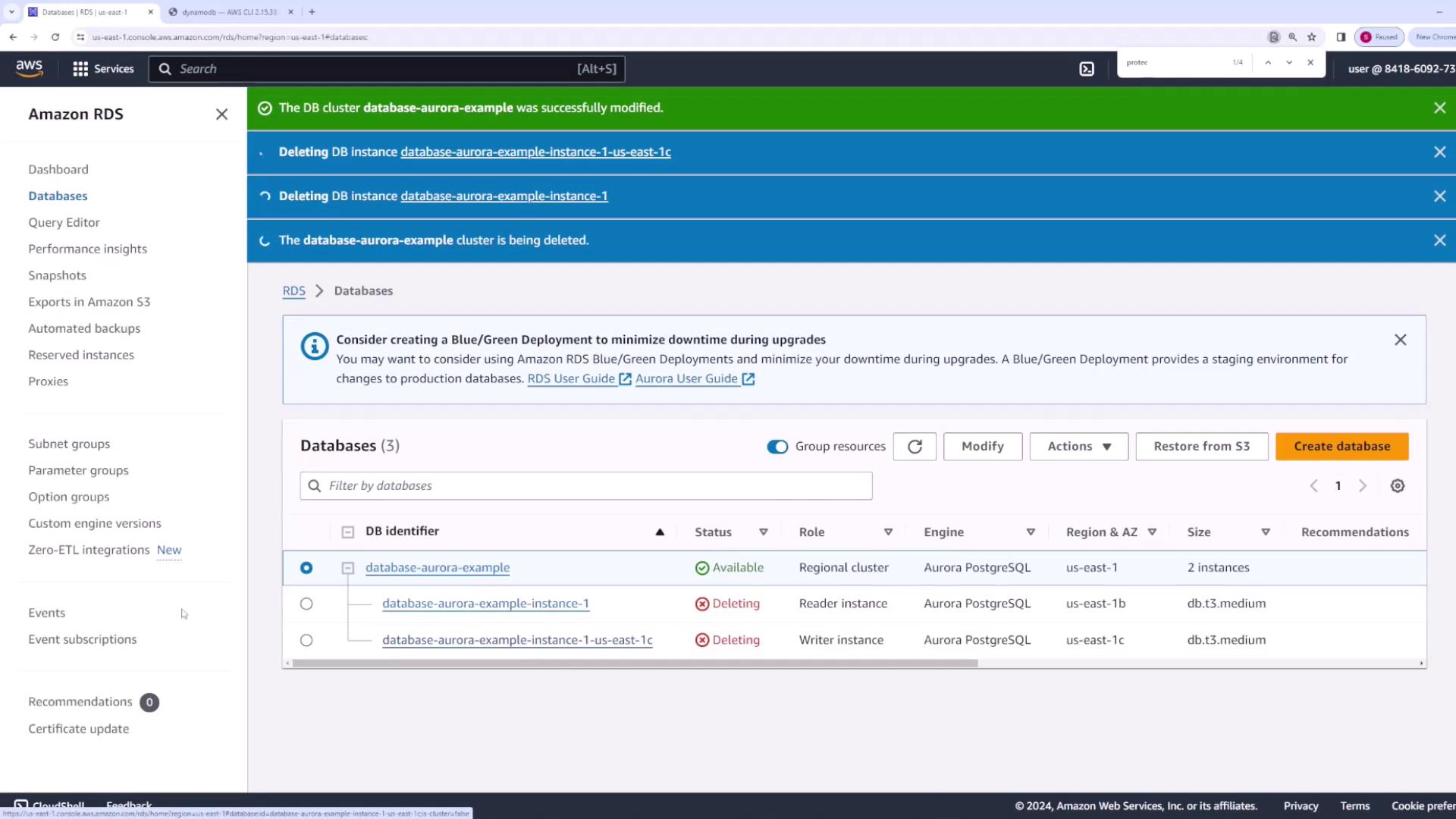
After modification, delete the instance and then proceed to delete the entire database cluster.
When prompted, choose not to create a final snapshot if not needed, and confirm by selecting Delete Database Cluster.
Once the deletion process is complete, notifications will appear on the Amazon RDS dashboard confirming the changes.
This lesson provided a comprehensive guide to setting up and managing an Aurora cluster on AWS RDS. By following these steps, you can deploy, configure, and manage your Aurora database with ease.For more detailed information on AWS RDS and Aurora, explore the official AWS Documentation.