

What Is AWS Lambda?
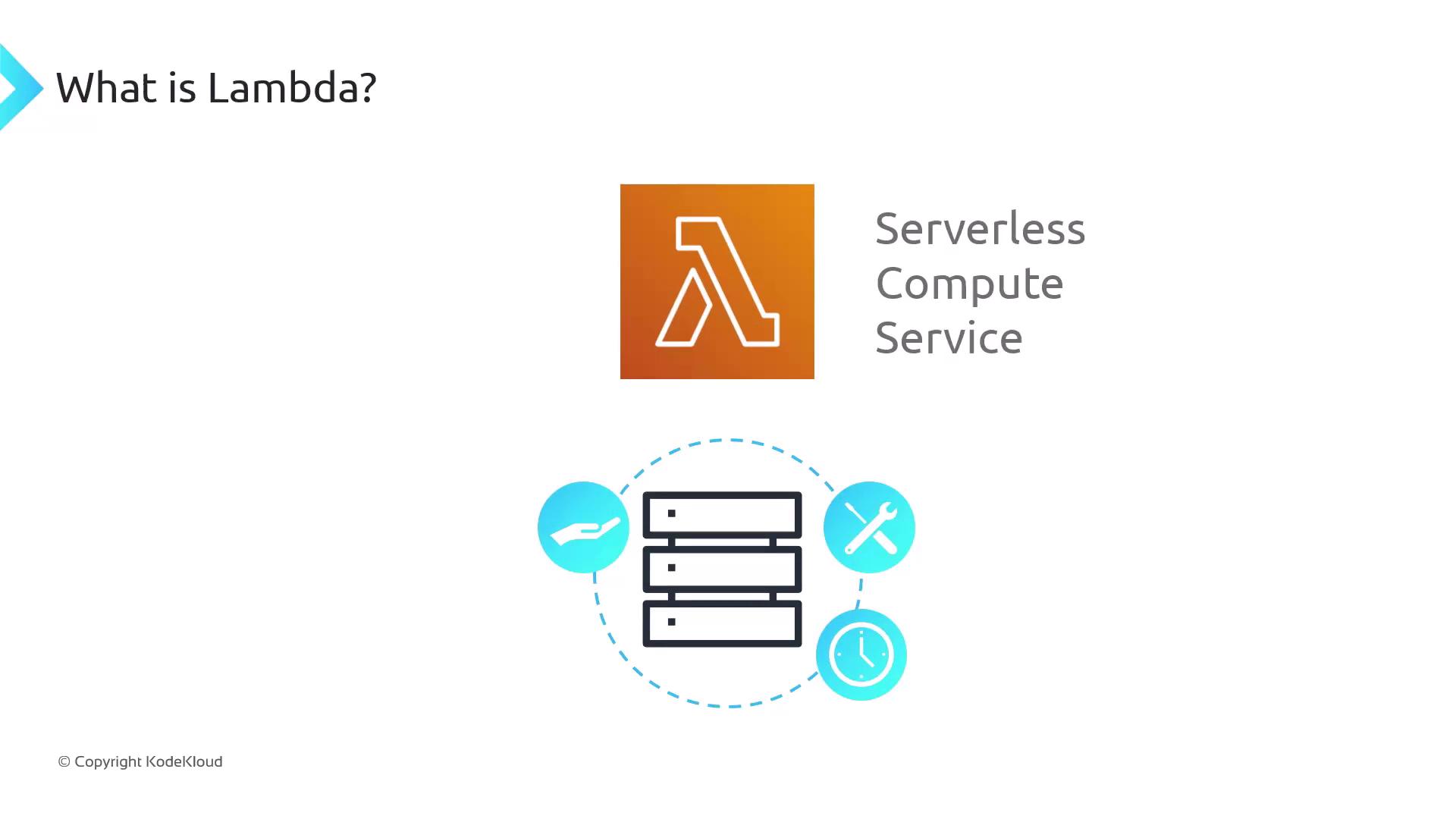
Imagine a clever inventor who wrote a program to spark fire by rubbing sticks together. In the old world, he’d wait days for a server to be built, provisioned, and maintained—delaying his warmth and dinner. AWS Lambda changes that:- You simply upload your code as a “Lambda function.”
- Lambda takes care of the infrastructure, scaling from zero to thousands of concurrent executions.
- You pay only for the milliseconds your code runs.
AWS Lambda is a Functions-as-a-Service (FaaS) offering. It abstracts away servers, operating systems, and scaling concerns so you can focus entirely on your application logic.
Key Benefits of AWS Lambda
| Feature | Description |
|---|---|
| Serverless Management | No servers to provision, patch, or maintain |
| Automatic Scaling | Instantly scales based on incoming requests |
| Pay-per-Use Pricing | Billed in 100 ms increments for only the compute time you consume |
| Built-in High Availability | Fault-tolerant across multiple Availability Zones |
| Integrated Security | IAM-based permissions and VPC integrations out of the box |
Supported Languages and Runtimes
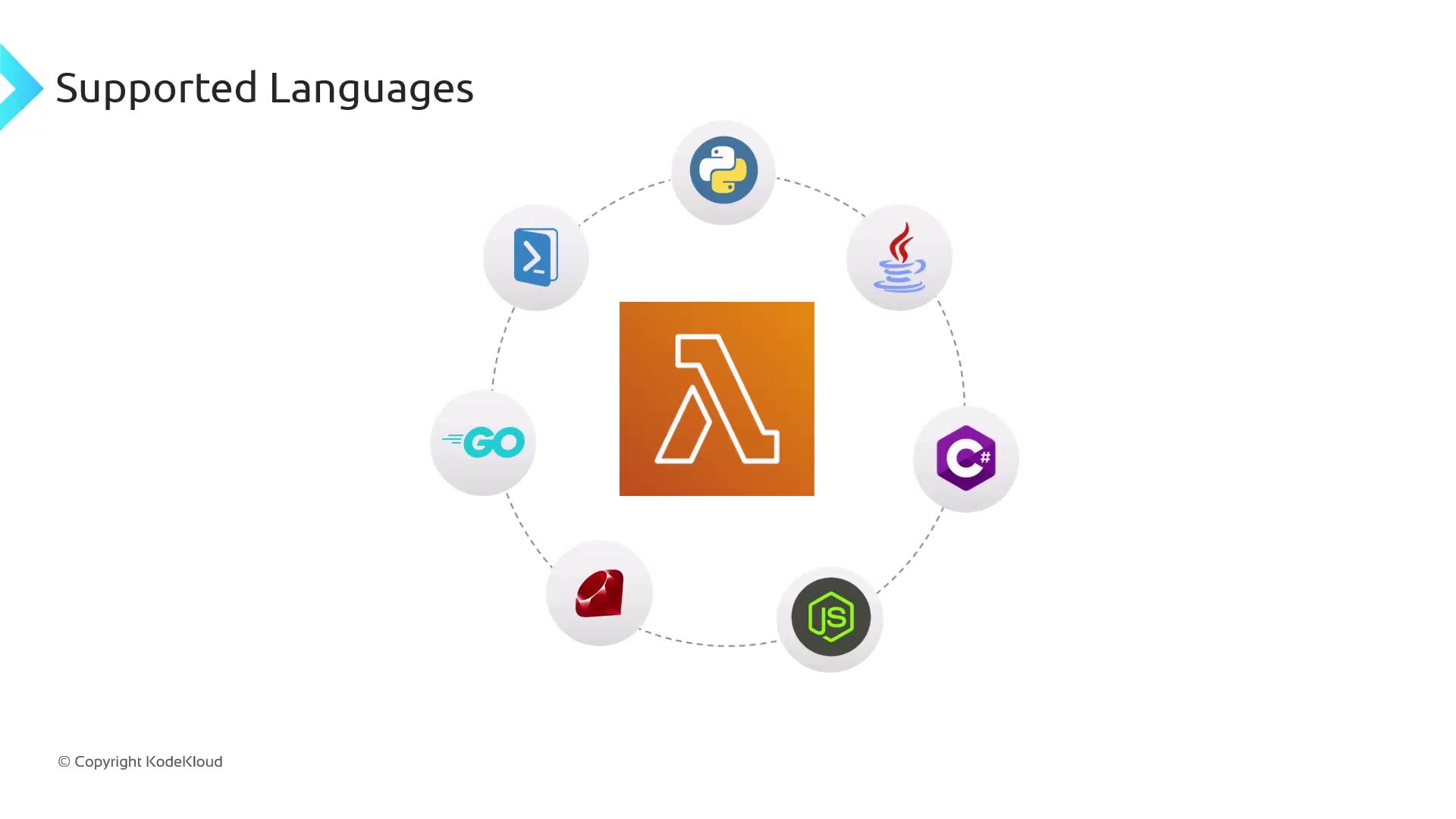
AWS Lambda natively supports these runtimes:| Runtime | Common Use Cases |
|---|---|
| Node.js (12.x, 14.x, 16.x) | APIs, microservices |
| Python (3.7, 3.8, 3.9) | Data processing, machine learning |
| Java (8, 11) | Enterprise applications |
| C# (.NET Core 3.1, .NET 5) | Windows workflows, back-end services |
| Go (1.x) | High-performance microservices |
| Ruby (2.7) | Web applications |
| PowerShell (6.x) | Automation and scripting |
Lambda functions can experience cold starts, especially in VPCs or when using large deployment packages. Design for stateless, short-duration handlers to minimize latency.
About This Course
In this hands-on module, we will:- Create and configure a Node.js Lambda function.
- Set up a Jenkins pipeline to deploy and invoke the Lambda.
- Monitor performance using CloudWatch logs and metrics.