VPN Purpose and Use Case
Imagine you have an AWS Virtual Private Cloud (VPC) containing private subnets that host various resources without public IP addresses. These resources require secure connectivity to an on-premises data center. A VPN provides this secure link by establishing an encrypted IPsec tunnel between the two environments, ensuring that communication remains private and protected.VPN Architecture in AWS
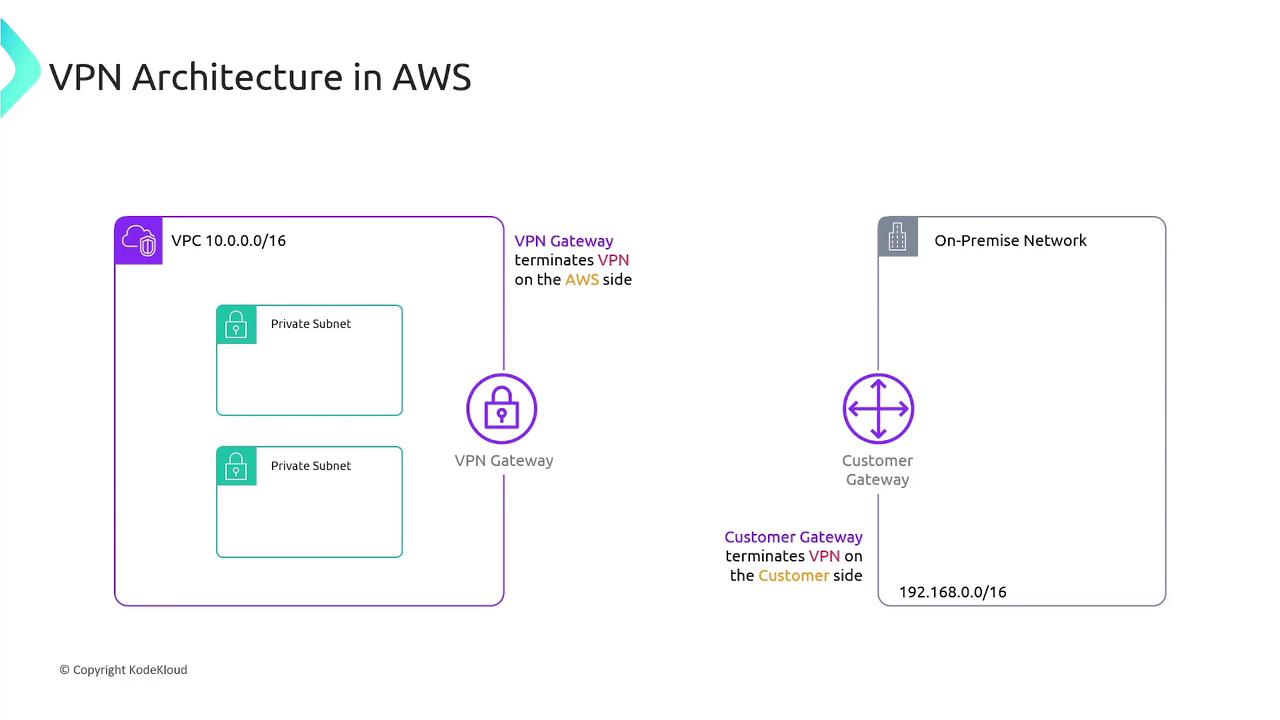
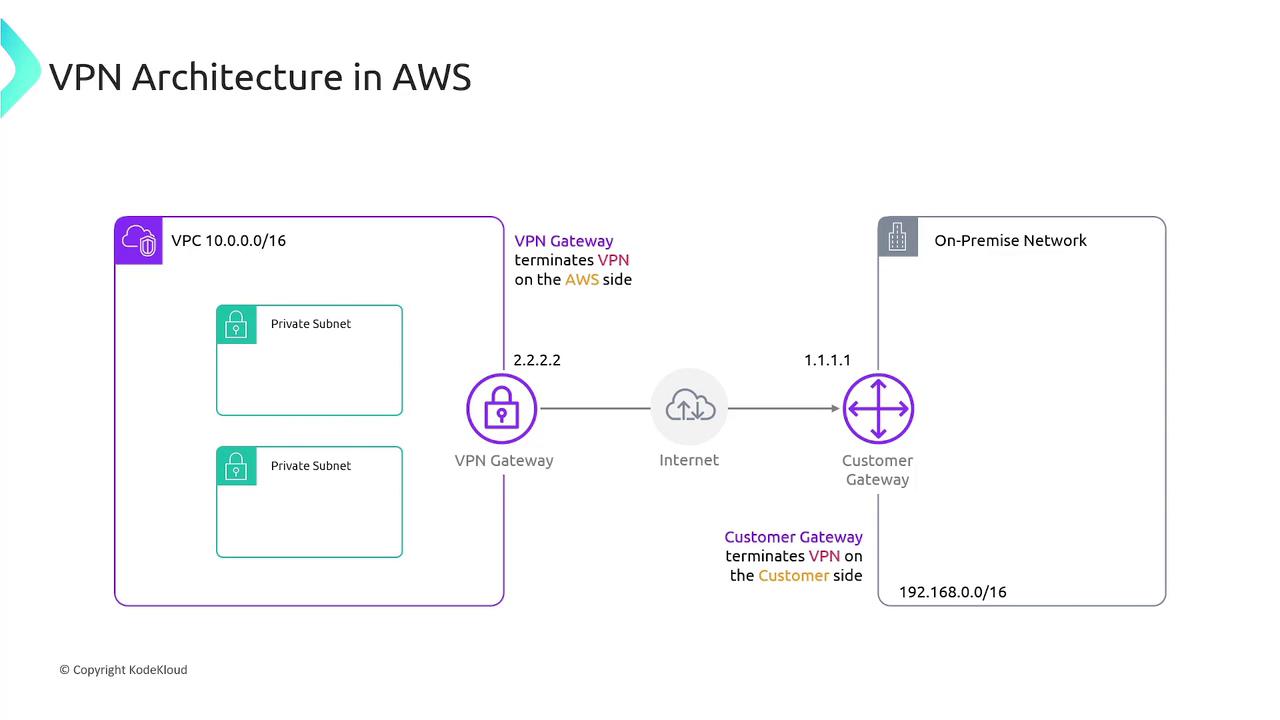
Consider a VPC with a CIDR block of 10.0.0.0/16 where your resources are hosted in private subnets. To connect to an on-premises data center (for example, using 192.168.0.0/16), two critical components are involved:- VPN Gateway (VGW): Located on the AWS side, it terminates the VPN connection.
- Customer Gateway (CGW): Located on your on-premises network, it terminates the VPN connection on the customer side and possesses a public IP address.
Routing Between AWS and On-Premises Networks
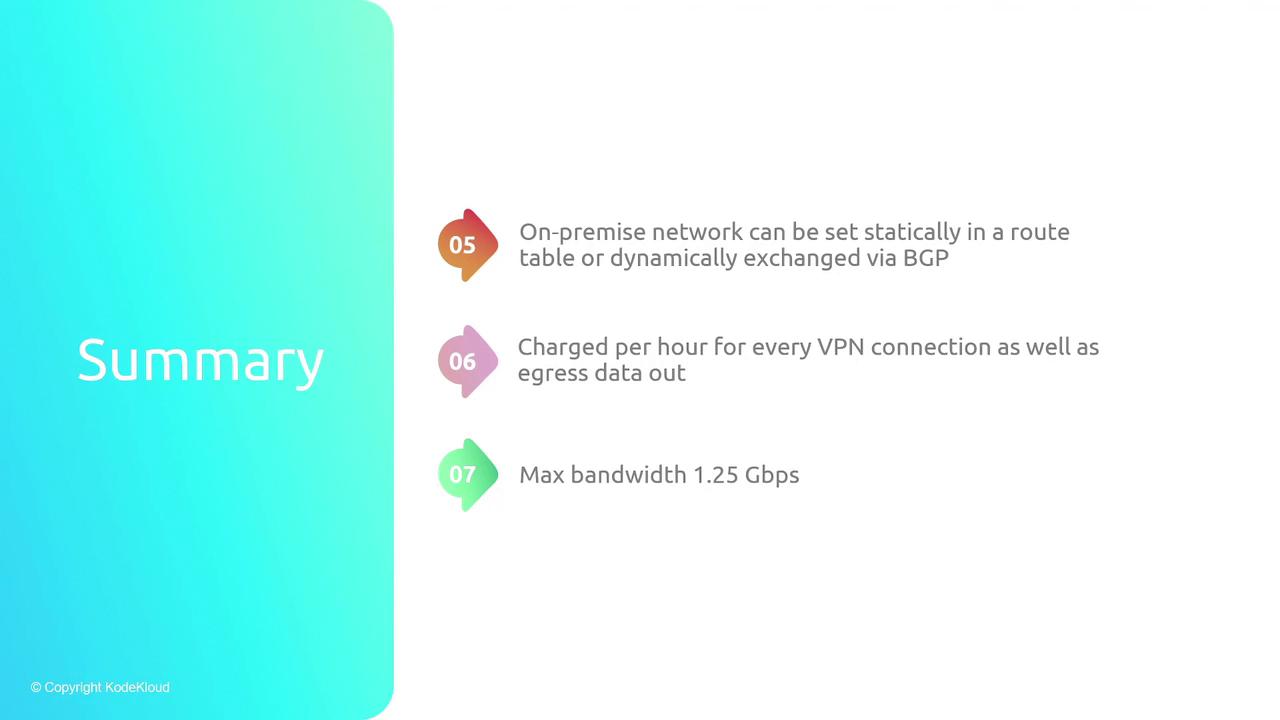
To facilitate communication between the on-premises network (192.168.0.0/16) and the AWS VPC (10.0.0.0/16), you must configure routing appropriately. Packets destined for the on-premises network should be directed through the VPN Gateway. There are two routing approaches:- Static Routing: Manually add a route in the VPC routing table that directs traffic for 192.168.0.0/16 to the VPN Gateway.
- Dynamic Routing: Use a routing protocol like Border Gateway Protocol (BGP) to automatically exchange routes between the VPN Gateway and the Customer Gateway. This dynamic method allows AWS to learn the on-premises routes automatically.
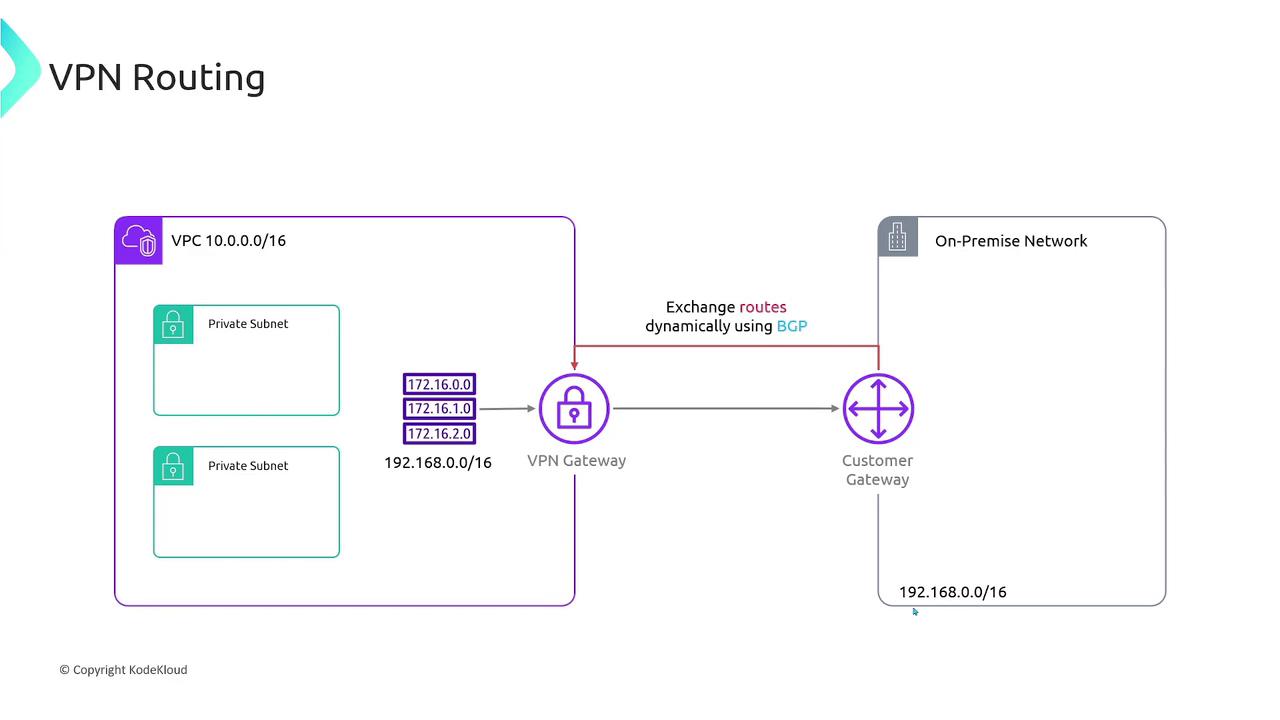
Using dynamic routing with BGP simplifies route management and provides improved resiliency by automatically adapting to route changes.
VPN Pricing
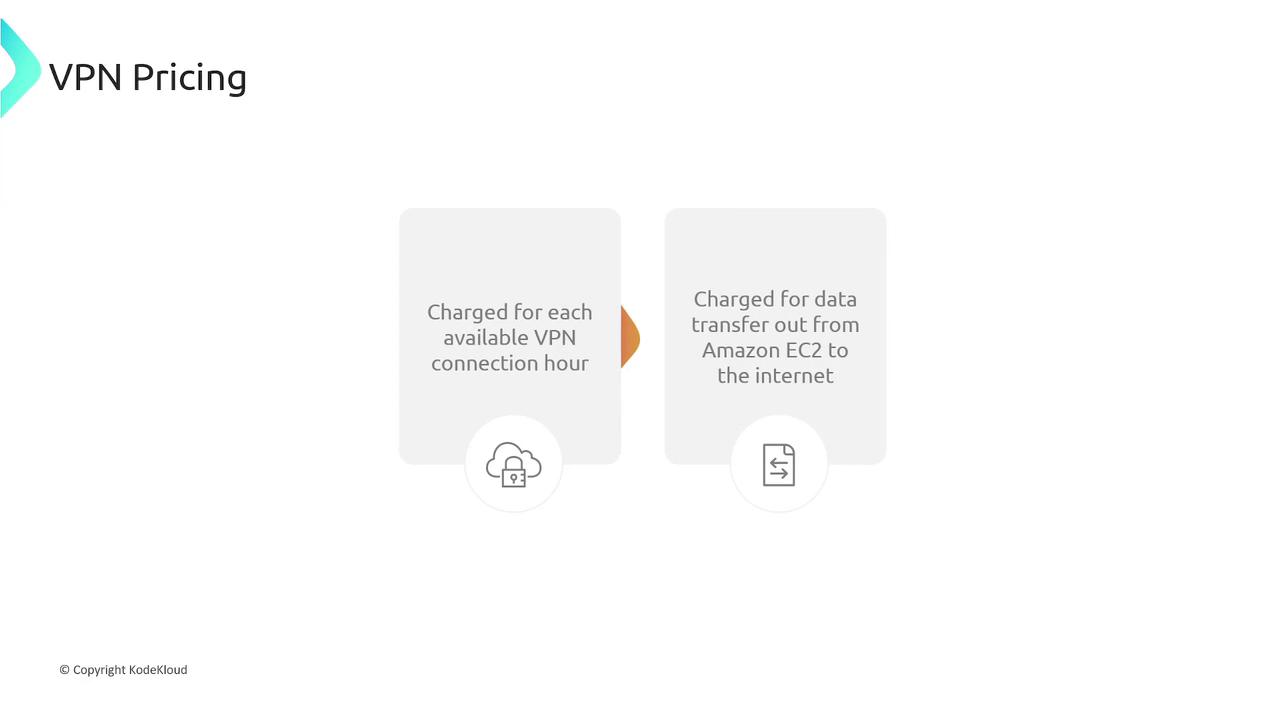
AWS charges for VPN gateways in two main ways:- A fee for each hour that the VPN connection is available.
- Additional charges for data transfer out (egress traffic) from Amazon EC2 over the VPN.
Monitor your outbound data transfer closely to manage costs, as VPN egress charges can accumulate quickly.
VPN Performance Limits
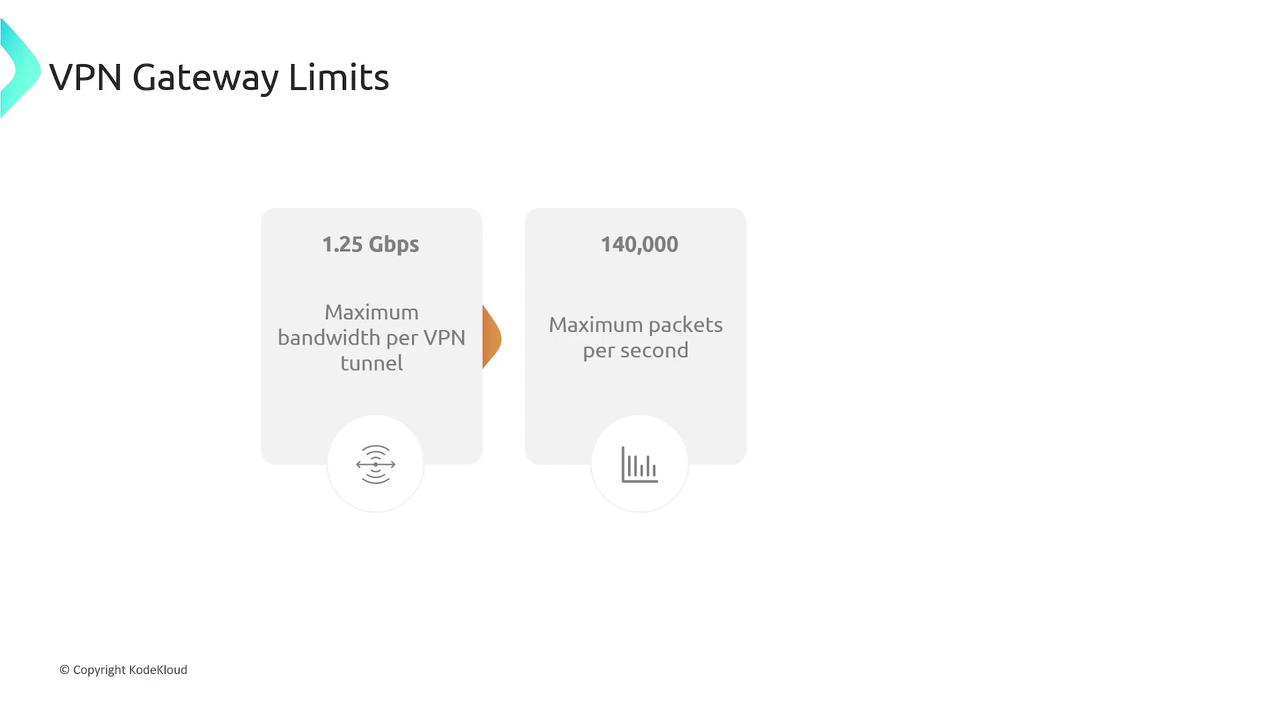
When deploying VPN gateways, consider these performance limits:- Bandwidth: Up to 1.25 Gbps per VPN tunnel.
- Packets Per Second: Capable of handling up to 140,000 packets per second.
- MTU (Maximum Transmission Unit): Limited to 1,466 bytes.
Summary
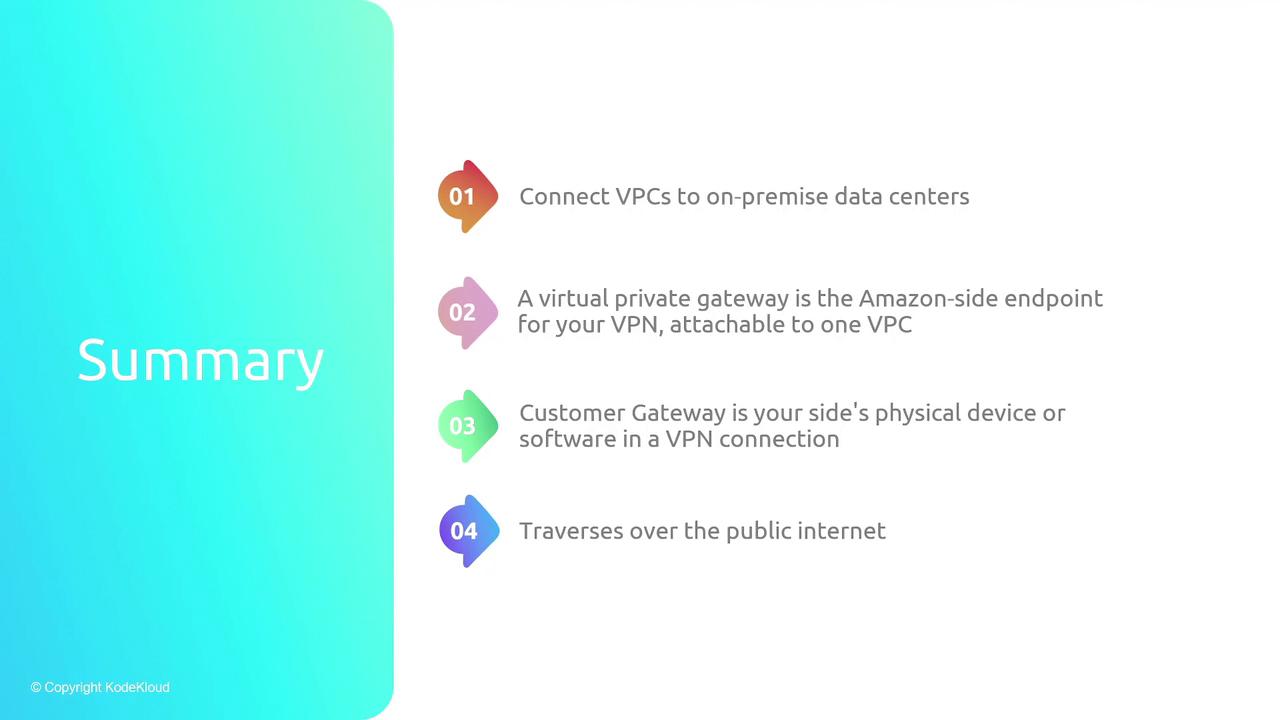
To summarize:- VPNs provide secure connectivity between AWS VPCs and on-premises data centers.
- The VPN Gateway (AWS side) and Customer Gateway (on-premises side) serve as the endpoints for the encrypted IPsec tunnel.
- Routing can be managed either statically or dynamically using BGP to ensure proper packet flow.
- AWS charges for VPN usage based on connection uptime and data egress, and VPN tunnels have defined performance limits.