- Design principles for cost optimization.
- Foundational categories for managing costs in AWS.
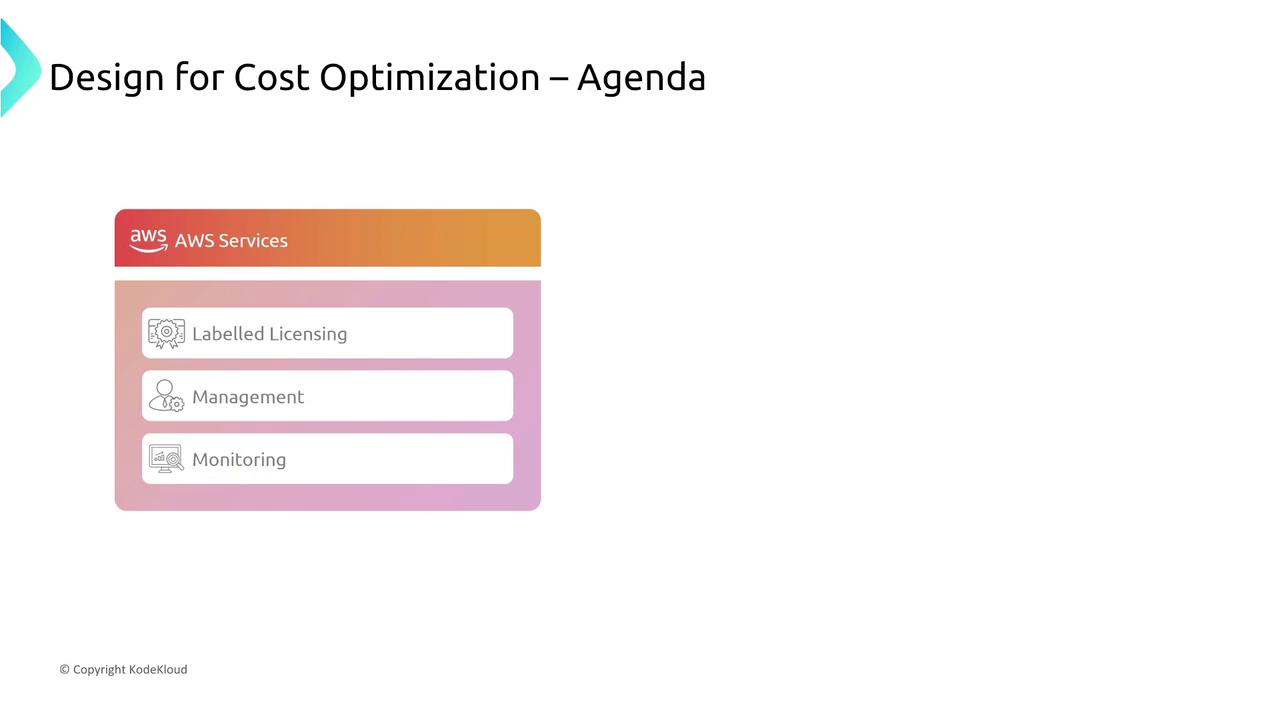
- Specific cost optimization scenarios aligned with individual AWS services.
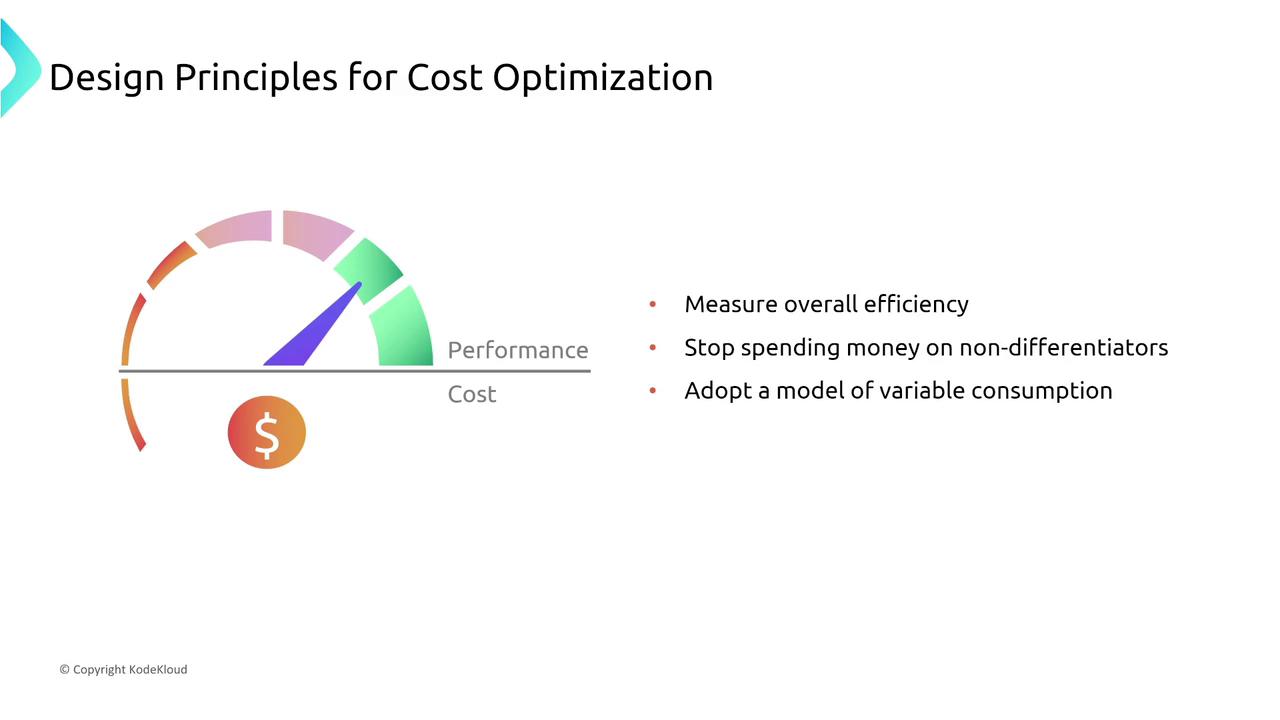
Design Principles for Cost Optimization
In this section, we explore the balance between performance and cost—crucial for delivering optimal value. Here, value is defined as achieving high performance without overspending. The key design principles include:- Measuring overall efficiency.
- Avoiding excessive spending on non-differentiators.
- Embracing a model of variable consumption.
Always monitor your performance metrics to ensure that cost-cutting does not impact application performance negatively.
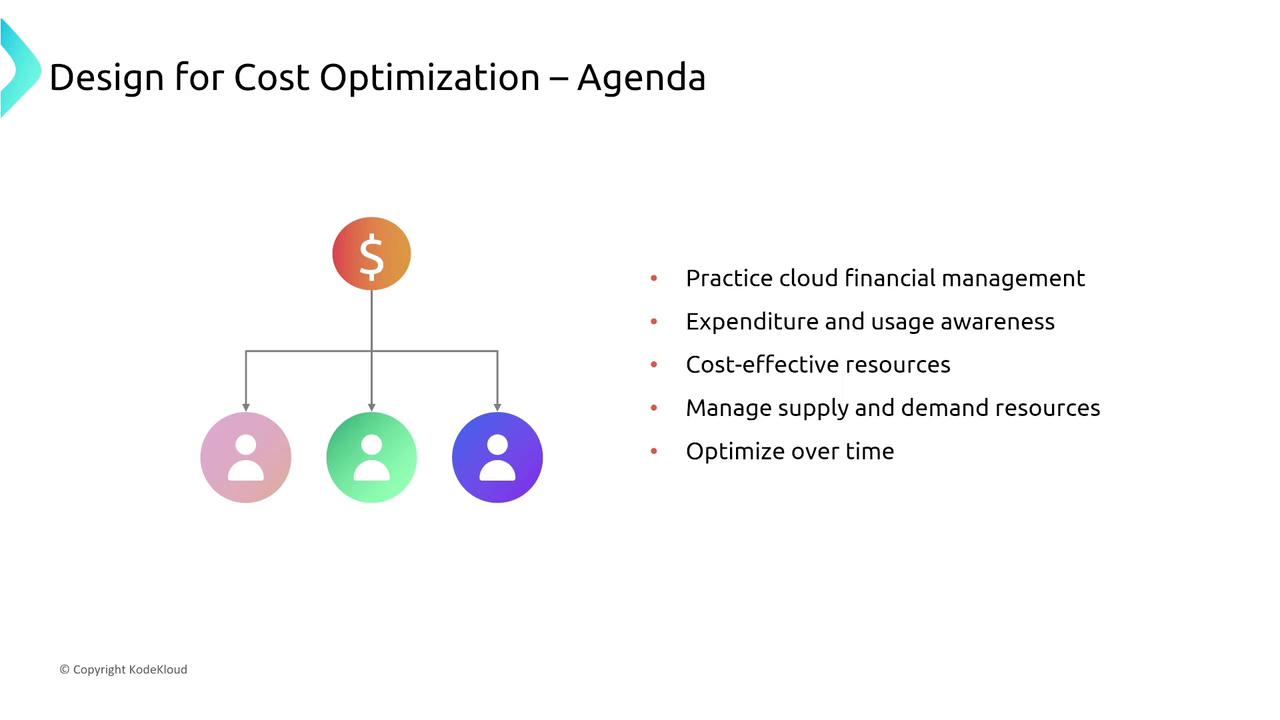
Foundational Categories for Cost Optimization in AWS
This section outlines the fundamental categories essential for organizing and managing your AWS expenditures effectively. The core areas of focus include:- Practicing cloud financial management.
- Tracking all expenditures and usage.
- Ensuring cost-effective resource allocation based on business needs.
- Managing resource capacity.
- Pursuing continuous cost optimization rather than one-time fixes.
Specific Cost Optimization Scenarios
This section reviews practical scenarios for optimizing costs within various AWS services. Topics include:- Licensing models and options.
- Reservations and different licensing strategies in AWS.
- Evaluating return on investment (ROI) and total cost of ownership.
- A review of AWS billing and monitoring tools.
Understanding how AWS pricing models work can help you answer cost-related exam questions more effectively.
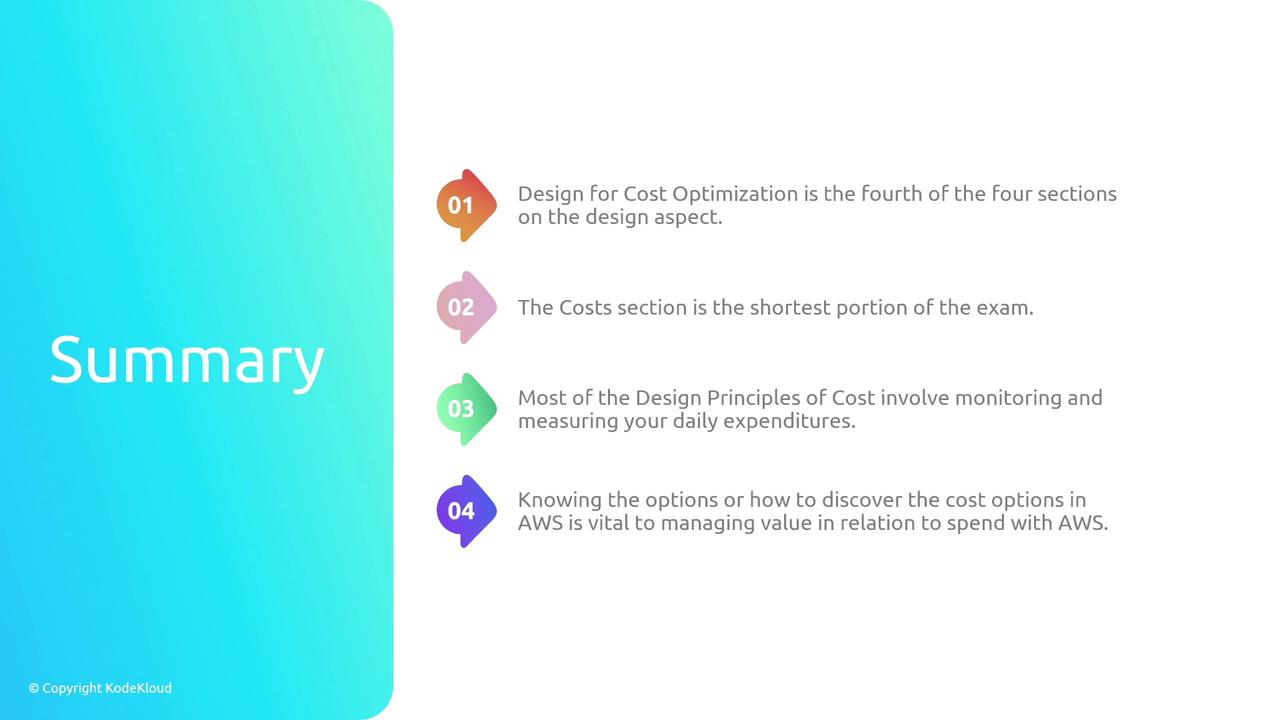
Summary and Final Thoughts
In summary, the cost optimization design principles and scenarios covered in this session form an essential part of the overall exam topics. Though cost-related questions constitute about one-fifth of the total 65 exam questions, they underscore the importance of routine monitoring, automated tagging, and efficient resource management. A thorough grasp of AWS cost features will ensure you derive the best value from every dollar spent.