

EMR Cluster Architecture
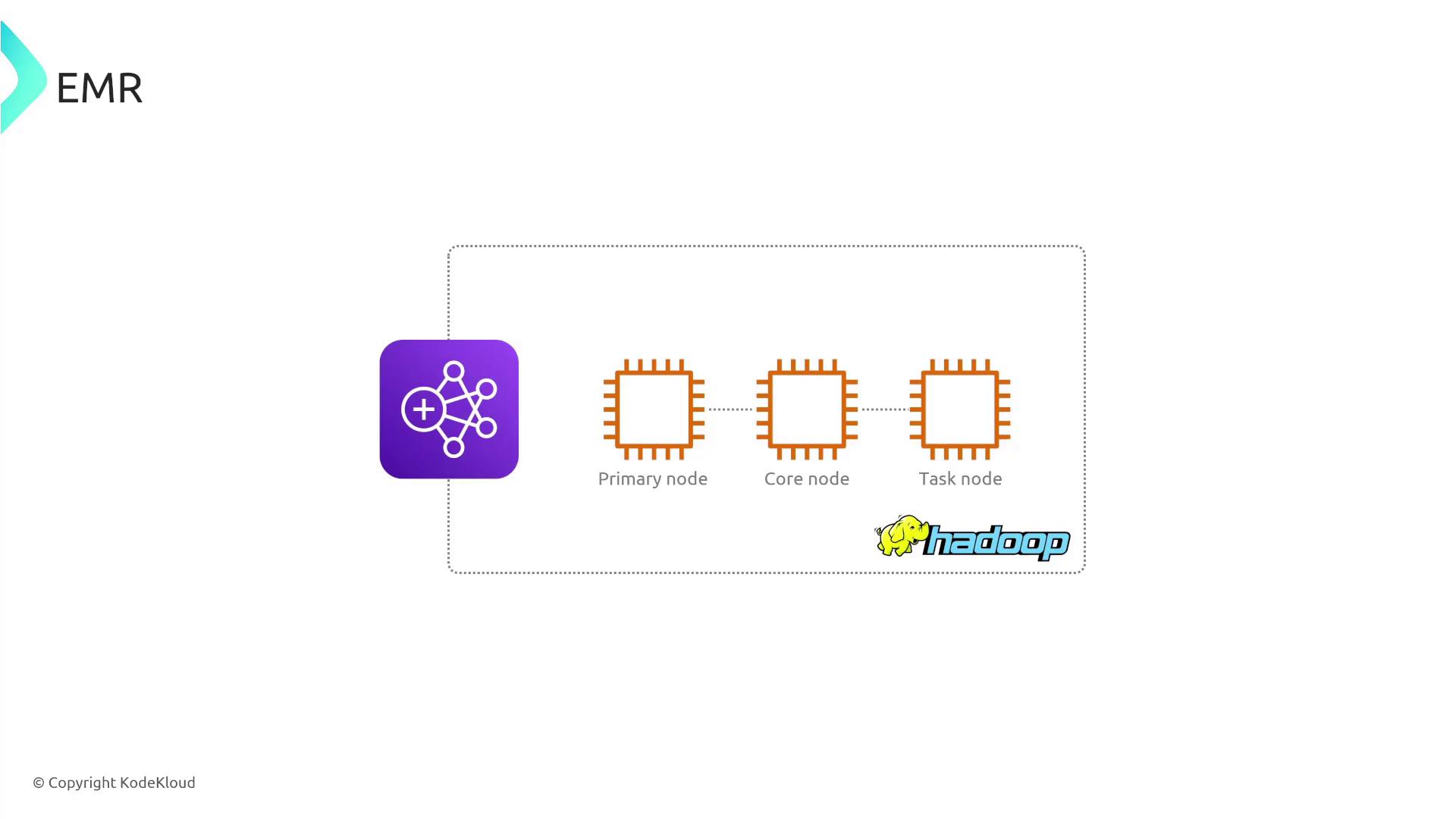
At the heart of EMR lies its cluster—a set of Amazon EC2 instances known as nodes. Understanding the roles these nodes play is essential:- Primary Node: Manages the overall cluster and orchestrates the distribution of data and tasks.
- Core Node: Hosts components that store data in the Hadoop Distributed File System (HDFS) and actively participate in data processing. In multi-node clusters, at least one core node is essential.
- Task Node: Exclusively handles data processing tasks without storing data. These nodes are optional and help scale the processing workload.
How EMR Works
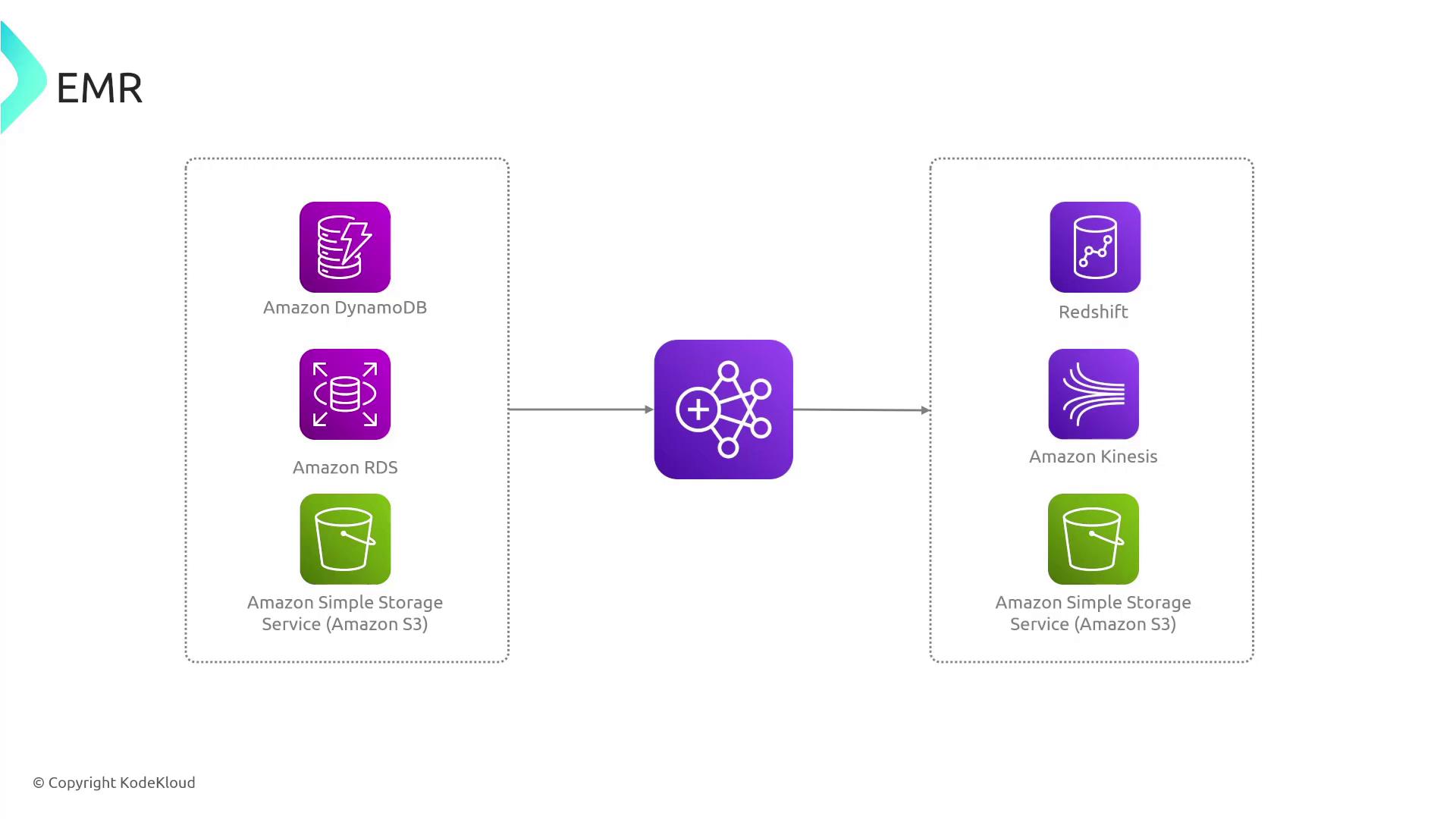
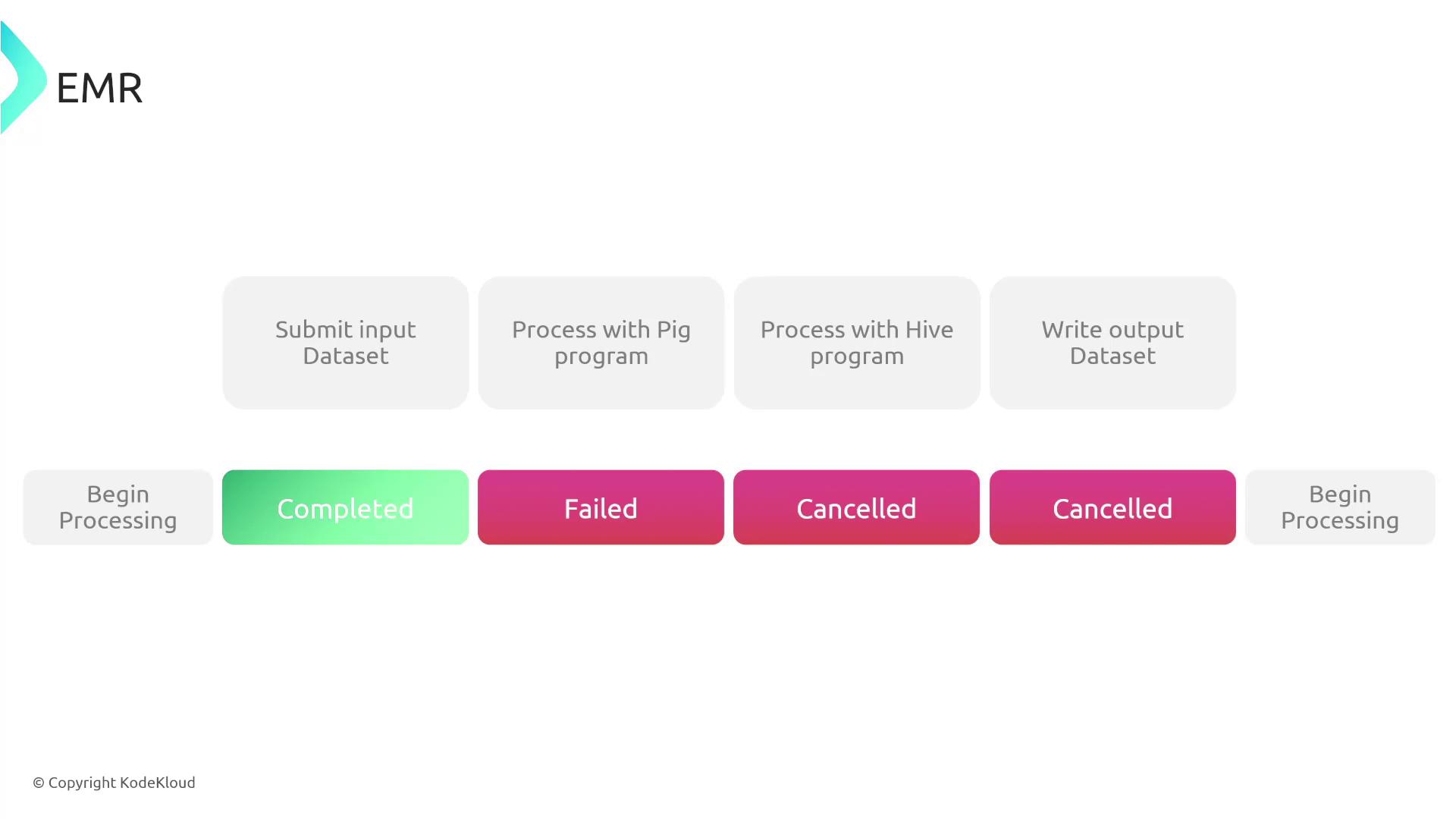
When launching an EMR cluster, you determine its size and specify node roles. Data is imported into the cluster from supported sources like S3 or DynamoDB. The primary node leverages frameworks such as Hadoop, Apache Spark, HBase, Presto, or Hive to distribute and process the data concurrently. AWS provides tools like the CLI and EMR API, which allow you to monitor cluster performance and dynamically adjust the number of instances or manage the cluster lifecycle. You can submit multiple processing steps to a running EMR cluster. For instance, a workflow might include running a Pig script on an input dataset, followed by a Hive program on a subsequent dataset, finally producing results. The step execution process works as follows:- Initially, all steps appear in a “pending” state.
- The first step transitions to a “running” state while later steps remain pending.
- Completed steps update to “completed.”
- If a step fails (e.g., due to a Pig script error), its status changes to “failed,” and any pending steps are automatically canceled.
- Optionally, you may opt to ignore a failure to allow subsequent steps to run, or terminate the cluster immediately.
Key Features of Amazon EMR
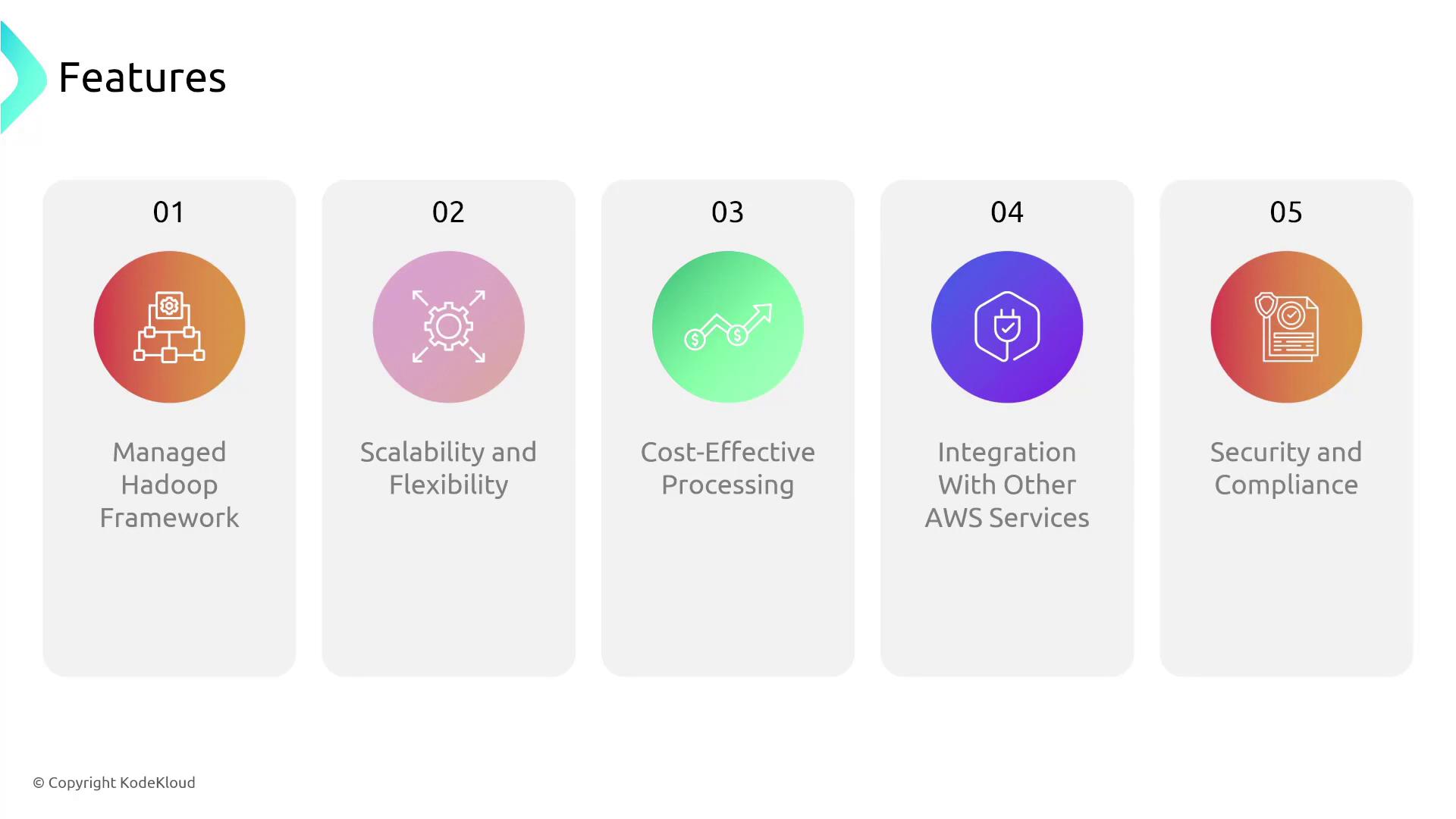
Amazon EMR offers several standout features that make it a powerful solution for big data processing:- Managed Hadoop Framework: Leverage native support for Hadoop alongside Spark, HBase, Presto, Hive, and more.
- Scalability and Flexibility: Easily scale clusters from a single instance to thousands, taking full advantage of AWS’s elastic infrastructure.
- Cost-Effective Processing: Optimize costs with EC2 spot pricing for task nodes, ideal for interruptible workloads.
- Seamless AWS Integration: Integrates effortlessly with services such as S3, RDS, DynamoDB, CloudWatch, and CloudFormation.
- Robust Security: Multiple security layers include IAM integration, customer-managed key support, encryption (at rest and in transit), and network isolation. EMR also complies with standards like GDPR and HIPAA.
For detailed integration guidelines and best practices, refer to the Amazon EMR Documentation.