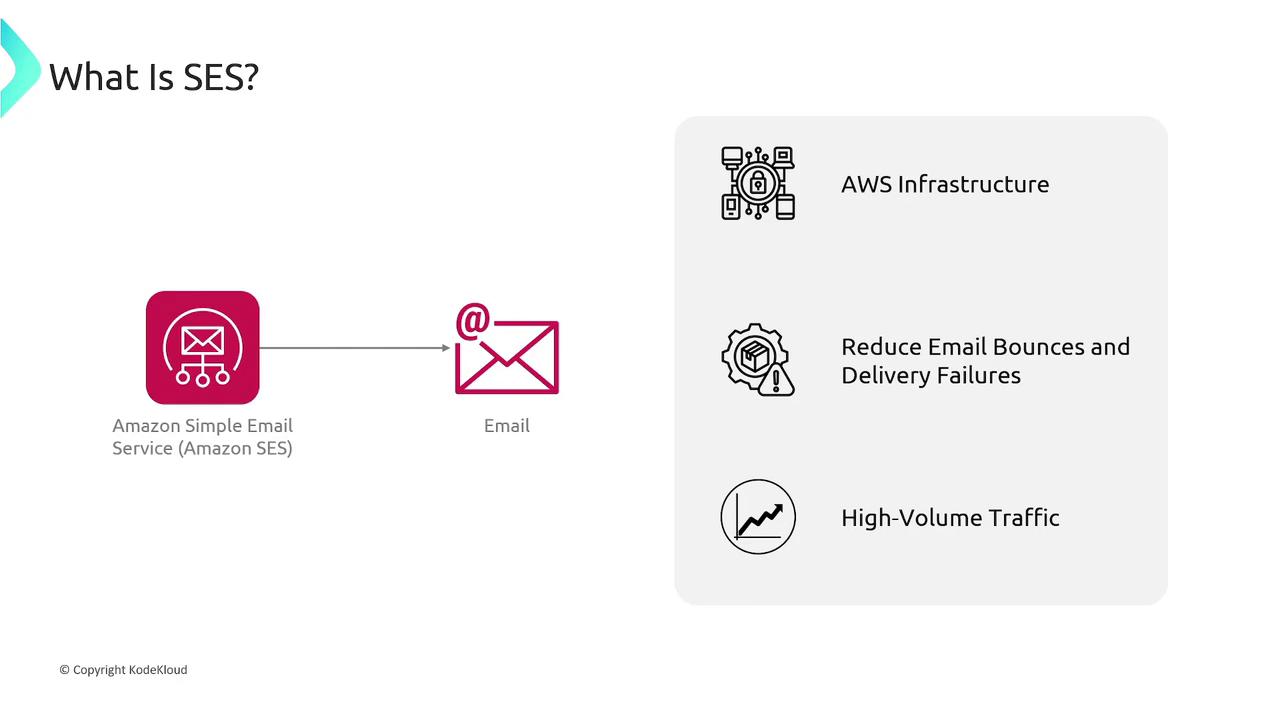
Key Components of AWS SES
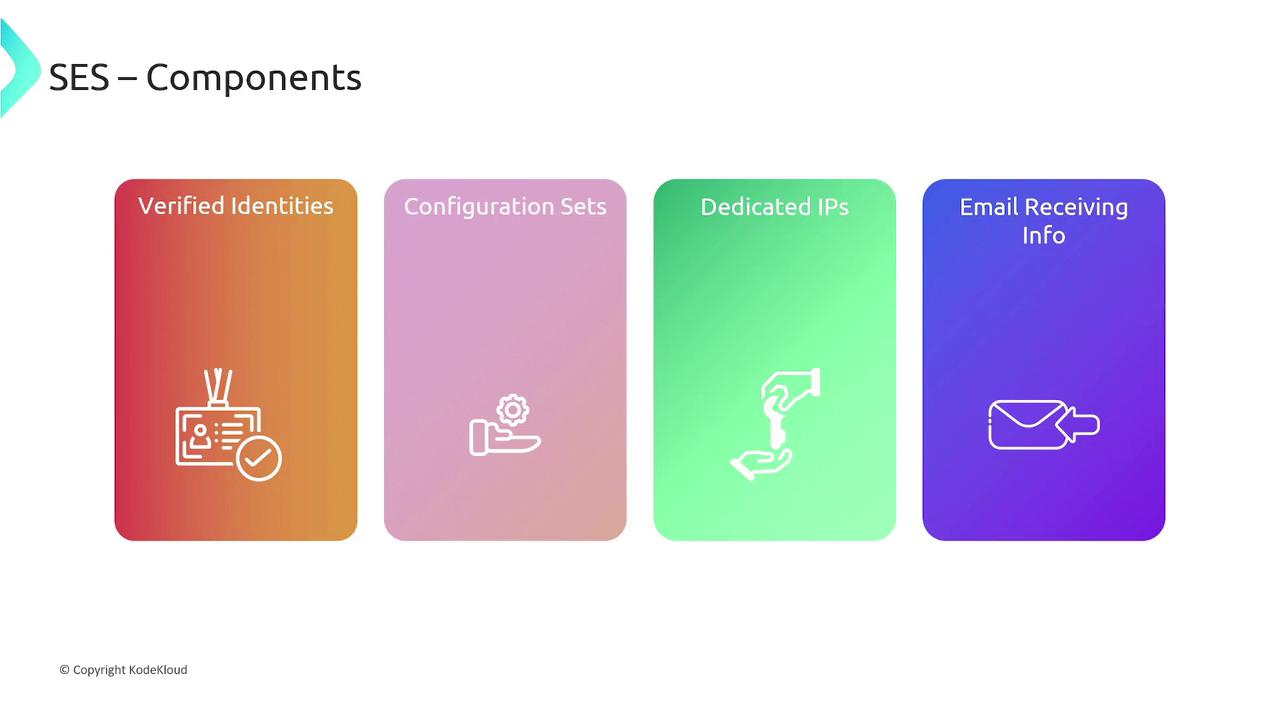
Below are the main components that make up the SES solution:-
Verified Identities
A verified identity can be a domain, subdomain, or email address used to send emails through SES. Before sending emails on behalf of a particular domain, you must verify your ownership. For instance, to send emails as [email protected], you must confirm that you own the domain kodekloud.com. This verification protects against spoofing and ensures the legitimacy of your emails. -
Configuration Sets
Configuration sets help organize, track, and manage different segments of your email sending operations. They allow you to specify which sending events to record and where to send these events, providing valuable insights into your email campaigns. -
Dedicated IPs
SES offers the option to use dedicated IP addresses which are exclusively reserved for your account. This ensures full control over your sender reputation, as your dedicated IP directly reflects the quality and volume of your email programs. -
Receipt Rules and IP Filters
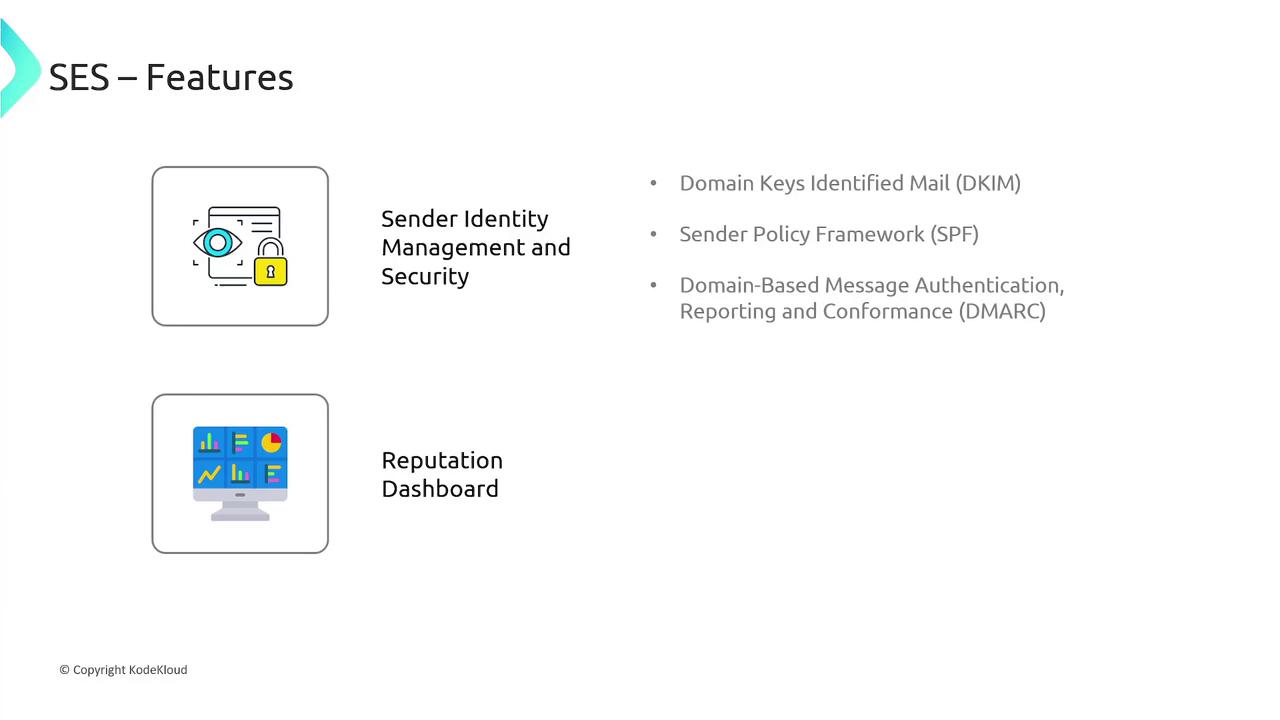
SES supports industry-standard email authentication protocols such as DomainKeys Identified Mail (DKIM), Sender Policy Framework (SPF), and Domain-based Message Authentication, Reporting, and Conformance (DMARC). With receipt rules and IP filters, you can determine how SES handles emails received on your behalf, enhancing your email security and deliverability.
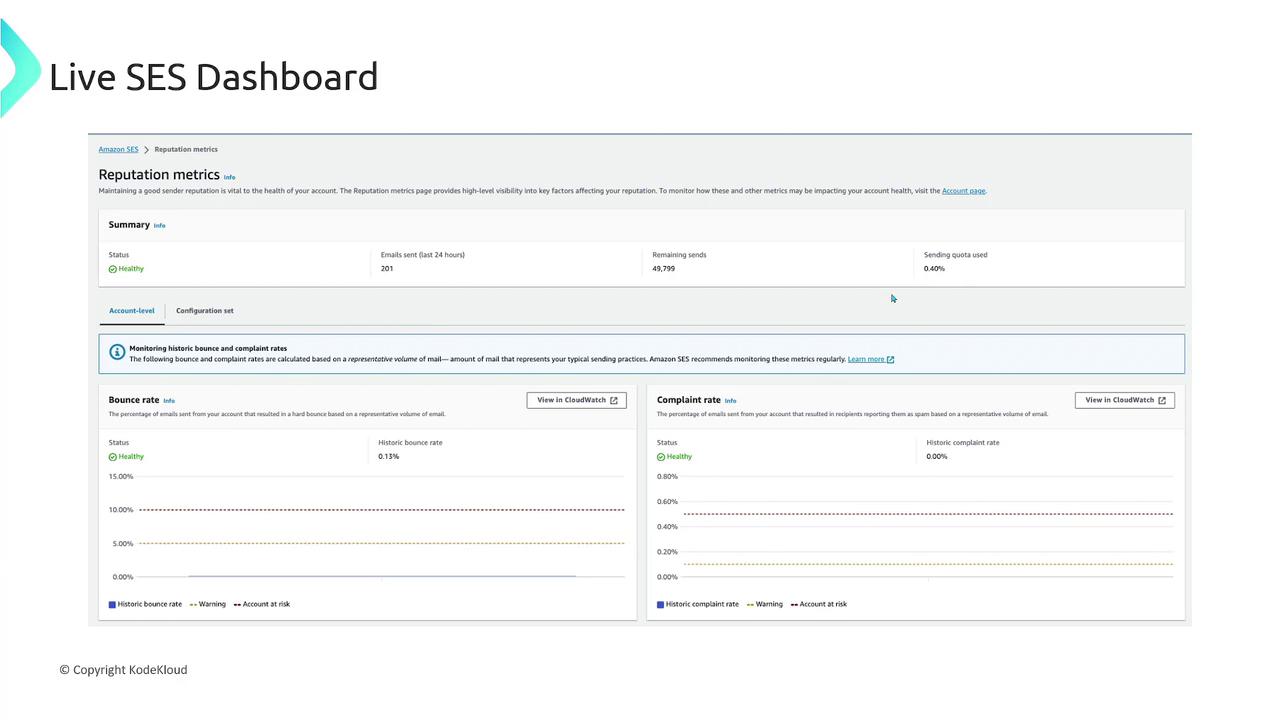
The Reputation Dashboard of SES is an essential feature that provides real-time metrics such as bounce rates, complaint rates, and other deliverability indicators.
Additional Features of AWS SES
AWS SES comes with several other powerful features that enhance its flexibility and usability:-
Email Templates:
Create and send personalized messages to your customers by using customizable email templates. -
Email Receiving Capabilities:
Manage incoming emails with rules that allow you to accept or reject messages based on criteria such as IP addresses and domains. -
Mailbox Simulator:
Simulate various scenarios (e.g., email bounces or complaints) without risking your sender reputation, enabling safer testing environments. -
Suppression List Management:
Control email delivery by configuring suppression lists at either the account level or within individual configuration sets. This ensures that specific email addresses do not receive emails from your account.
Seamless Integration with AWS Services
AWS SES integrates effortlessly with other AWS services to provide a comprehensive email ecosystem. For example, you can configure SES to trigger AWS Lambda functions to process incoming emails in real time. Additionally, you can store incoming emails in Amazon S3 and monitor events like bounces by publishing notifications to Amazon SNS.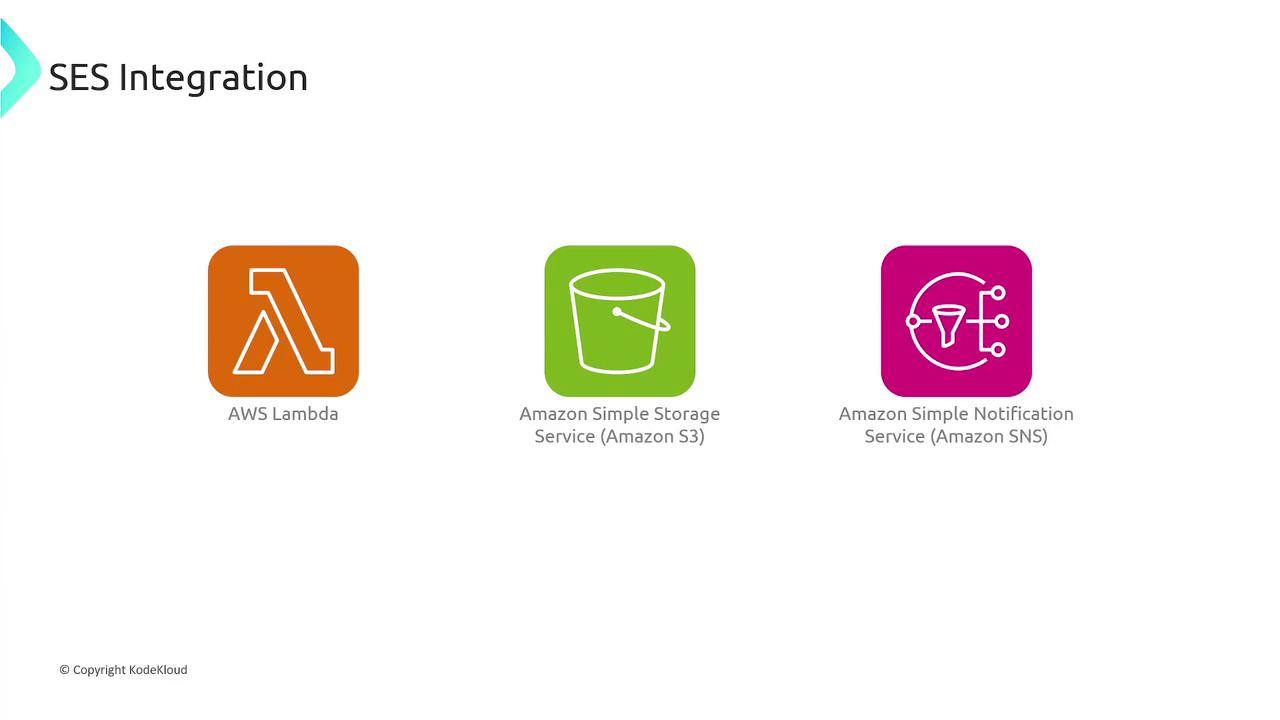
Primary Use Cases for AWS SES
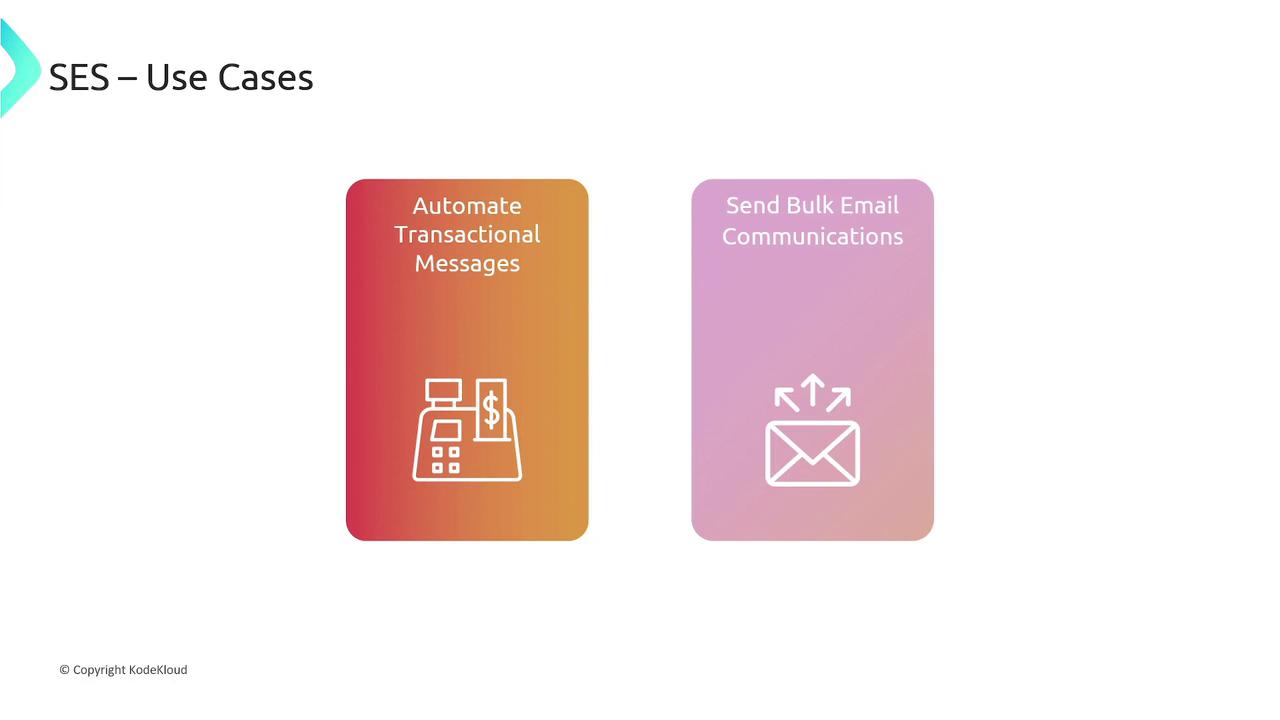
There are two main use cases for deploying AWS SES:-
Automated Transactional Messages:
Automatically send notifications such as order confirmations or shipping alerts immediately after a transaction occurs. -
Bulk Email Communication:
Efficiently manage and send newsletters or mass communications to large groups and communities.