- Consolidated Billing: Separate billing for each account increases administrative complexity.
- Management Overhead: Distinct logins, user management, and ongoing maintenance for each account can be cumbersome.
- Security Inconsistencies: Configuring IAM policies and security settings on a per-account basis can lead to vulnerabilities.
- Limited Resource Sharing: Without centralized control, resources may be underutilized, leading to unnecessary costs due to redundancy.
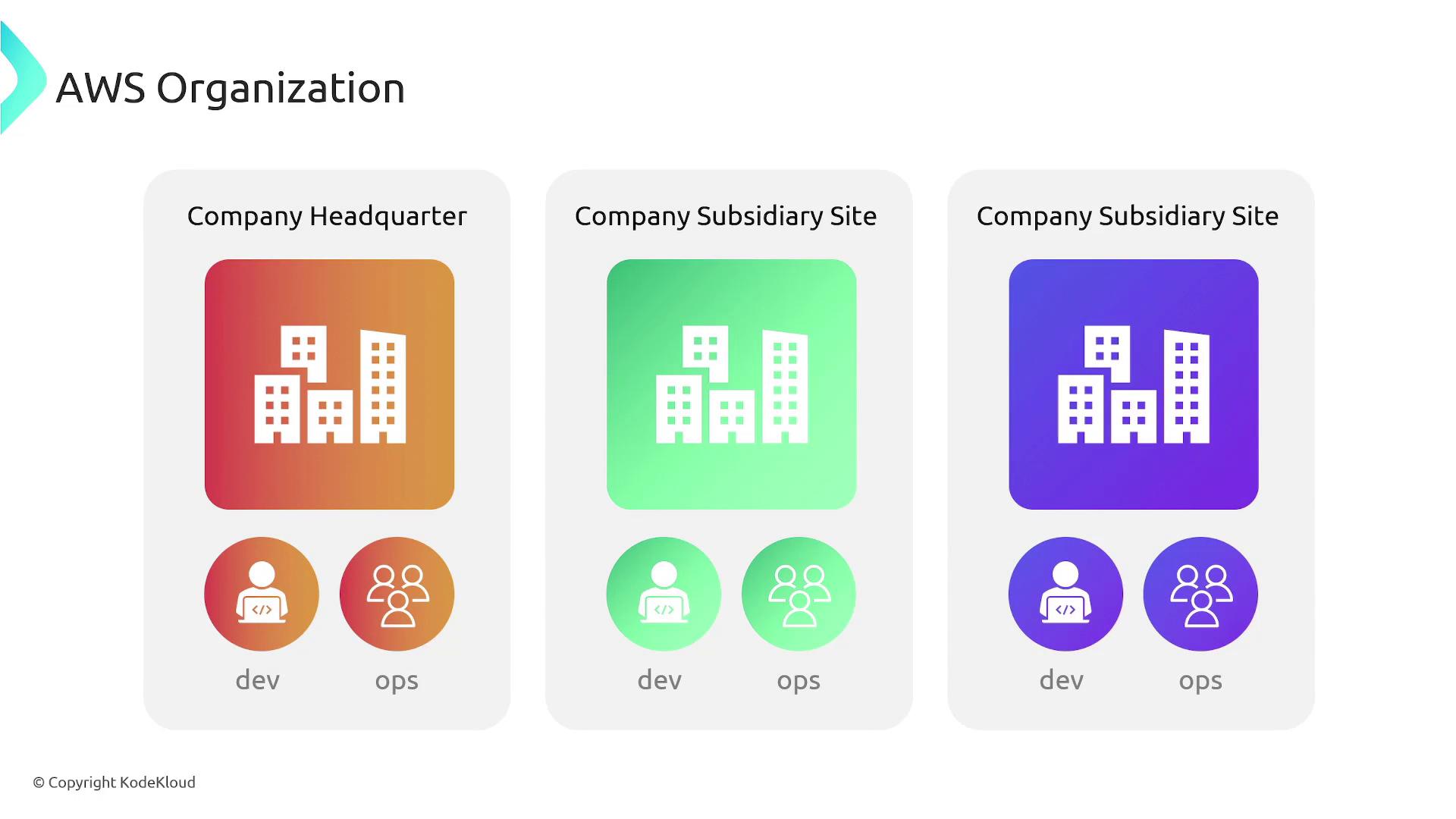
- Centrally Manage Multiple Accounts: Administer several AWS accounts all from a single interface.
- Group Accounts with Common Policies: Organize accounts into groups, or Organizational Units (OUs), to simplify policy enforcement.
- Streamline Billing: Utilize consolidated billing to aggregate charges across accounts for reduced administrative effort.
- Enforce Service Control Policies (SCPs): Apply overarching policies that define permissible actions across accounts.
Components of AWS Organizations
An AWS Organization unifies multiple AWS accounts into a single, manageable unit. The key components are:Root Account
The root account serves as the top-level container for all AWS resources. Policies applied at this level cascade down to all Organizational Units and subordinate accounts. An organization always starts with one root.Organizational Units (OUs)
OUs allow you to group accounts based on common requirements. For example, you might group all development accounts together, enabling you to apply consistent policies to that group.Management Account
The management account is responsible for administrative tasks within the AWS Organization. It facilitates creating permissions, inviting or removing accounts, applying policies, and integrating with other AWS services for enhanced functionality.Service Control Policies (SCPs)
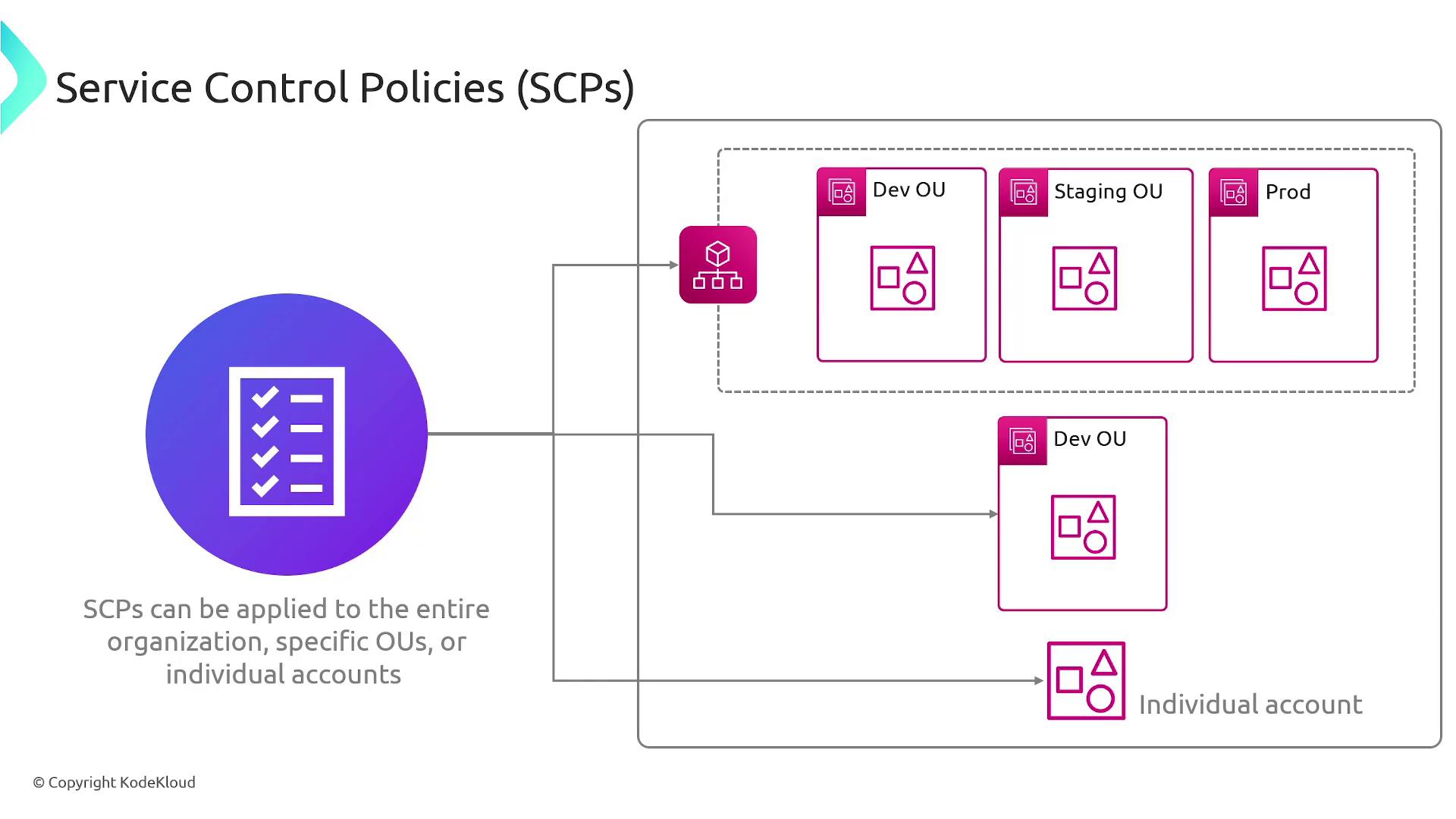
SCPs establish the schema for permitted or denied operations within your accounts. Operating similarly to IAM policies but on an organizational level, SCPs can restrict actions—for instance, preventing the launch of oversized EC2 instances in development environments. These policies can be applied organizationally, to specific OUs, or at the individual account level.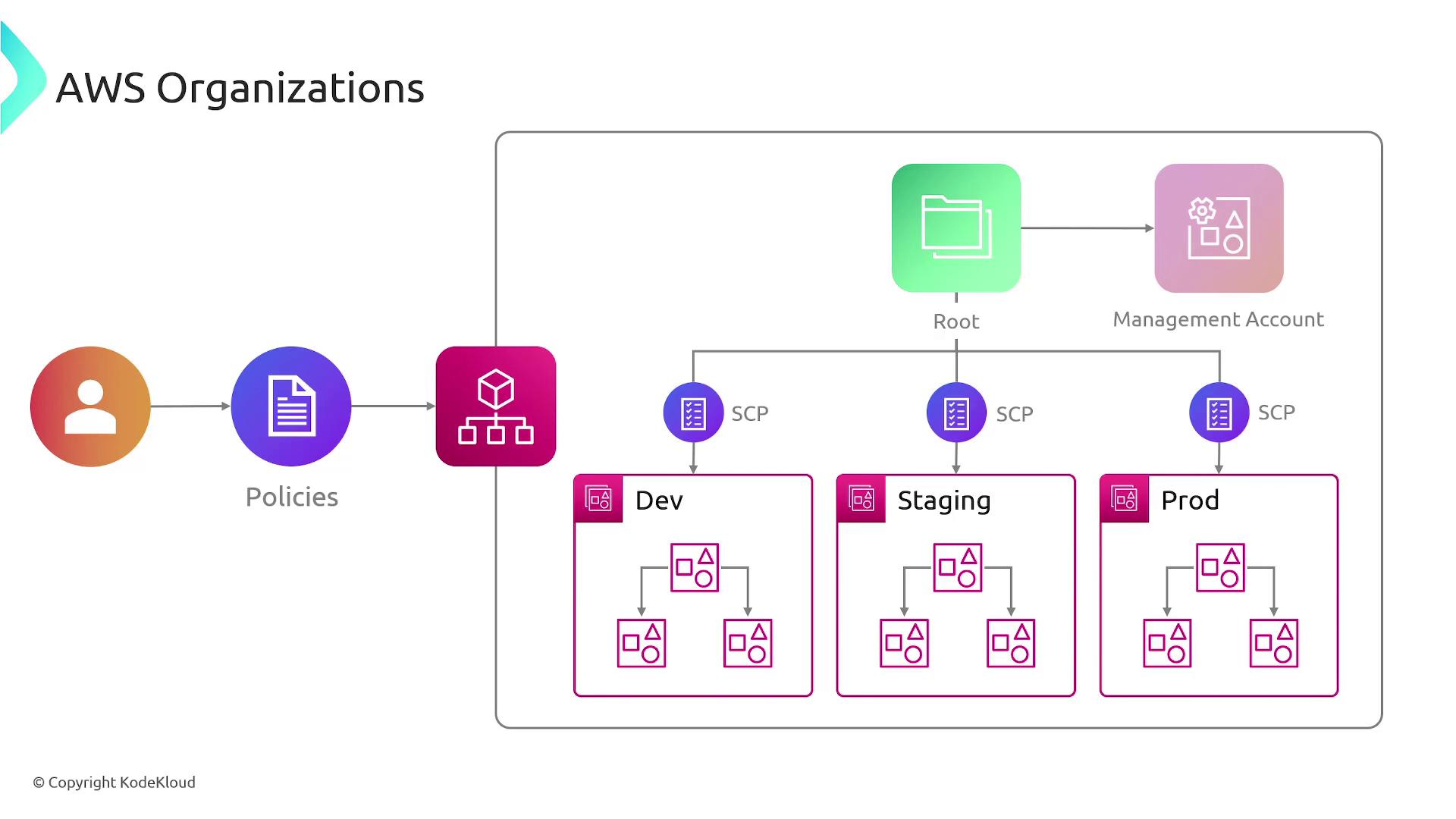
Benefits and Features of AWS Organizations
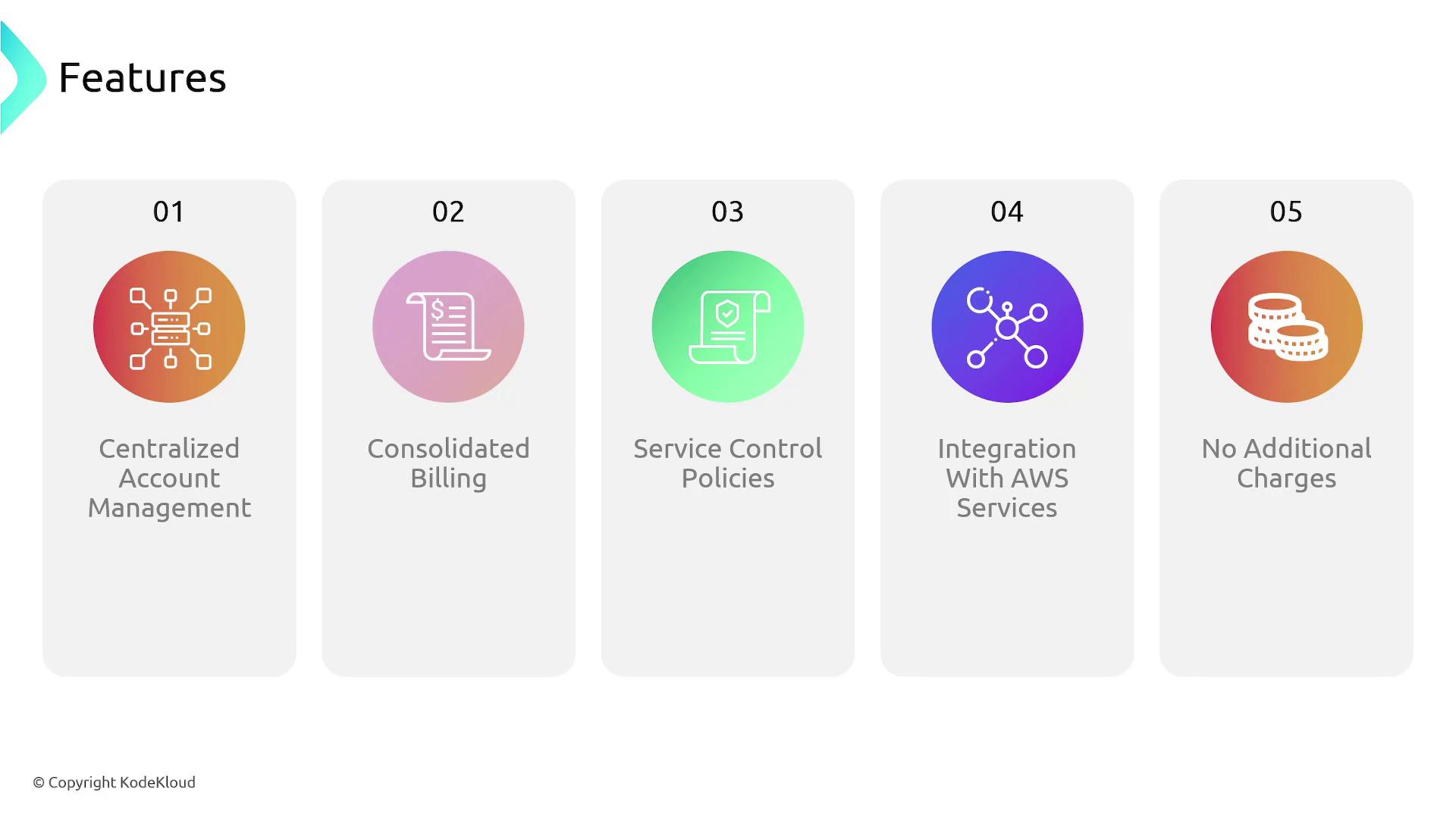
AWS Organizations offer a range of features designed to improve operational efficiency and security:- Centralized Management: Control multiple AWS accounts from one central dashboard instead of managing them individually.
- Consolidated Billing: Aggregate charges across all accounts for streamlined financial management.
- Service Control Policies: Enforce security and operational guidelines across accounts similarly to IAM policies.
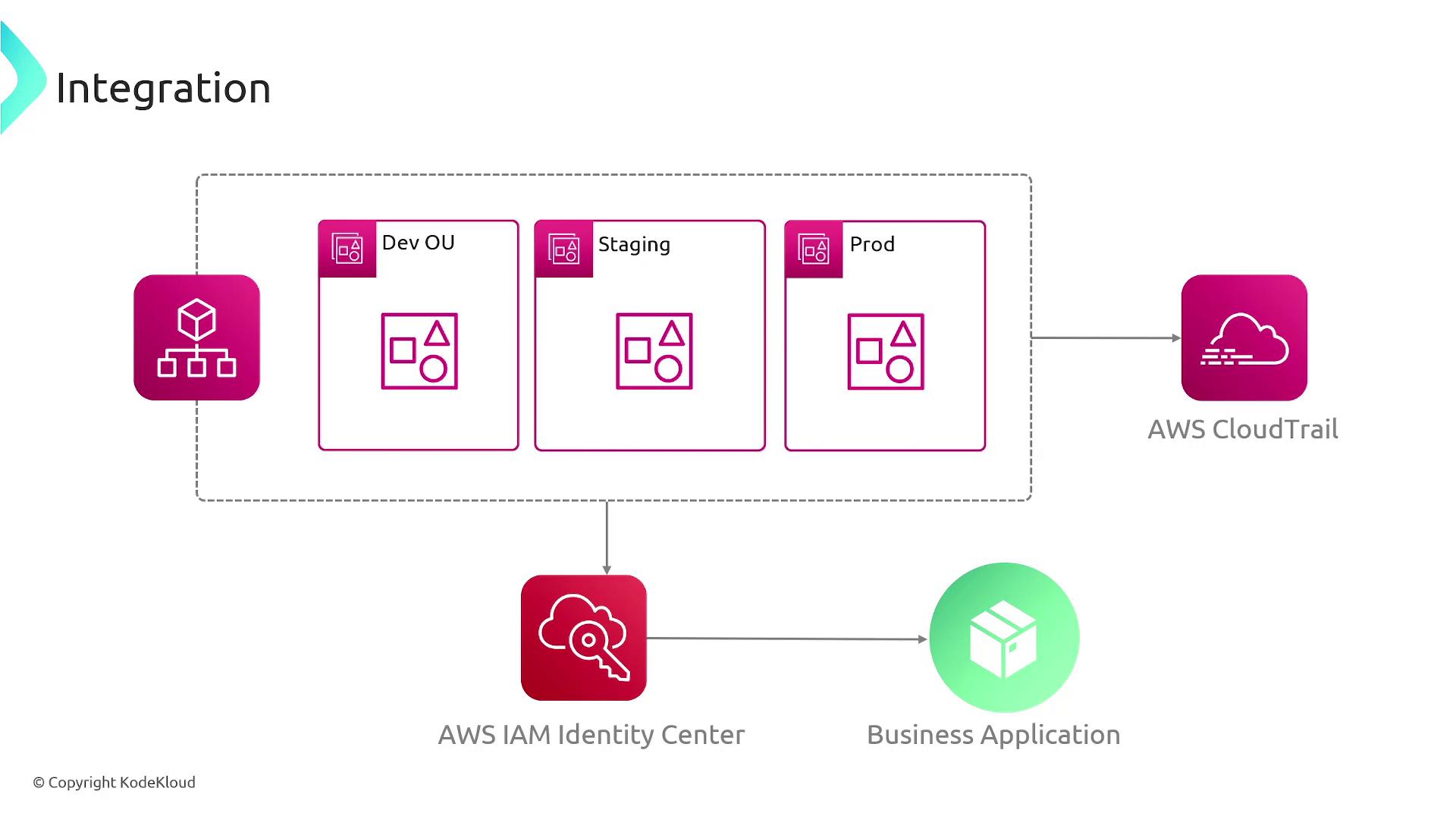
- Seamless Integration with AWS Services: Integrate effortlessly with services such as AWS IAM, IAM Identity Center, and CloudTrail, enhancing both security and insight.
- Cost Efficiency: AWS Organizations itself does not incur extra charges; you only pay for the AWS resources you deploy.
Integrations like single sign-on through AWS IAM Identity Center simplify access by eliminating the need for multiple logins. Additionally, enabling CloudTrail across your organization offers comprehensive API activity insights, bolstering both security and operational oversight.