

Key Feature: Speaker Diarization
One of the standout features of Amazon Transcribe is speaker diarization. This capability distinguishes between different speakers in an audio clip by labeling each participant from “SPK0” to “SPK9.” This clear designation is especially useful in multi-participant environments like conference calls and interviews.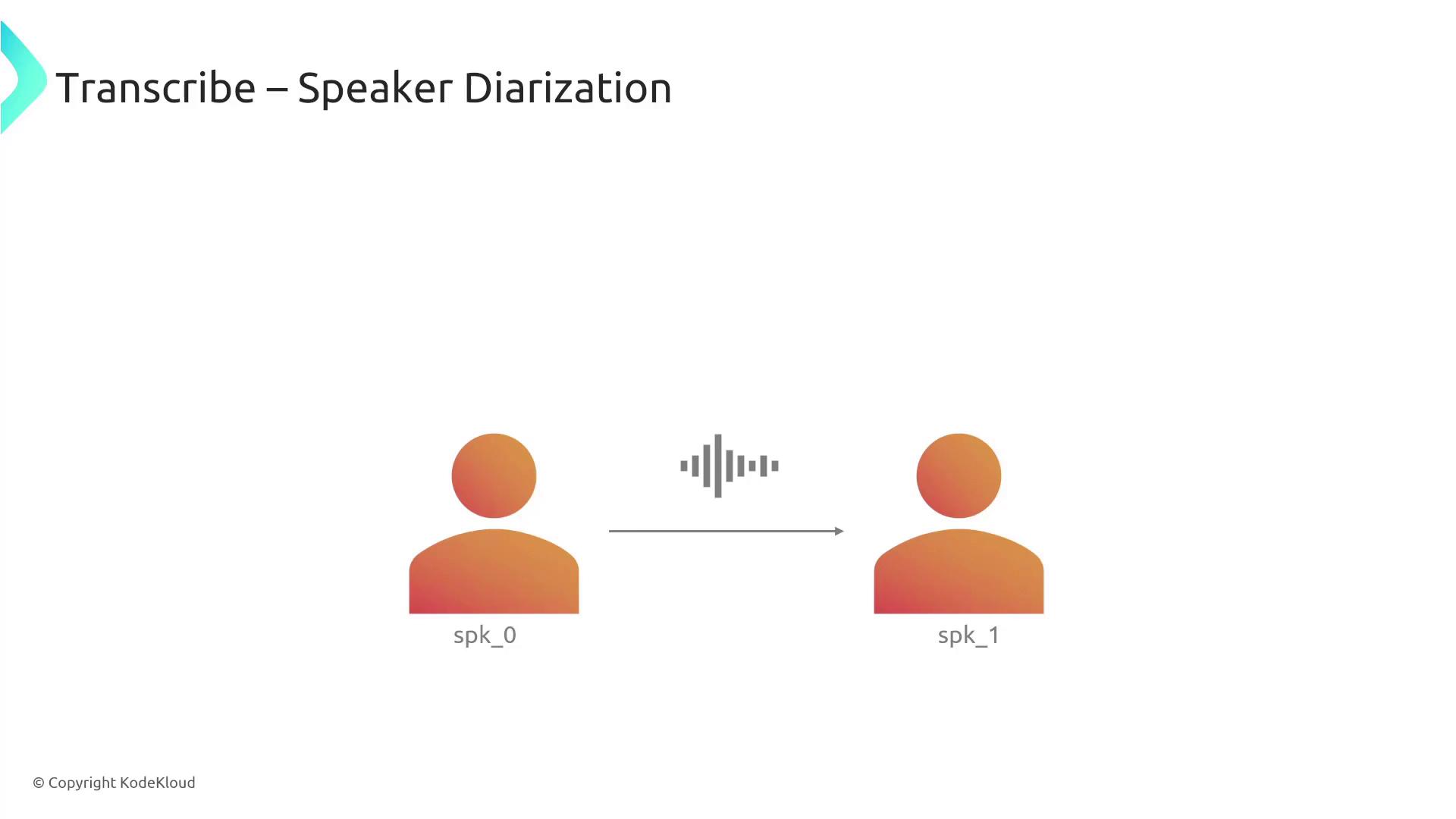
Speaker diarization helps in accurately mapping conversations by identifying individual speakers, which makes it easier to analyze dialogue patterns and context in multi-speaker recordings.
Extending the Workflow with AWS Integration
After a transcription is completed and stored in Amazon S3, the transcription process can be further automated and enhanced using other AWS services. For example, an AWS Lambda function can be triggered to initiate additional processing tasks, such as:- Forwarding the transcription results to Amazon Comprehend for sentiment analysis.
- Translating the text using Amazon Translate.
- Storing metadata and transcripts in Amazon DynamoDB for quick retrieval and further analysis.
Use Case: Transcribe Call Analytics
A compelling use case of Amazon Transcribe is in call analytics. By enabling Transcribe Call Analytics, businesses can extract actionable insights from customer interactions. This service allows organizations to identify key topics, follow-up actions, and areas for improvement in agent productivity and customer engagement, making it a game changer for call center operations.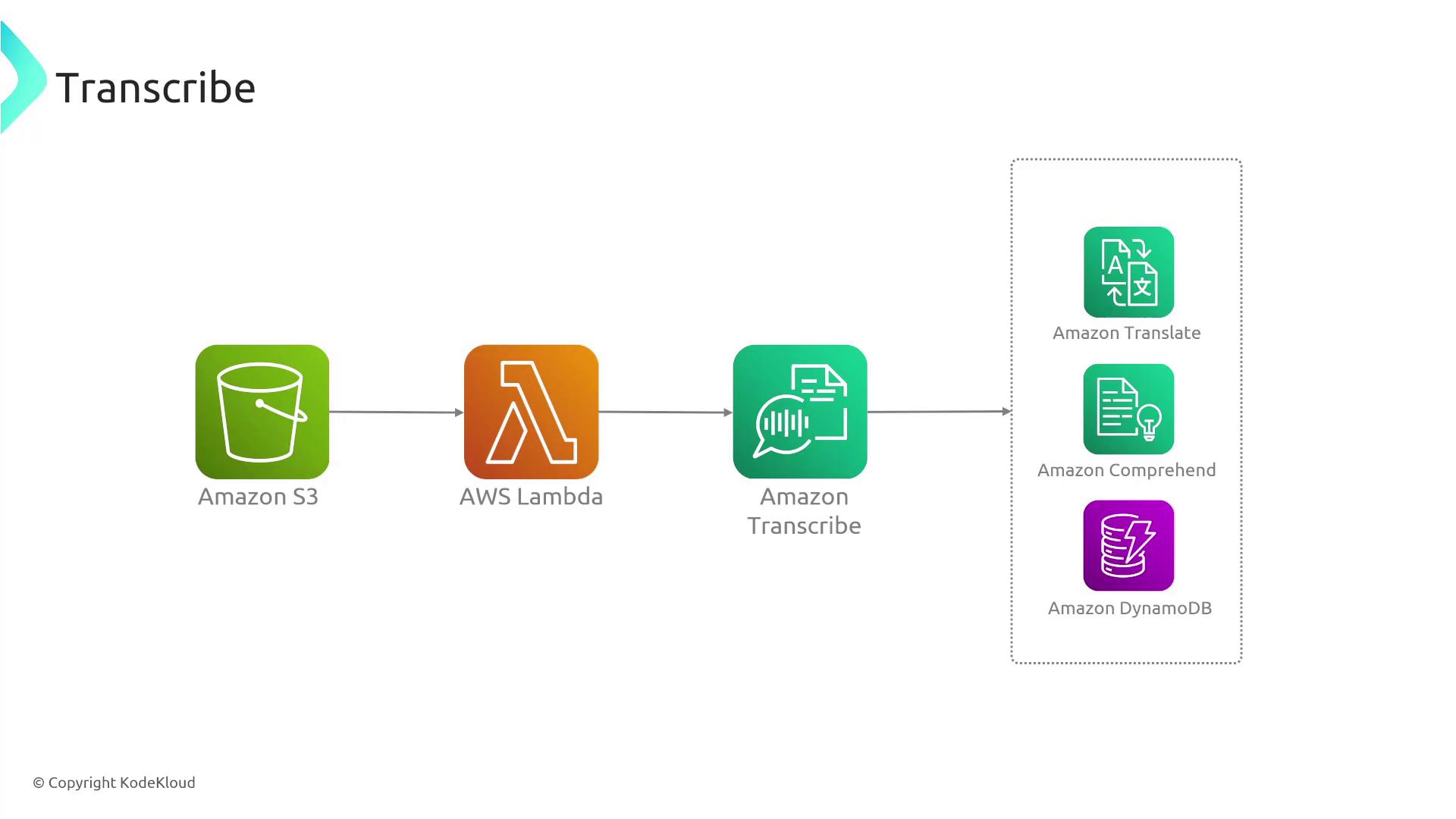
Ensure that your AWS Lambda functions and other integrated services are correctly configured to handle the data flow between Amazon S3 and Transcribe to avoid disruptions in the automated workflow.