

Performance Insights
Performance Insights is a diagnostic dashboard designed for your transactional databases. Much like a car’s dashboard monitors engine strain, overheating, or low fuel levels, this tool continuously monitors heavy loads, bottlenecks, and inefficient queries in your RDS instances. Additionally, it leverages RDS Events to provide context about significant database events and changes, offering you a broad perspective on your database’s overall performance. Performance Insights diligently analyzes critical areas such as long-running SQL queries and resource-intensive tasks by examining both real-time and historical data. Consider the following SQL queries as examples: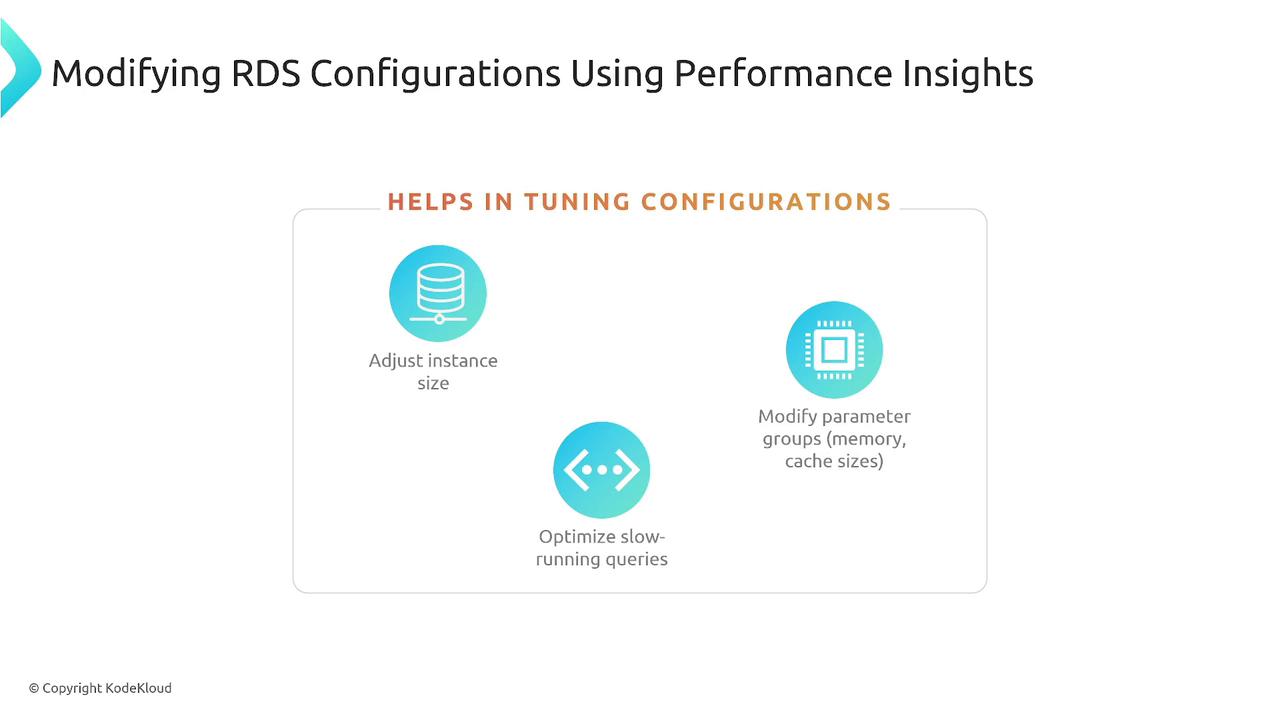
Indexing the correct columns can improve performance by reducing database load and can lead to enhancements of 30% or more in query performance.
RDS Proxy
RDS Proxy acts as an intermediary connection manager for your database, similar to a traffic controller or load balancer. Instead of your applications connecting directly to the RDS instance, they connect to the proxy, which handles connection pooling and persistent connections. Here are some key advantages:- The proxy manages persistent connections, reducing the overhead associated with establishing and closing connections.
- It enables connection pooling, which improves the efficiency of handling more requests during periods of peak traffic.
- In multi-AZ deployments, RDS Proxy reduces failover times by seamlessly rerouting connections, thereby enhancing database availability.
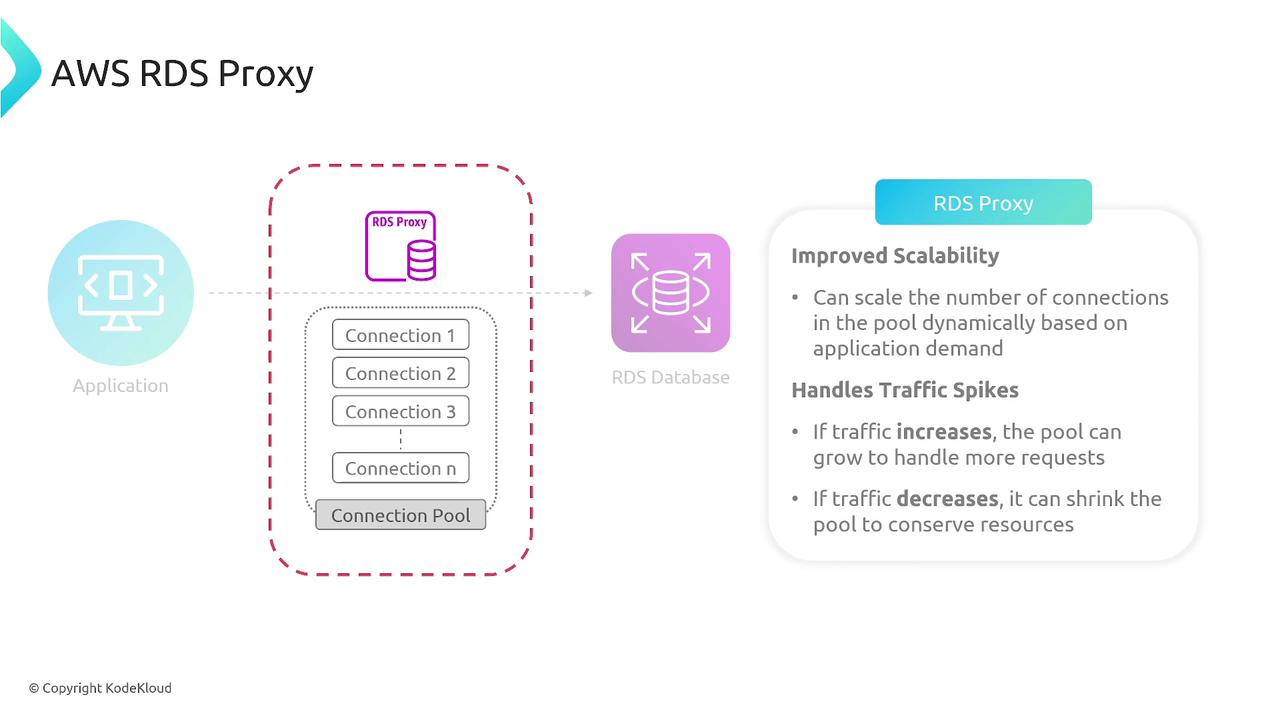
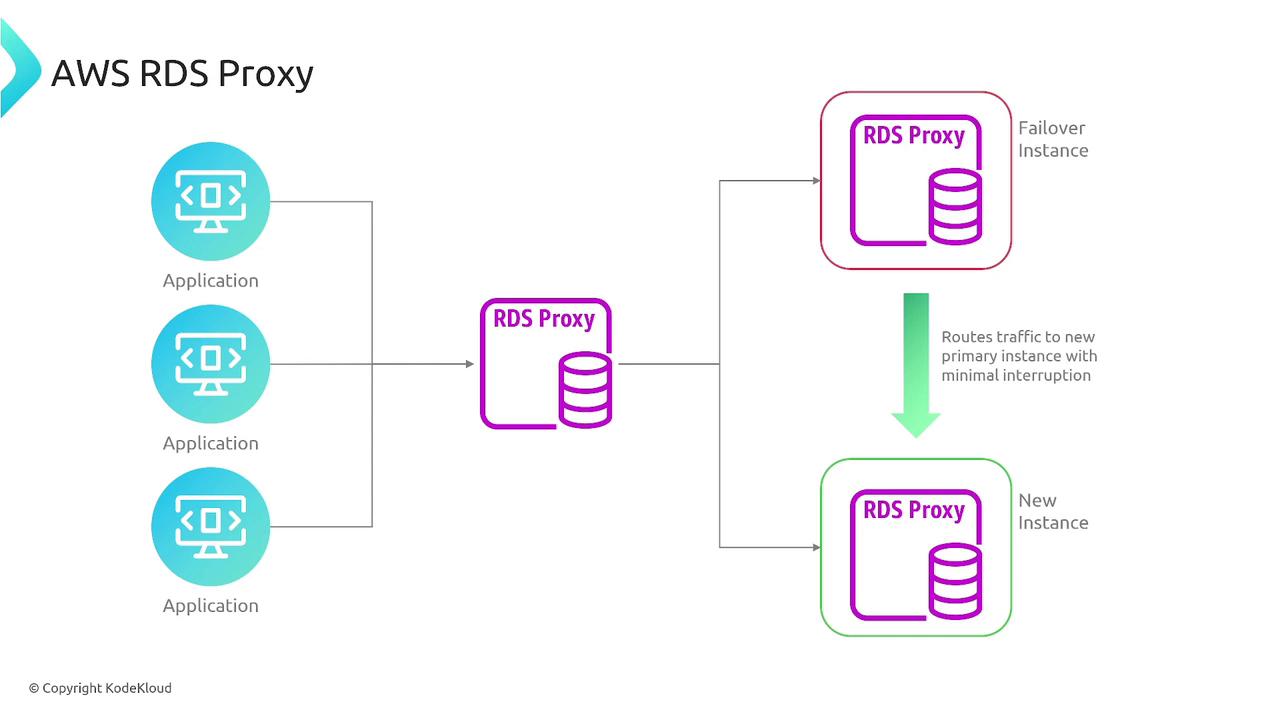
By mitigating connection churn during failovers, RDS Proxy not only enhances application reliability but also helps maintain consistent performance levels during periods of change.
Conclusion
This lesson has highlighted two essential aspects of optimizing Amazon RDS performance:- Performance Insights offers real-time and historical analyses of database performance, identifies inefficient queries, and suggests optimization strategies, such as indexing and instance scaling.
- RDS Proxy enhances the management of database connections by providing persistent connection pooling, improving scalability, availability, and reducing failover times.