

Types of Route 53 Resolver Endpoints
There are two types of endpoints in Route 53 resolvers: inbound and outbound.| Endpoint Type | Use Case | Example |
|---|---|---|
| Inbound | DNS queries from external (on-premises) networks directed toward AWS resources | An on-premises DNS forwarder sends queries to an inbound endpoint in AWS |
| Outbound | DNS queries originating from within AWS that need to be forwarded to an external DNS server | A VPC instance forwards a query to an external authoritative DNS server using an outbound endpoint |
Inbound Resolver
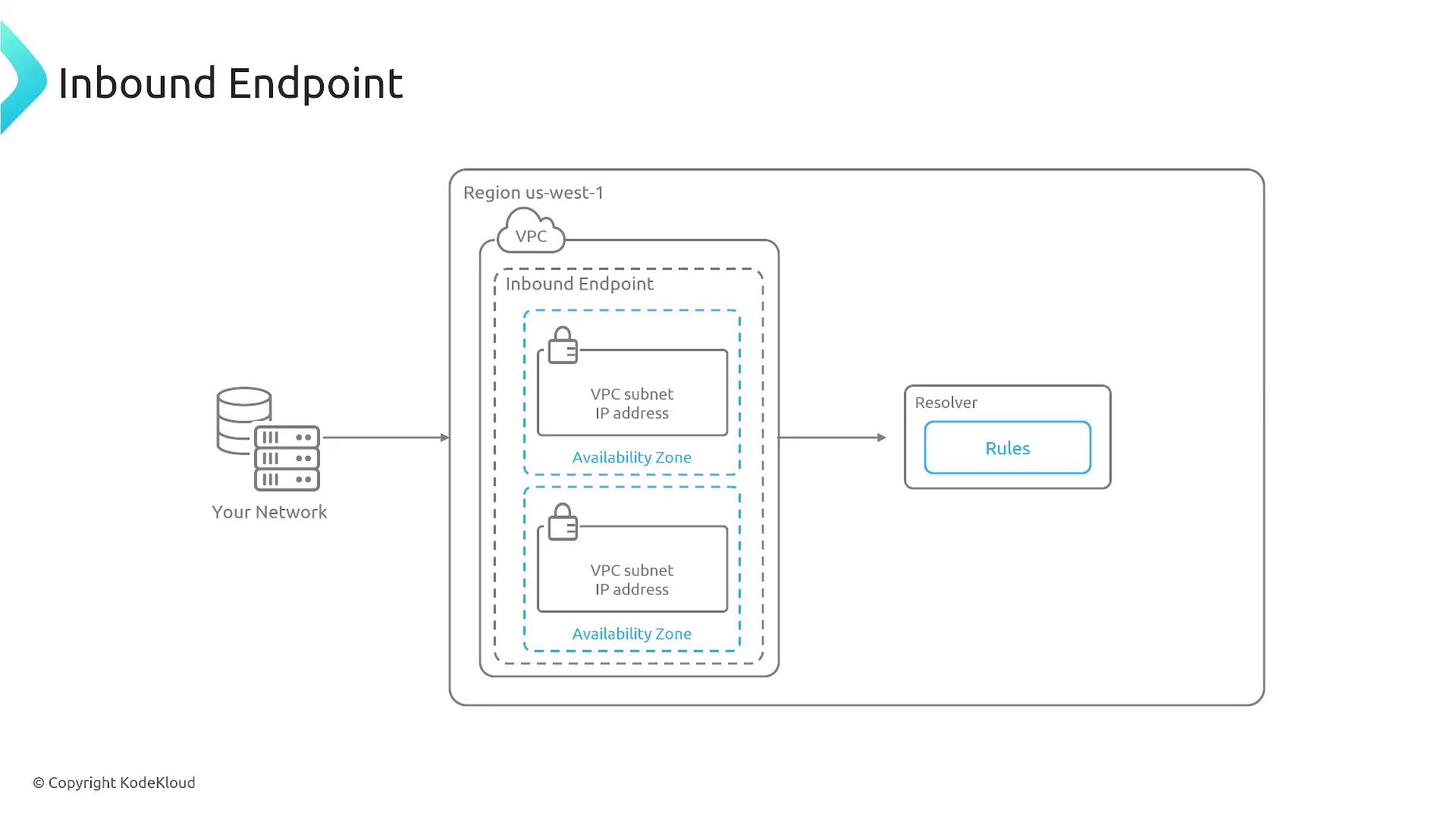
An inbound resolver processes DNS queries coming from external networks into your VPC. For instance, when an on-premises DNS forwarder is configured to send queries to an inbound endpoint, Route 53 resolver applies specific rules to handle these queries.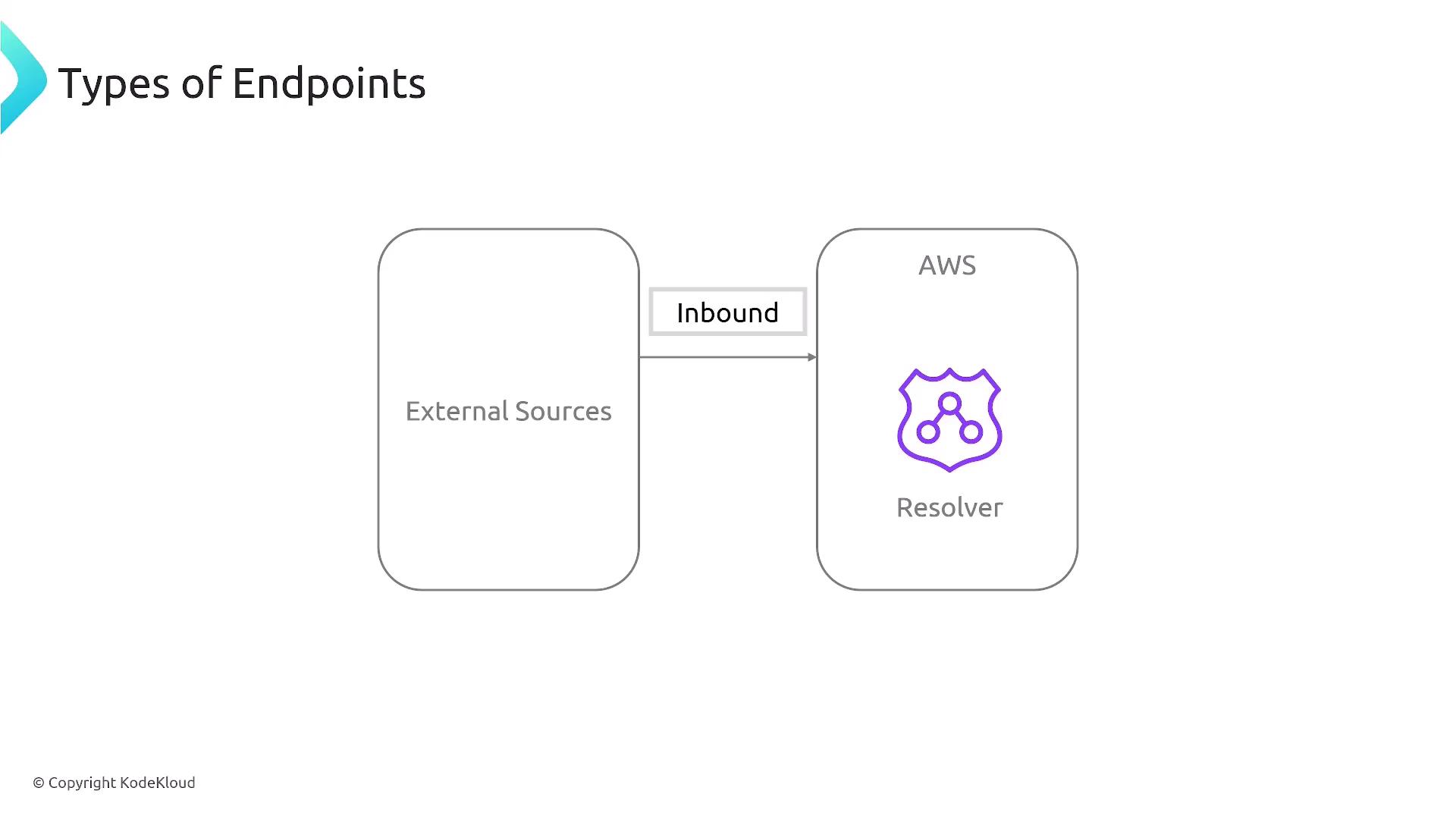
Outbound Resolver
In contrast, an outbound resolver manages DNS queries that originate from within your VPC and must be forwarded externally. When a network interface in your VPC triggers a DNS query from an instance, the outbound endpoint ensures the query reaches the appropriate external DNS server that provides authoritative responses.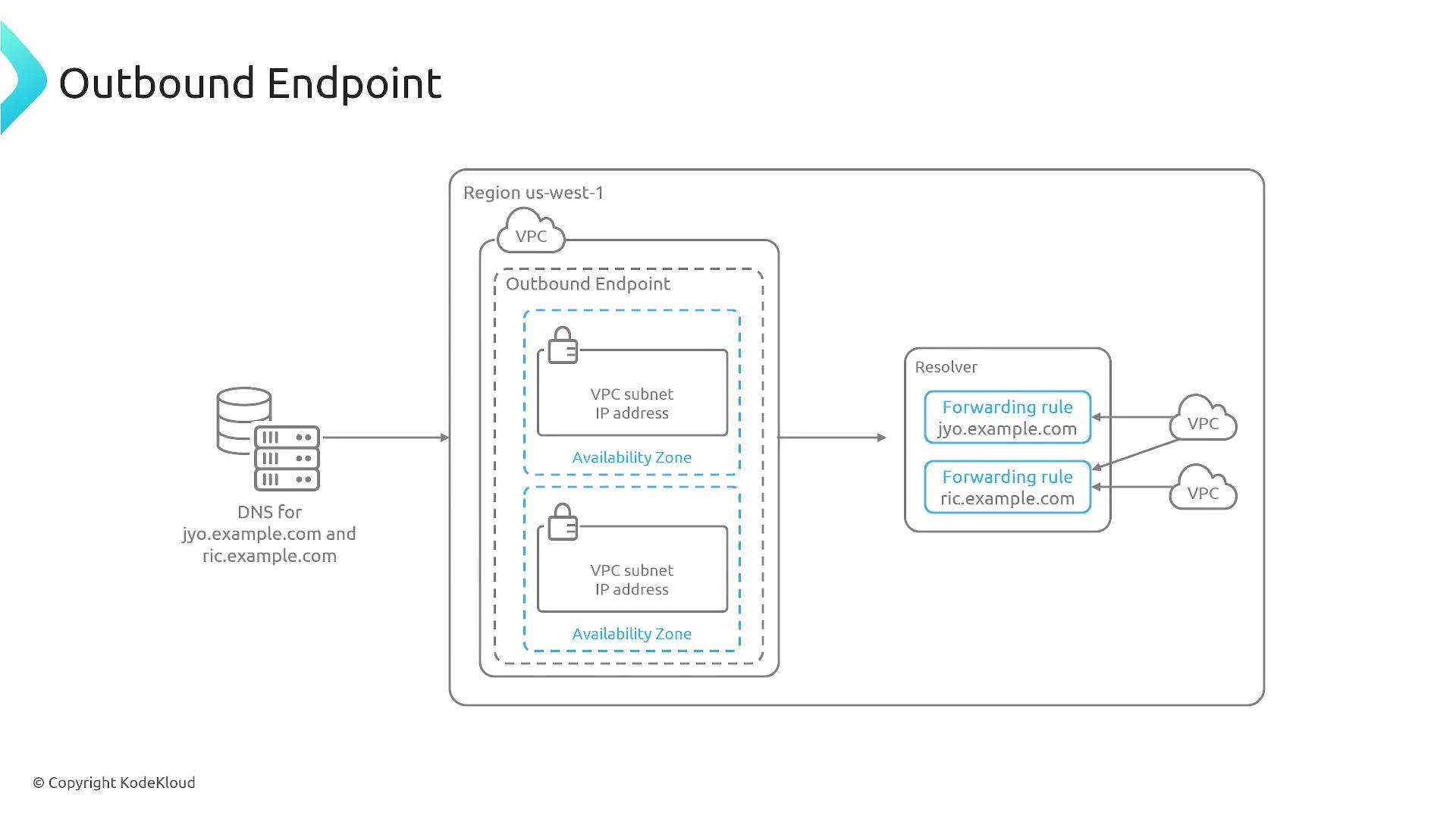
DNS Query Forwarding Flow
Let’s summarize the flow:- Inbound Endpoints: Allow DNS queries from an external network (e.g., your corporate network) to enter AWS, where Route 53 resolvers apply your defined rules.
- Outbound Endpoints: Enable DNS queries originating from within AWS to be forwarded to an external DNS server, treating that external server as authoritative for the specific domain.
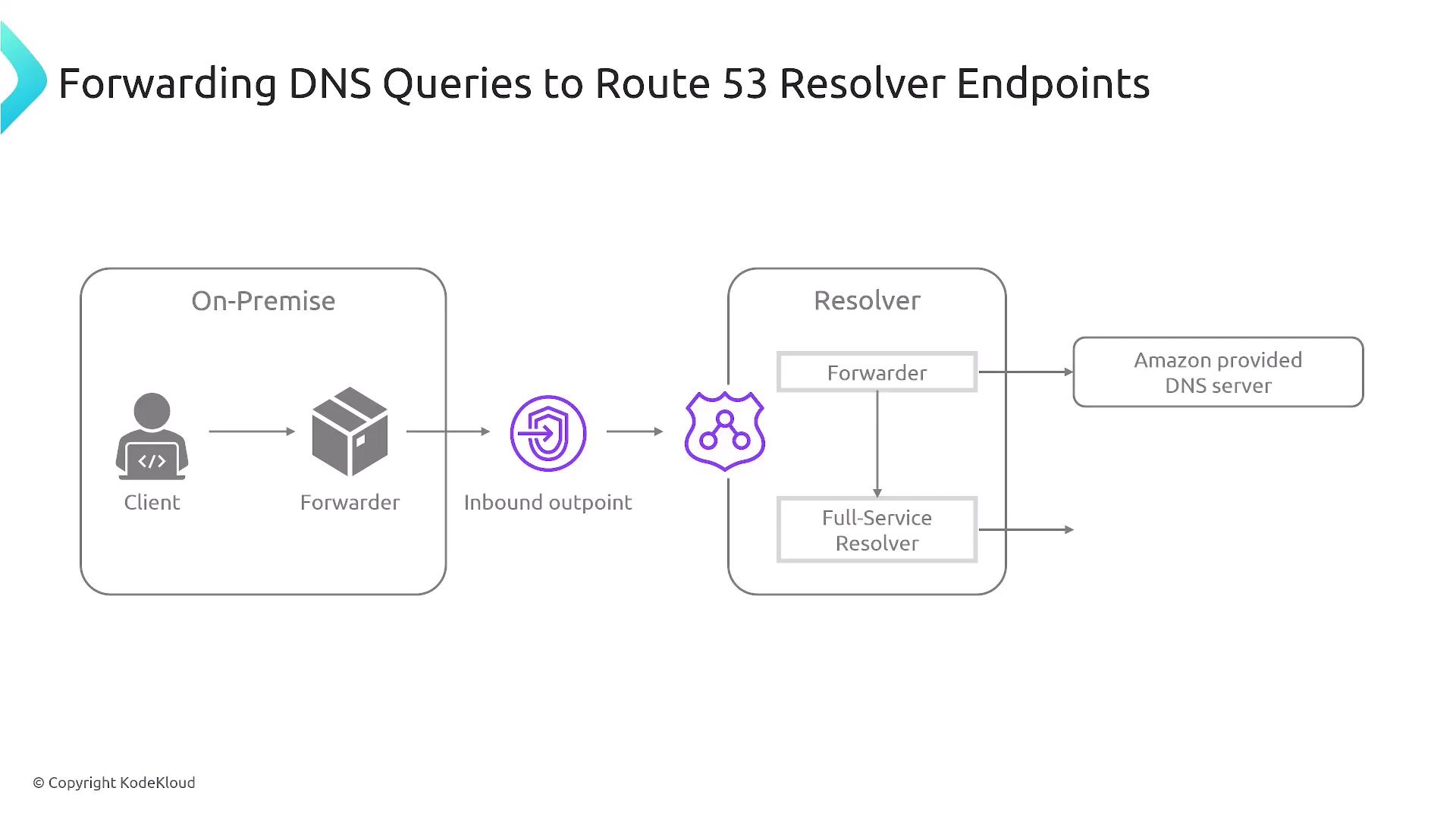
- Inbound endpoints serve queries from external networks within AWS.
- Outbound endpoints forward internal AWS queries to an external authoritative DNS server.
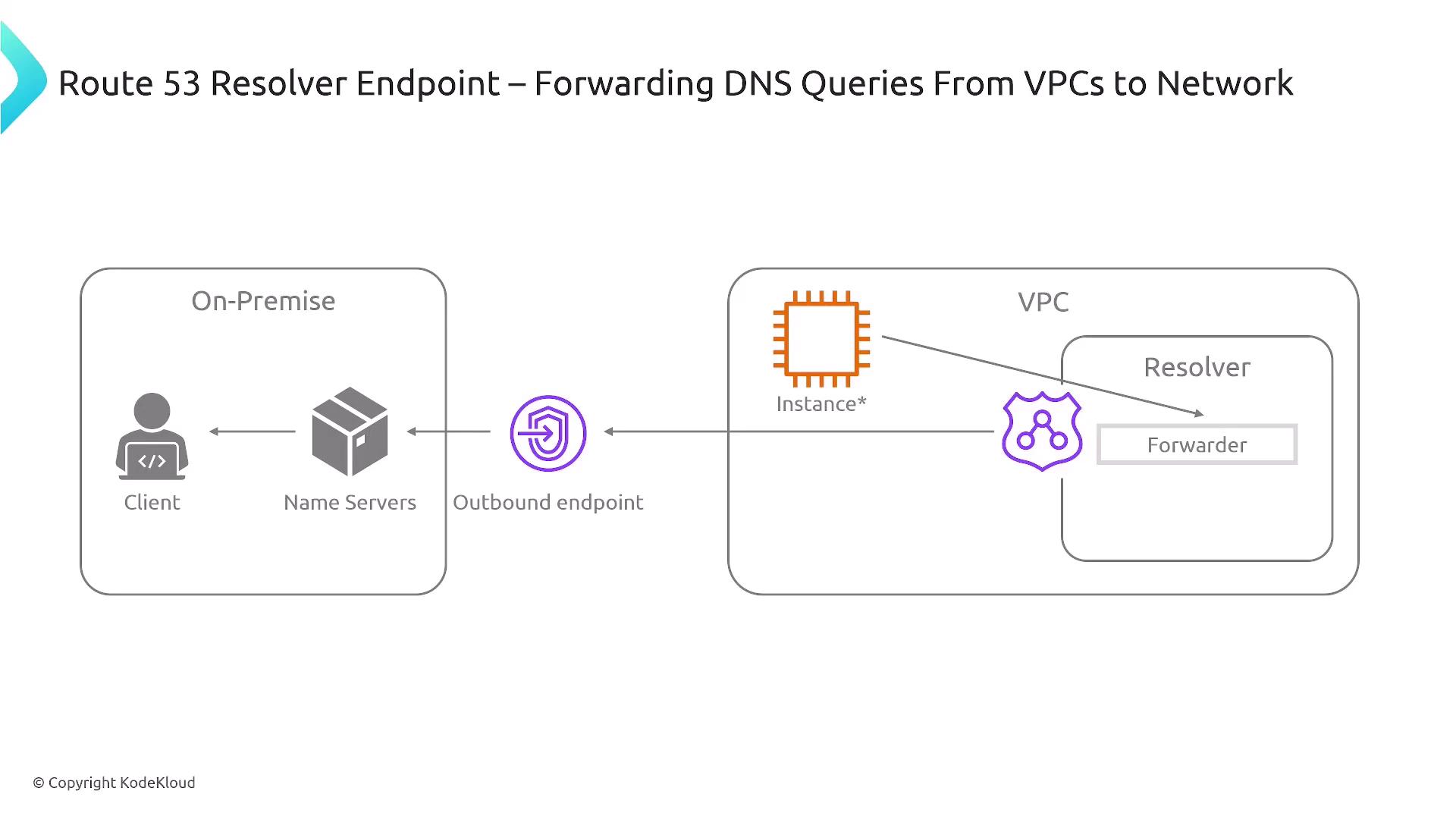
- The term “Inbound” applies to DNS queries originating from external (corporate) networks being resolved within AWS.
- The term “Outbound” applies to DNS queries originating in AWS that require resolution via an external authoritative DNS server.