

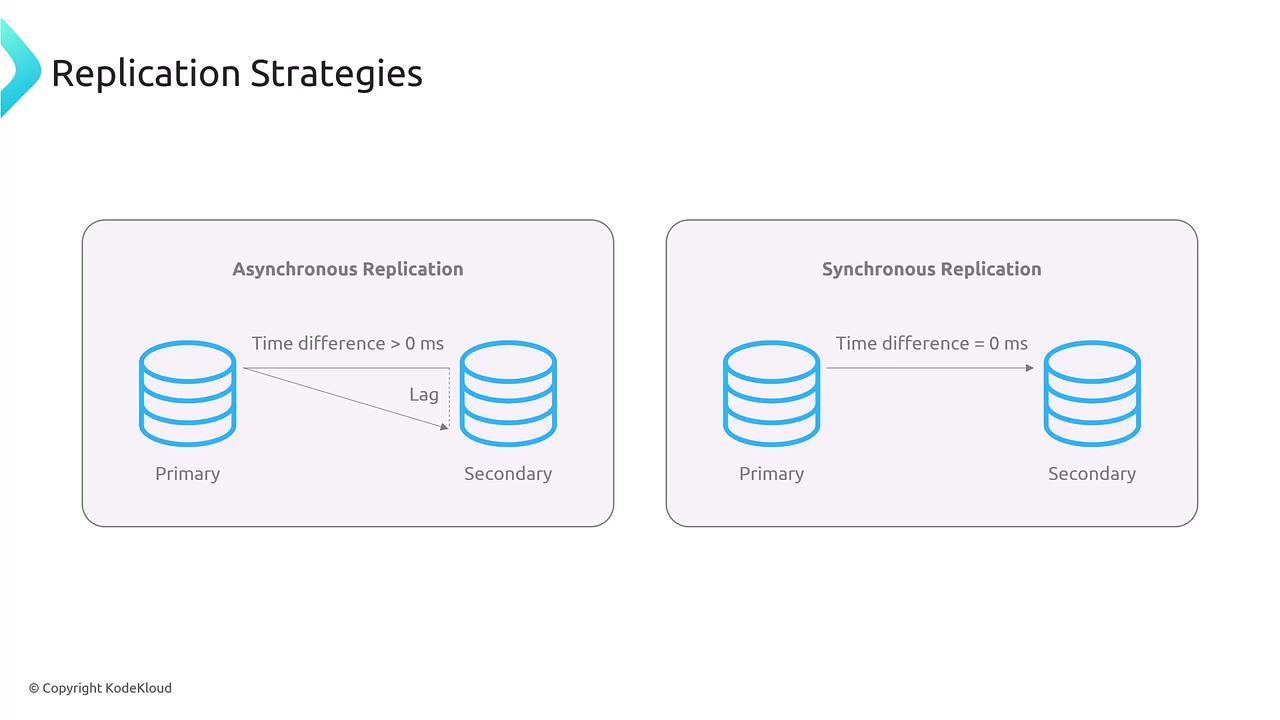
Asynchronous replication is suitable for non-critical applications where a minor delay is permissible, whereas synchronous replication is key for mission-critical scenarios demanding zero data loss.
AWS Data Replication Services
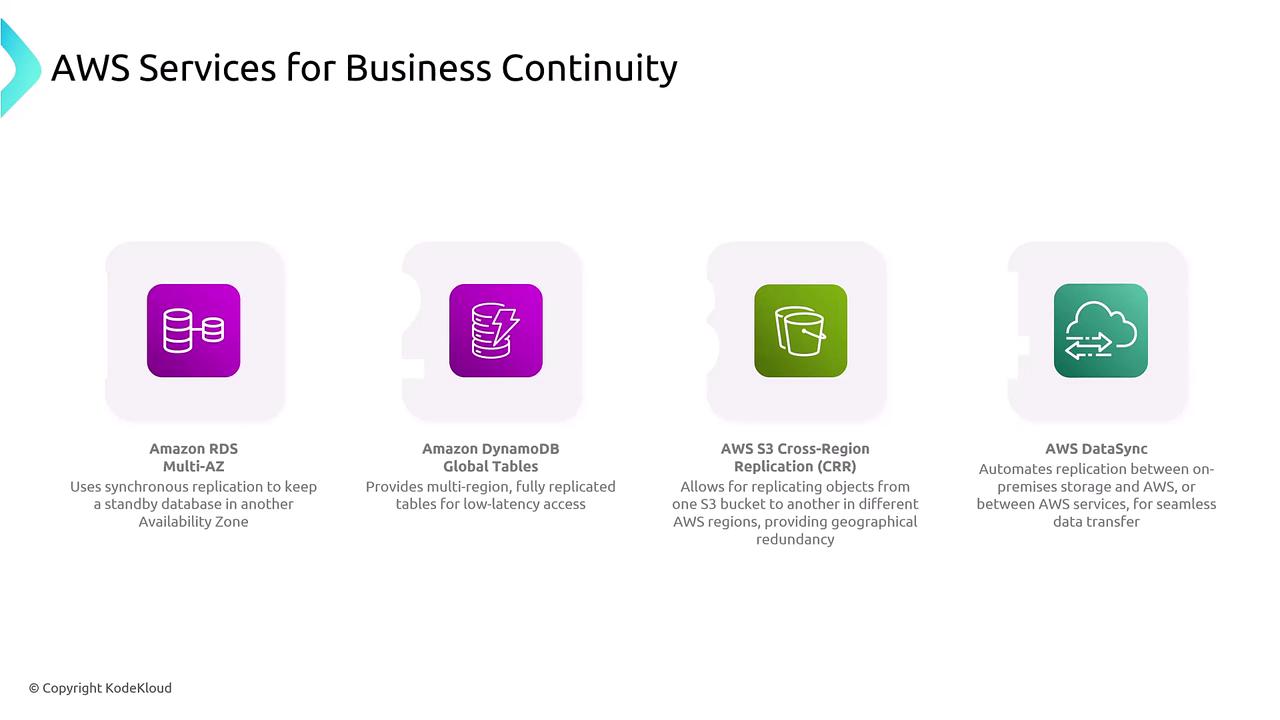
AWS offers a variety of features to handle replication, each tailored to different use cases and operating environments:-
Amazon RDS Multi-AZ:
- Instance deployments include one primary and one secondary instance.
- Cluster deployments involve one primary and two secondary instances spanning multiple availability zones.
-
DynamoDB Global Tables:
- Provides asynchronous replication across regions, supporting globally distributed applications with eventual consistency.
-
Cross-Region Replication for Amazon S3:
- Automatically copies objects between buckets in different regions, with a replication lag that may extend up to 30 seconds or more depending on configuration.
-
AWS DataSync:
- Facilitates data transfer between on-premises storage and the AWS cloud, or between AWS services, using asynchronous methods.
Choosing the Right Replication Strategy
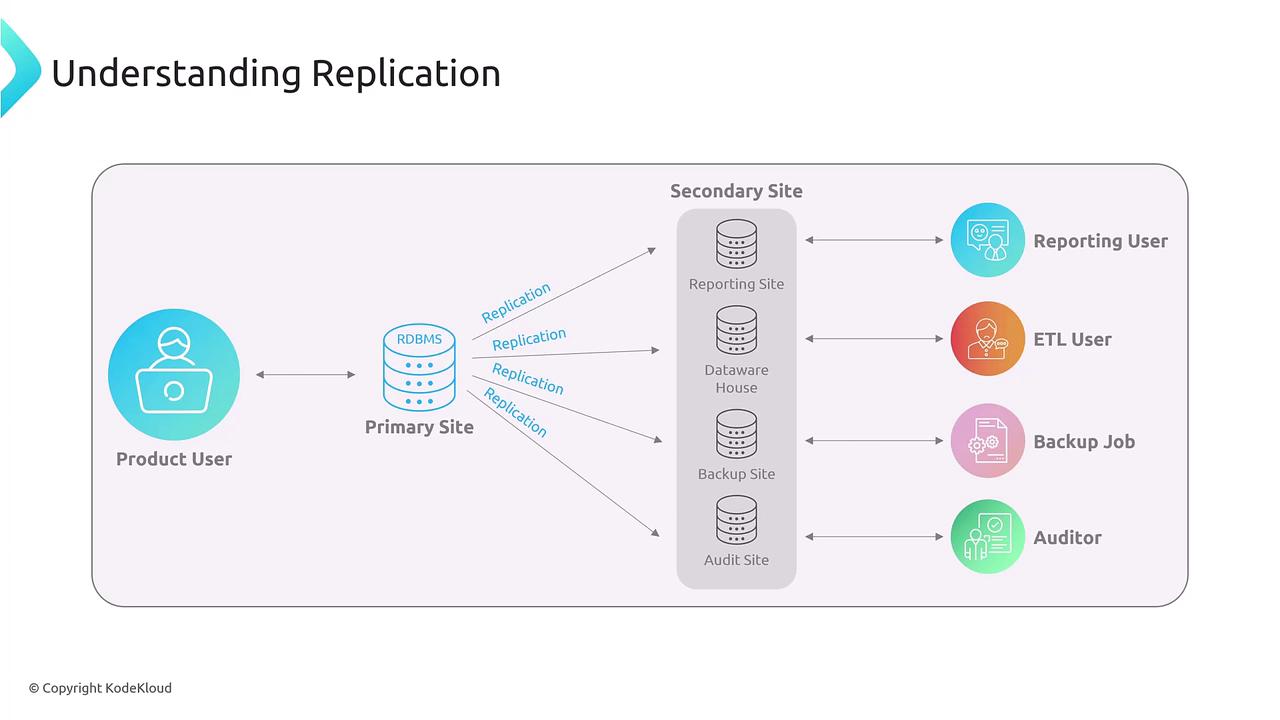
Transactional databases often leverage synchronous replication to ensure strong consistency. In contrast, services such as DynamoDB Global Tables, cross-region replication, and DataSync typically use asynchronous replication. The ideal strategy depends on your use case—whether the focus is on rapid recovery, enhanced availability, or offloading non-production tasks like analytics and reporting. For instance, if there’s a need to run reports without impacting the production database, setting up a read replica with asynchronous replication is a viable solution. In one case, a customer encountered performance issues on the production database when running reports. The recommended solution was to create a read replica, which required about 15 minutes for setup and roughly an hour for the initial large dataset to fully synchronize, thereby isolating analytics and reporting tasks from production traffic. The following diagram encapsulates various replication use cases in AWS, including disaster recovery, global data accessibility, and analytics/reporting: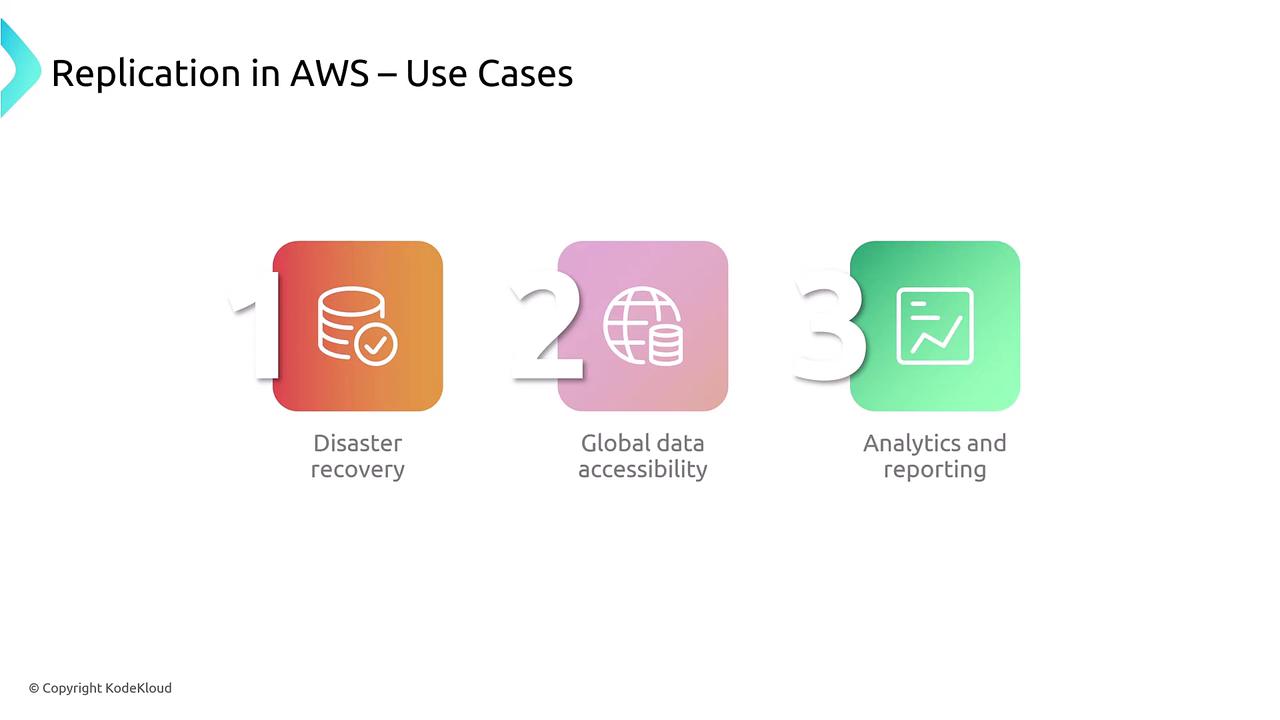
- Synchronous Replication: Best for applications requiring zero data loss and immediate failover, such as banking.
- Asynchronous Replication: Ideal for reporting, backups, and disaster recovery where a slight lag is acceptable.