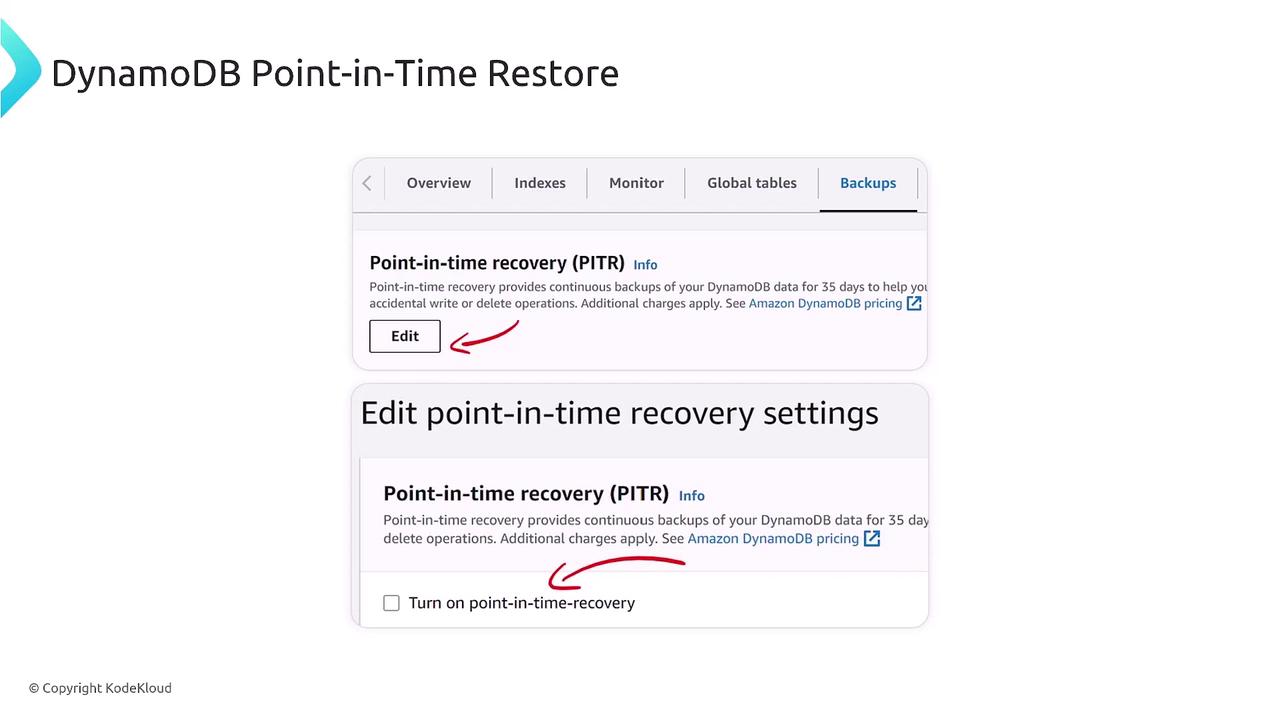
- A full backup
- A differential backup capturing changes since the full backup
- Transaction logs that record ongoing changes
- A larger differential backup that aggregates subsequent changes
- Additional transaction logs
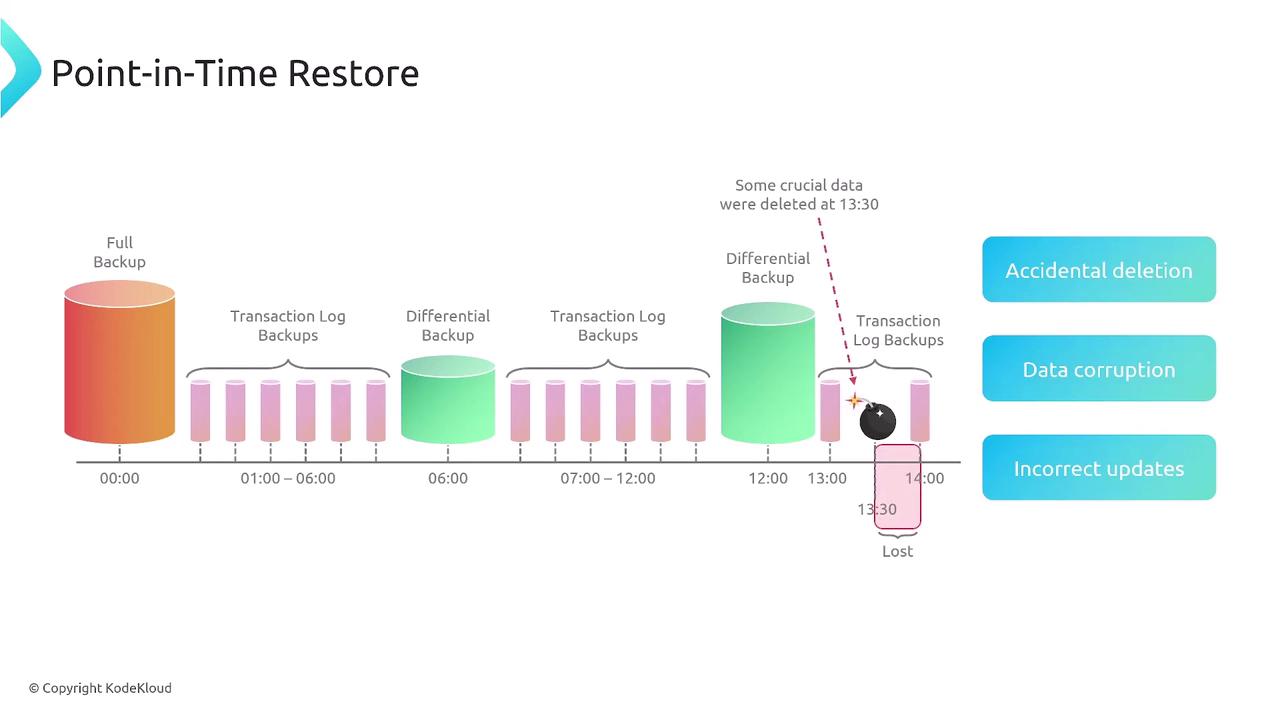
MySQL on RDS: Snapshots and Binary Logs
For MySQL on Amazon RDS, PITR is implemented using snapshots in combination with binary log backups. The binary logs are captured at five-minute intervals, enabling the restoration of a database to a very specific point in time after the latest snapshot.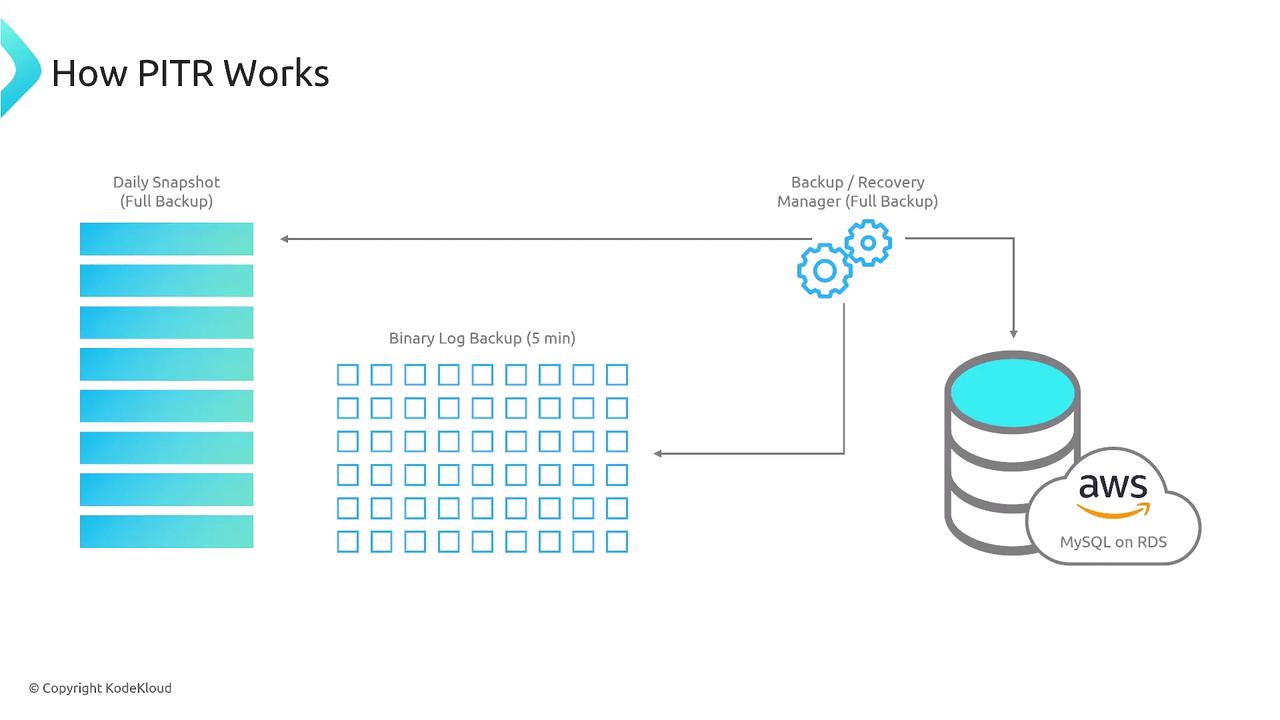
Amazon RDS does not roll back the existing database. Instead, it creates a new instance and migrates your applications to it.
SQL Server on RDS: Multi-AZ Deployment
For SQL Server on RDS, a typical PITR architecture involves a multi-AZ (Availability Zone) setup. In this configuration, the primary database runs in one availability zone (AZ A), while a standby replica operates in another (AZ B). Backups—including full database and incremental transaction log backups—are primarily taken on the standby instance. This minimizes the performance impact on the primary database while ensuring robust data resiliency.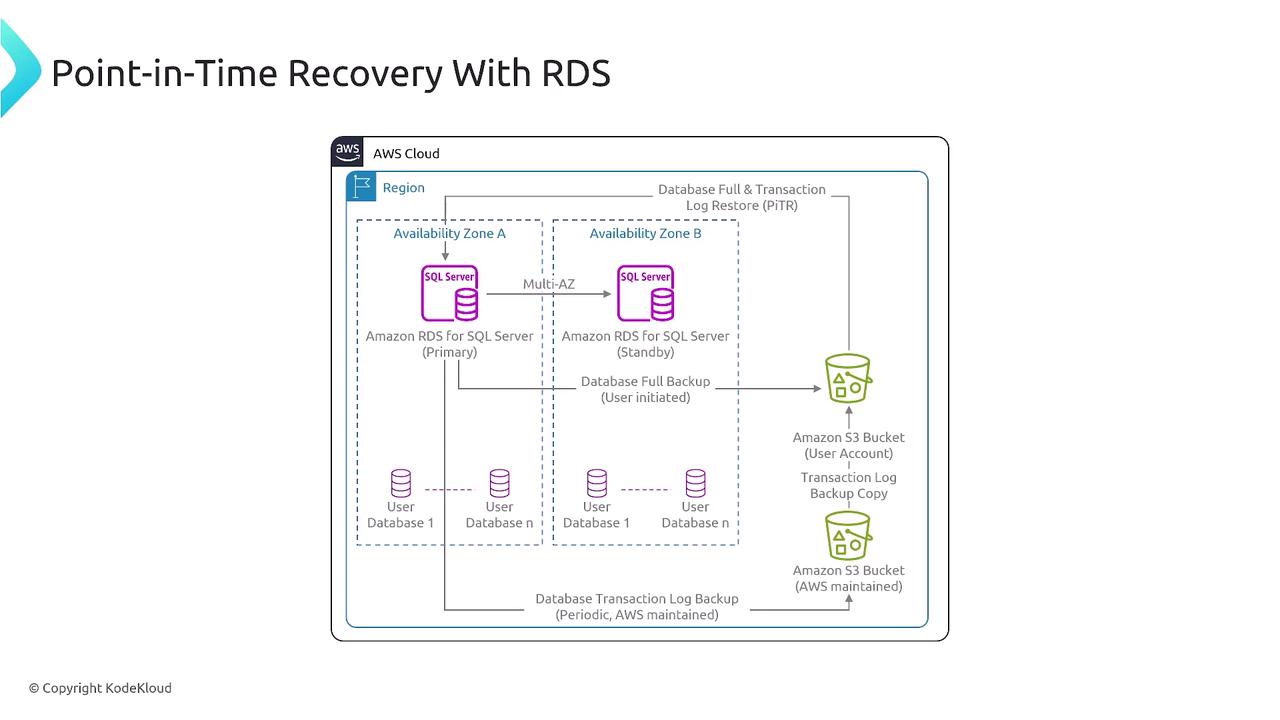
Aurora: Continuous Backups and New Cluster Creation
Aurora, Amazon’s cloud-optimized version of MySQL or PostgreSQL, employs a unique approach to PITR. With continuous backups enabled, you can specify an exact restore time. Instead of overwriting the existing database cluster, Aurora creates a new cluster based on the chosen point in time. This method ensures the original cluster remains intact during the recovery process.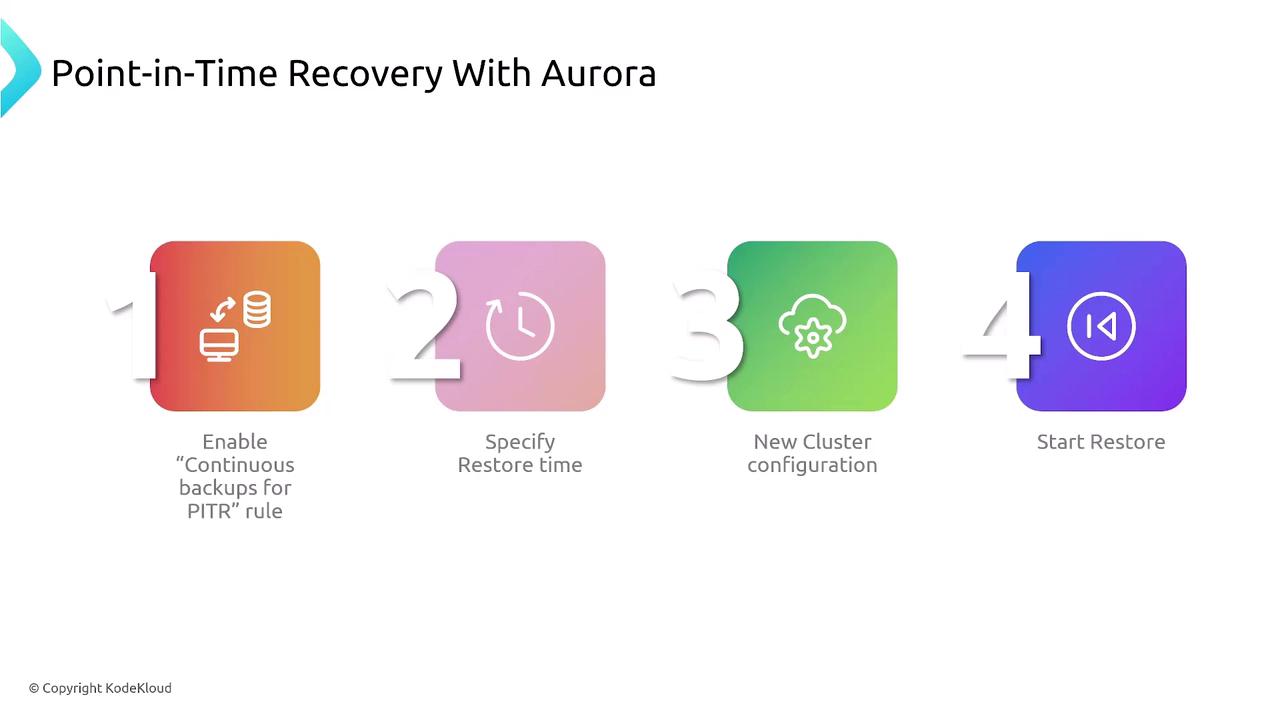
DynamoDB: Serverless PITR
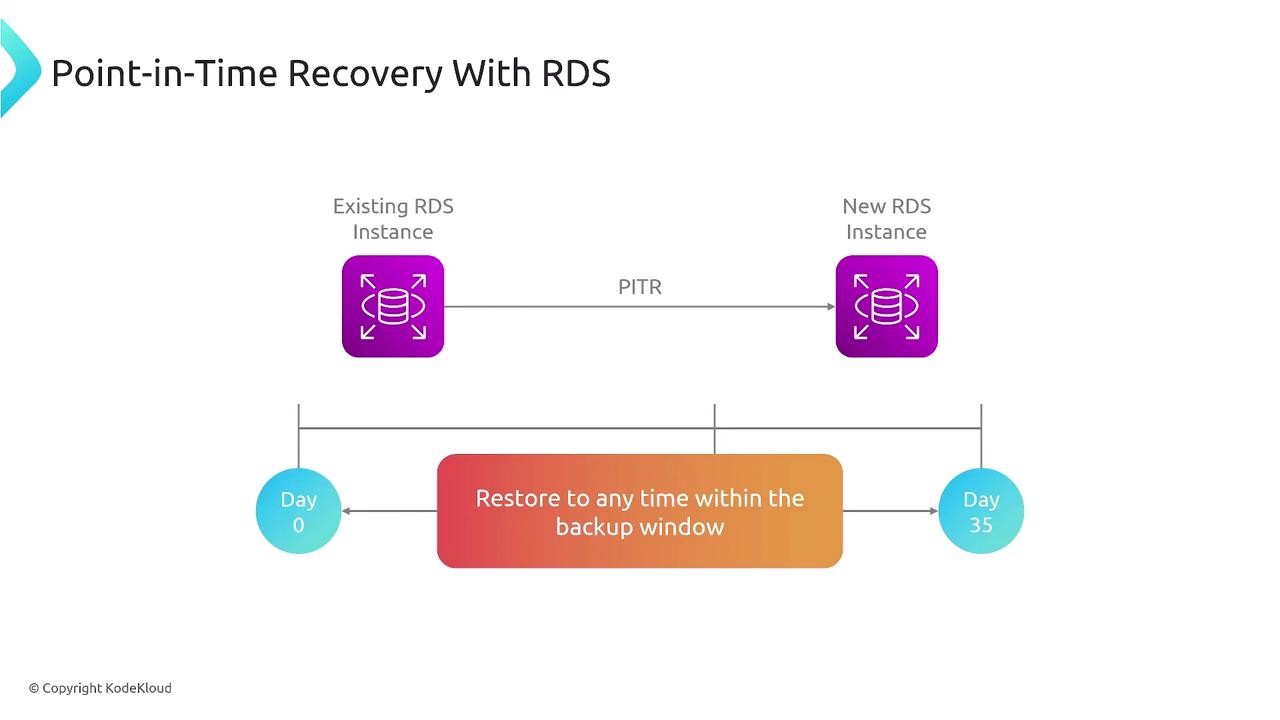
DynamoDB, a fully serverless database service, offers its own seamless method for PPTIR. Enabling PITR in DynamoDB is straightforward—navigate to the Backups tab in the console and activate the continuous backup feature. Once enabled, DynamoDB retains a continuous backup for 35 days. Restoring from a specific point creates a new table with the same schema and settings, ensuring that your production table remains unaffected. This option is particularly useful for generating data snapshots for reporting without disrupting live operations.