

Overview
DynamoDB is a fully managed, serverless, and scalable NoSQL database designed to handle massive volumes of data with high performance. It organizes data into tables made up of items (analogous to rows in a relational database) and attributes (similar to fields). Each table uses hash keys, sort keys, or composite keys to manage and access its data efficiently.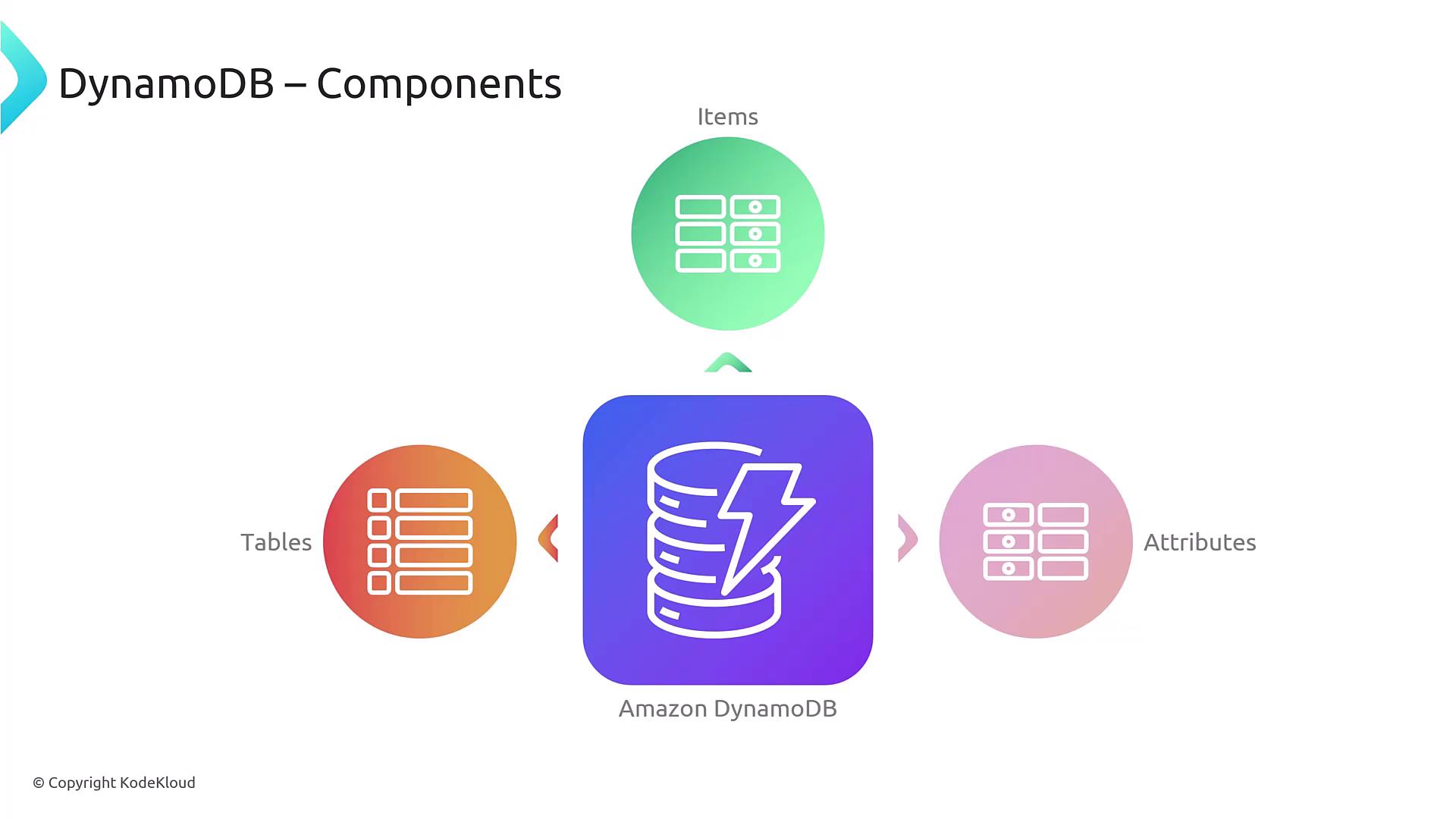
DynamoDB Data Structure
In DynamoDB, a table consists of multiple items where each item is a collection of key attributes along with additional attributes. Consider the following JSON representations for items in a “People” table:Table Classes
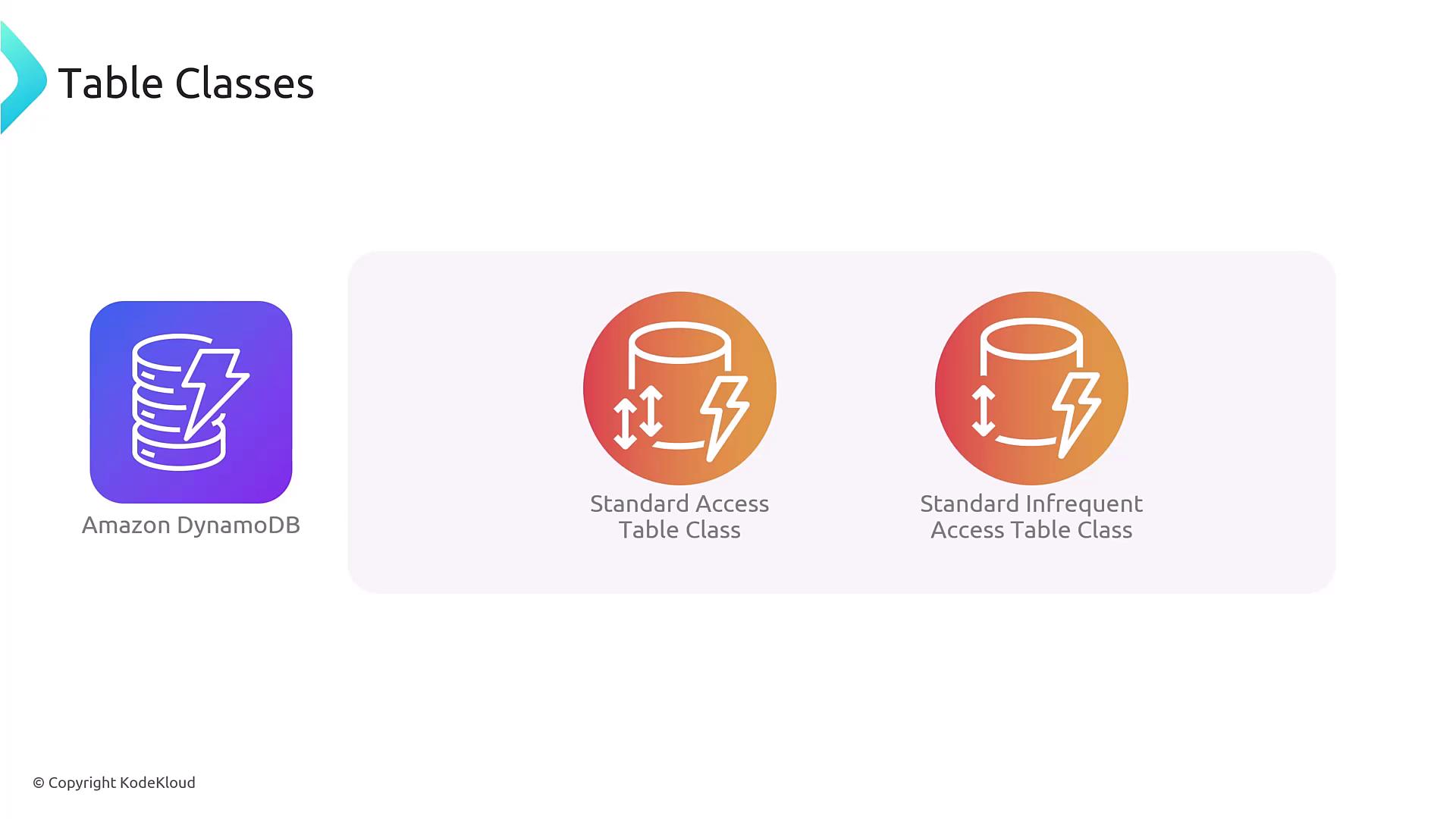
DynamoDB provides different classes of tables to optimize for varied access patterns and cost requirements:-
Standard Access Table:
The default type, optimized for rapid access with user-controlled read and write capacities. -
Infrequent Access Table:
Optimized for data that is accessed less frequently, it leverages a colder storage tier to reduce costs. However, if access patterns change and resemble those of a standard table, additional costs might be incurred.
Data Models and Indexes
DynamoDB is versatile, supporting both key-value and document data models. Its flexible schema allows on-the-fly modifications without downtime. Key elements of a DynamoDB data model include:-
Primary Keys:
Set during table creation and can be either a simple primary key or a composite key. -
Secondary Indexes:
- Local Secondary Indexes: Must be created when the table is initialized.
- Global Secondary Indexes: Can be added post table creation and have dedicated read and write capacities.
Introduction to DAX
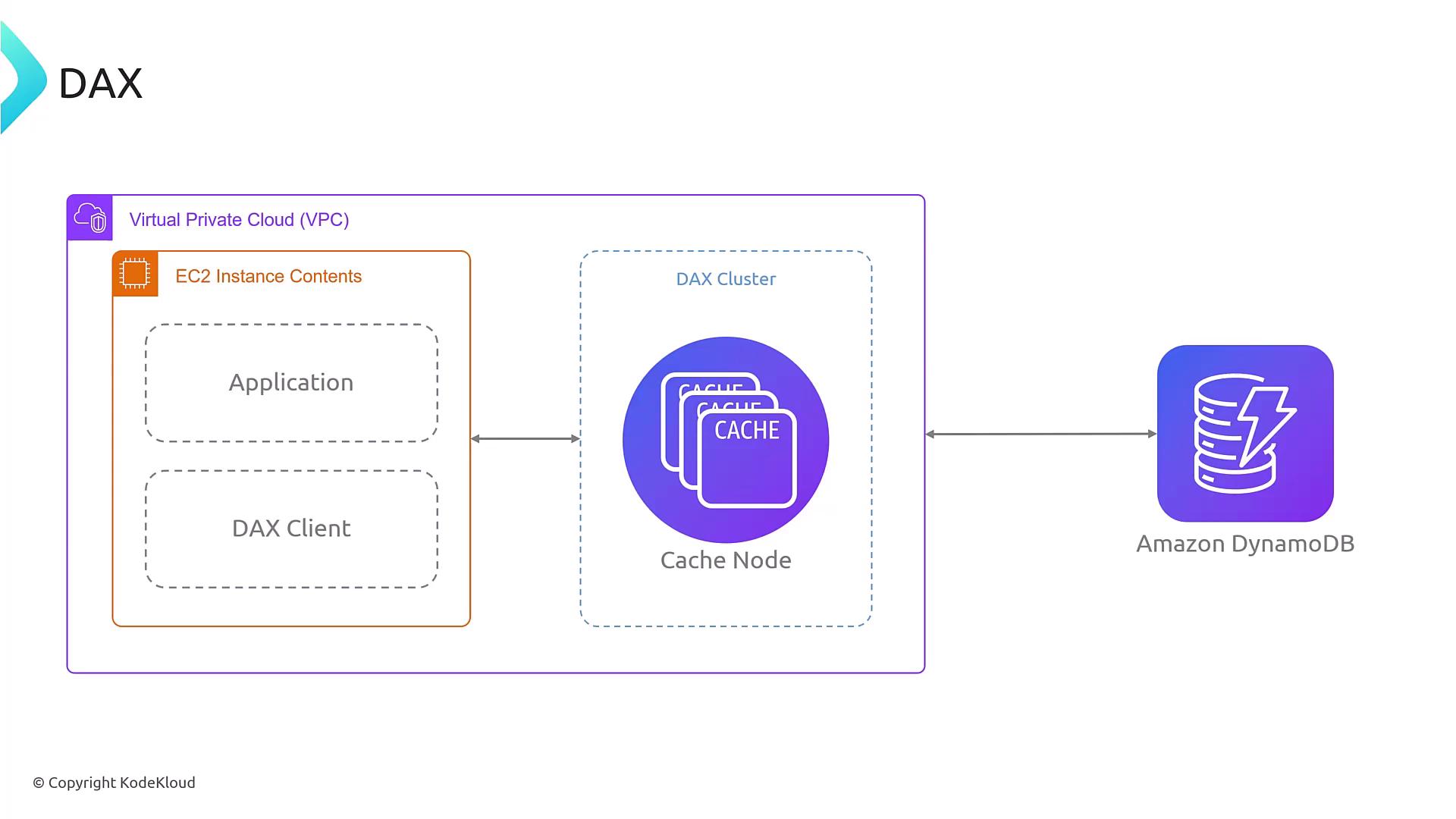
DAX (DynamoDB Accelerator) is a fully managed caching service built specifically for DynamoDB. It is designed to deliver microsecond response times for read-heavy applications. By directing read operations to the DAX cluster, your application can achieve significant performance improvements. On a cache miss, DAX retrieves data from DynamoDB, updates the cache, and then returns the data to the application.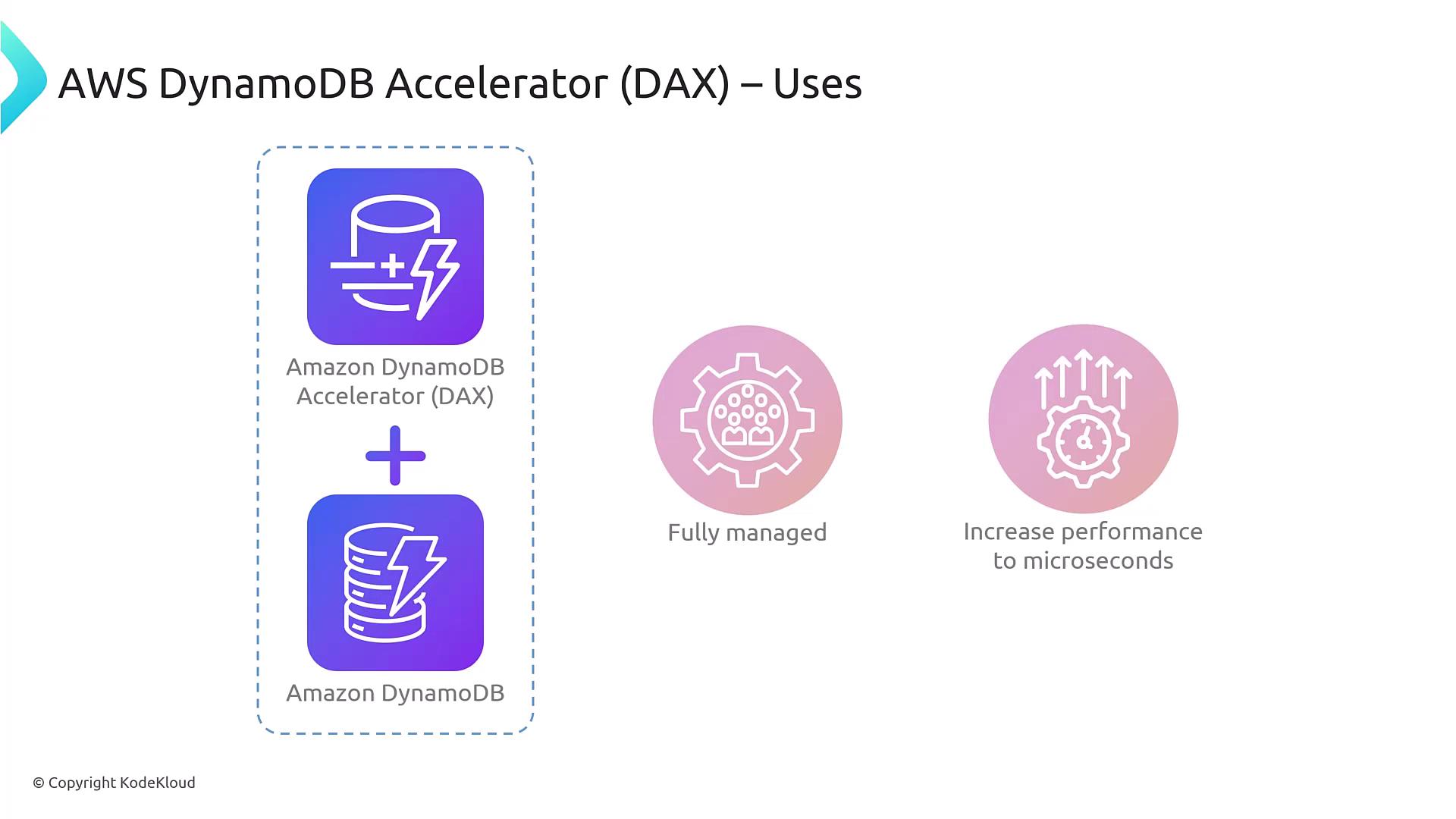
How DAX Works
A DAX cluster comprises one primary node and up to nine additional read replica nodes, supporting a total of 10 nodes per cluster. The client integrated into your application (whether on EC2, Lambda, etc.) is responsible for managing the connection to the DAX cluster endpoint and handles:- Intelligent load balancing
- Request routing
- Managing write throughput
DAX Features
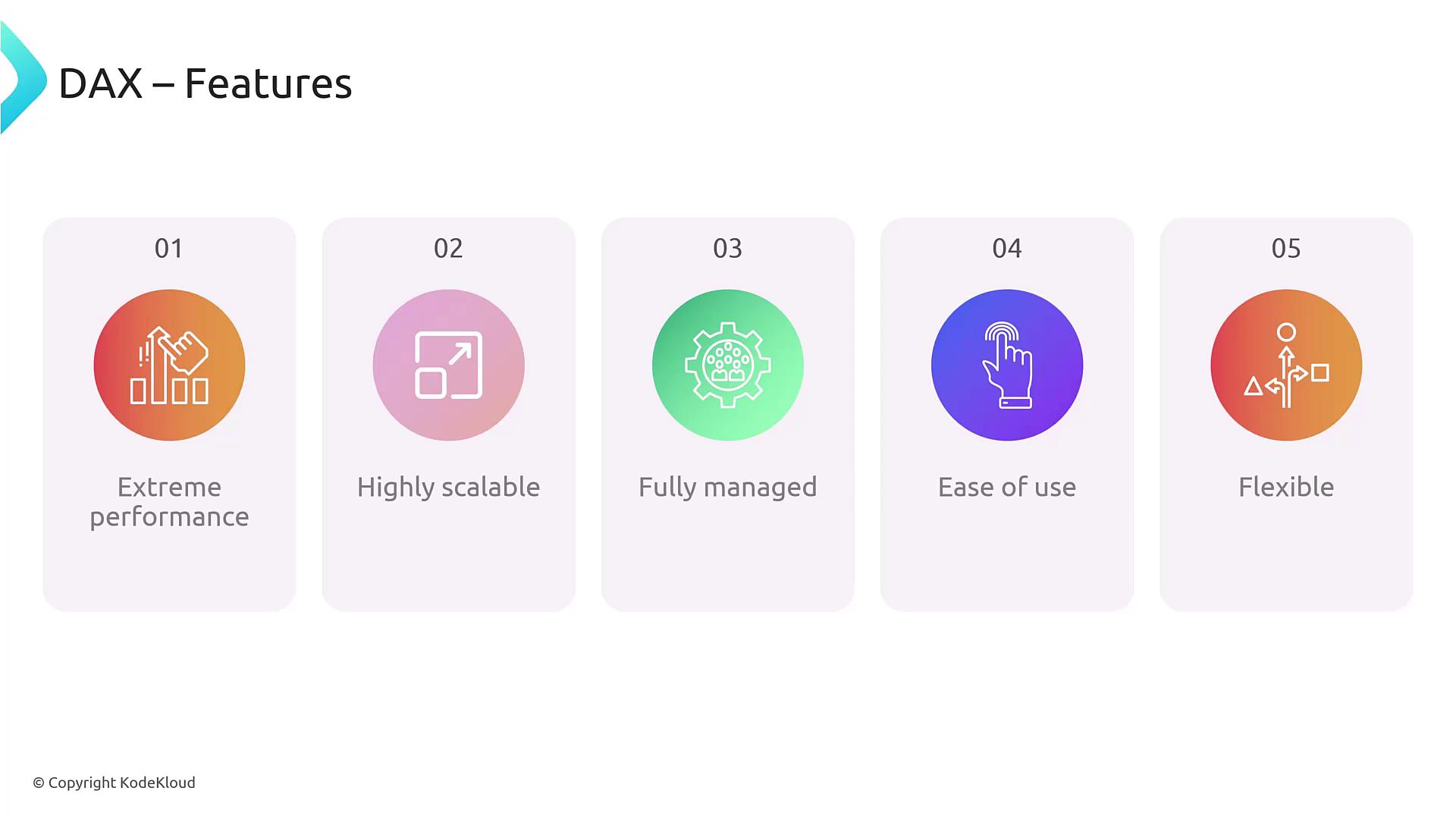
DAX offers several key features that make it an attractive solution for scenarios requiring high-speed read operations:- Microsecond response times for read-intensive workloads
- High scalability to support growing application demands
- Fully managed service to reduce operational overhead
- Seamless integration with existing applications
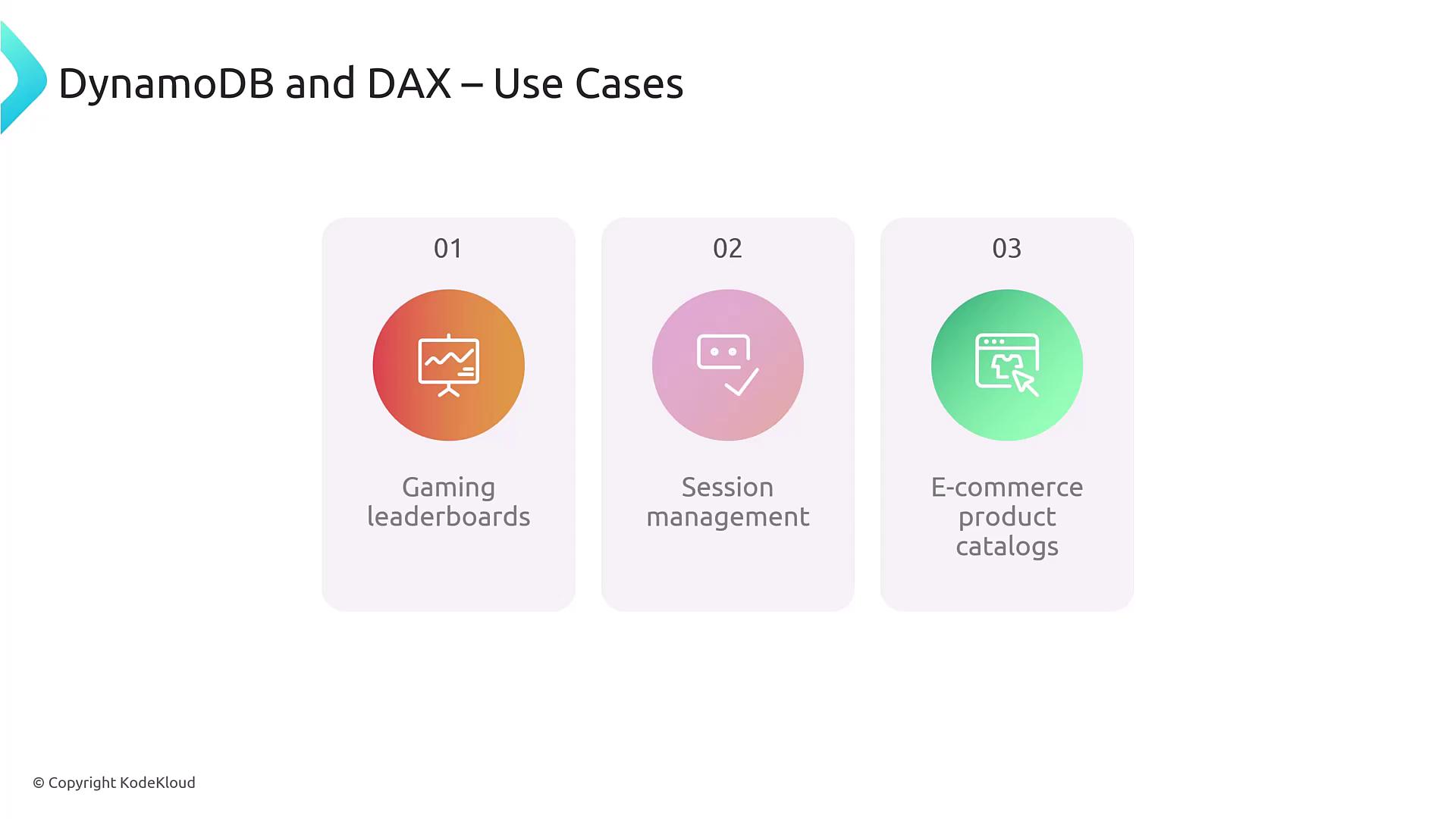
- Versatility to support diverse use cases, such as gaming leaderboards, session management, and comprehensive product catalogs
Before integrating DAX in a production environment, perform a detailed cost analysis. While DAX significantly improves performance, it may introduce additional costs compared to a direct DynamoDB setup.
Conclusion
DAX enhances DynamoDB by providing an efficient in-memory caching mechanism, reducing read latency from milliseconds to microseconds. This automated handling of cache hits and misses allows you to build high-performance applications while reducing operational complexity.DAX is ideal for applications requiring rapid read operations—such as gaming leaderboards, session management, and dynamic product catalogs. Always evaluate your use cases to balance performance enhancements against additional costs.