

Scenario: The Wish List Feature
Imagine an e-commerce platform where your product manager, Alex, wants users to build custom wish lists by submitting their own SQL queries. While this feature sounds innovative, allowing end users to run arbitrary database queries can open the door to SQL Injection.Never trust user input for query construction. Even developers can introduce vulnerabilities if input isn’t handled correctly.
Threat Landscape Overview
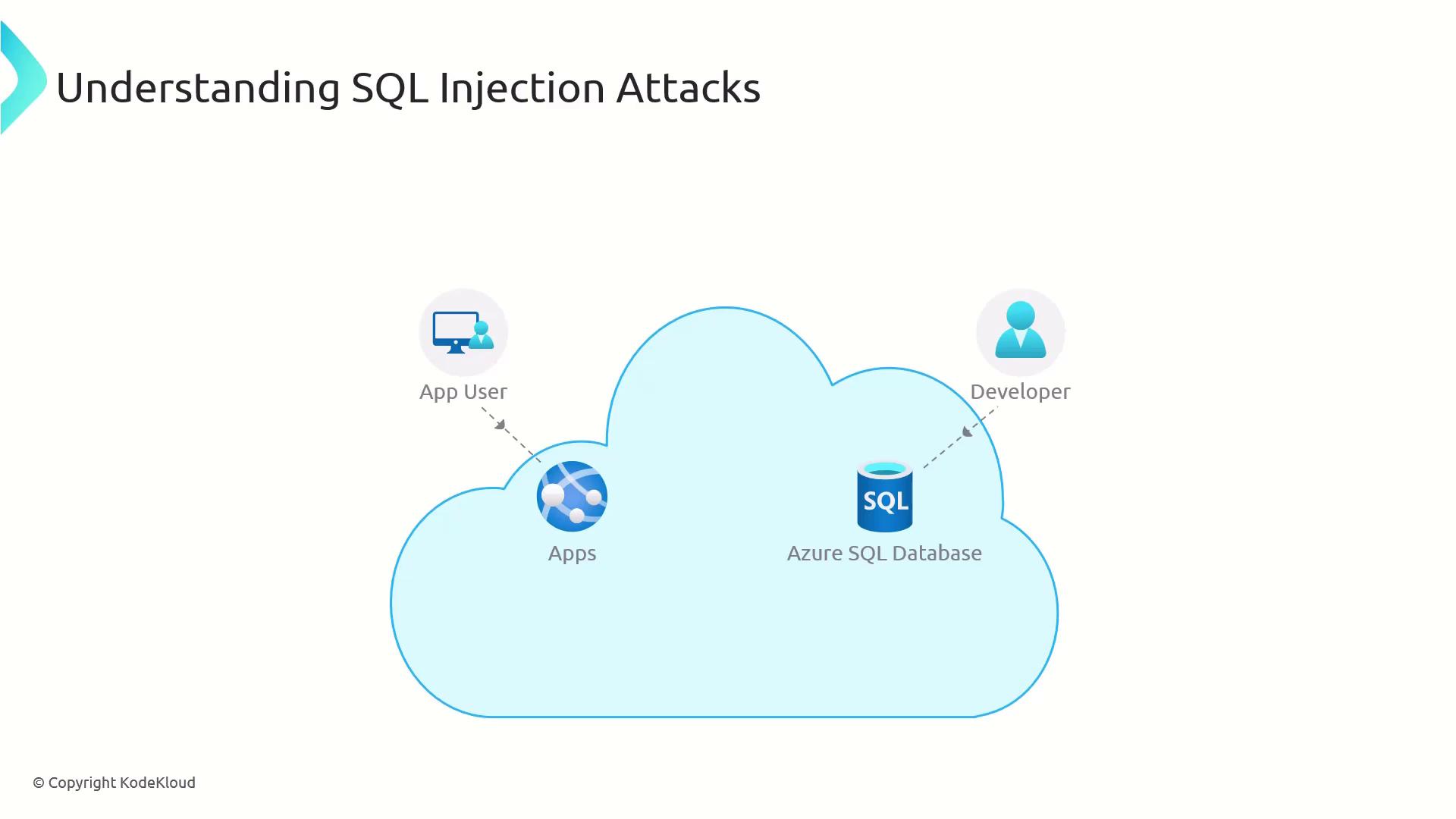
In a typical cloud-native setup:- Users browse and submit requests via the application front end.
- The application connects to an Azure SQL Database.
- Developers may also have administrative access for troubleshooting.
- Azure’s built-in features like Auditing and Advanced Data Security provide monitoring and alerts.
Key Elements at a Glance
| Element | Description |
|---|---|
| Underlying Risk | How unvalidated input allows malicious SQL to slip through. |
| Attack Anatomy | Step-by-step flow of a typical SQLi exploit. |
| Proactive Defenses | Coding and configuration practices to block SQLi. |
1. Underlying Risk
When you concatenate user input directly into SQL statements, you risk letting malicious actors inject additional SQL commands. Our “custom wish list” scenario is a prime example—every new feature that executes raw queries increases your attack surface.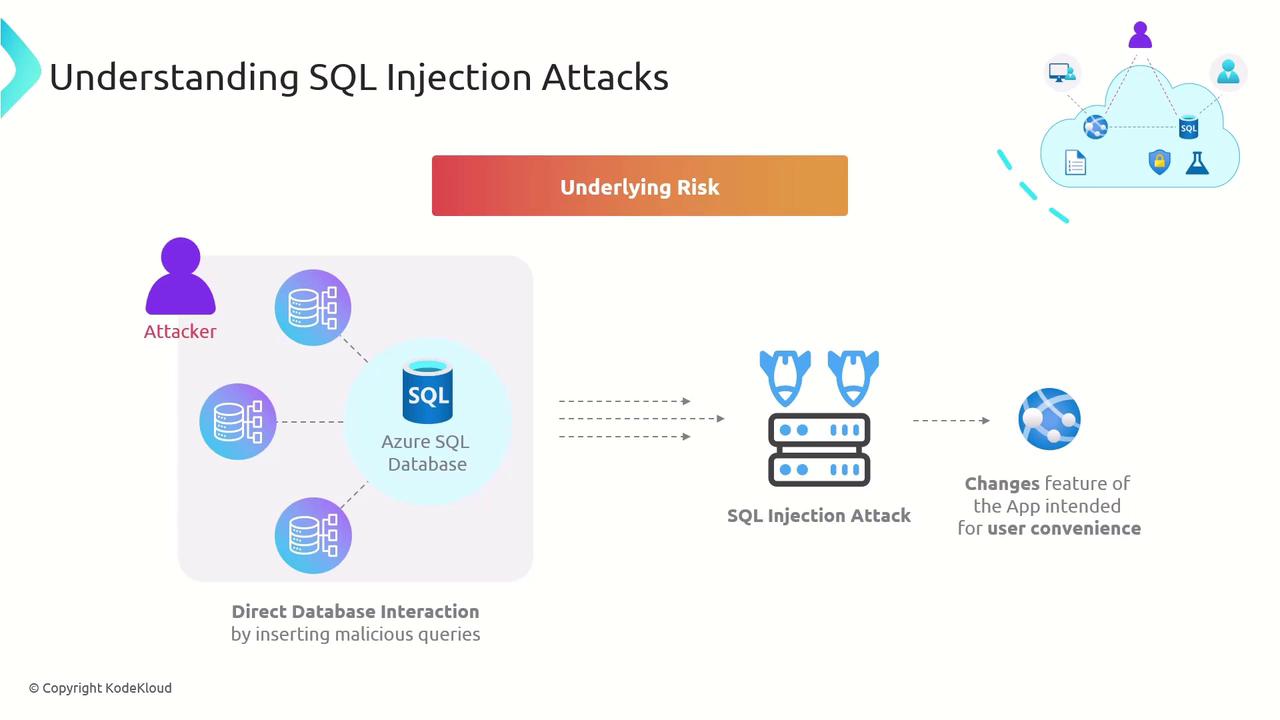
- Retrieve sensitive data (e.g., user credentials).
- Modify or delete records.
- Escalate privileges for full database control.
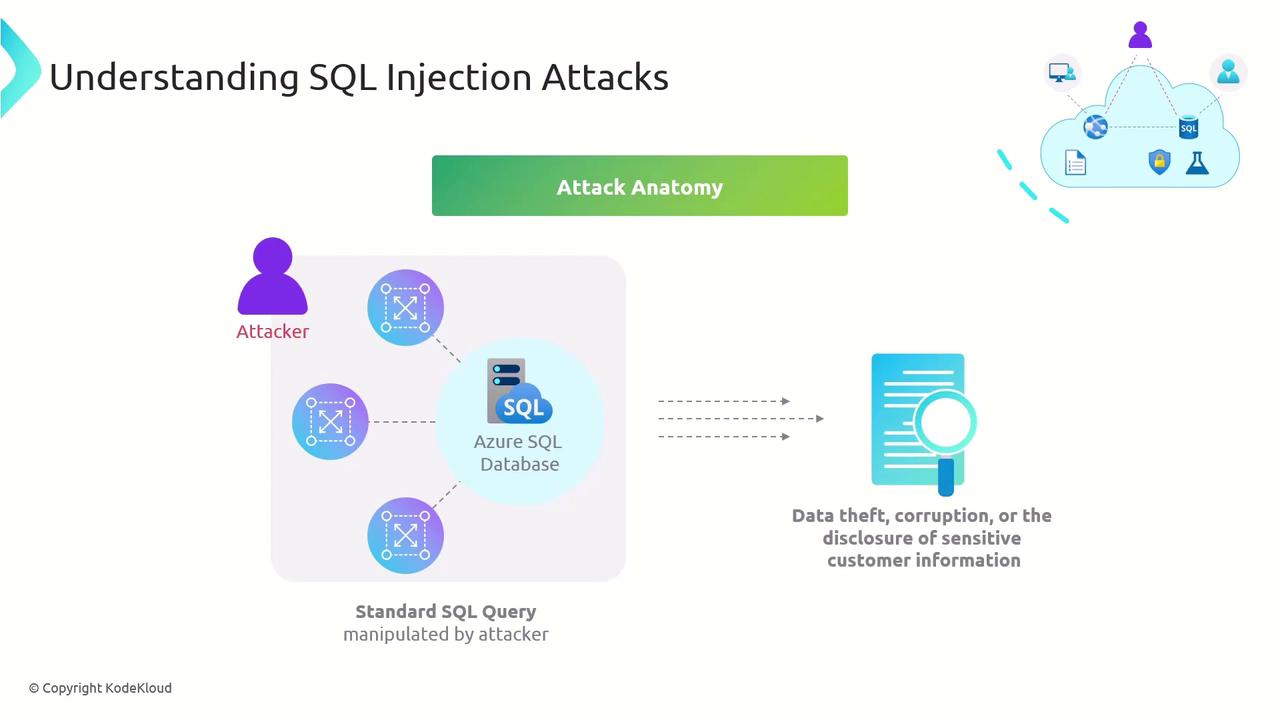
2. Anatomy of a SQL Injection Attack
Let’s walk through a typical SQLi exploit:- Identify a Vulnerable Input
The attacker locates a form field or URL parameter that reflects input directly into a query. - Craft Malicious Payload
They append SQL syntax—e.g.,'; DROP TABLE Orders; --—to the input. - Execute via the Application
The back-end builds a query string by concatenation and sends it to the database. - Database Runs the Injected SQL
The server interprets the injected commands as part of the original query.
3. Proactive Defenses
A multi-layered approach is essential. The following strategies are proven to reduce SQLi risk: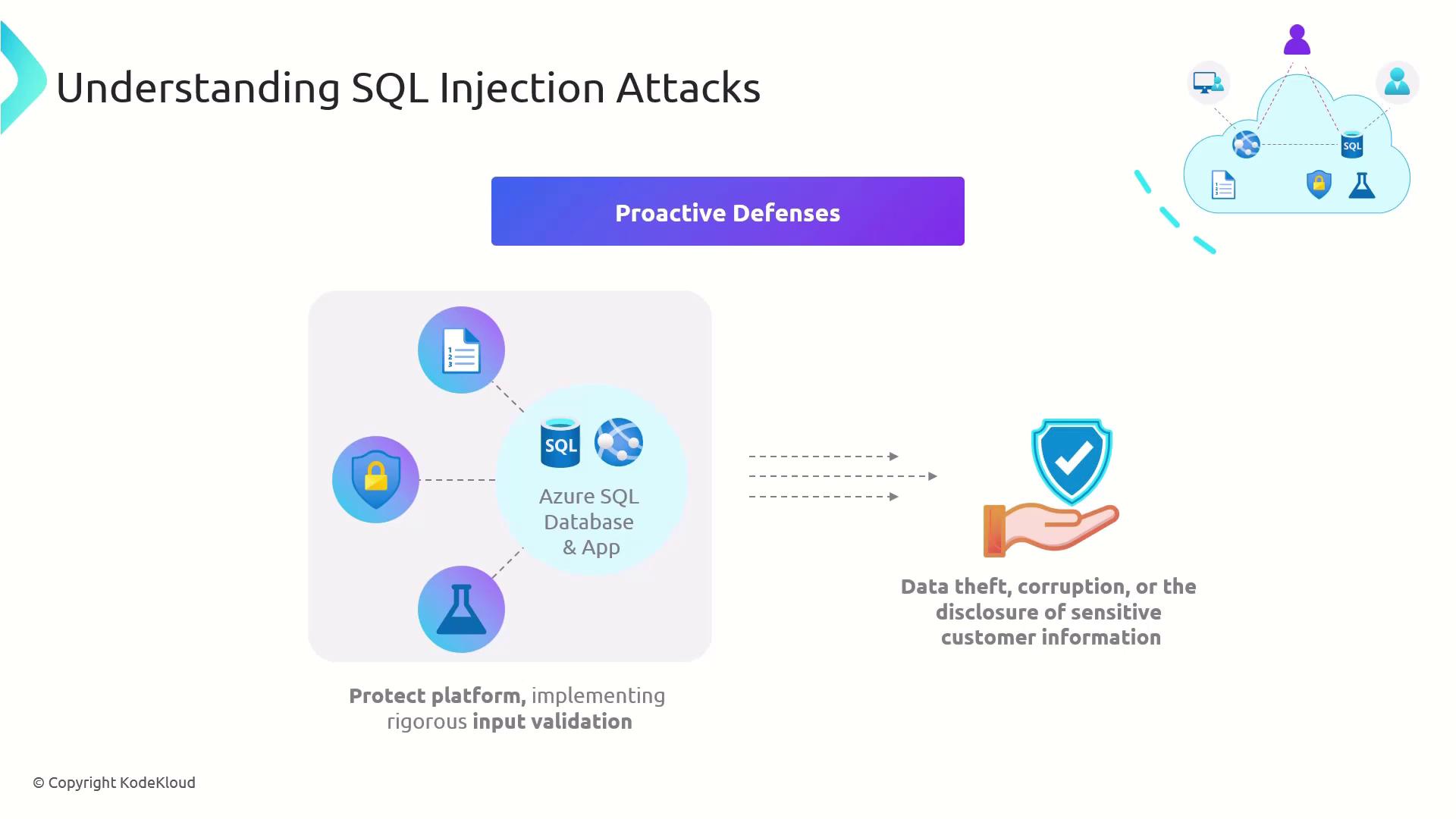
| Defense Strategy | Description |
|---|---|
| Input Validation & Sanitization | Enforce strict patterns and reject unexpected characters on both client and server sides. |
| Parameterized Queries / Prepared Statements | Use bind variables so data never merges with SQL commands. |
| Stored Procedures | Encapsulate SQL logic in DB-residents procedures with controlled interfaces. |
| Principle of Least Privilege | Assign each application account the minimum permissions needed. |
| Security Audits & Testing | Employ automated scanners, manual code reviews, and penetration tests regularly. |
Skipping proper testing can leave hidden SQLi vectors. Integrate security checks into your CI/CD pipeline.