

Incorporating SCA early in your workflow reduces risk by catching vulnerabilities before they reach production. Automate scans as part of your CI/CD pipelines for continuous protection.
Package Management Strategies
Maintaining control over the components in your software supply chain starts with a solid package management approach:-
Single Source of Truth
Host all approved binaries in a central repository to ensure consistency across teams. -
Local Approval Repository
Curate an internal feed containing only vetted packages, giving you complete governance over dependencies. -
Azure Artifacts for Distribution
Use Azure Artifacts to store, share, and manage NuGet, npm, Maven, Gradle, Universal, and Python packages.
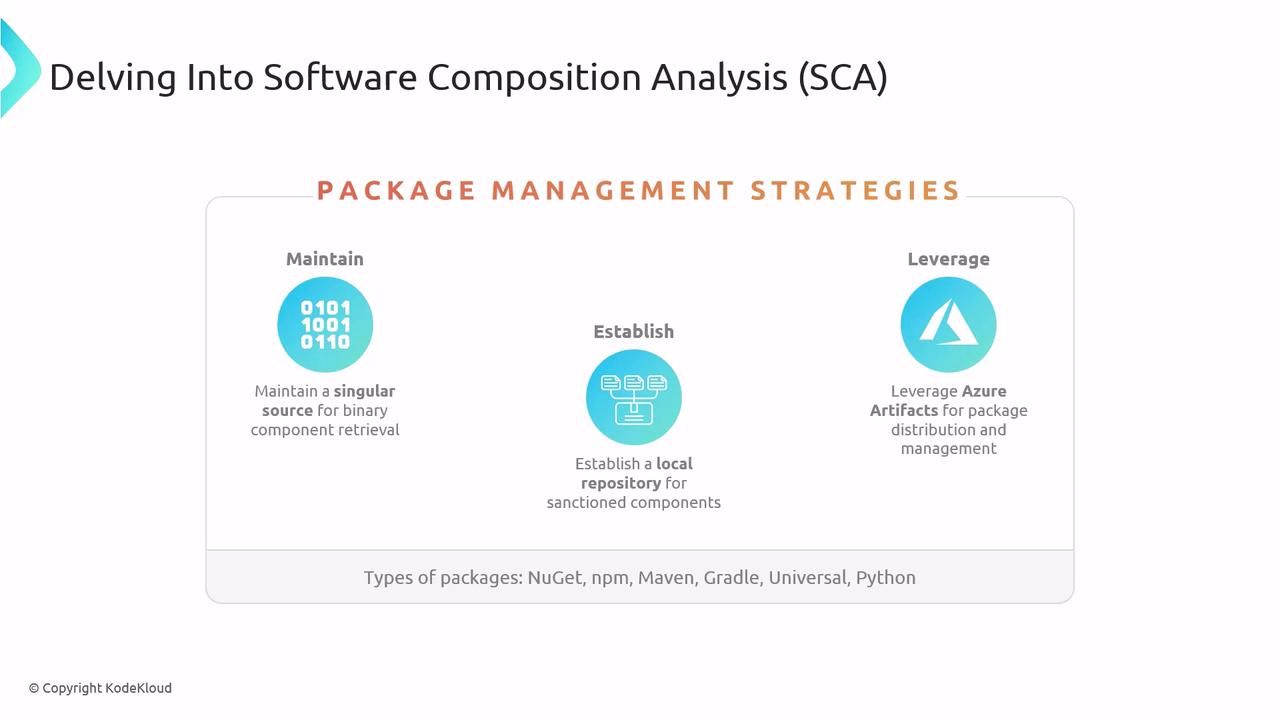
Supported Package Types
| Package Type | Use Case |
|---|---|
| NuGet | .NET libraries and frameworks |
| npm | JavaScript modules for web and Node.js |
| Maven | Java and JVM-based artifacts |
| Gradle | Build automation for multi-language apps |
| Universal | Generic binaries and scripts |
| Python | Python packages and wheels |
Managing Open-Source Software Components
Open-source libraries drive innovation but can introduce vulnerabilities if not managed properly. Adopt these best practices:-
Keep Dependencies Updated
Upgrade to the latest stable releases to incorporate security patches and improvements. -
Map Transitive Dependencies
Analyze indirect dependencies to reveal hidden vulnerabilities. -
Verify Package Integrity
Use signatures or checksums to confirm that binaries have not been tampered with.
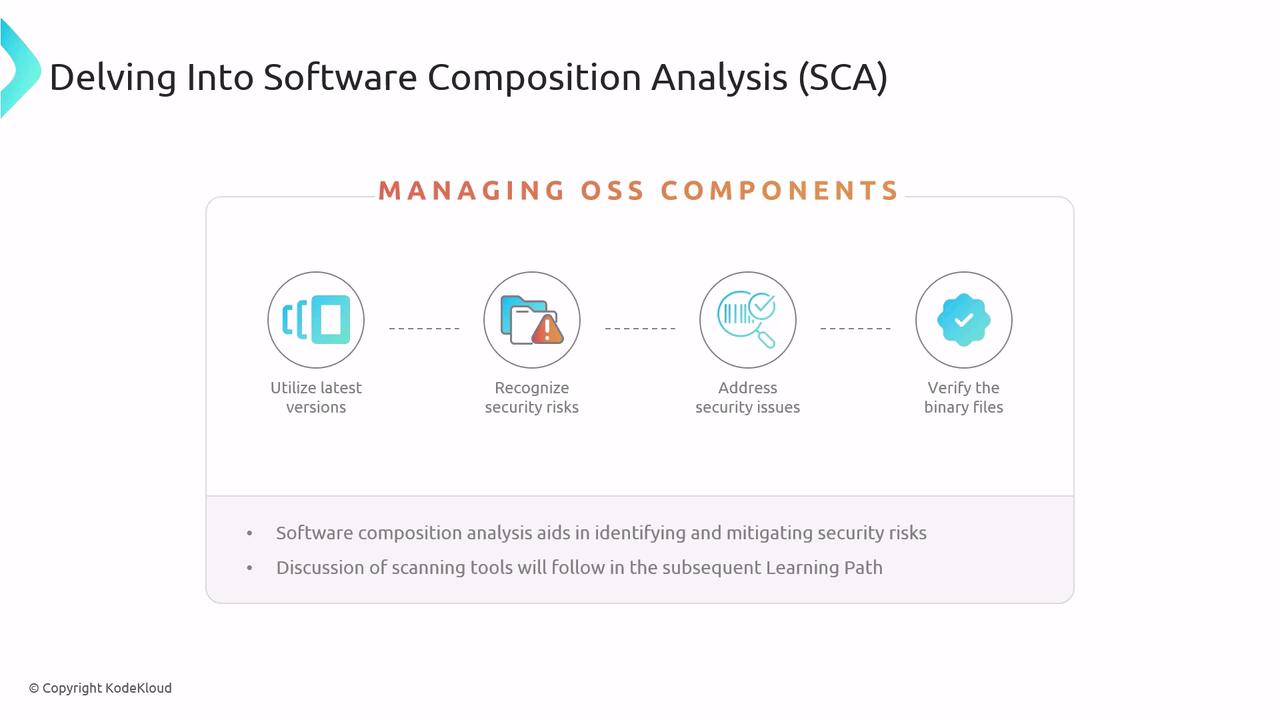
Delaying remediation of known vulnerabilities can expose your organization to breaches. Set up automated alerts and prioritize fixes based on risk severity.
Next Steps
To dive deeper into SCA implementation:- Explore popular SCA tools like OWASP Dependency-Check and Snyk.
- Integrate SCA scans into Azure DevOps pipelines: Configuring SCA extensions.
- Review compliance frameworks: NIST SBOM guidelines.