This article introduces Docker Enterprise Edition, its components, architecture, setup, and configuration requirements for deploying enterprise-grade applications.
Hello and welcome! In this lesson, we’ll explore the components and architecture of Docker Enterprise Edition (Docker EE). Docker Engine is available in two major editions:
Docker CE (Community Edition): the free, open-source version
Docker EE (Enterprise Edition): the certified, enterprise-grade version
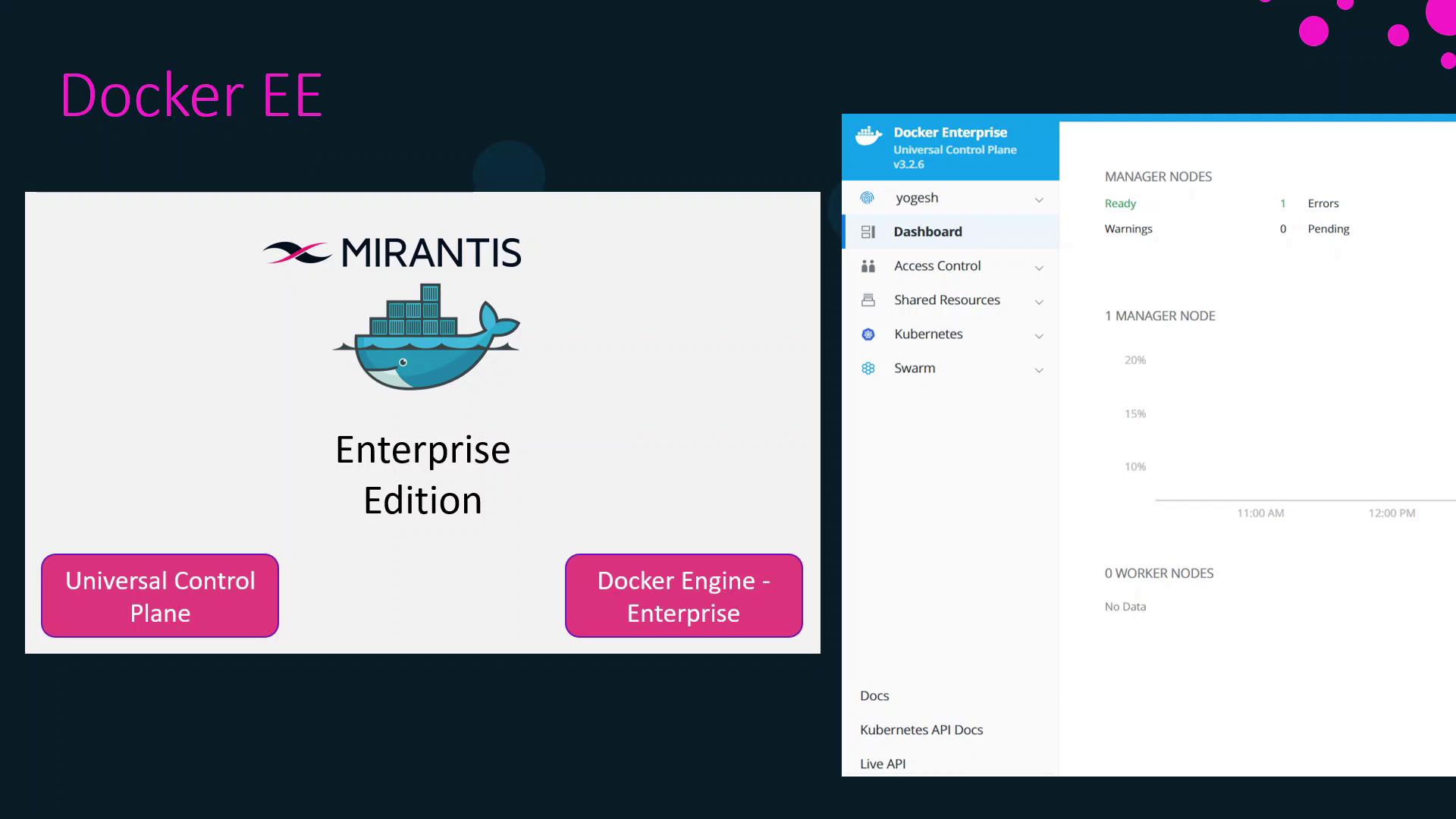
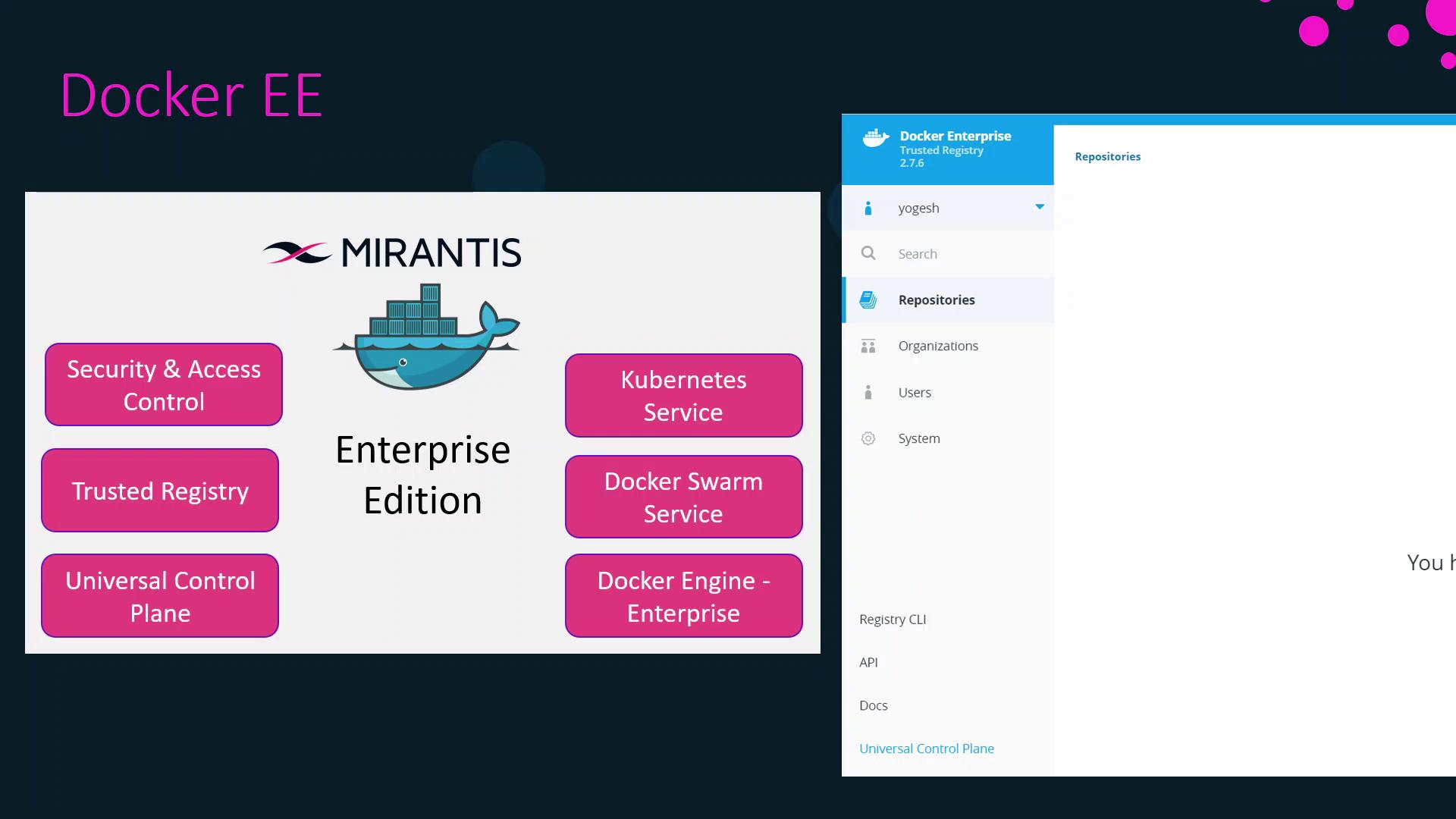
Since November 2019, Mirantis Inc. maintains Docker EE. Built for developers and IT teams, Docker EE enables you to build, share, and run business-critical applications at scale with enterprise-grade security and management.Docker EE comprises three core components:
Docker Engine Enterprise: Certified container runtime with FIPS compliance
Universal Control Plane (UCP): Web-based cluster management portal with role-based access control (RBAC) and LDAP/AD integration
UCP supports both Docker Swarm and Kubernetes on the same cluster. You can label nodes as Swarm workers, Kubernetes workers, or both, then deploy services across them.
Docker Trusted Registry integrates seamlessly with UCP and Engine. You can deploy Docker EE clusters on-premises, in public clouds, or in hybrid environments.
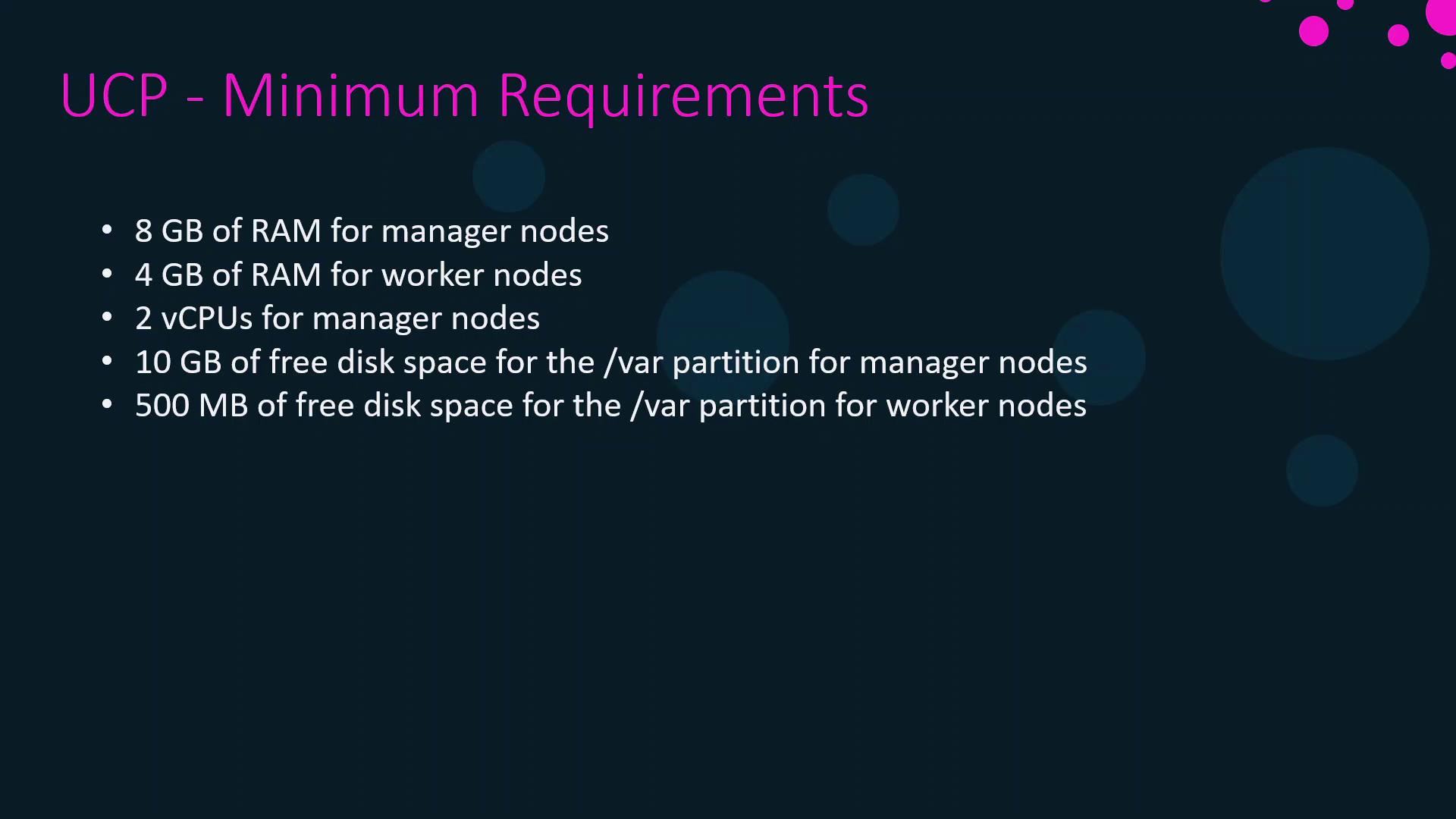
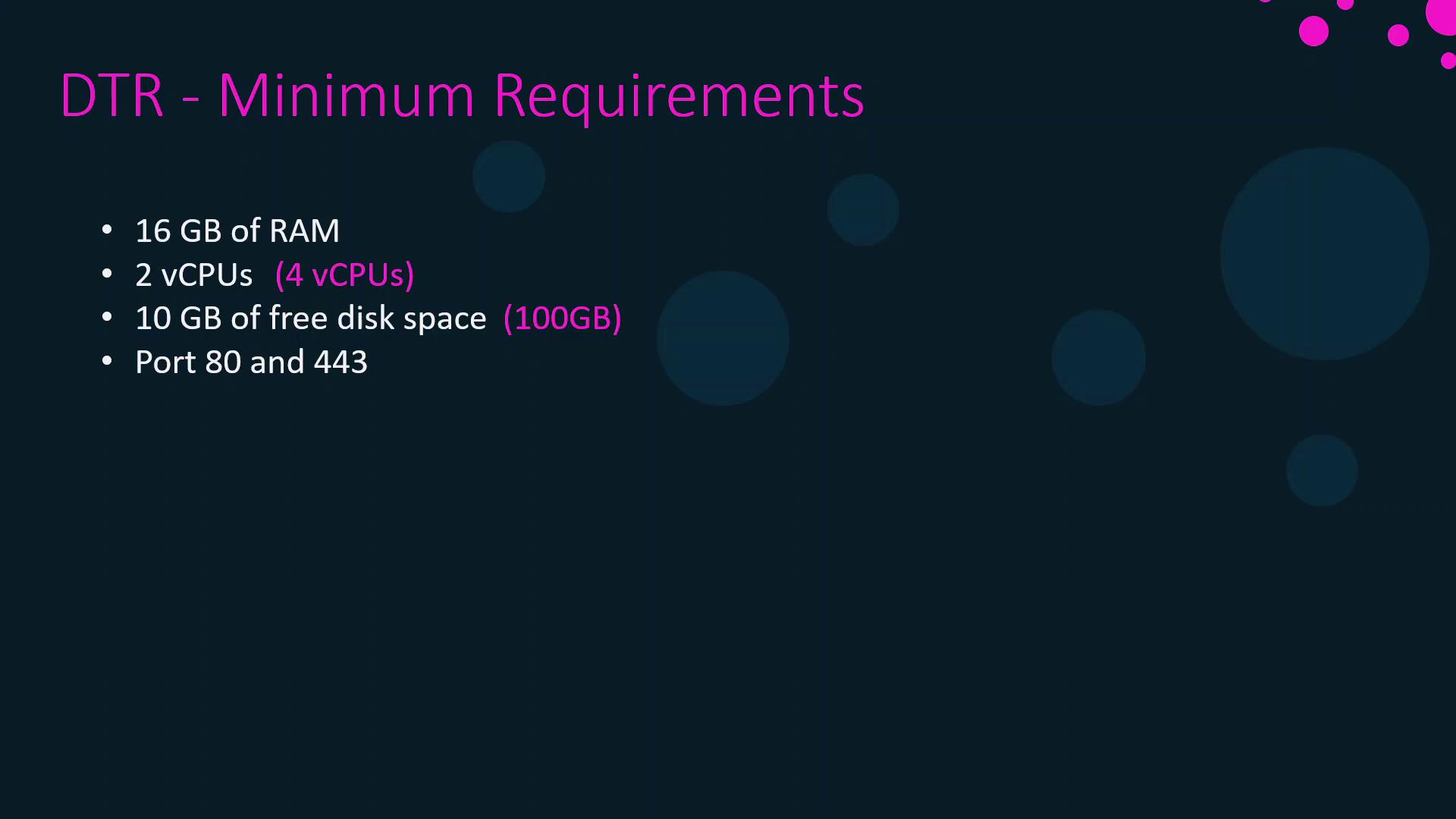
Docker UCP and DTR each have minimum and recommended hardware specifications. Use minimum specs for testing or proofs of concept; follow recommended specs for production environments.