

- Session-based authentication – A session is stored on the backend server (or API) to track whether a user is logged in. This session data is typically saved in memory or in a database and remains active until the user logs out.
- JWT token-based authentication – This stateless approach involves no backend storage for login sessions. Instead, the client stores a token containing all the necessary authentication details, and the API verifies this token to authenticate the user.
JWT token-based authentication simplifies horizontal scaling and reduces backend storage needs since the client is responsible for holding the token.
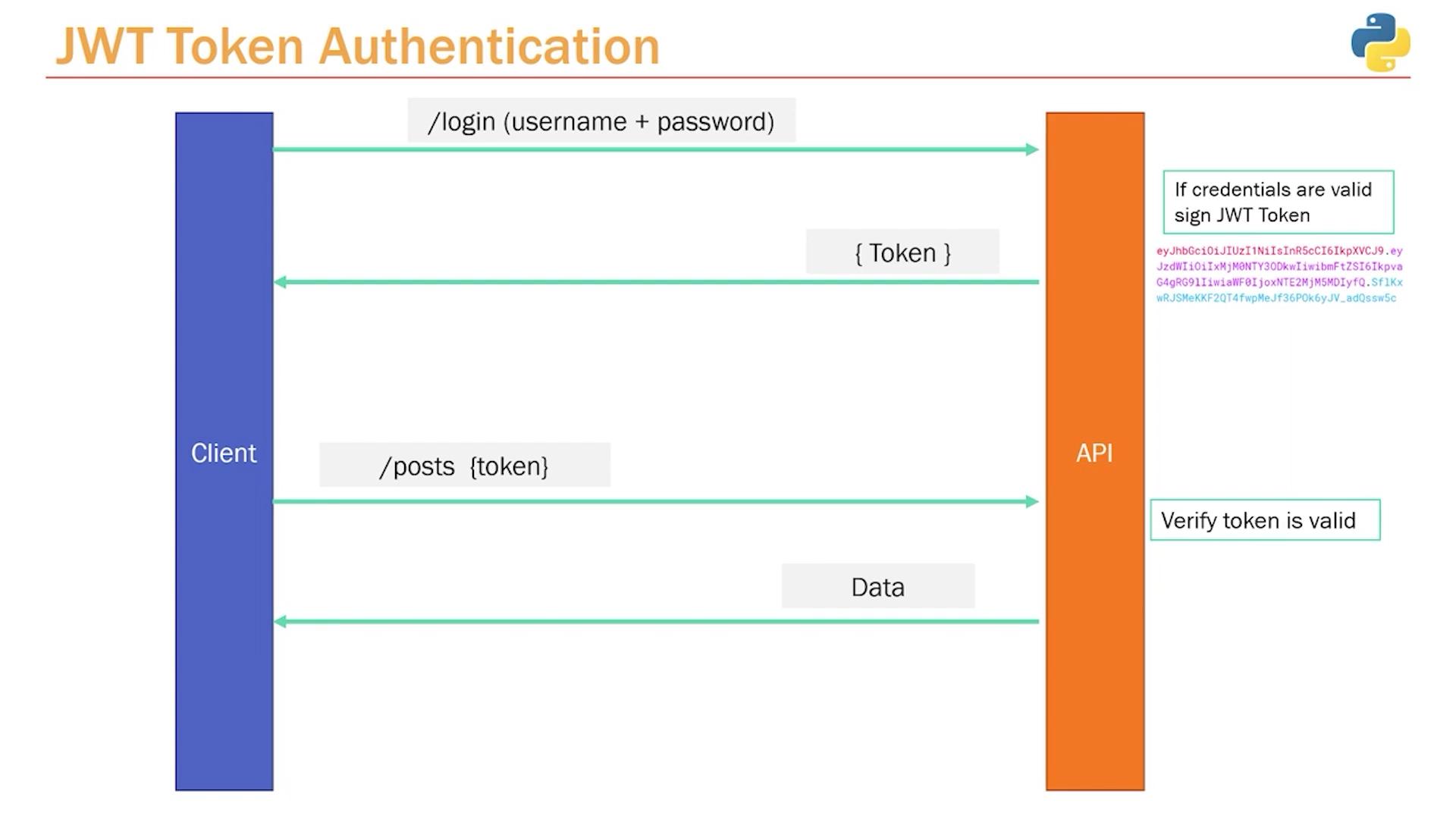
/posts endpoint), it sends the token in the request header. The API then validates the token to ensure the user is authenticated. The typical flow is as follows:
- The client sends credentials (usually an email and password) to a login endpoint (e.g.,
/login). - The API validates the credentials and, if they are correct, generates a JWT token.
- The client stores this token and includes it in the header for all subsequent requests to protected resources.
- The API extracts and verifies the token. If the token is valid, the API responds with the requested data.
JWT Token Structure
A JWT token is comprised of three parts separated by dots: the header, the payload, and the signature. Although the token is just a string, it carries structured data essential for authentication.1. Header
The header contains metadata about the token, such as the token type and the algorithm used for signing. A typical header looks like this:2. Payload
The payload includes the actual data (claims) of the token. This can include non-sensitive information such as the user’s ID, name, or role. It is important to note that the payload is not encrypted, so sensitive data (like passwords) should never be stored here.3. Signature
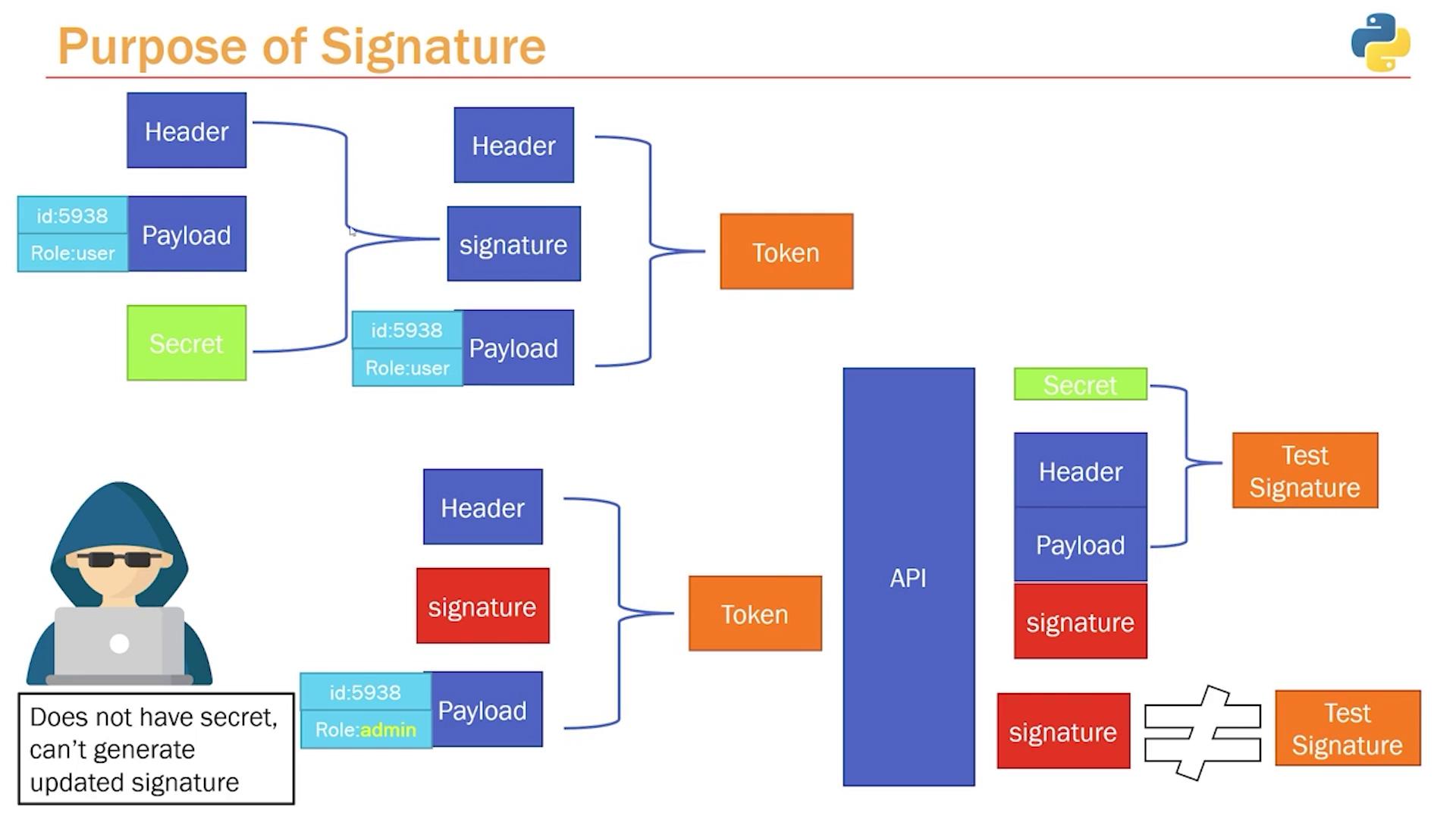
The signature ensures the integrity of the token—it detects any tampering. To generate the signature, the API encodes the header and payload with a secret key (known only to the API) using a hashing algorithm (commonly HS256). In pseudocode, the process is as follows:Data Integrity and the Role of the Signature
It is essential to understand that a JWT is not encrypted; its data is merely encoded. This means anyone can decode the header and payload to read the information. However, the signature ensures that any tampering is detected. If a malicious user alters any part of the header or payload (for instance, changing their role from “user” to “admin”), the signature computed by the API using the secret key will not match, and the token will be rejected. The token verification process works as follows:- The API receives the token along with the client’s request.
- It extracts the header and payload from the token and recomputes the signature using the secret key.
- If the recomputed signature matches the signature in the token, the token is considered valid.
- If the signatures do not match, the API rejects the token, ensuring that tampered tokens are not accepted.
Always keep your secret key confidential. Exposure of this key compromises the integrity of your token-based system since attackers could generate valid tokens.
Summary
JWT token-based authentication provides a secure and stateless method for handling user authentication by:- Accepting user credentials at login.
- Generating a token that includes a header, payload, and signature.
- Storing the token on the client side for use in future requests.
- Validating the token with every protected resource request using a secret key.