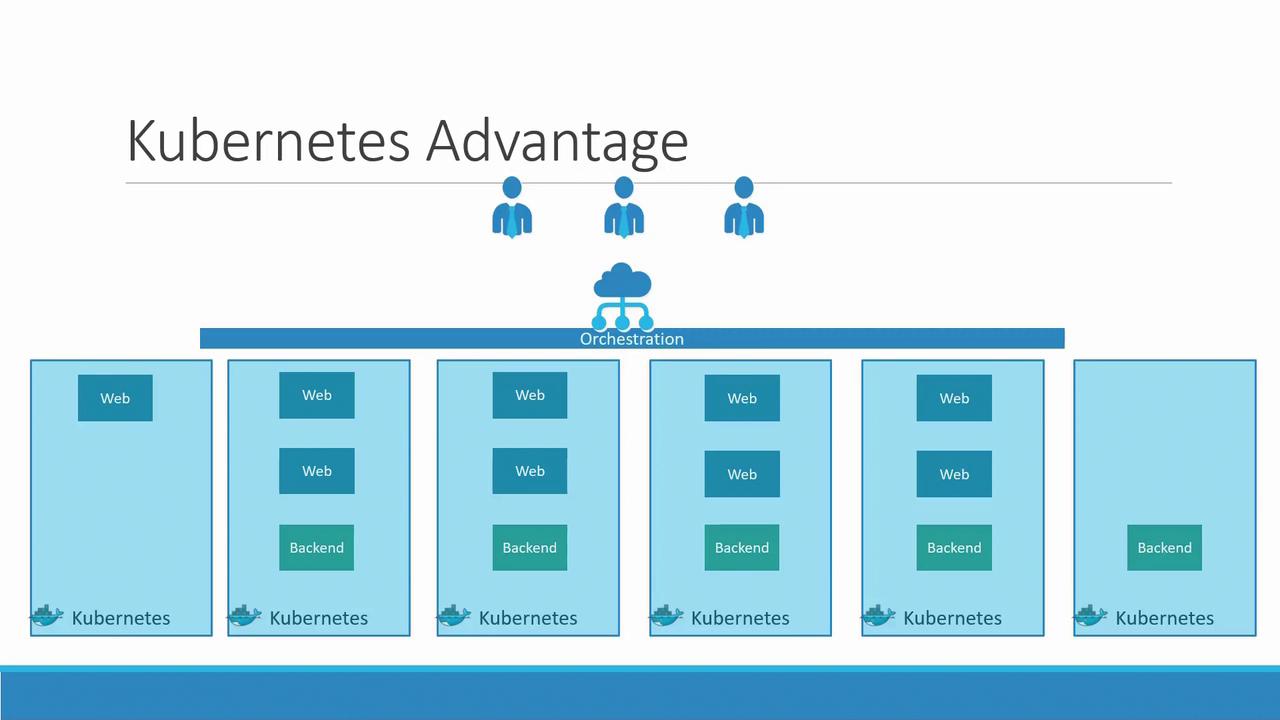
- How do you run your application in a production environment once it’s containerized?
- What steps are needed when your application relies on dependent services like databases, messaging systems, or other backend components?
- How can you scale your application up during high demand or scale it down when traffic decreases?

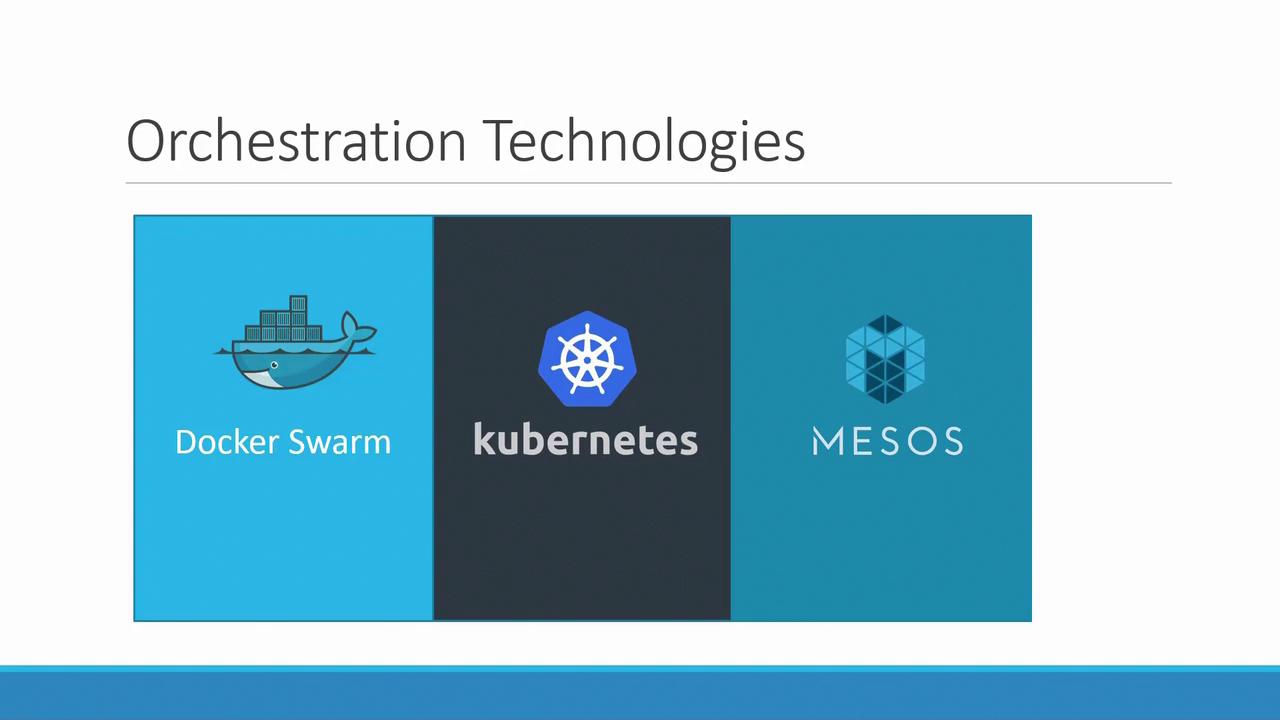
- Docker Swarm: Offers a straightforward setup but may lack advanced features for complex applications.
- Apache Mesos: Provides robust functionality but can be challenging to configure initially.
- Kubernetes: Though it might require extra effort for initial setup, it provides extensive customization, supports complex architectures, and is integrated with all major public cloud providers such as GCP, Azure, and AWS. Its popularity is also evident on GitHub.
Container orchestration offers multiple advantages:
- High Availability: Mitigate downtime by running multiple container instances across different nodes.
- Load Balancing: Evenly distribute user traffic across containers.
- Scalability: Seamlessly deploy additional instances as demand increases.
- Flexibility: Scale services and adjust underlying nodes without interrupting operations.
- Simplicity: Manage functionalities with declarative object configuration files.