

Challenges with Traditional Release Processes
Historically, releasing new features relied on manually building and testing the code. This outdated process was not only time-intensive but also highly prone to errors. Despite thorough testing, bugs could still appear during deployment, leading to delays and frustrating user experiences. The traditional approach had long lead times and posed significant risks to stability.Implementing CI/CD for Improved Efficiency
To overcome these challenges, the team adopted a CI/CD (Continuous Integration/Continuous Deployment) strategy to automate building, testing, and deploying the new feature.-
Continuous Integration (CI):
With CI, any code changes are automatically built, tested, and containerized. This proactive automation catches issues early in the development cycle, reducing the likelihood of bugs in later stages. -
Continuous Deployment (CD):
The CD process streamlines deployments by pushing the updated code directly to a production Kubernetes cluster via a push-based model. This minimizes manual errors and accelerates the release of new features.
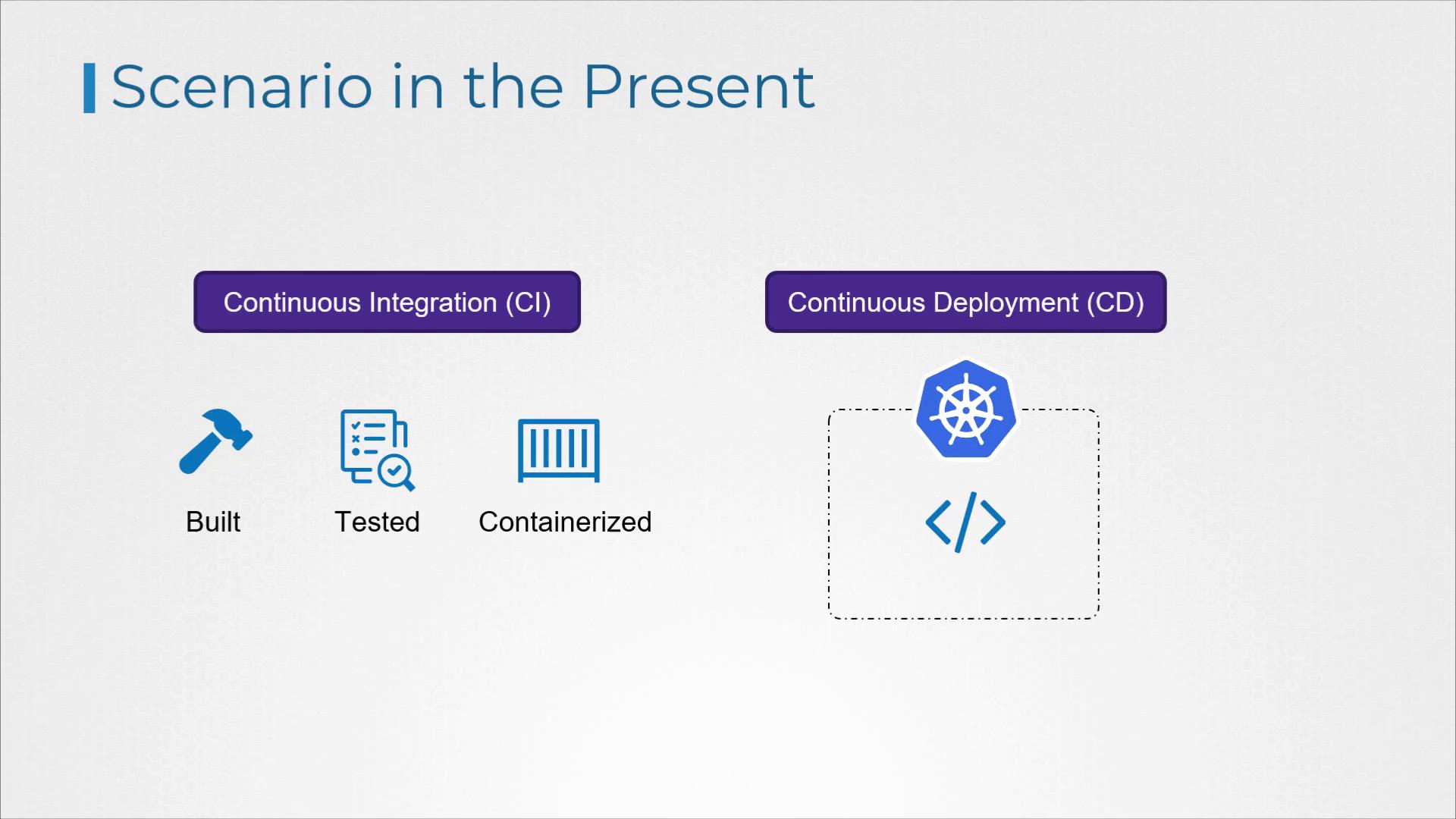
Implementing a CI/CD pipeline helps teams respond quickly to market changes while maintaining high software quality and reliability.
Leveraging GitOps for Infrastructure Management
Adopting GitOps practices transforms both infrastructure and deployment processes into version-controlled code. This approach enables the team to track every change, significantly reducing risks associated with manual deployments and configuration drift.
The Pitfalls of Manual Changes
Manual modifications using the command-line interface (CLI) can lead to several issues:- Configuration drift
- Increased potential for human error
- Overall system instability or failure
Relying on manual changes can complicate disaster recovery. In circumstances such as natural events, technical failures, or human errors, manual configurations hinder the quick restoration of stable systems.
The Benefits of a GitOps Approach
Implementing a GitOps strategy offers numerous advantages, particularly in disaster recovery and system management:- Provides a single source of truth via Git for both infrastructure and application resources
- Enables accurate tracking of every change applied to the system
- Allows for rapid rollback of modifications when issues are detected
- Streamlines the restoration process by reverting to a known, stable configuration