

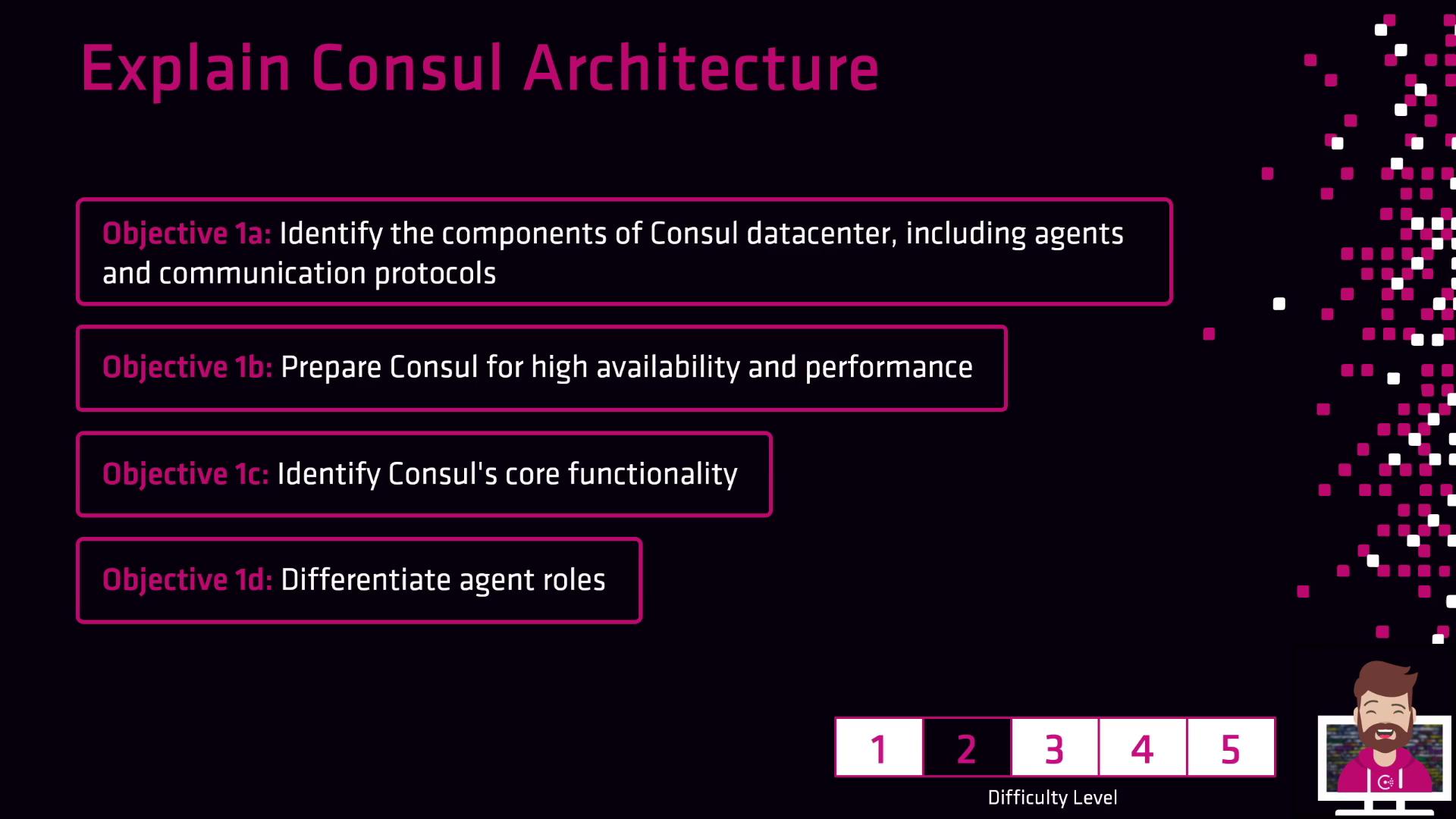
Key Takeaways
| Area | Description |
|---|---|
| Core Functionality | Service discovery, health checking, the key/value store, and multi-datacenter support. |
| Consul Components | Server and client agents (including development mode) and their interactions within a datacenter. |
| Communication Protocols | Gossip for cluster membership and Raft for strong data consistency. |
| High Availability | Clustered server configuration to maintain fault tolerance and automatic failover. |
| Read Scalability | Non-voting server agents (read-only replicas) to scale query throughput. |
You now have a solid understanding of Consul’s architecture and design. In the upcoming lessons, we’ll explore specific features—starting with service registration and discovery.