This article explores the core components of Consul, including agent deployment, operational modes, data centers, and key protocols.
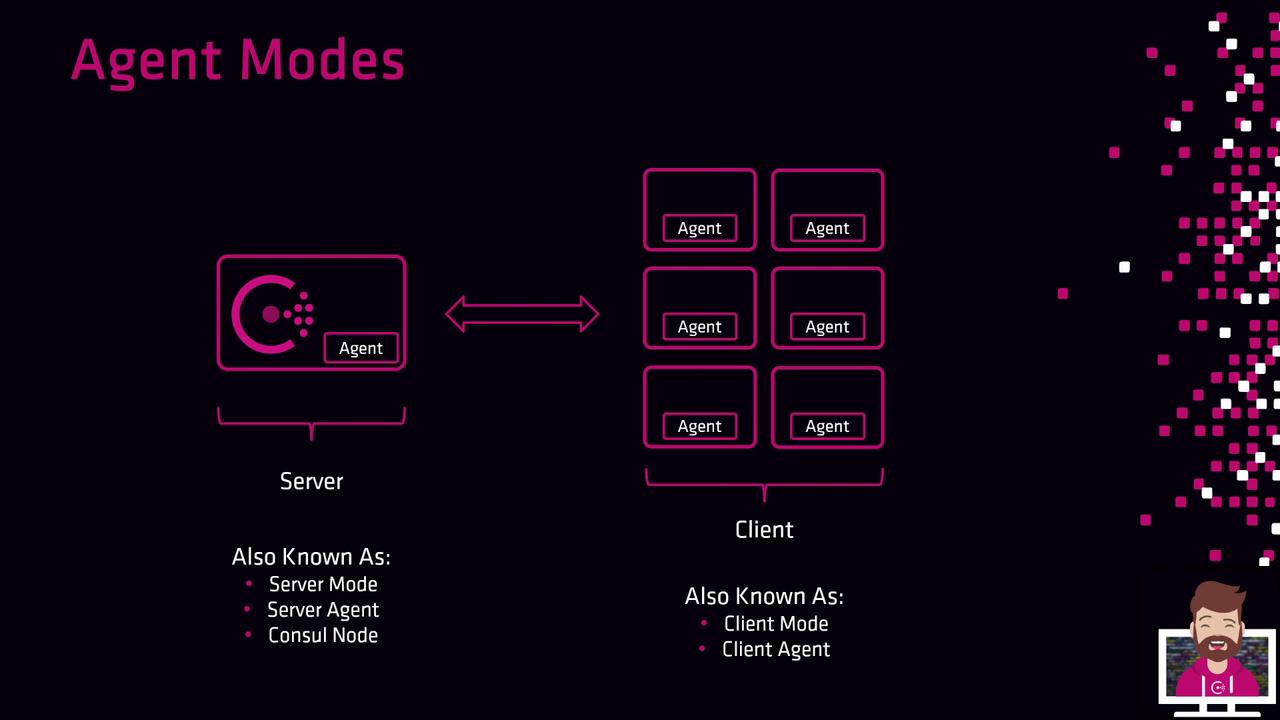
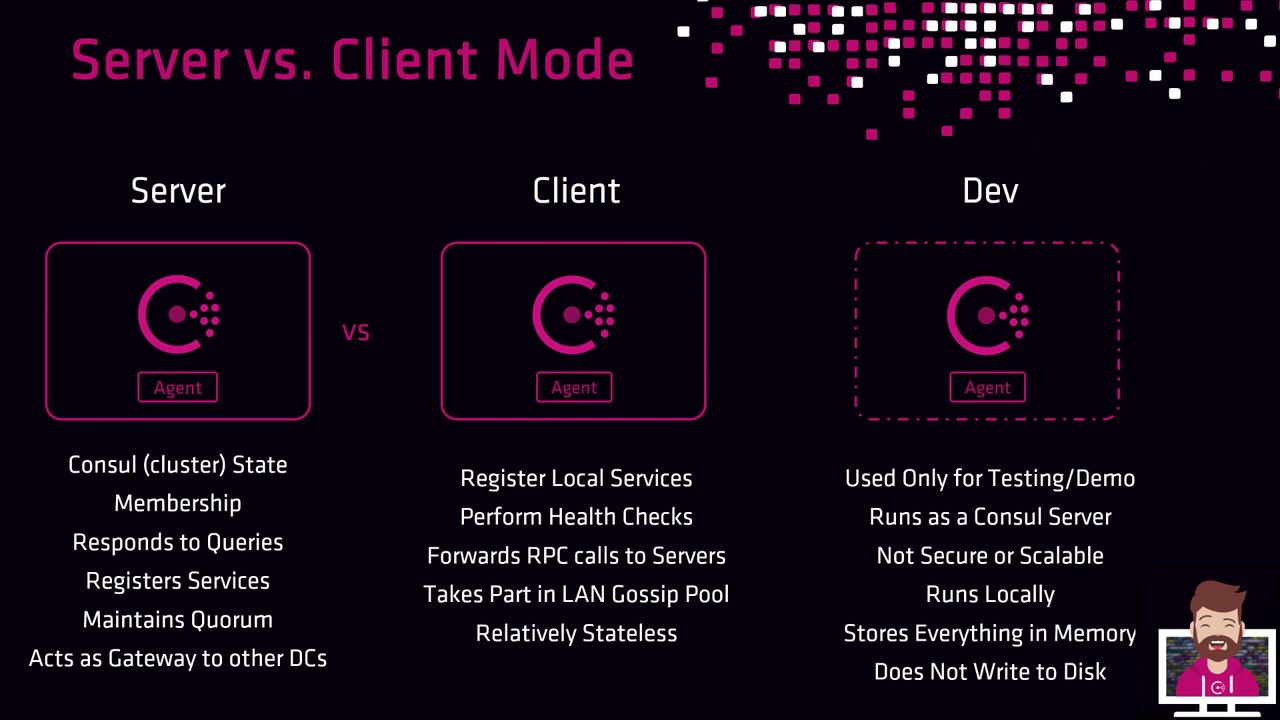
In this lesson, we’ll explore the core technical components of Consul: agent deployment patterns, operational modes, data center concepts, and the underlying protocols.
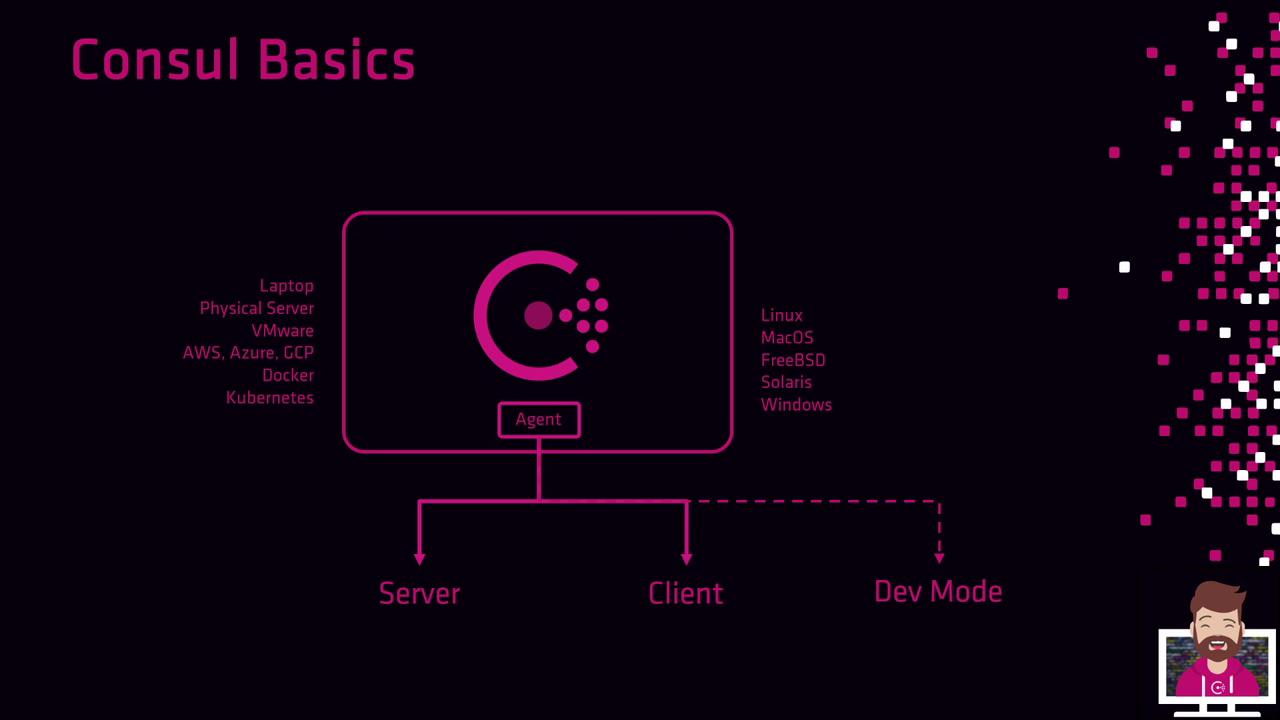
The Consul agent is a lightweight, long-running daemon that enables service discovery, health checking, and key/value storage on any host. Thanks to its platform-agnostic design, you can run the agent in various environments:
Environment
Examples
Local
Laptop
On-Premises
Physical server, VMware, Hyper-V
Public Cloud
AWS, Azure, GCP
Virtualized
VMware VMs, Hyper-V VMs
Containers
Docker, Kubernetes pods
Operating Systems
Linux, macOS, FreeBSD, Solaris, Windows
Running consistent agent binaries across your infrastructure provides a unified control plane for service registration and health monitoring.
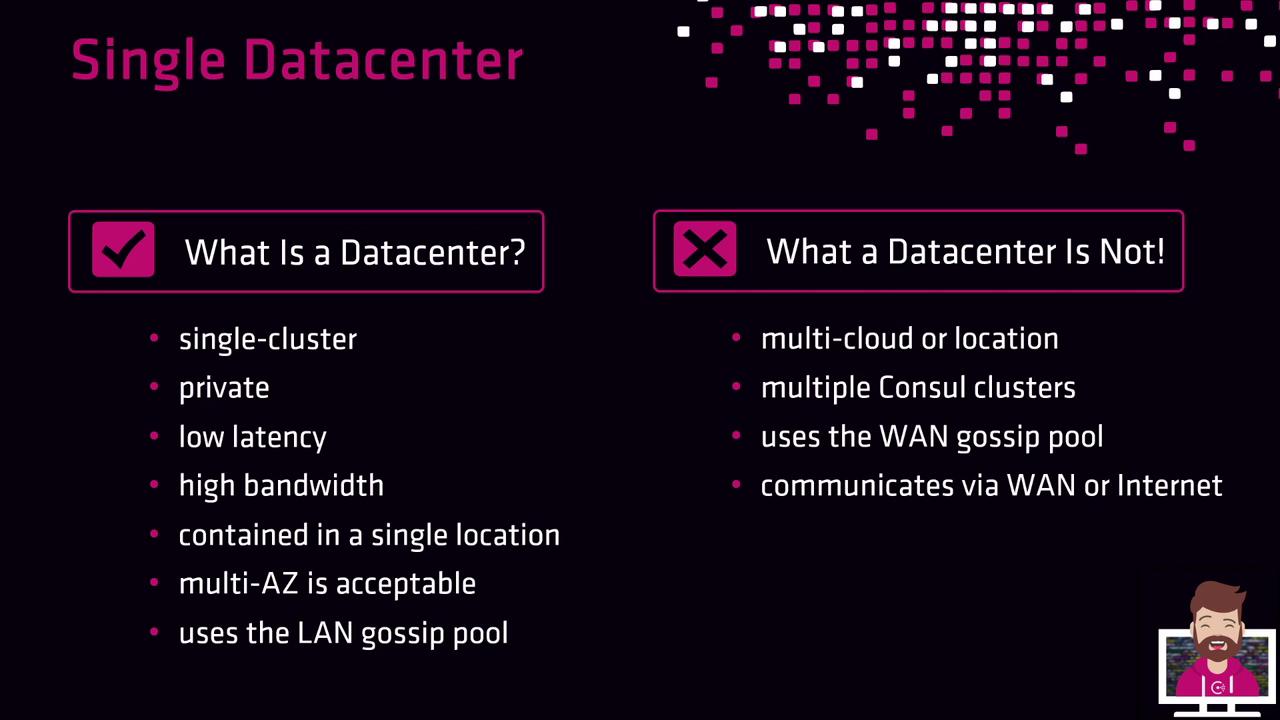
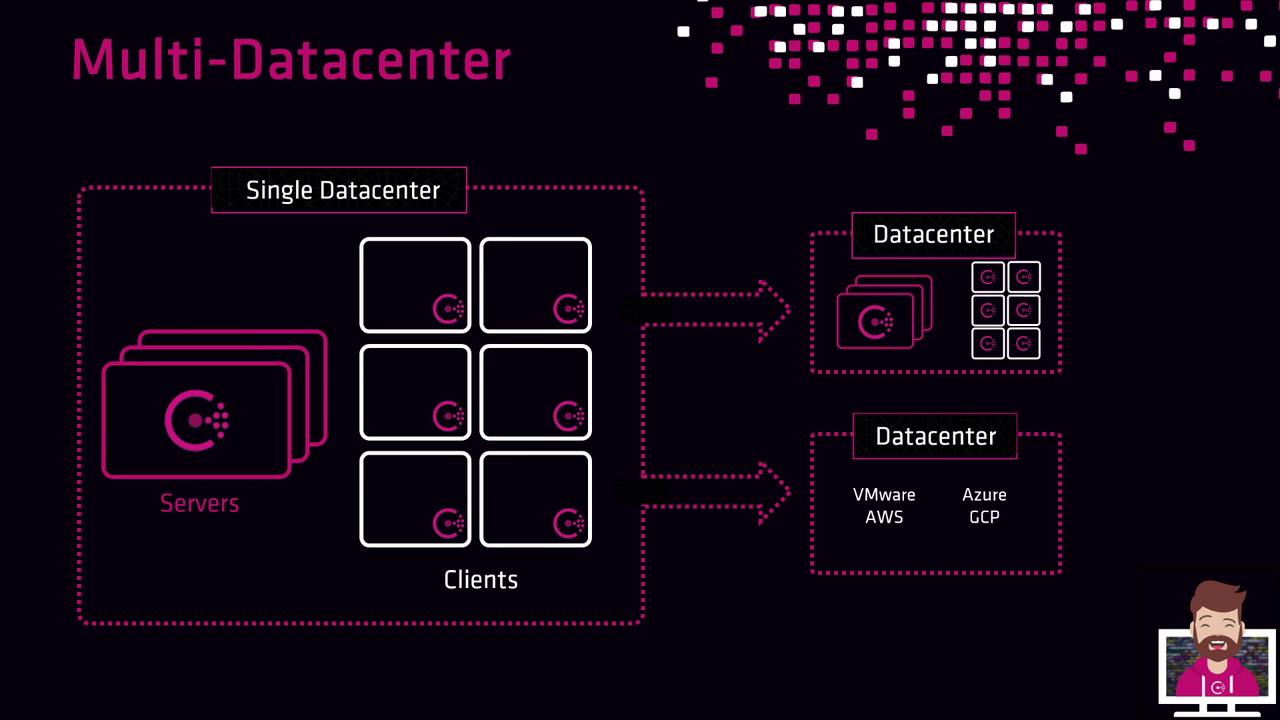
A data center in Consul represents a logical cluster co-located in one physical region or network. All members within a DC use the LAN gossip pool for low-latency communication.
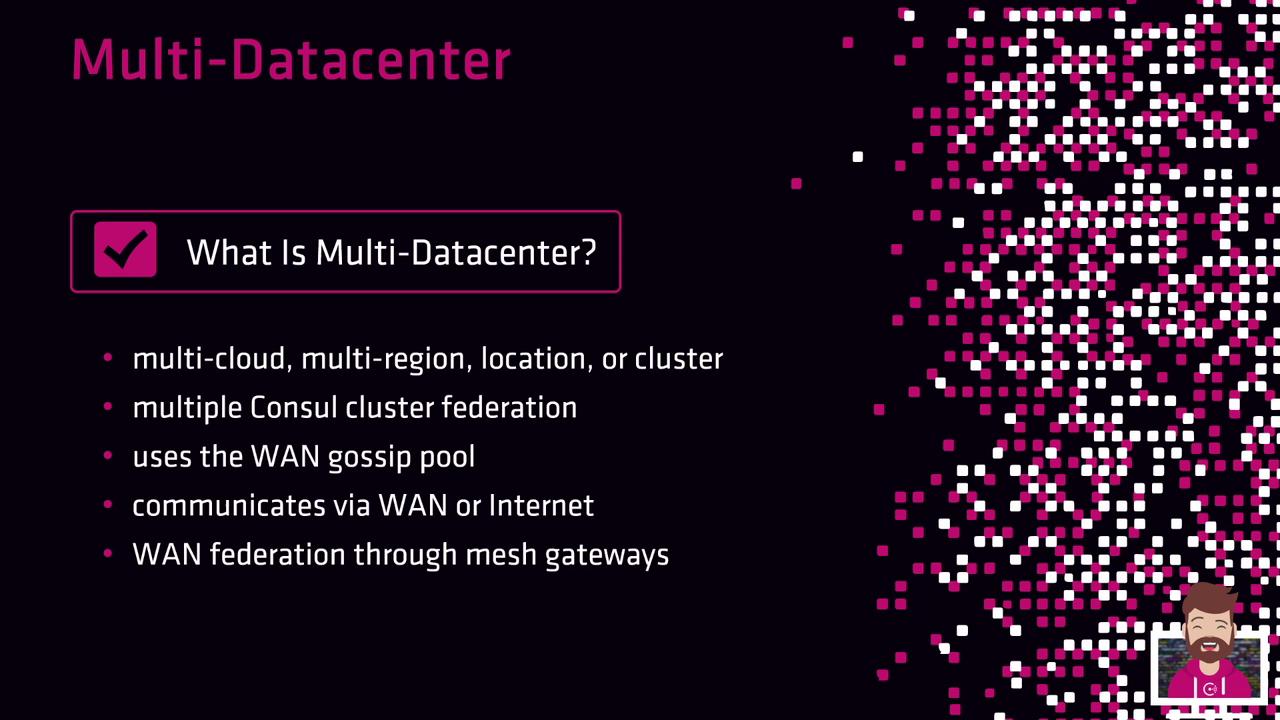
Federated Consul DCs allow cross-DC service discovery and failover. Each DC remains an independent cluster, communicating over WAN gossip or mesh gateways:
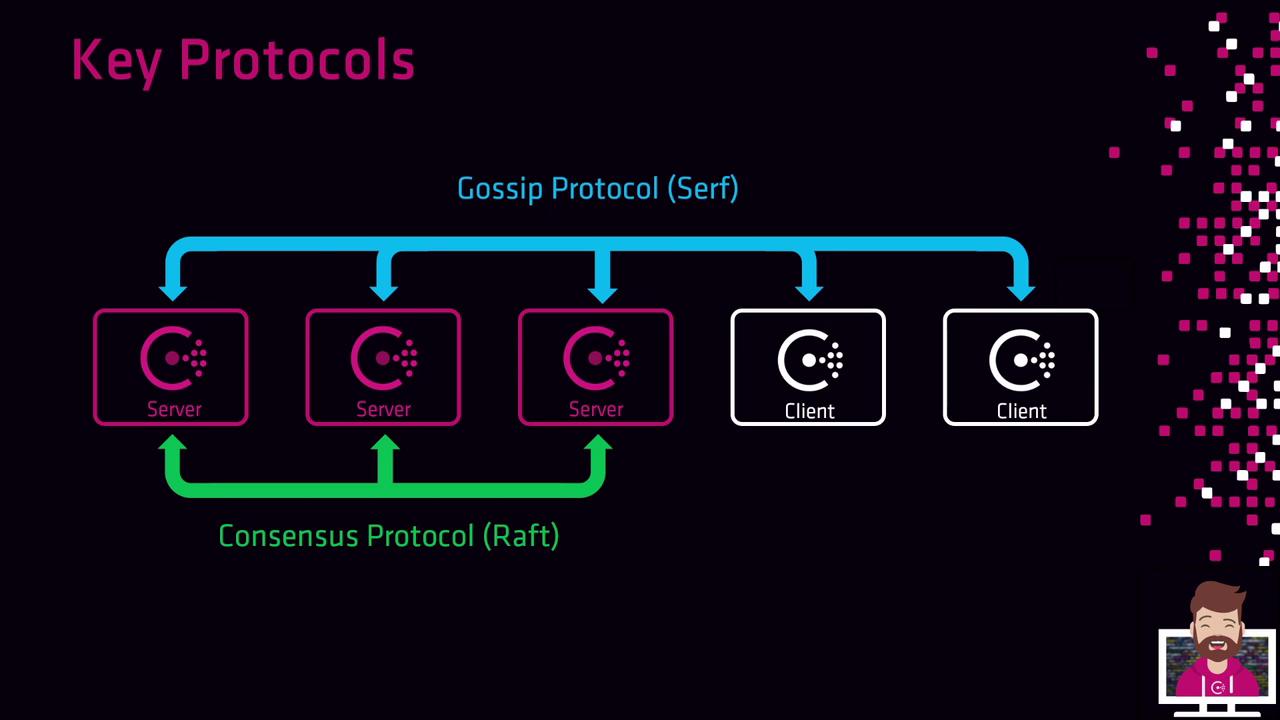
Cluster membership, failure detection, and message broadcast over LAN and WAN
Understanding these components is critical for designing, deploying, and managing a resilient Consul architecture optimized for service discovery and health monitoring.