Understanding the tactics used in network attacks is critical for cybersecurity professionals. Recognizing these techniques helps in designing robust defenses to mitigate threats effectively.
Denial of Service (DoS) and Distributed Denial of Service (DDoS) Attacks
A Denial of Service (DoS) attack aims to render a website or service inaccessible by overwhelming it with an enormous volume of traffic. In contrast, a Distributed Denial of Service (DDoS) attack involves multiple computers concurrently generating this excessive traffic. In most cases, these machines are compromised devices, collectively known as a botnet, which are remotely controlled by the attacker to flood the target server with requests.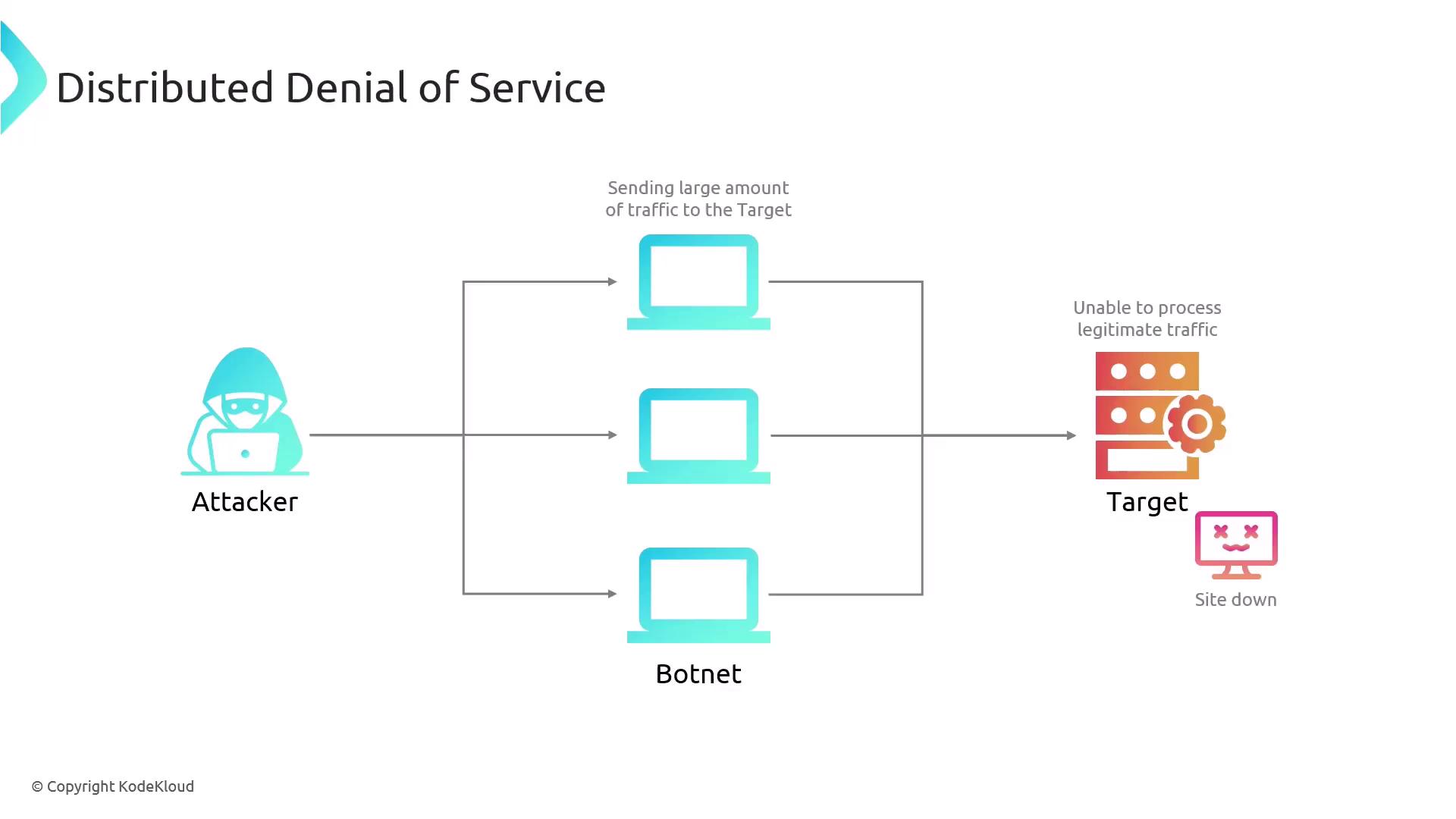
DDoS attacks can severely disrupt business operations. It is essential to implement robust network monitoring and mitigation strategies to defend against these large-scale attacks.
Domain Name System (DNS) Attacks
The Domain Name System (DNS) plays a pivotal role in resolving human-friendly domain names to their corresponding IP addresses, ensuring proper routing of internet traffic. However, attackers can manipulate the DNS process to redirect users to fraudulent sites or execute phishing schemes without their knowledge. For instance, a harmless URL like “www.kodekloud.gov” might be redirected to a malicious server if the DNS records are tampered with.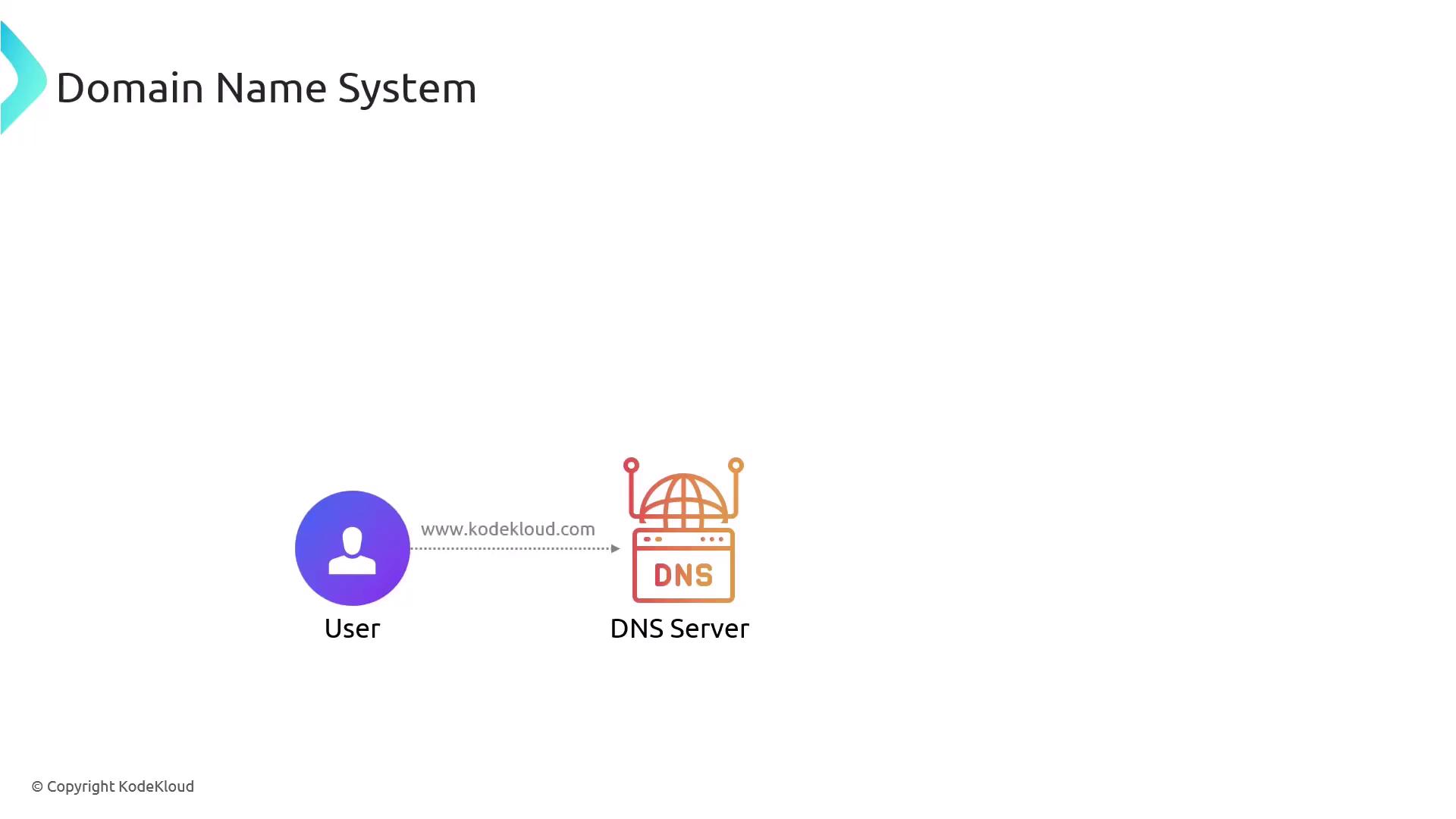
On-Path Attacks
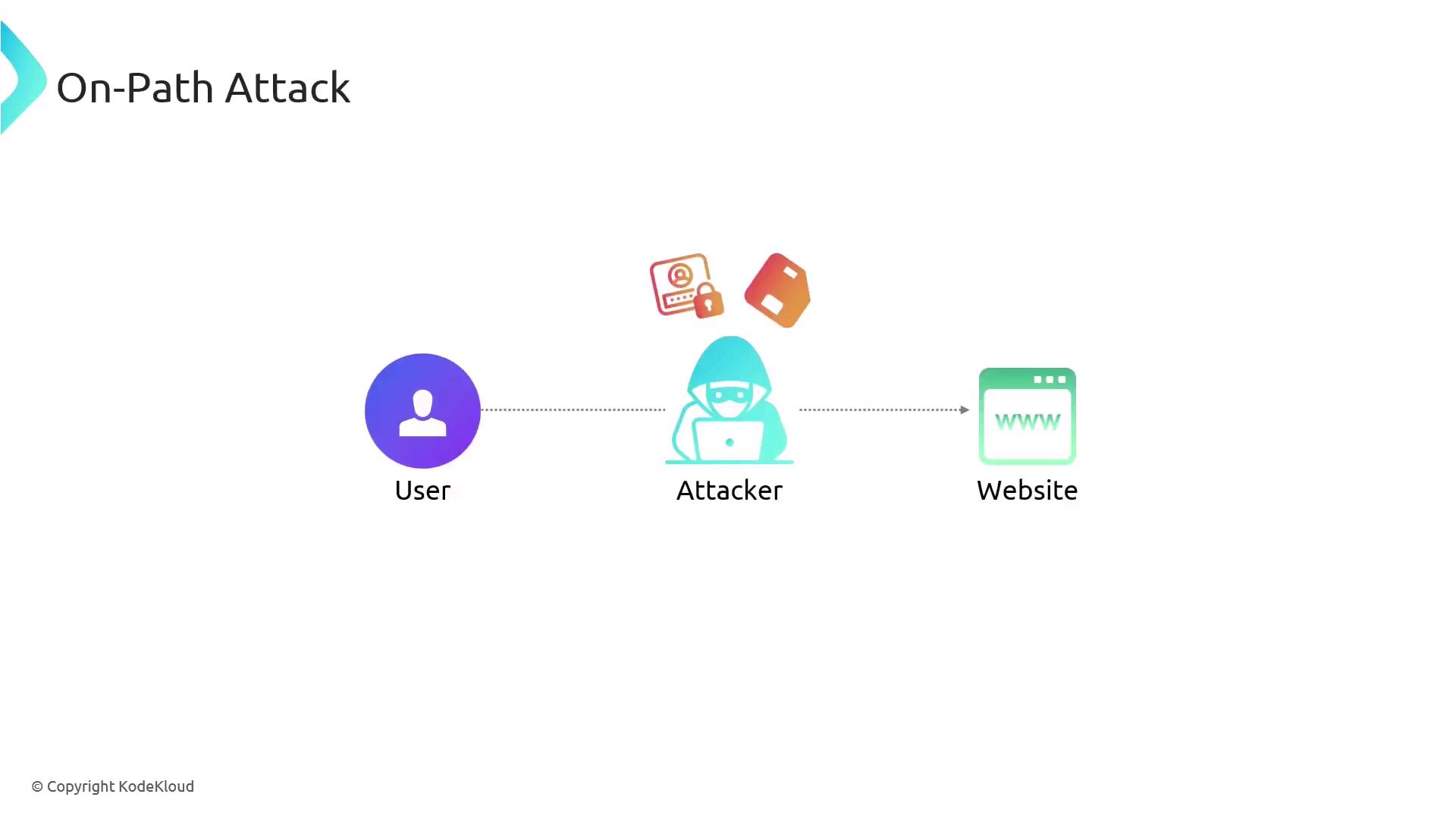
On-path attacks, previously known as man-in-the-middle attacks, occur when an attacker positions themselves between a sender and a receiver in a network communication. This positioning allows the attacker to intercept and potentially alter the traffic, leading to the unauthorized collection of sensitive information such as login credentials or personal data. The attacker can silently eavesdrop on the communication between a user’s computer and a website, compromising the confidentiality and integrity of the data exchanged.