

Log Aggregation
Log aggregation is the process of combining logs from various sources into a single, unified stream. This centralization allows security teams to detect patterns and uncover connections between disparate events that might be overlooked when analyzing individual logs.
Streamlining log aggregation not only simplifies monitoring but also accelerates the identification of anomalies across your systems.
Event Correlation
After aggregating logs, the next step is event correlation. This technique involves linking related events from multiple sources to create a comprehensive picture of a security incident. For instance, an attack might trigger activities across several systems, and analyzing data in isolation could reveal only partial information. By correlating these events, security analysts can better understand the full scope and impact of an incident.Data Archiving
Data archiving involves implementing retention policies to store historical data that might be critical during investigations or legal proceedings. Effective archival practices ensure that essential data remains intact and accessible for forensic analysis whenever it is required.
Maintaining a robust data archiving strategy is key to meeting compliance requirements and preserving evidence for potential future audits.
Alert Tuning
Alert tuning is aimed at minimizing false positives by refining the criteria and processes that trigger alerts. This can be achieved by optimizing collection rules, managing alert floods by routing them to specialized teams, and incorporating machine learning techniques to enhance detection accuracy. Fine-tuning these systems helps reduce noise and ensures that alerts are relevant and actionable for security teams.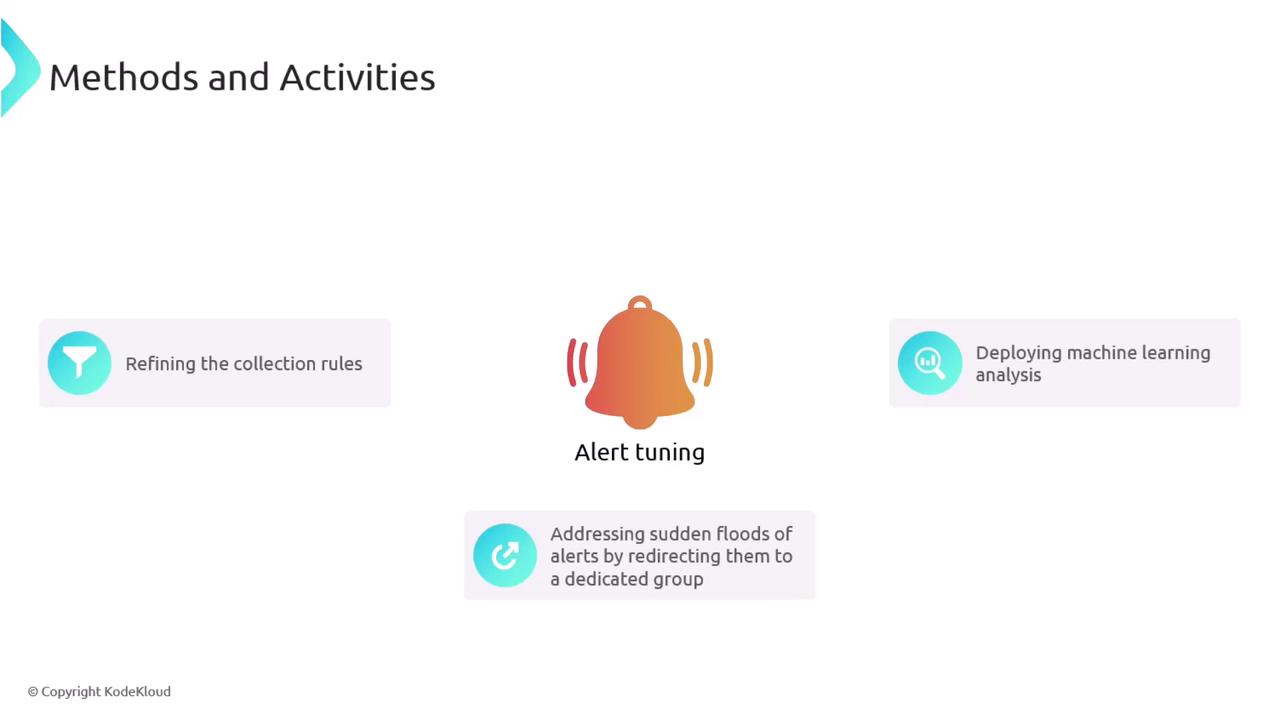
Be cautious when tuning alerts; over-adjustment may lead to missed critical events. Regularly review and adjust your tuning strategy to balance sensitivity with accuracy.