- Understand fundamental security concepts.
- Explore the definition of security controls and differentiate between various types.
- Review key security principles such as the Confidentiality, Integrity, and Availability (CIA) triad, Zero Trust, and physical security measures.
- Examine the Change Management process in detail.
What Are Security Controls?
A security control is an action or countermeasure implemented to mitigate specific security threats. As cyberattacks become more complex, understanding these controls is crucial to safeguarding your systems. Below, we discuss examples to help illustrate how these controls function in practice.Mitigating Malware and Computer Viruses
Malware and computer viruses are among the most common attack vectors. To protect against these threats, many organizations deploy anti-malware and anti-virus detection software.
Protecting Against SQL Injection Attacks
Consider another scenario: running a SQL database as part of an application. SQL databases are particularly vulnerable to SQL injection attacks, during which hackers attempt to manipulate your database by injecting malicious SQL commands.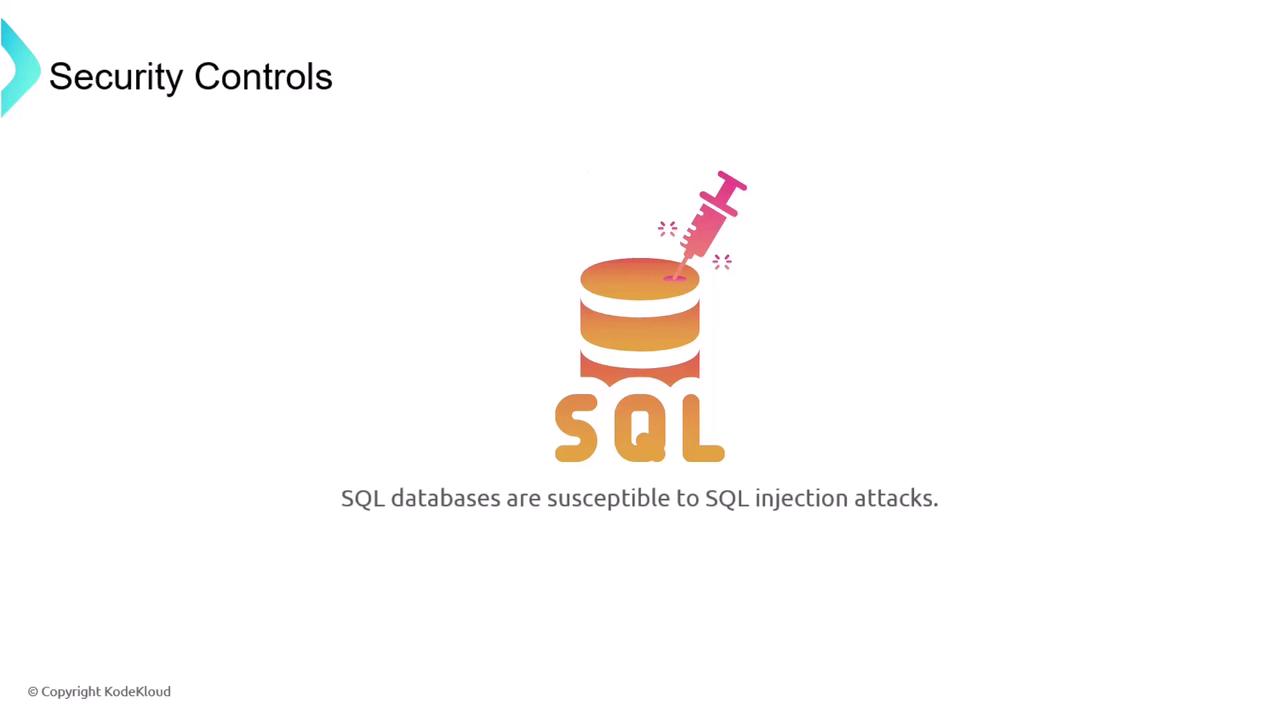
- Input Validation: Ensure all data received by your application is checked for potentially harmful input.
- Code Reviews: Regularly perform thorough code reviews to identify and remediate vulnerabilities.
Implementing robust input validation and comprehensive code reviews can significantly reduce the risk of SQL injection attacks.
The Defensive Role of Security Controls
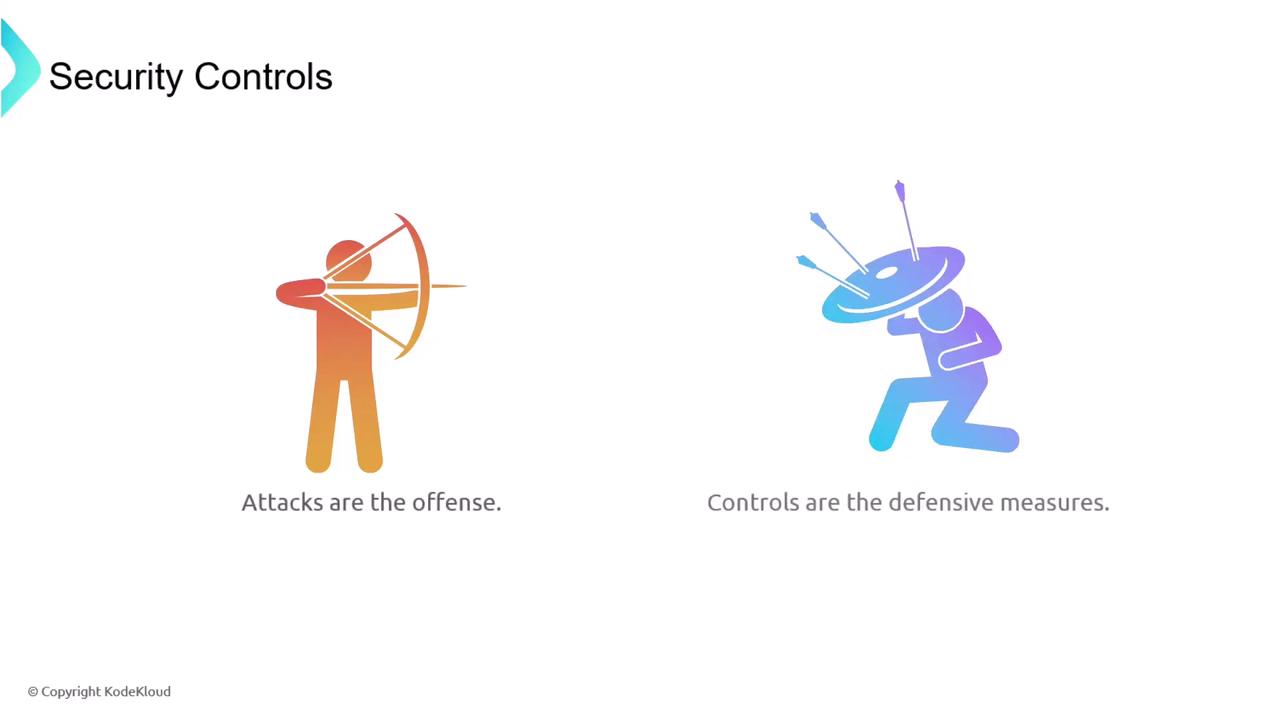
While malicious attacks represent offensive tactics, security controls act as your organization’s defensive measures, preventing or mitigating these attacks.