

What is WebAssembly?
WebAssembly is a universal binary format that enables high-performance code to run directly in the browser. It allows languages such as Rust, C++, and Go to work alongside JavaScript, unlocking new possibilities for performance-critical tasks.

Bridging the Gap in Browser Applications
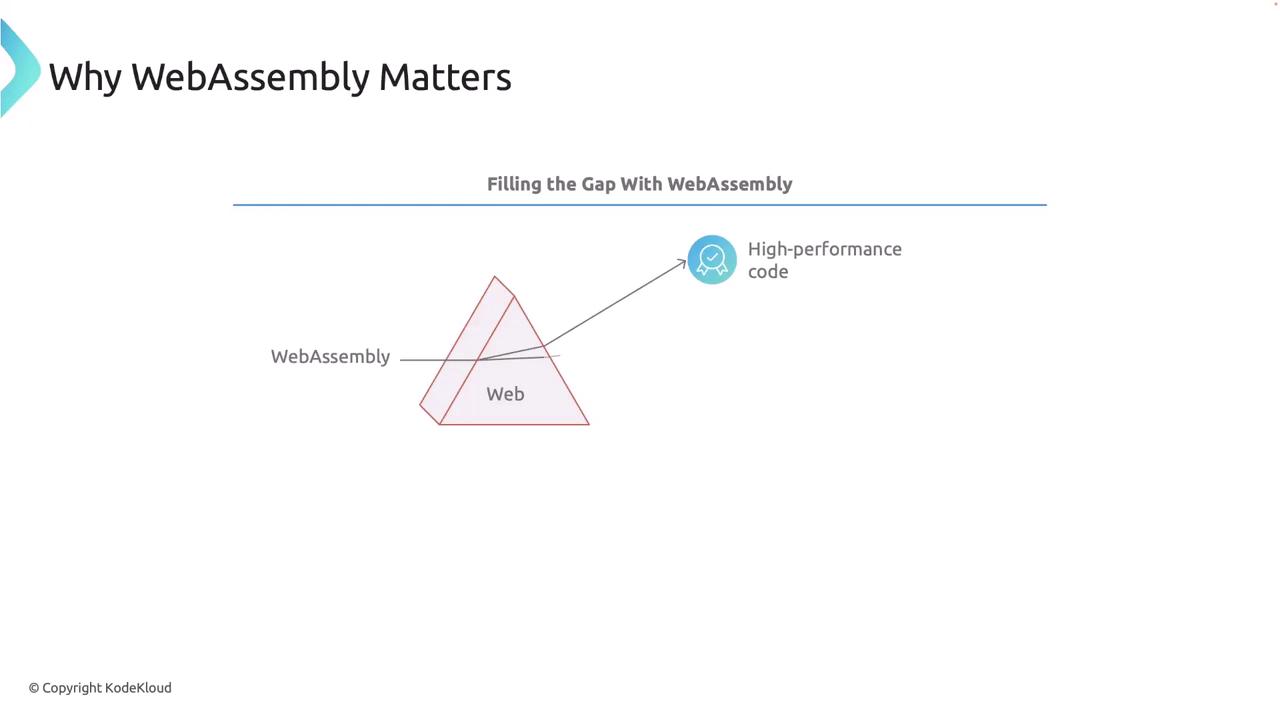
WebAssembly comes into play when browser applications require enhanced performance for tasks like 3D gaming, photo editing, and other computation-heavy processes. By using high-performance languages for critical sections and JavaScript for UI and general logic, developers can achieve significant performance improvements.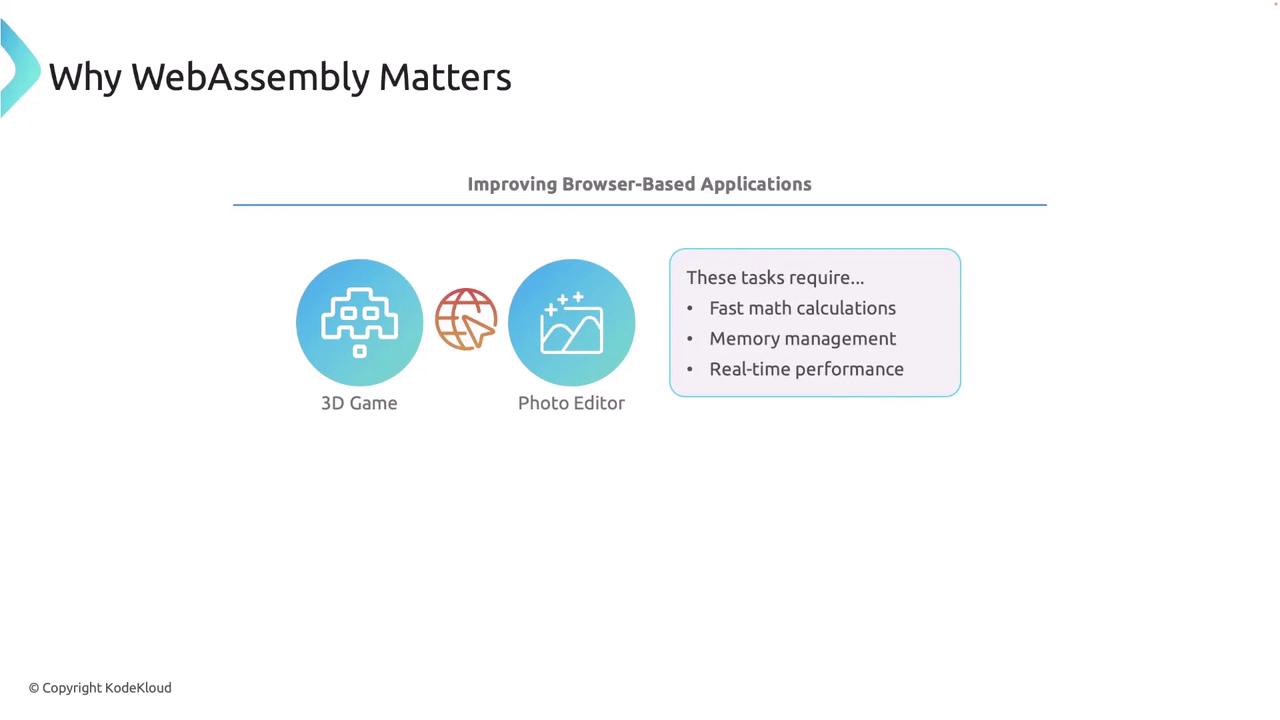
Real-World Examples of WebAssembly
WebAssembly brings tangible benefits to various domains. Here are some real-world examples demonstrating its impact:- Gaming:
Many modern online games leverage WebAssembly to manage real-time 3D graphics, physics calculations, and complex interactions. This results in smoother gameplay, improved responsiveness, and reduced lag during intense processing tasks.

- Video Editing Tools:
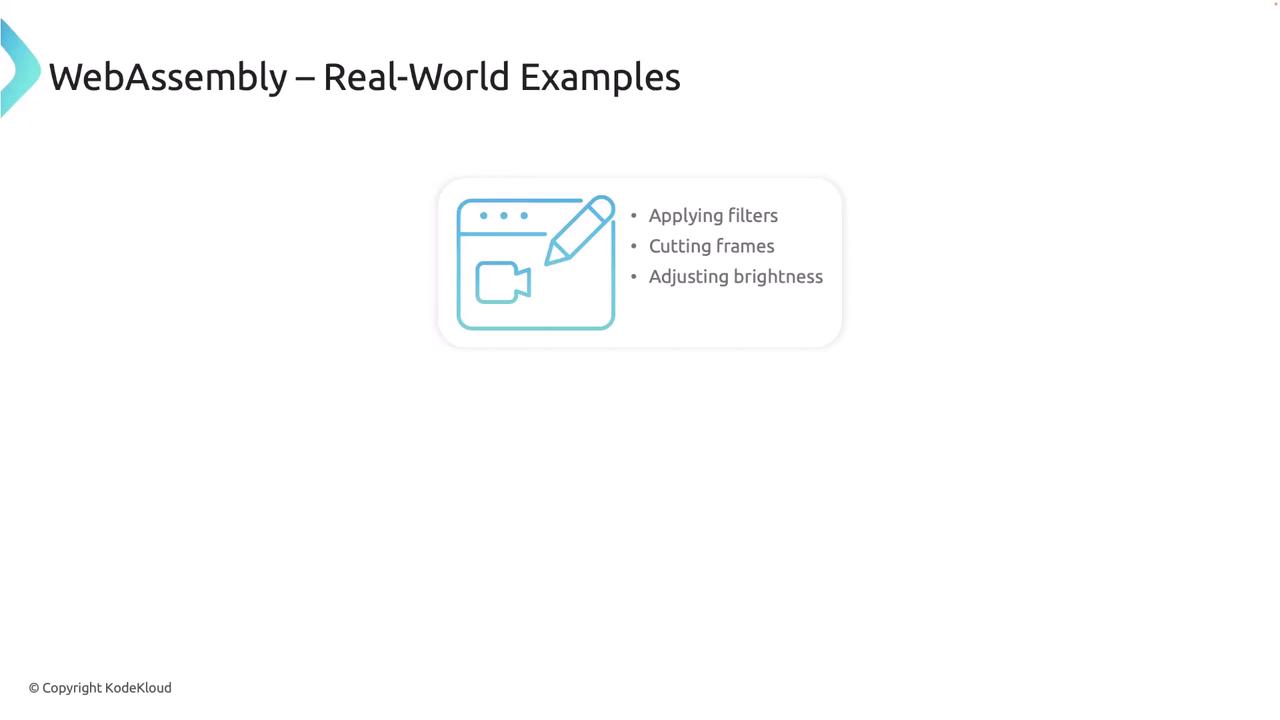
Imagine editing a high-definition video in your browser—applying filters, cutting frames, or adjusting brightness in real time. WebAssembly makes it possible to handle these resource-intensive tasks efficiently, providing a more responsive user experience.
- Scientific Simulations:
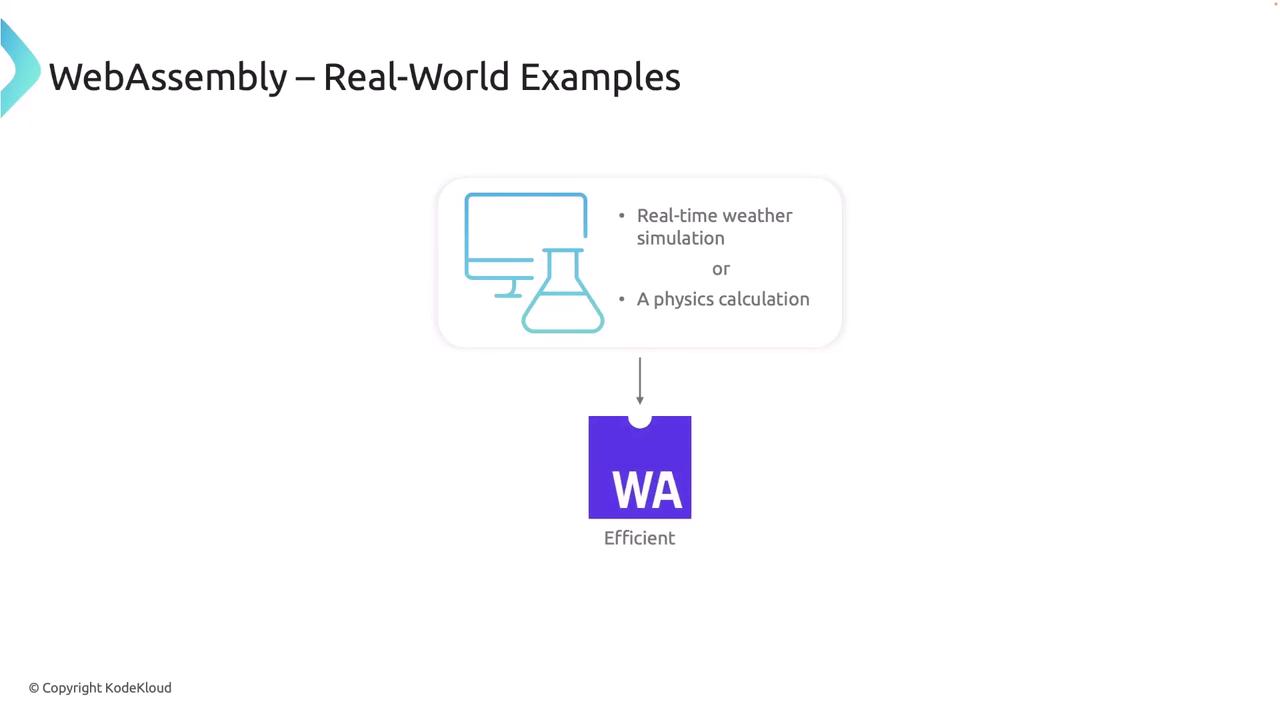
From real-time weather simulations to complex physics calculations, WebAssembly empowers researchers to run data-heavy processes directly in the browser without relying heavily on specialized software.
Why Rust is the Perfect Match for WebAssembly
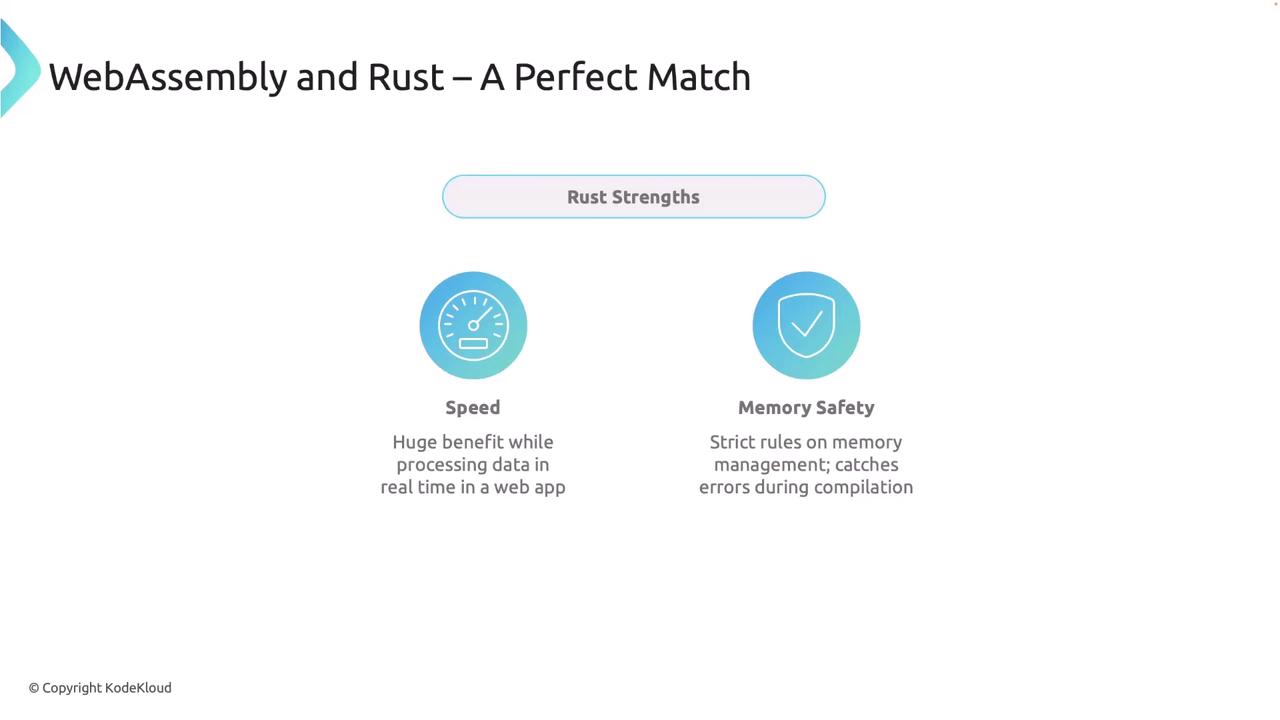
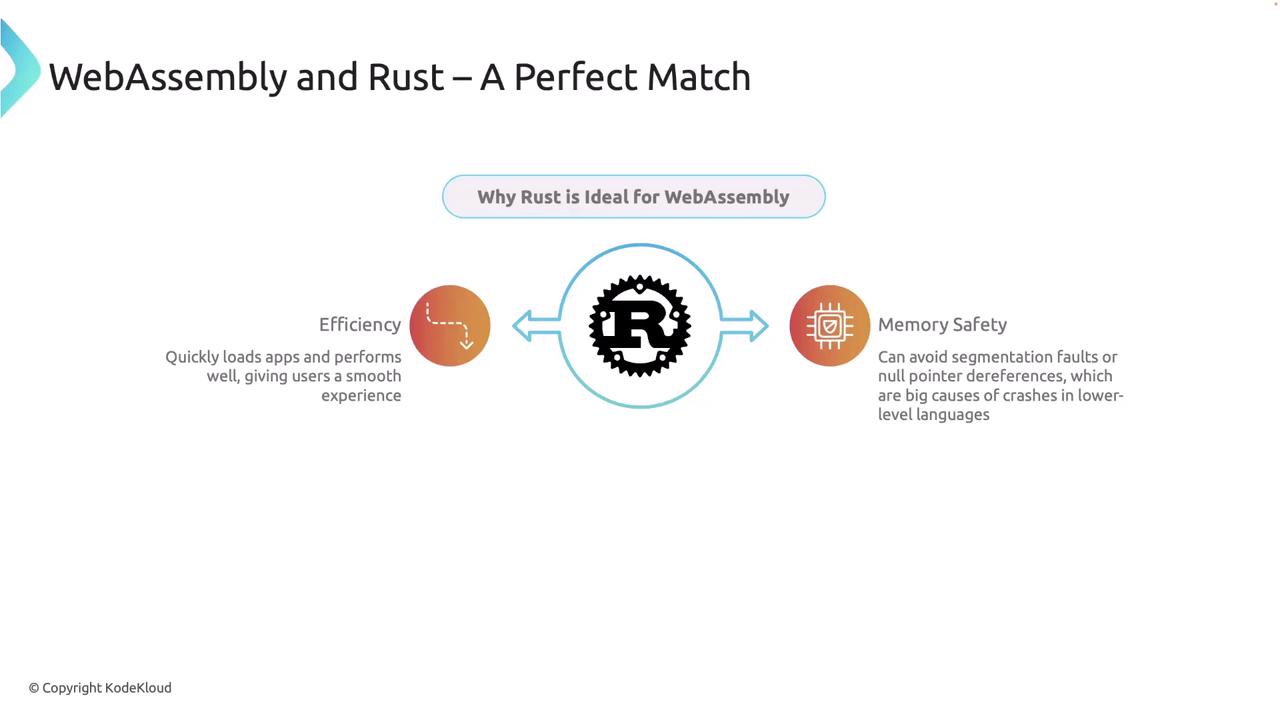
Rust is renowned for its speed and memory safety, two critical aspects that make it an excellent choice for WebAssembly development.-
Speed:
Rust is designed to be as fast as C++, ensuring swift data processing for real-time applications. This high level of efficiency is a significant advantage when handling performance-critical tasks on the web. -
Memory Safety:
Rust enforces strict memory management rules and detects many errors during compile time. This rigorous approach minimizes issues such as crashes and memory leaks—problems that are especially impactful in web environments.
By harnessing Rust’s capabilities, developers can build web applications that are not only powerful but also safe and reliable, making the most of what both WebAssembly and modern web technologies have to offer.
Conclusion
In this article, we covered the fundamentals of WebAssembly, its role in modern browser applications, and why Rust is ideally suited for tackling performance-intensive tasks on the web. WebAssembly empowers developers by allowing them to optimize the most demanding parts of their applications without compromising the accessibility and flexibility provided by traditional web technologies. Stay tuned for our next article, where we will guide you through setting up your development environment and writing your first Rust code that compiles seamlessly into WebAssembly. For more in-depth insights and hands-on examples, continue following our series.Be sure to check out our upcoming posts for practical tips and detailed tutorials on WebAssembly and Rust integration.