

What Is a Thread?
A thread is a lightweight unit of a process that runs concurrently with other threads in the same process. While each thread has its own execution context—complete with its own stack and program counter—all threads share the same memory space. This shared memory enables effective inter-thread communication but also poses challenges such as data races. Rust’s ownership model is designed to prevent these issues by enforcing strict rules on memory access.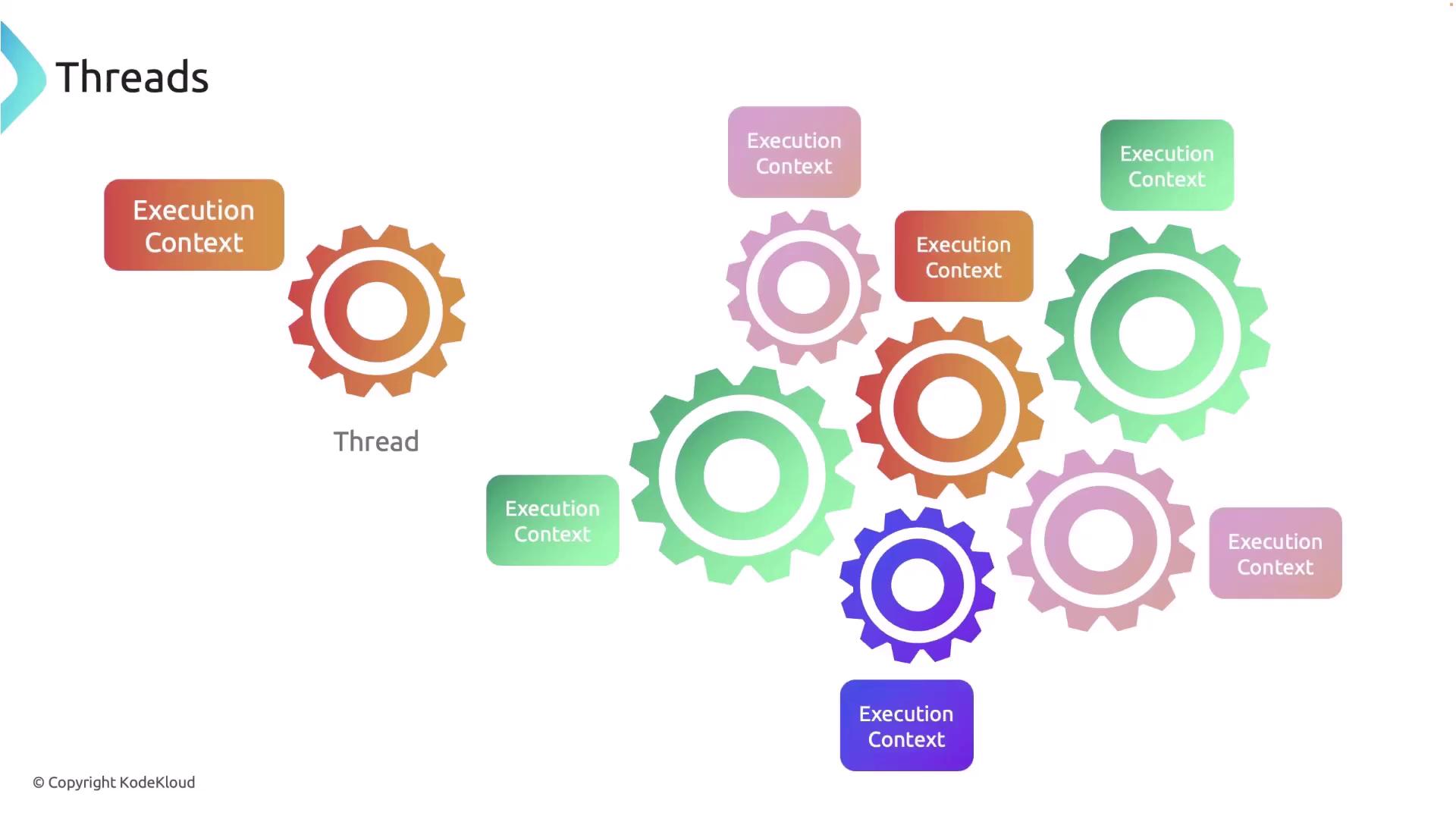
Creating a Thread
Creating a thread in Rust is straightforward with the help of the standard library’s thread module and itsspawn function. The spawn function takes a closure that contains the code to run concurrently with the main thread. Consider the following example:
Keep in mind that because threads run concurrently, the order of printed messages between the spawned thread and the main thread is not guaranteed.
Ensuring Thread Completion with Join
To ensure that a spawned thread completes its execution before the main thread terminates, Rust offers thejoin method. The spawn function returns a join handle representing the spawned thread, and calling join() on this handle blocks the main thread until the spawned thread finishes.
Here’s an example that demonstrates how to use join:
join guarantees that both the main and spawned threads complete their tasks, thereby preventing premature termination of the spawned thread.
Moving Ownership into Threads with the Move Keyword
Rust allows you to transfer ownership of variables into threads using themove keyword. This is particularly useful when data owned by the main thread needs to be accessed within a spawned thread. Without move, the closure might borrow values from the parent thread, leading to potential lifetime issues.
Consider the following code that attempts to borrow a vector from the main thread:
v, which is owned by the main function. To resolve this issue, add the move keyword to transfer ownership of v into the closure:
Using the
move keyword ensures that the data remains valid for the spawned thread, but remember that the original owner in the main thread loses access to that data.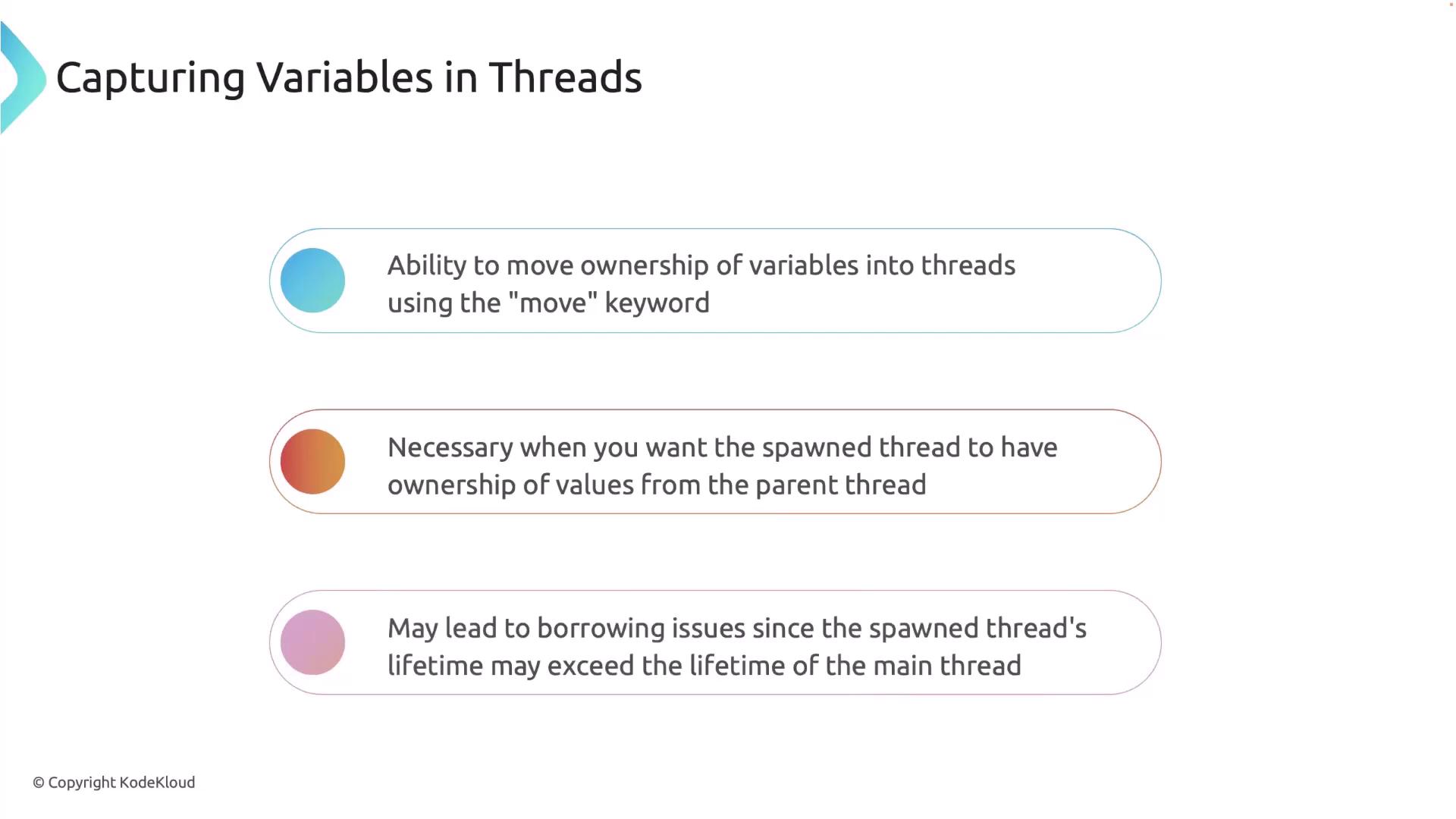
Handling Panics in Threads
Sometimes a thread may panic during execution. When you calljoin() on a thread that has panicked, the panic is propagated back to the main thread. You can handle this scenario gracefully by matching on the Result returned by join(). For example:
join(). By matching on the result, you can gracefully handle the error and take appropriate measures as needed.
By understanding and leveraging thread spawning, joining, and ownership transfer with the
move keyword, you can effectively manage concurrency in Rust. These techniques safeguard against common pitfalls such as data races and ensure that all threads complete their execution as expected.
For further details, you might want to explore more about Rust’s concurrency guarantees and how its ownership model contributes to thread safety.