Understanding the Stack
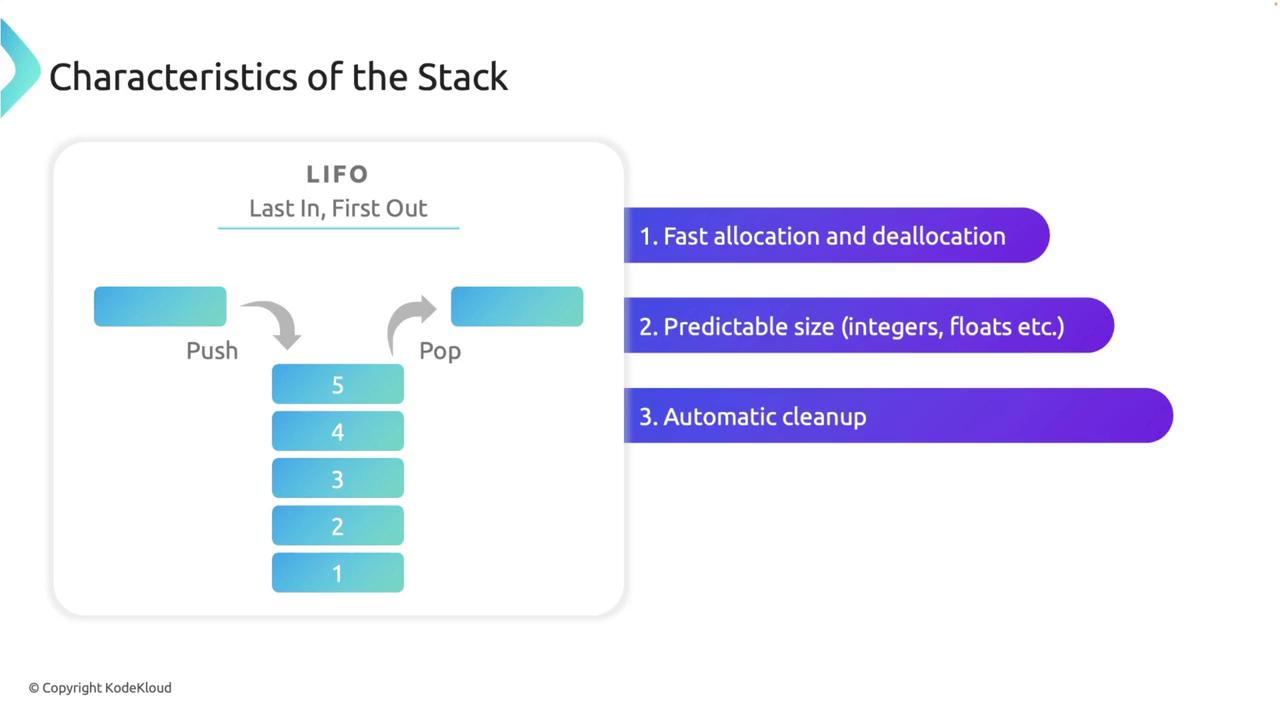
The stack is a region of memory that stores values in a Last-In-First-Out (LIFO) manner. It offers fast, efficient storage for short-lived data and function calls. Each time a function is called, a new stack frame is created, and when the function returns, that frame is removed. Some key characteristics of stack memory include:- Fast allocation and deallocation: Memory management is as simple as moving the stack pointer.
- Fixed size at compile time: The size of data (e.g., integers, floats) must be known when compiling.
- Automatic cleanup: When a function exits, its stack frame is automatically removed.
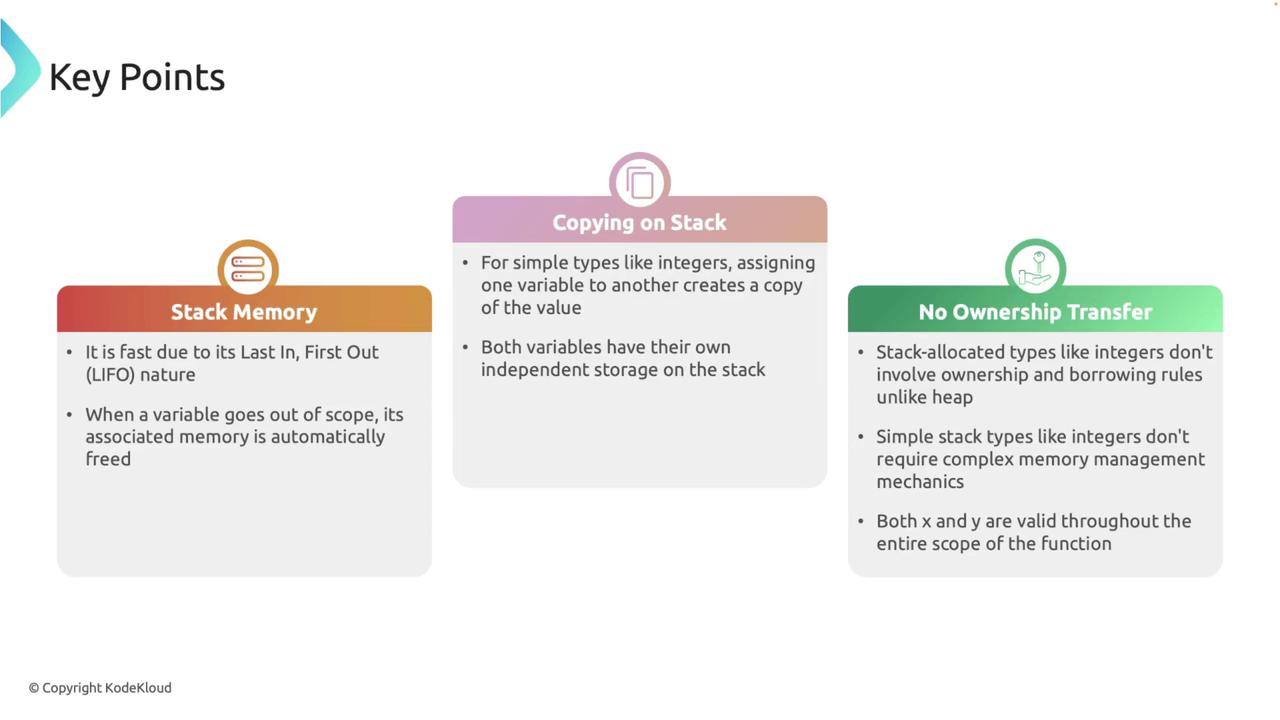
In Rust, simple types like integers are copied rather than transferred, meaning that each variable gets its independent allocation on the stack.
Understanding the Heap
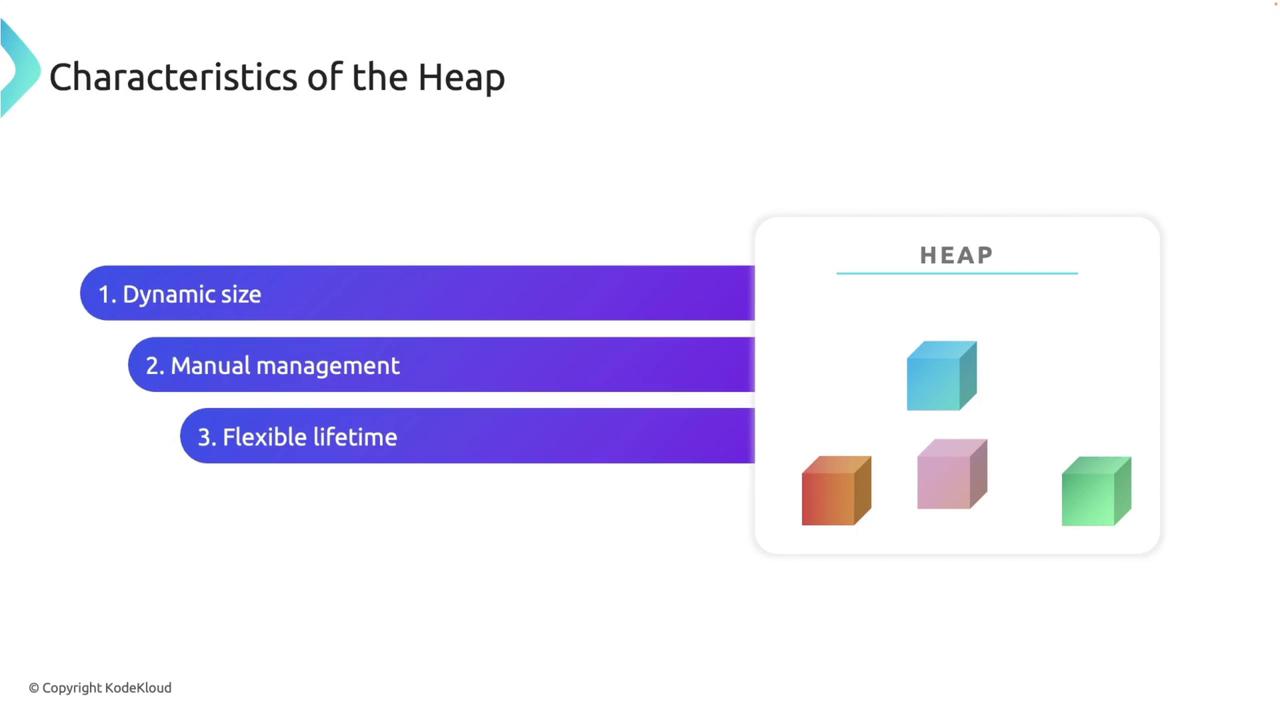
The heap is used for managing data that requires dynamic memory allocation. Unlike the stack, the heap is more flexible in size, and memory is allocated and freed manually, which can affect performance. Key characteristics of heap memory are:- Dynamic size: The size of the allocated data is determined at runtime.
- Explicit management: Allocation and deallocation require explicit instructions, adding complexity.
- Flexible lifetime: Data on the heap can persist longer than the function that created it.
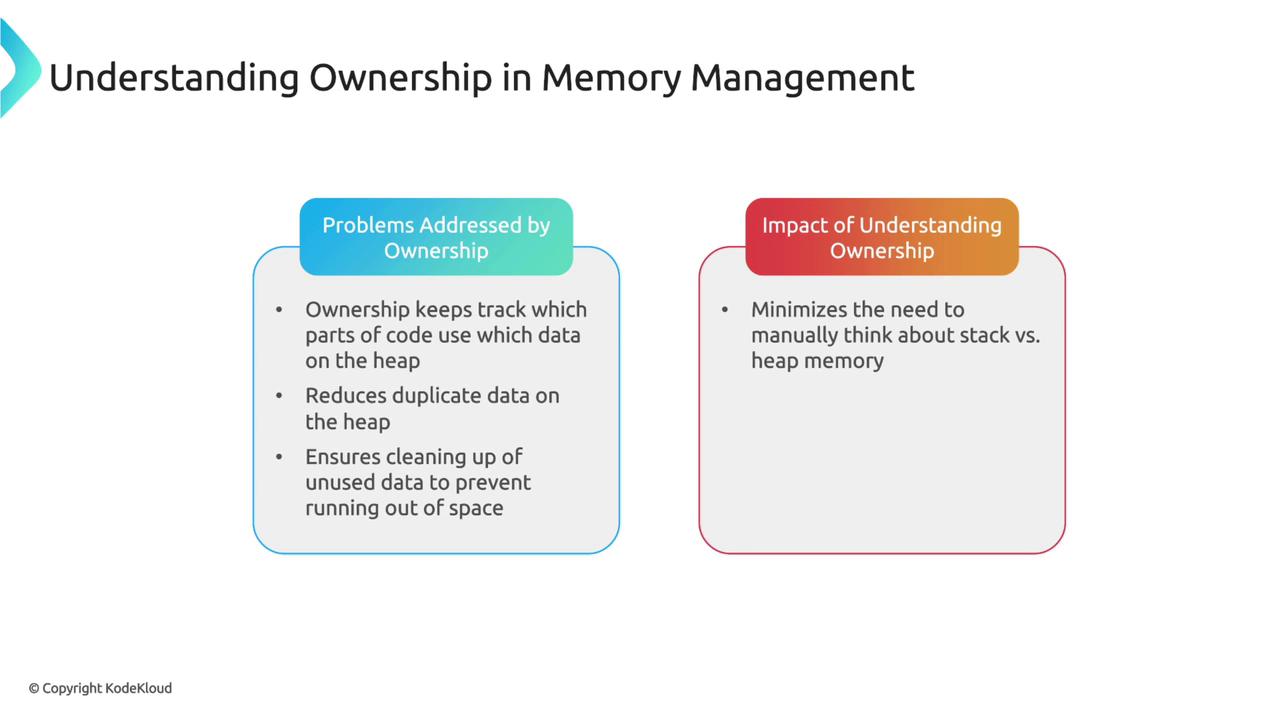
Rust’s ownership system helps manage heap memory by automatically freeing it when it goes out of scope, thereby reducing the chances of memory leaks.
Comparing Stack and Heap Memory
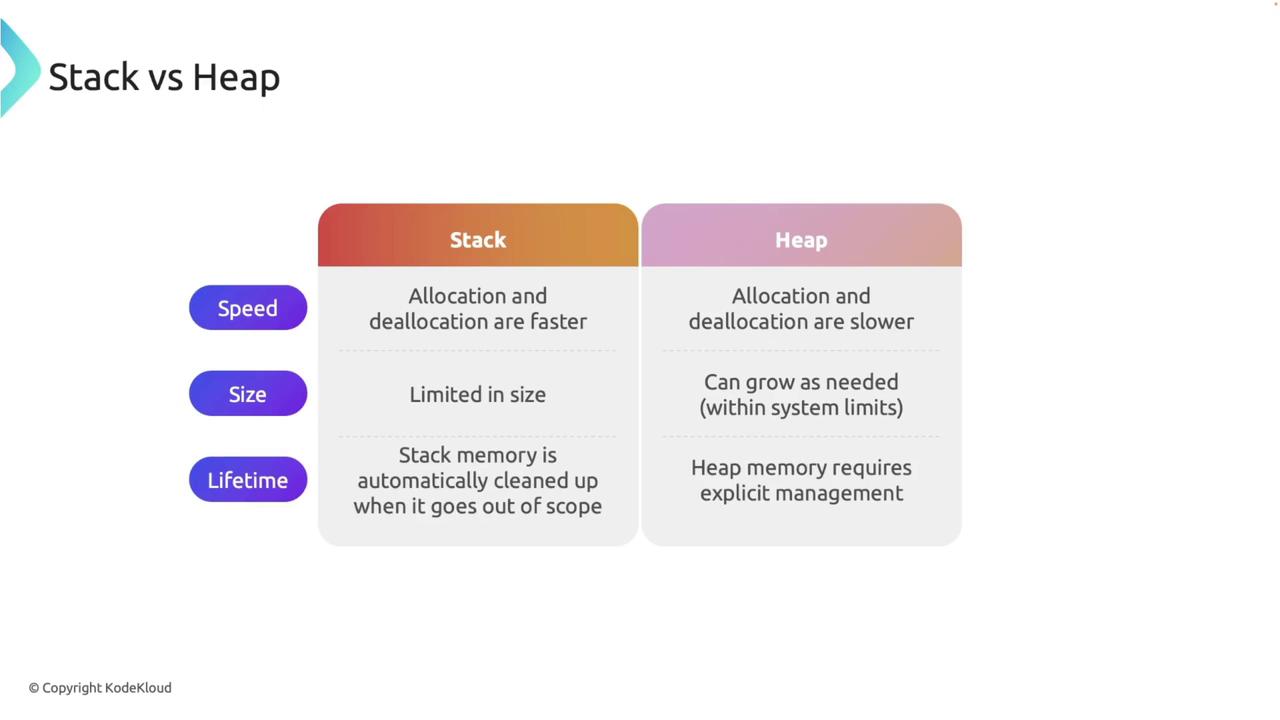
A solid understanding of Rust’s memory management begins with recognizing the differences between stack and heap memory. The following table summarizes the key differences:| Aspect | Stack | Heap |
|---|---|---|
| Allocation | Fast (LIFO) | Slower, requires manual allocation/deallocation |
| Size | Fixed (set at compile time) | Dynamic (grows at runtime within system limits) |
| Lifetime | Automatic cleanup when out of scope | Flexible, requires explicit management |
| Usage | Temporary data and function calls | Complex, variable-sized data like Strings and Vectors |