This article discusses Jenkins Configuration as Code, enabling management of Jenkins configurations through a single YAML file for improved automation and version control.
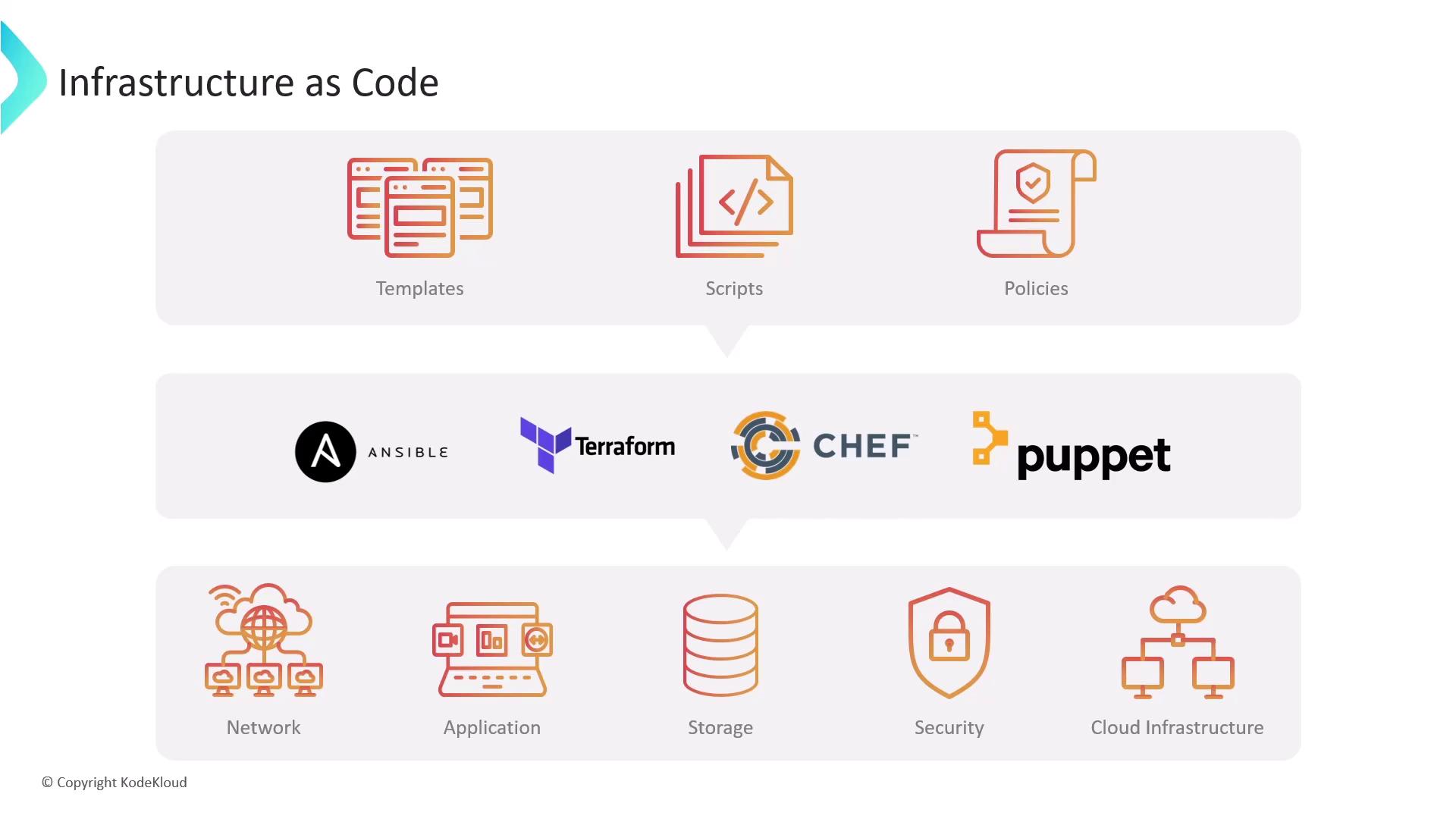
Before exploring Jenkins Configuration as Code, let’s revisit Infrastructure as Code (IaC). As organizations scale, managing infrastructure manually becomes error-prone and inefficient. Tools like Ansible, Terraform, Puppet, and Chef let you define network, compute, storage, and security resources as code—making deployments repeatable, versioned, and automated.
Just as IaC revolutionizes infrastructure management, Jenkins Configuration as Code (JCasC) brings the same benefits to your CI/CD platform.
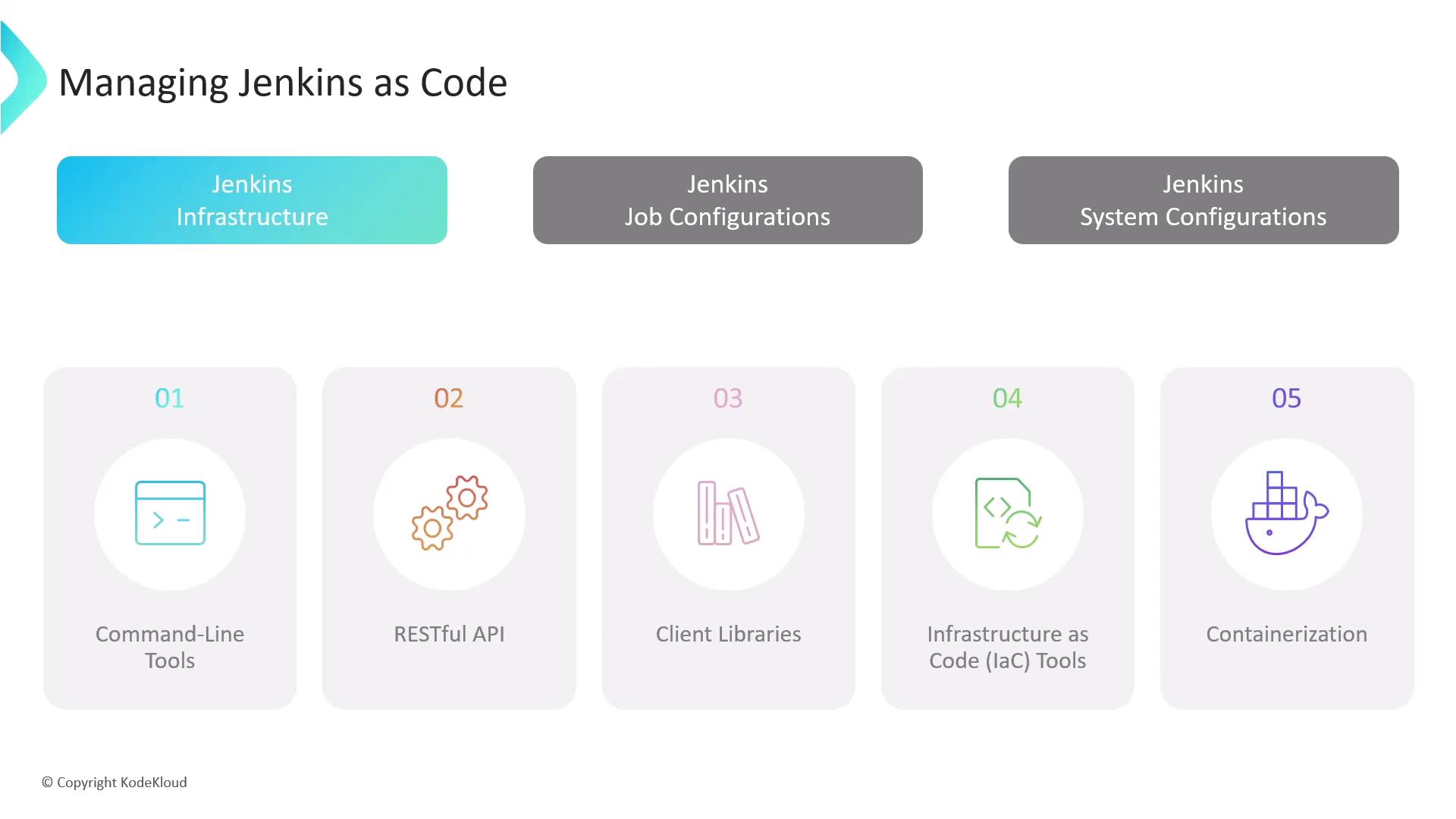
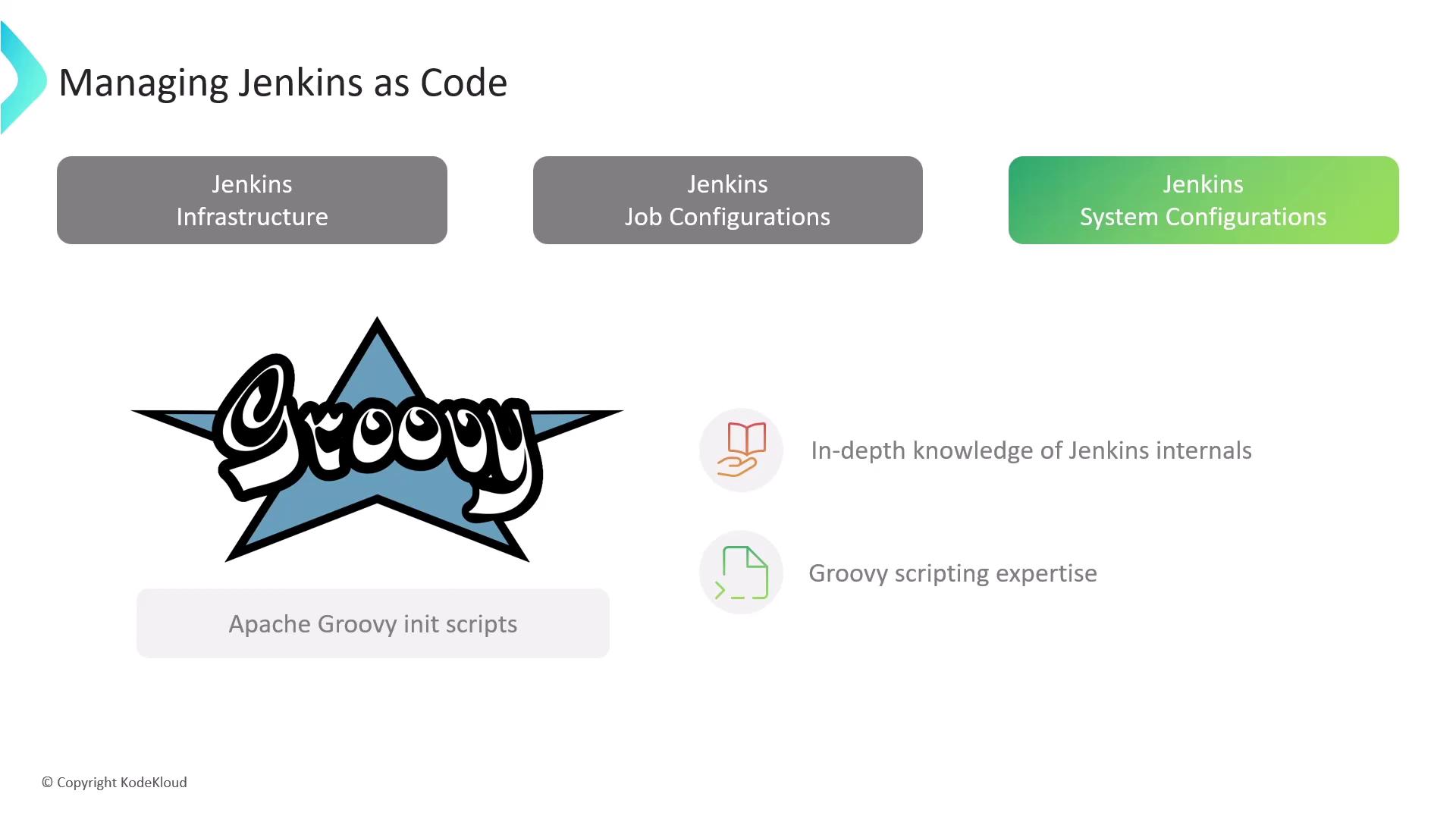
Historically, many admins scripted Jenkins setup with Apache Groovy init scripts. While powerful, these scripts require deep knowledge of the Jenkins API and plugin internals.
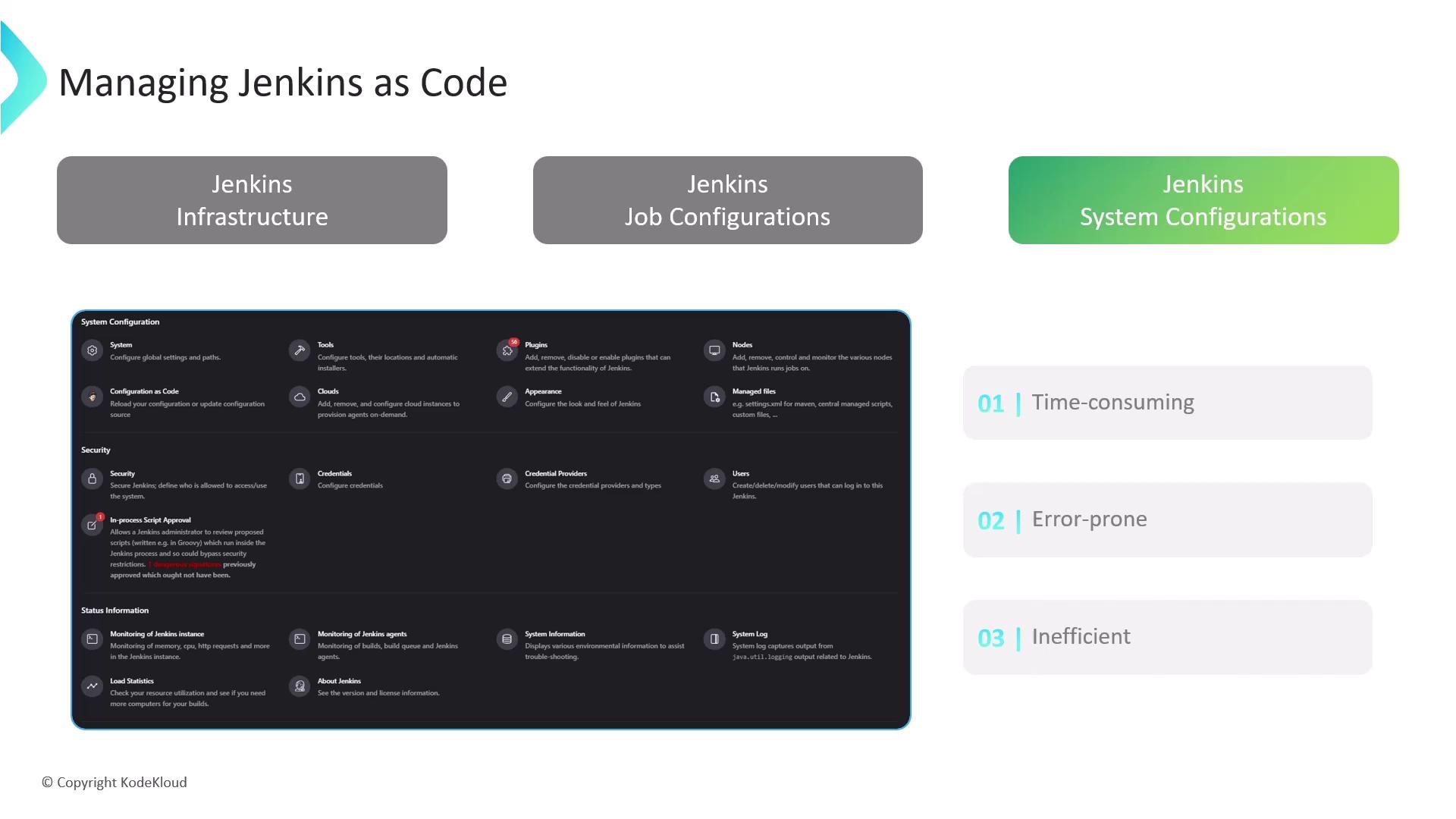
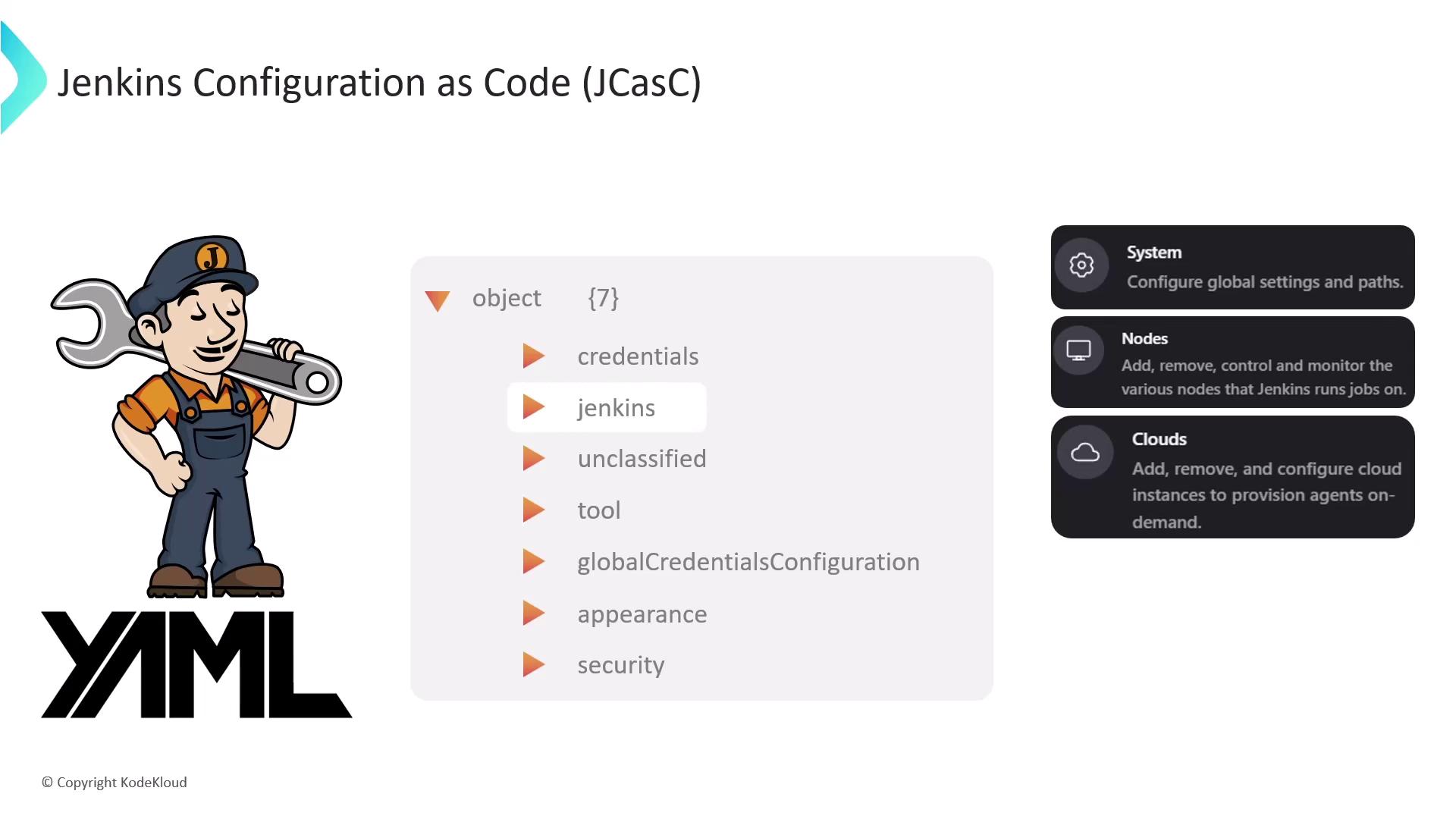
The Configuration as Code plugin enables you to define your entire Jenkins instance in a single human-readable YAML file. This mirrors every option in the UI:
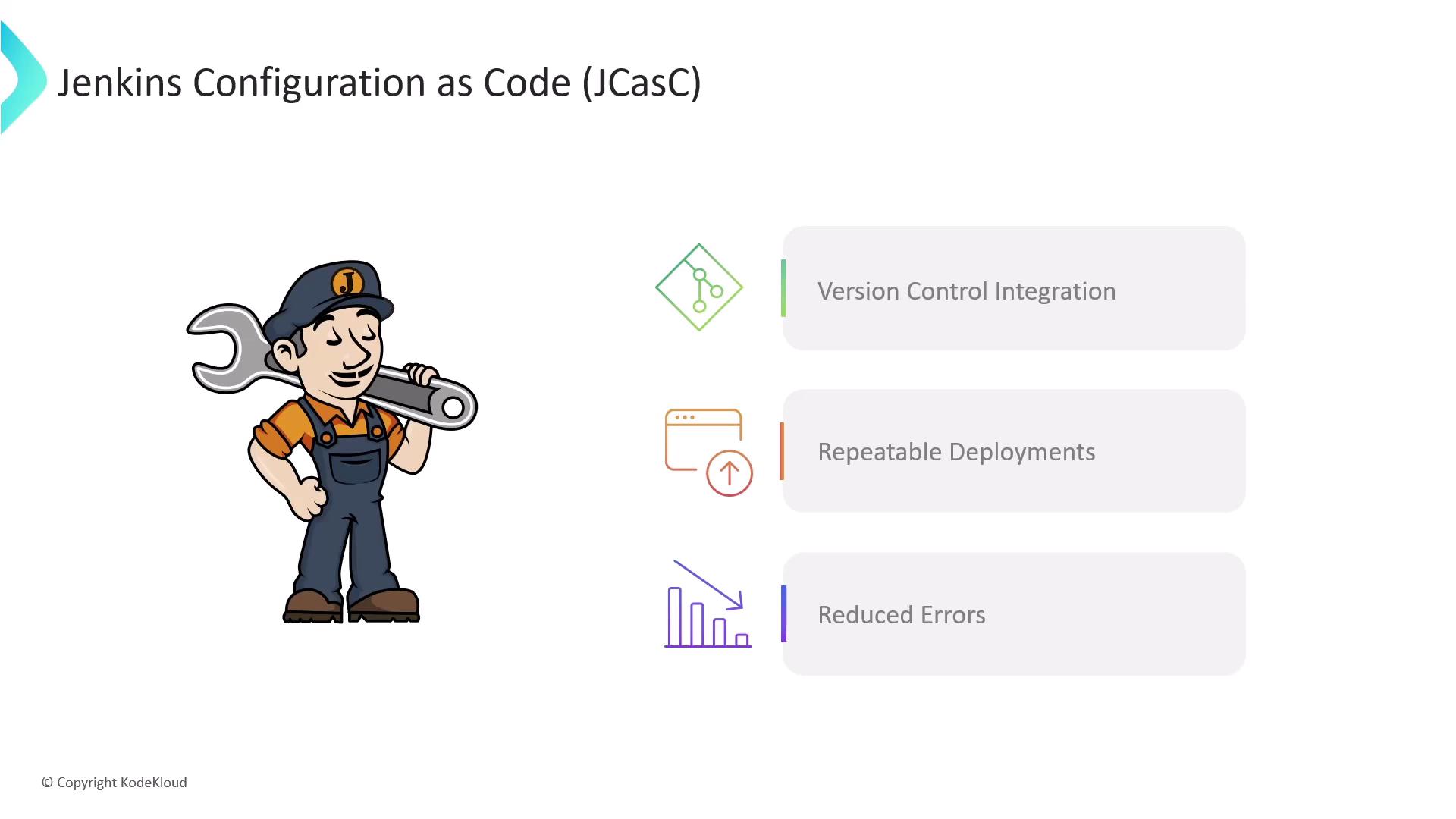
Version-controlled in Git alongside your apps
Self-configuring new instances for zero-touch provisioning
Fewer manual errors—YAML syntax is easy to validate