

Container isolation in CI/CD jobs reduces database locks and prevents resource contention.
Consider adopting this pattern early for any large-scale pipeline.
Consider adopting this pattern early for any large-scale pipeline.
Pipeline Optimization Overview
- Separated build/test jobs from long-running service containers
- Reduced concurrent connections on production DB by 40%
- Improved average job runtime by 25%
Deployment Stage Roadmap
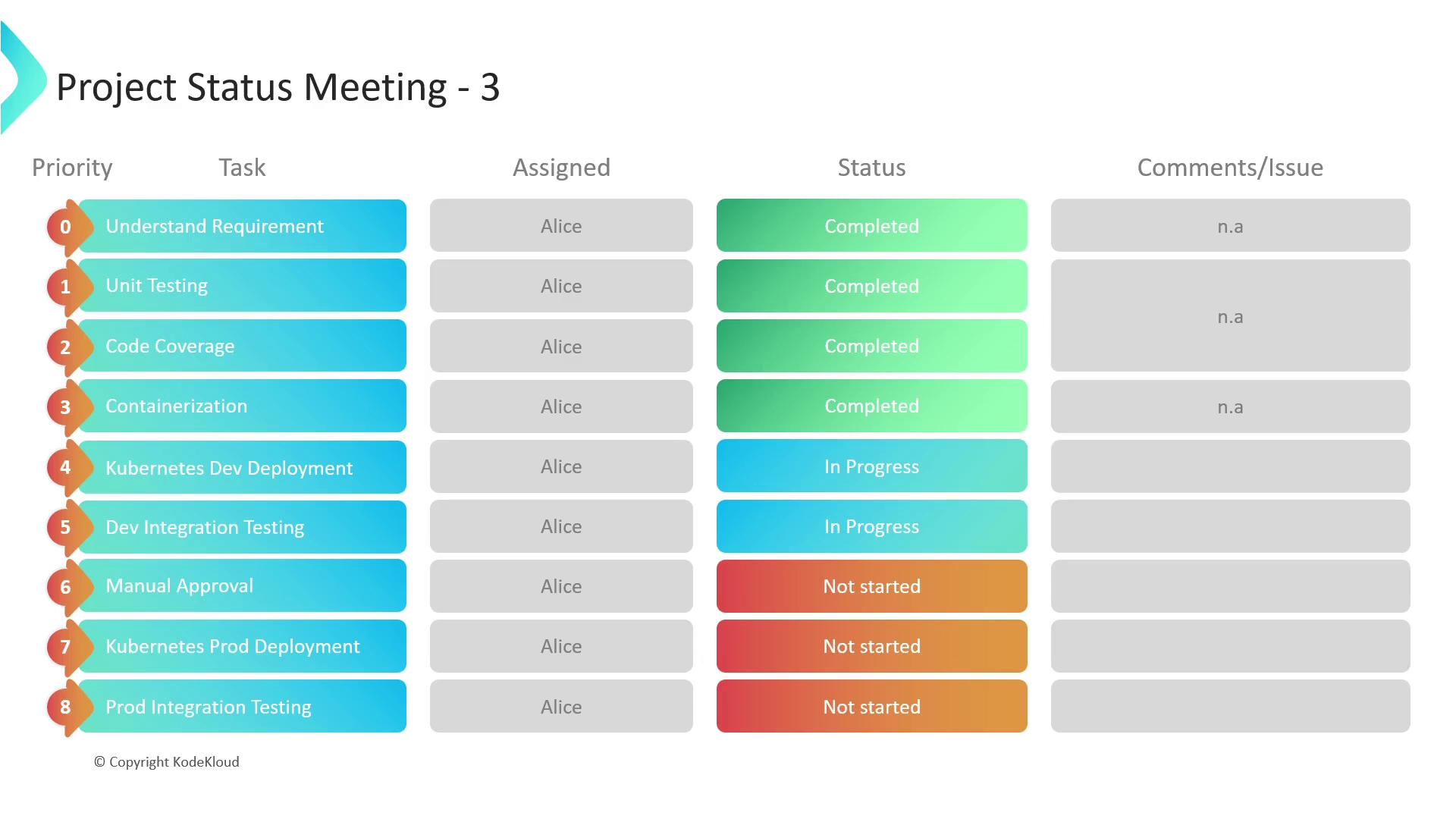
With the core optimizations complete, Alice and her team are now focusing on the next steps: defining deployment requirements, selecting orchestration tools, and automating rollout strategies. Below is the current project status, highlighting priorities, assignees, and outstanding issues.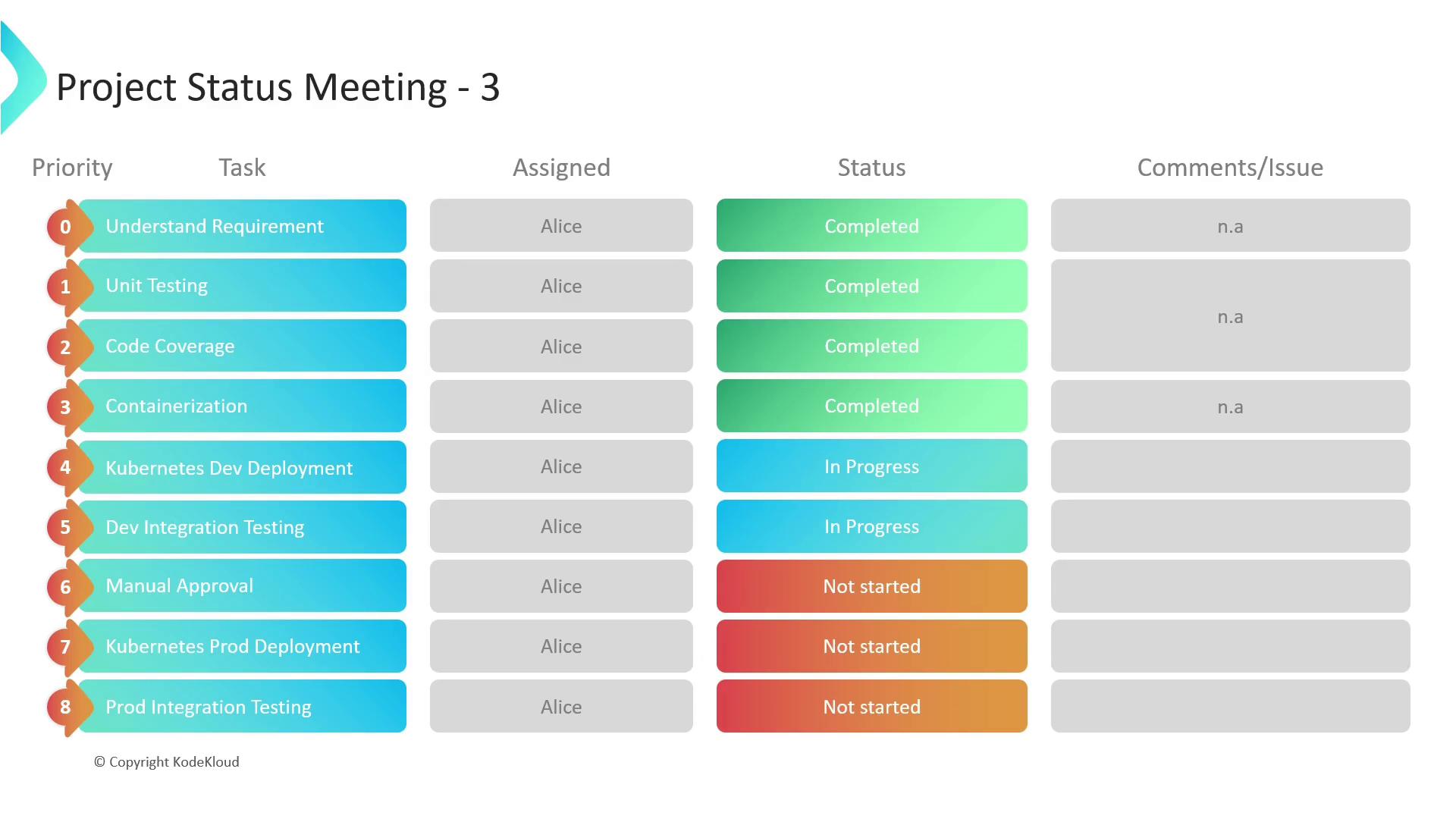
| Task | Priority | Assignee | Status | Comments / Issues |
|---|---|---|---|---|
| Define k8s deployment specs | High | Alice | In Progress | Waiting on service account permissions |
| CI to CD handoff automation | Medium | Alice | Not Started | Evaluate GitLab release job |
| Helm chart templating | Low | Alice | Not Started | Research community charts |
| Canary and blue/green rollout | High | Alice | Not Started | Drafting rollback procedures |
Before scaling up in Kubernetes, double-check resource requests/limits to prevent OOM kills and scheduler evictions.
Next Sessions & Resources
In upcoming meetings, we’ll cover:- Kubernetes Fundamentals: pods, services, deployments
- Helm & Chart Management: templating and versioning
- Automated Rollbacks & Monitoring: integrating health checks