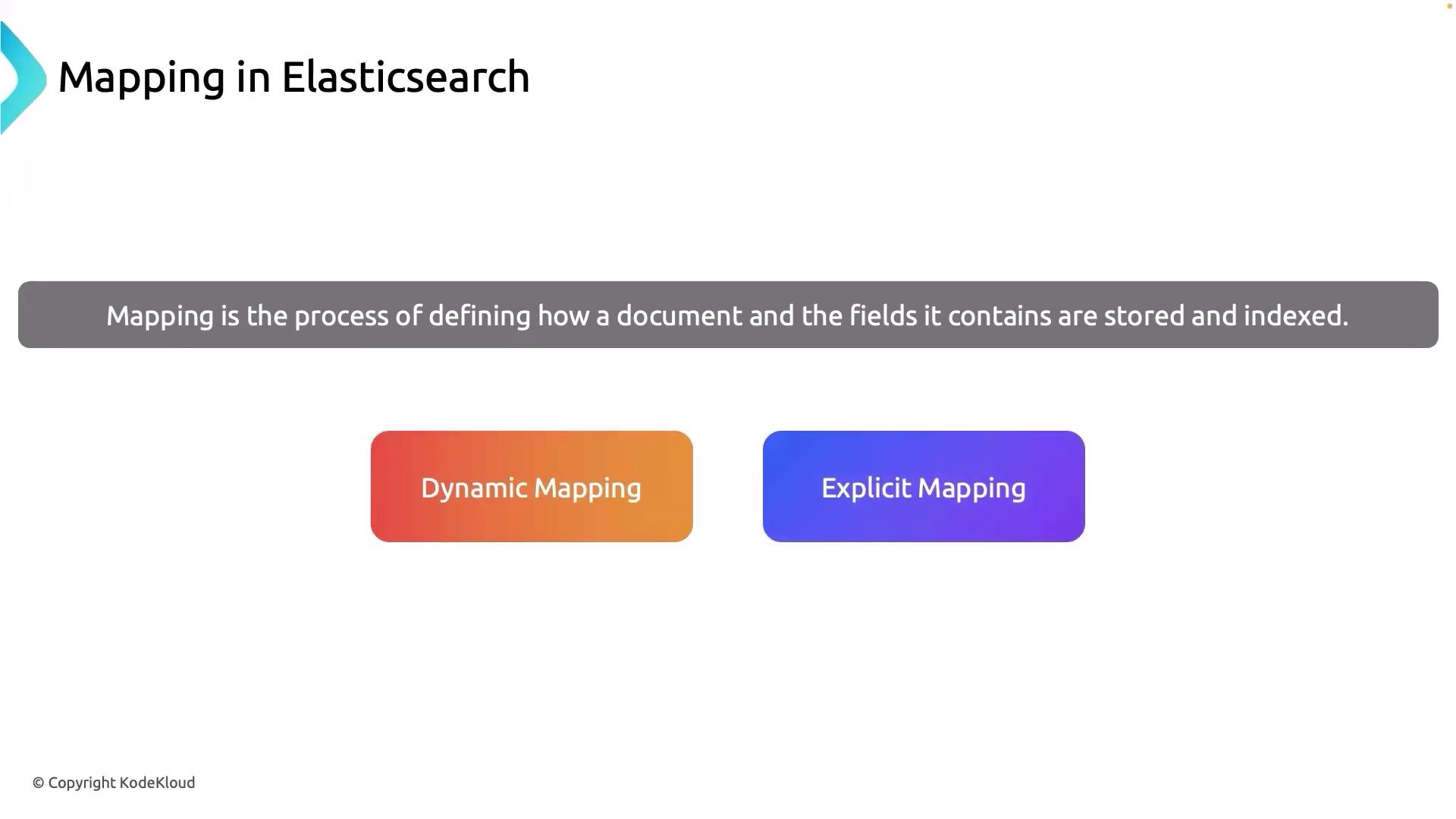
What Is Mapping in Elasticsearch?
Mapping in Elasticsearch is the process of defining how documents and their individual fields are stored and indexed. This configuration is critical because it directly influences how data is searched, analyzed, and retrieved within your Elasticsearch cluster. There are two primary approaches to mapping:1. Dynamic Mapping
Dynamic mapping allows Elasticsearch to automatically detect new fields within a document and add them to the index mappings. This flexibility is particularly useful when dealing with unstructured data or evolving schemas, as it simplifies the process of indexing new or unexpected data without manual intervention.Dynamic mapping is a great starting point when you are unsure of the schema. However, always consider reviewing the automatically generated mappings for optimal performance.
2. Explicit Mapping
Explicit mapping gives you complete control over how each field in your document is indexed and stored. Although this approach requires more upfront work, it enhances search performance and precision by allowing tailored configurations that match your application’s specific requirements. Below is a table that outlines the key differences between dynamic and explicit mapping:| Mapping Type | Description | Use Case |
|---|---|---|
| Dynamic Mapping | Automatically detects and indexes new fields dynamically | Ideal for unstructured data or evolving schemas |
| Explicit Mapping | Requires manual definition of each field’s data type and indexing method | Best for applications with strict search and performance requirements |
Visualizing Elasticsearch Mapping
The image below illustrates how document fields are defined in Elasticsearch, highlighting the differences between dynamic and explicit mapping: