

Understanding IP Addresses
Every device connected to a network requires an IP address. There are two primary versions of the Internet Protocol:- IPv4 (Internet Protocol version 4)
- IPv6 (Internet Protocol version 6)
IPv4 Addressing
IPv4 addresses are composed of four decimal numbers separated by dots (e.g., 192.168.1.101). Each number, also known as an octet, ranges from 0 to 255 because it represents 8 bits (2⁸ possible values).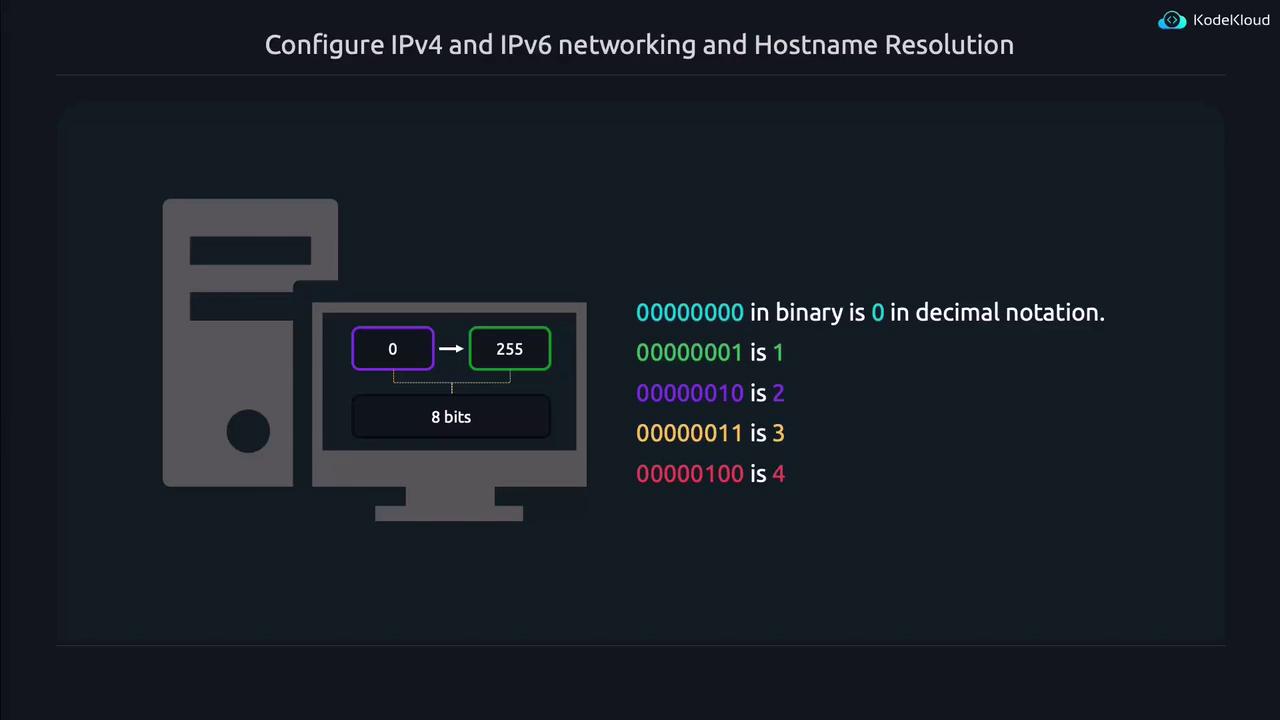
CIDR Notation in IPv4
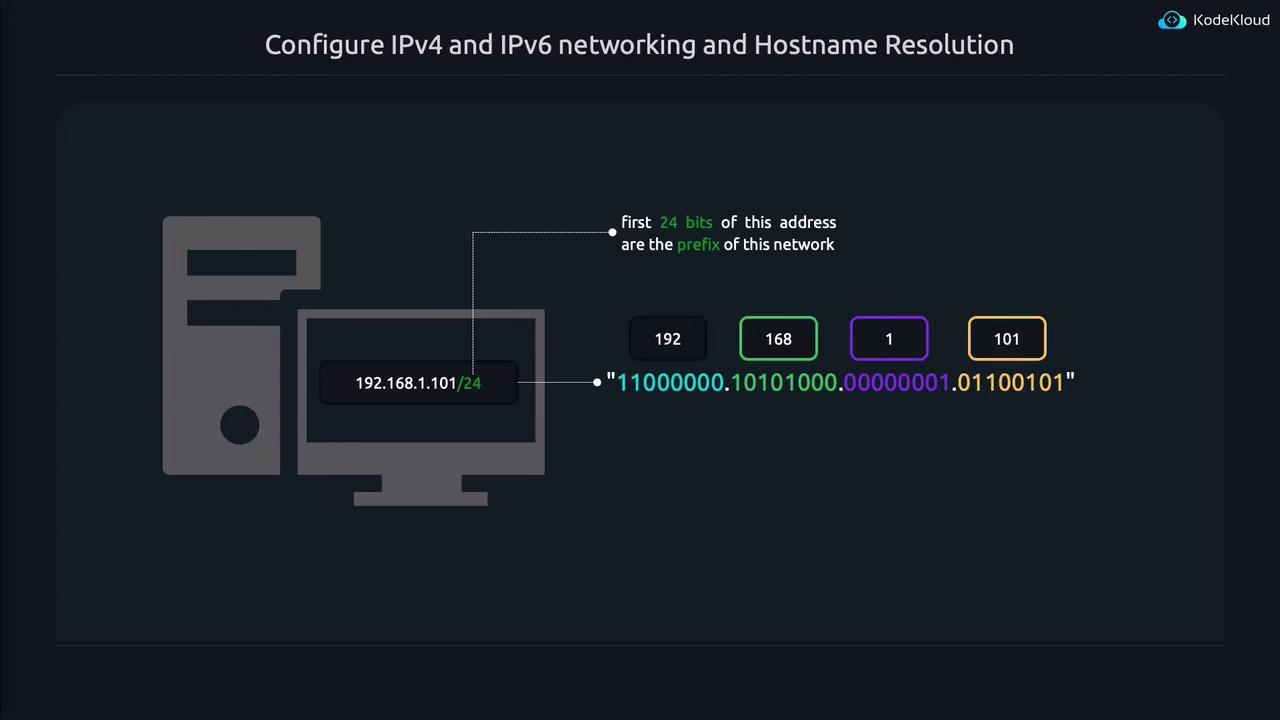
Often, IP addresses are shown with CIDR (Classless Inter-Domain Routing) notation. For example, 192.168.1.101/24 means that the first 24 bits of the address (corresponding to the first three octets “192.168.1”) denote the network prefix, while the last 8 bits indicate the specific host (in this case, “101”).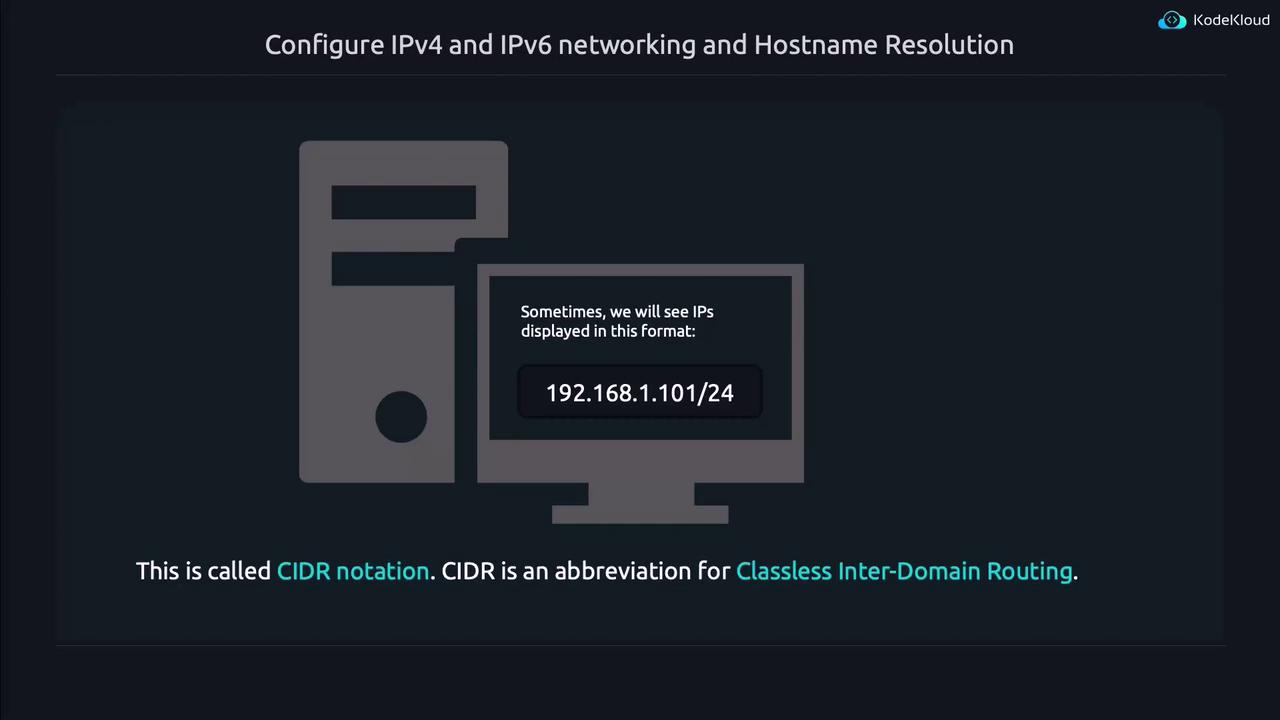
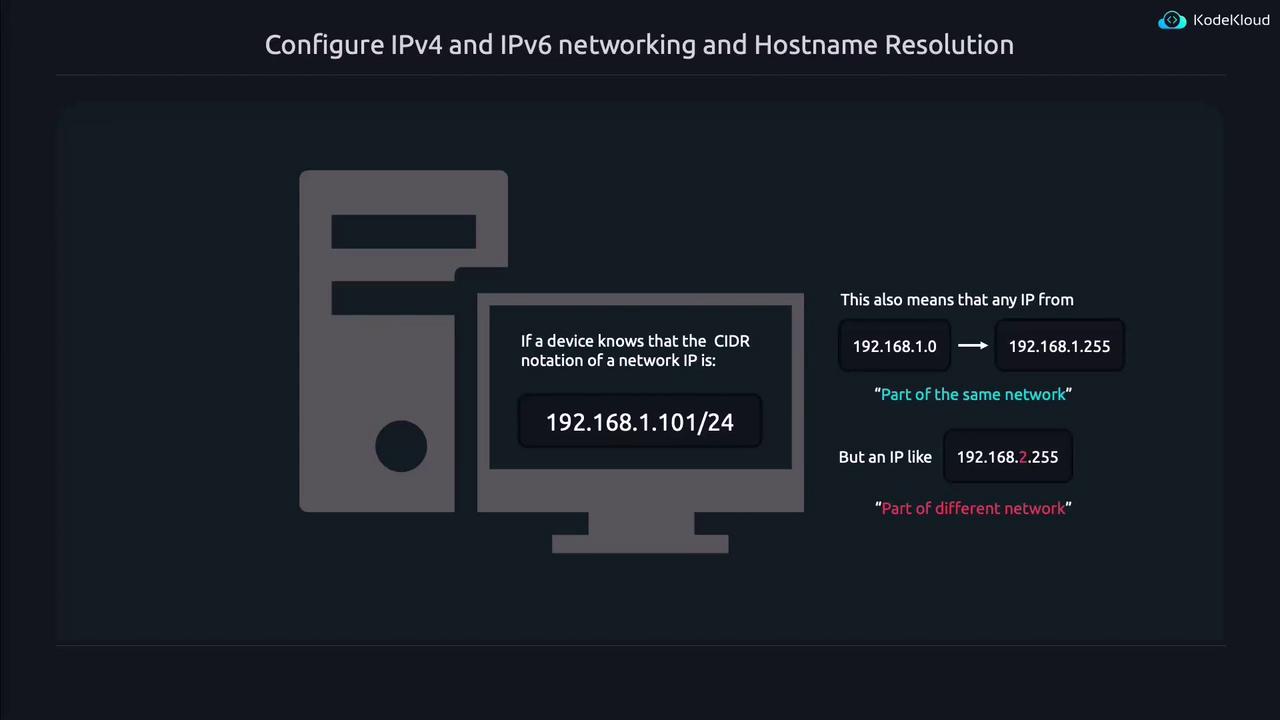
When dealing with CIDR notations that do not fit neatly into octet boundaries (such as a /20 prefix), consider using a CIDR or subnet calculator for precise network configuration.
IPv6 Addressing
IPv6 represents a significant upgrade from IPv4 by using 128-bit addresses. An example of an IPv6 address is:- Grouping: IPv6 addresses are divided into 8 groups instead of 4.
- Numerical System: The groups are presented in hexadecimal format, which includes digits from 0 to 9 and letters A–F.
- Separator: Groups in an IPv6 address are separated by colons.
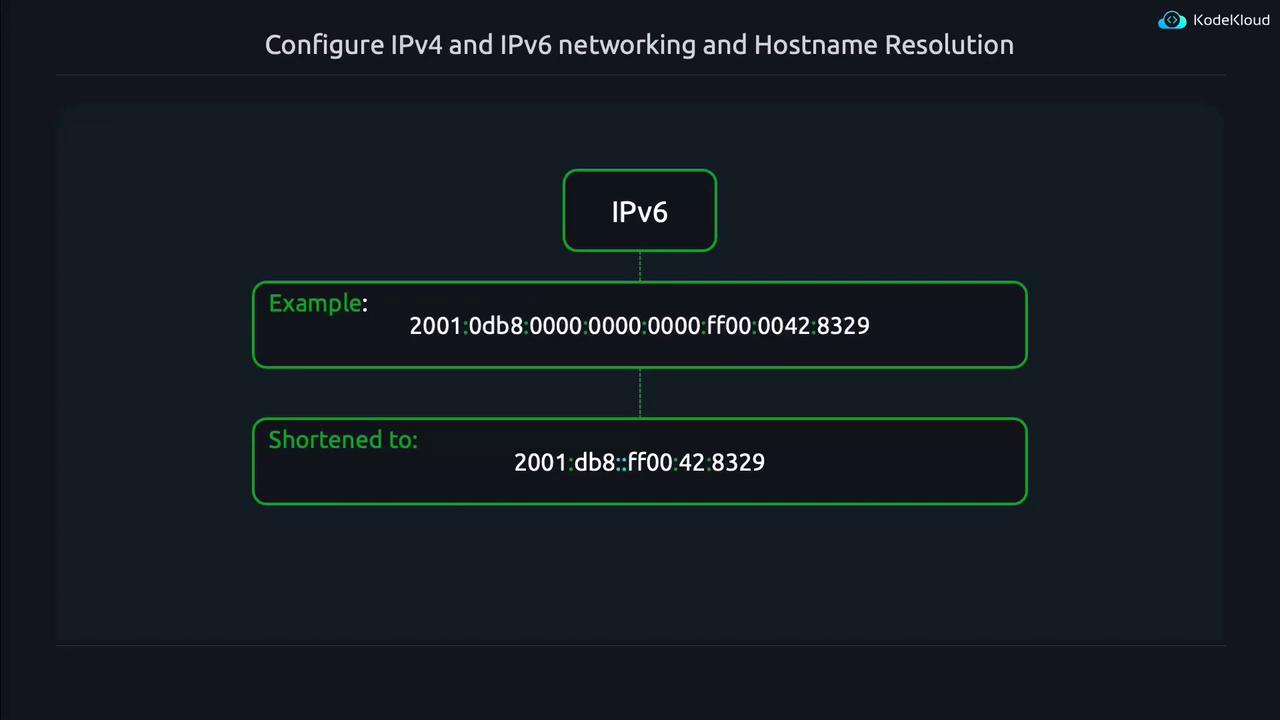
CIDR Notation in IPv6
IPv6 also employs CIDR notation. For example: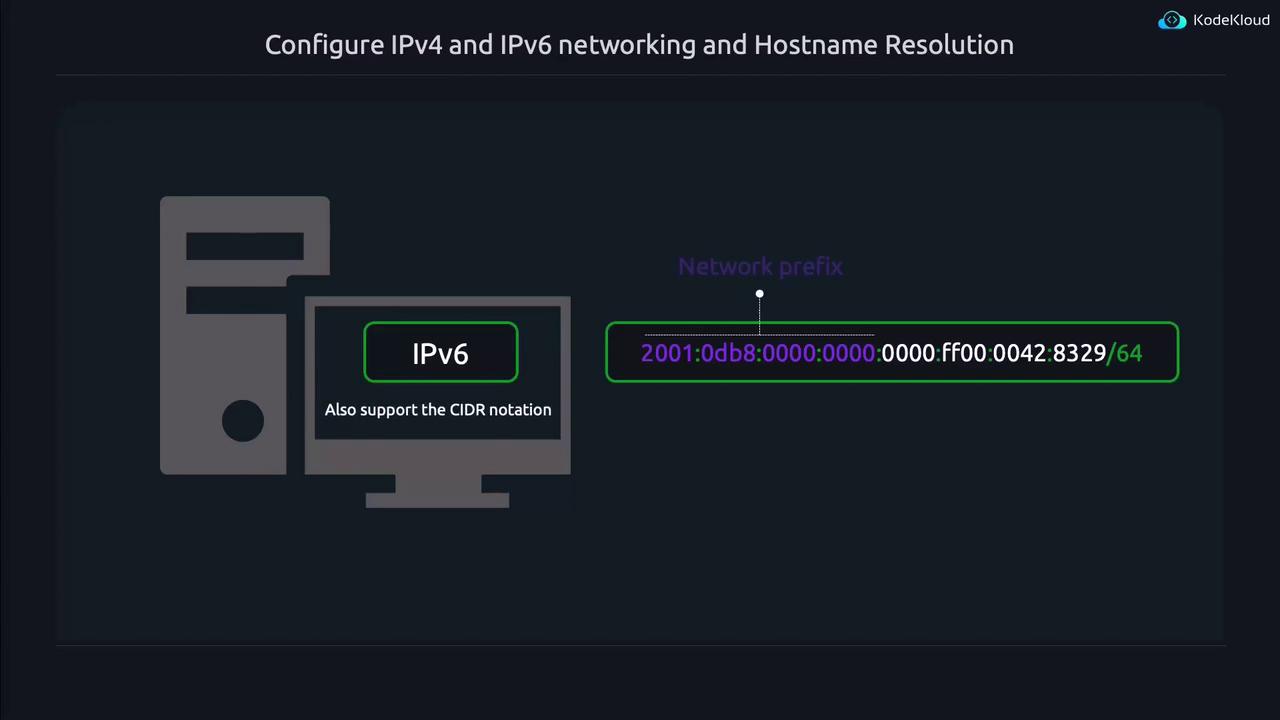
Tools for Network Configuration
When working with CIDR notations that are not multiples of 8 bits, it can be challenging to determine the exact network and host portions. In such cases, online CIDR calculators or subnet calculators are valuable tools for ensuring accurate network planning.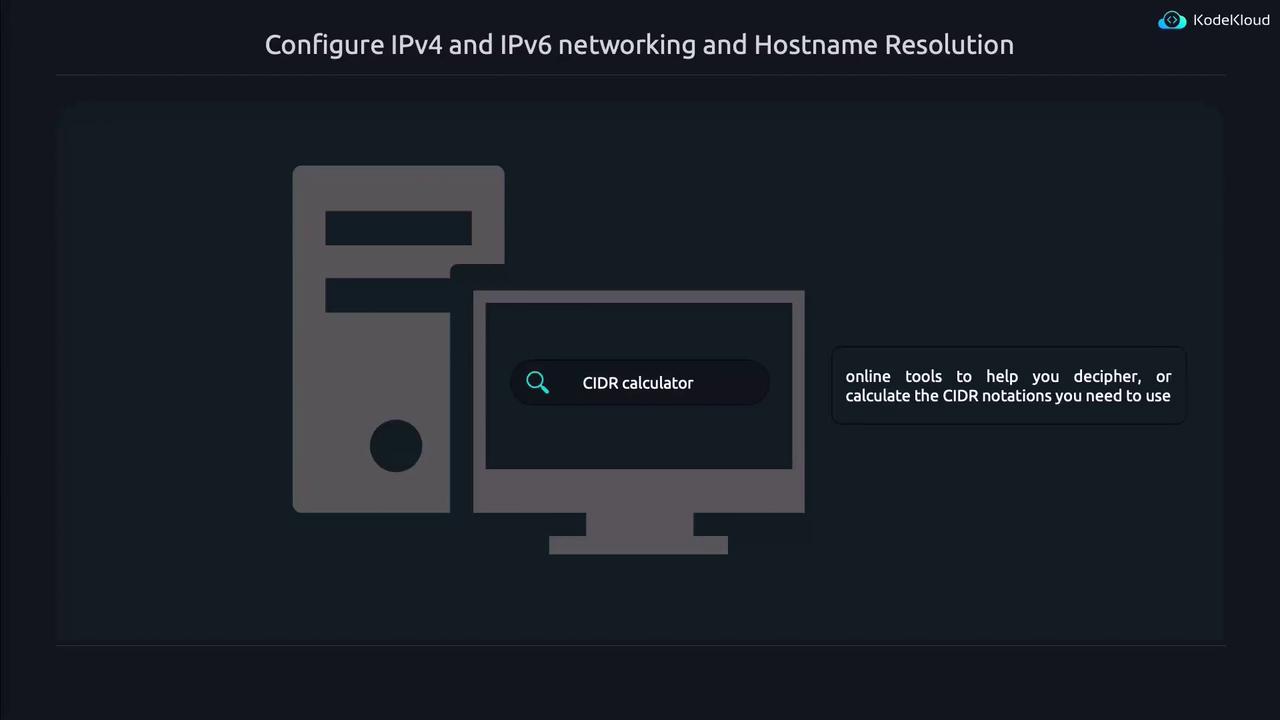
Incorrectly configuring CIDR notation can lead to network issues. Always double-check your settings using trusted subnet calculation tools.
Summary
Understanding and properly configuring IP addresses is fundamental for network communication. Here is an overview of the key components:| IP Version | Notation Example | Key Characteristics |
|---|---|---|
| IPv4 | 192.168.1.101/24 | 32-bit address, separated by dots, with each octet ranging 0–255 |
| IPv6 | 2001:0db8:0000:0000:ff00:0042:8329/64 | 128-bit address, organized in 8 hexadecimal groups and abbreviated |