When answering this interview question, focus on describing a coherent alerting flow that minimizes miscommunication and delays, particularly during incidents.
Unified Alerting Process
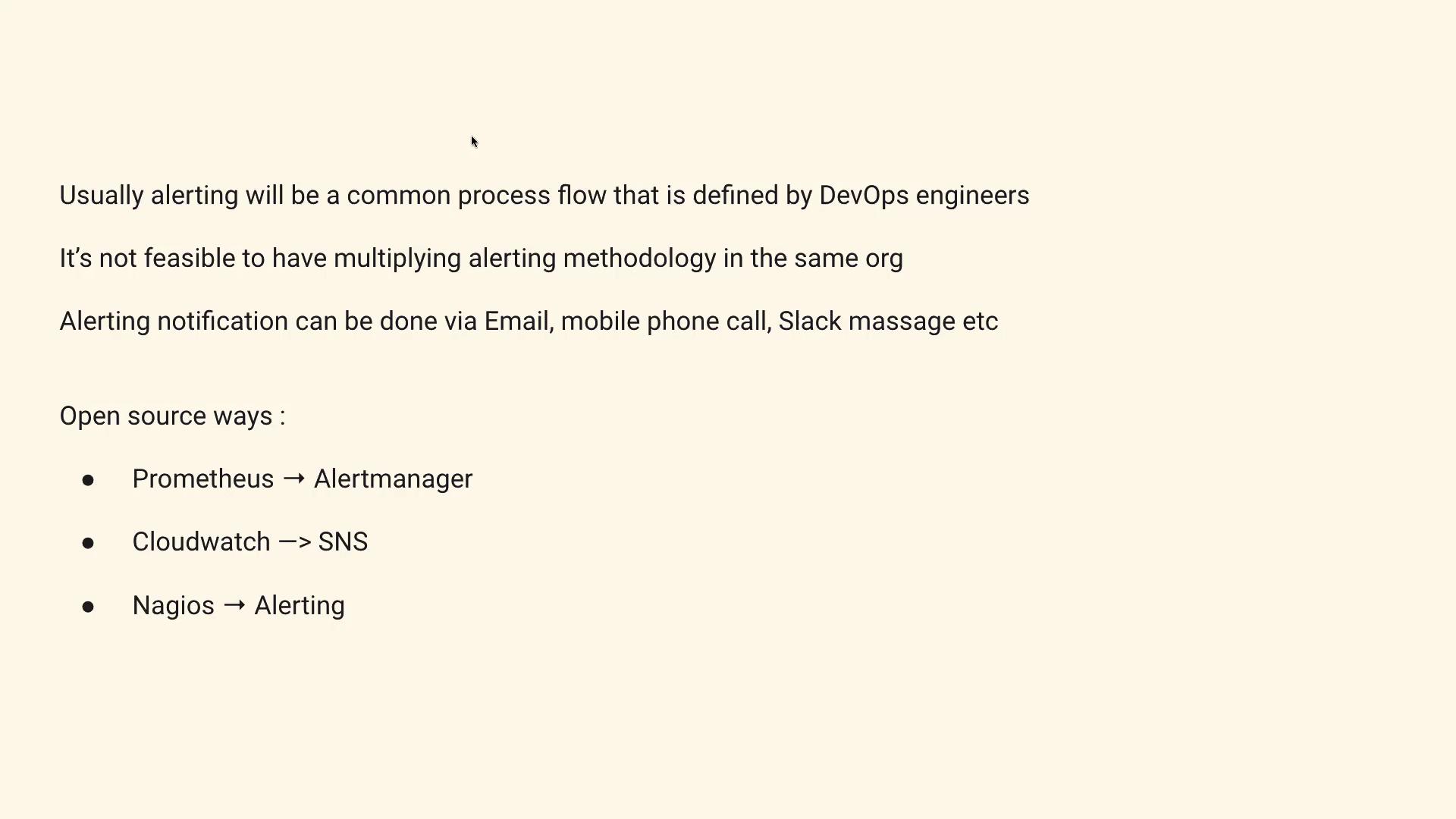
In most well-organized environments, a single, standardized alerting process is preferred. This approach reduces the chaos that can result from managing multiple alert streams and ensures a clear, consistent response when issues arise. The typical alerting mechanisms include notifications via email, mobile alerts, or Slack messages. This overall setup is often part of an on-call system, where a designated person is responsible for addressing production issues round the clock.Common Alerting Tools and Methods
Below is a table summarizing some of the common tools used in modern alerting setups:| Tool/Method | Description | Typical Use Case |
|---|---|---|
| Prometheus with Alertmanager | Open-source monitoring with integrated alerting capabilities | Monitors systems and dispatches alerts through multiple channels |
| AWS CloudWatch with SNS | AWS native monitoring and notification service | Sends timely alerts based on cloud service metrics |
| Nagios | Time-tested open-source monitoring system | Provides robust alerting and monitoring for diverse environments |
When discussing your experience, it’s beneficial to mention systems like Prometheus and Alertmanager, as they are widely recognized and implemented in many organizations.
Example Interview Response
You might respond to this question with something like:“In our organization, we use Prometheus coupled with Alertmanager to monitor our systems. When Prometheus detects an anomaly, Alertmanager sends out notifications via email and triggers phone calls to ensure that our team can address issues promptly. I am also familiar with similar setups using AWS CloudWatch with SNS and Nagios, and can adapt to the specific requirements of any environment.”
Visual Overview
Below is an image that summarizes alerting processes and tools commonly used in DevOps: