Introduction to OpenTofu
Welcome to OpenTofu for Beginners! OpenTofu was born as a fully open, community-driven fork of Terraform after its transition to the Business Source License (BSL). By embracing open source values, OpenTofu ensures flexibility, extensibility, and freedom for all users. Although it shares Terraform’s roots, OpenTofu now evolves independently—leveraging Terraform’s strengths while innovating to meet the community’s needs.What You’ll Learn
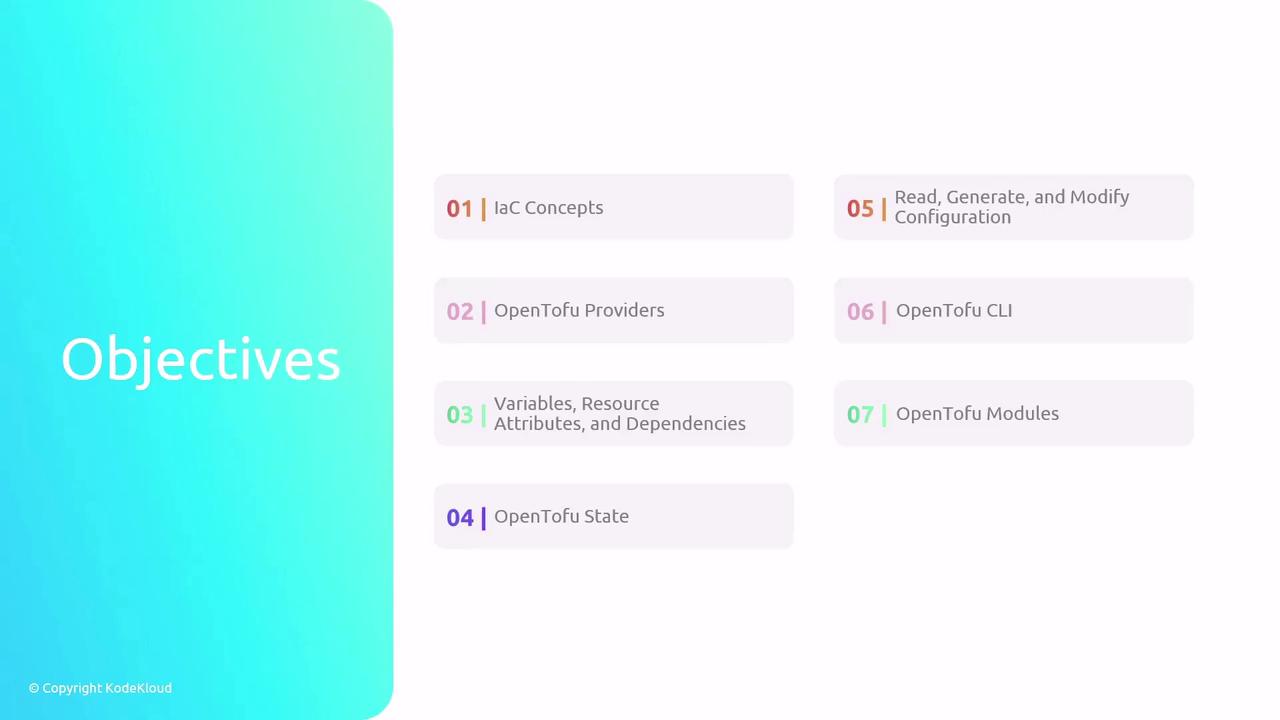
- High-level Infrastructure as Code (IaC) concepts and a comparison of popular IaC tools.
- Core Terraform/OpenTofu workflow: init, plan, apply, destroy.
- Managing OpenTofu Providers: installing plugins, version constraints, and aliases.
- Handling input/output variables, resource attributes, dependencies, resource targeting, and data sources.
- Understanding OpenTofu State: the importance of state files and migrating from local to remote backends.
- Mastering configuration fundamentals: loops (
count,for_each), provisioners, built-in functions, conditional expressions, local values, and dynamic blocks. - Navigating the OpenTofu CLI: common commands, lifecycle rules, logging, debugging, import, and workspaces.
- Working with Modules: creating and consuming modules from the registry.
Collaborating with Remote State
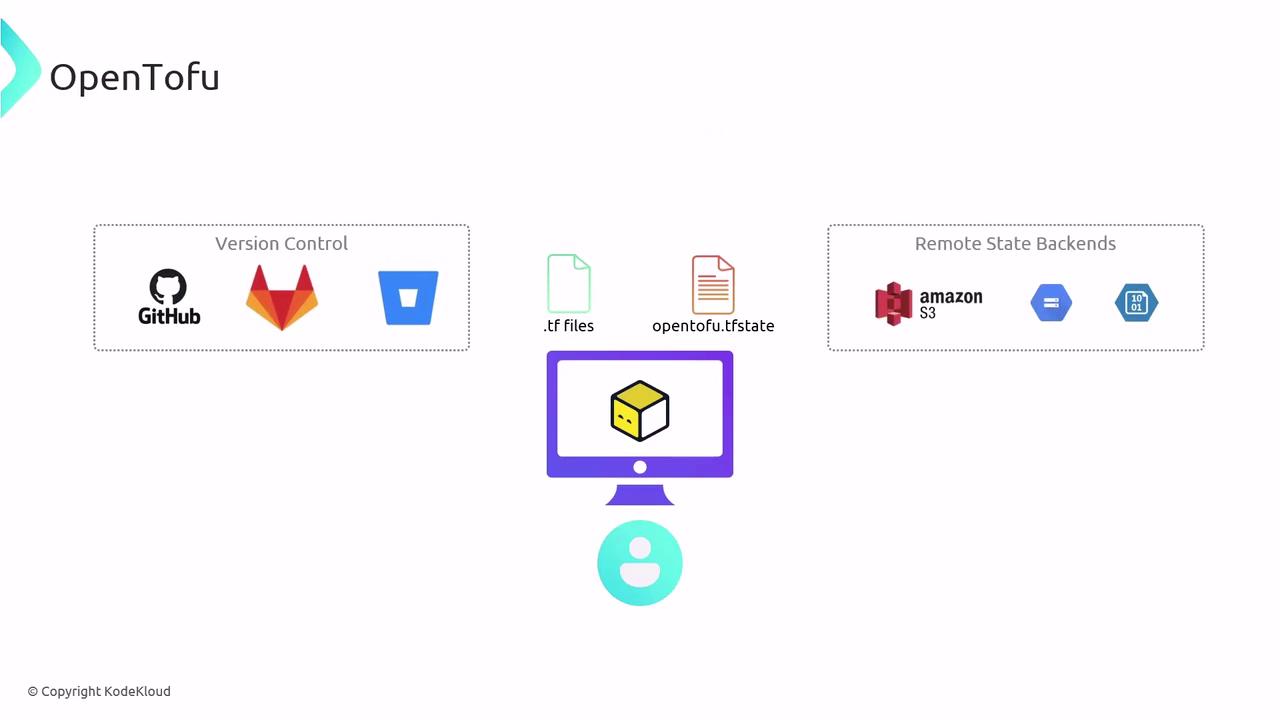
So far, you’ve likely run OpenTofu locally—storing both configuration files and state on your machine. However, when collaborating in a team, local state files become risky:Never commit your
*.tfstate files to Git or any public repository. They may contain sensitive data (e.g., resource IDs, secrets)..tf files in a VCS and configure a remote backend for state management.
| Version Control System | Remote State Backend |
|---|---|
| GitHub | Amazon S3 |
| GitLab | Google Cloud Storage |
| Bitbucket | Azure Blob Storage |
When you run
opentofu init after configuring your backend, OpenTofu will migrate state automatically or prompt you for migration options.OpenTofu Versioning
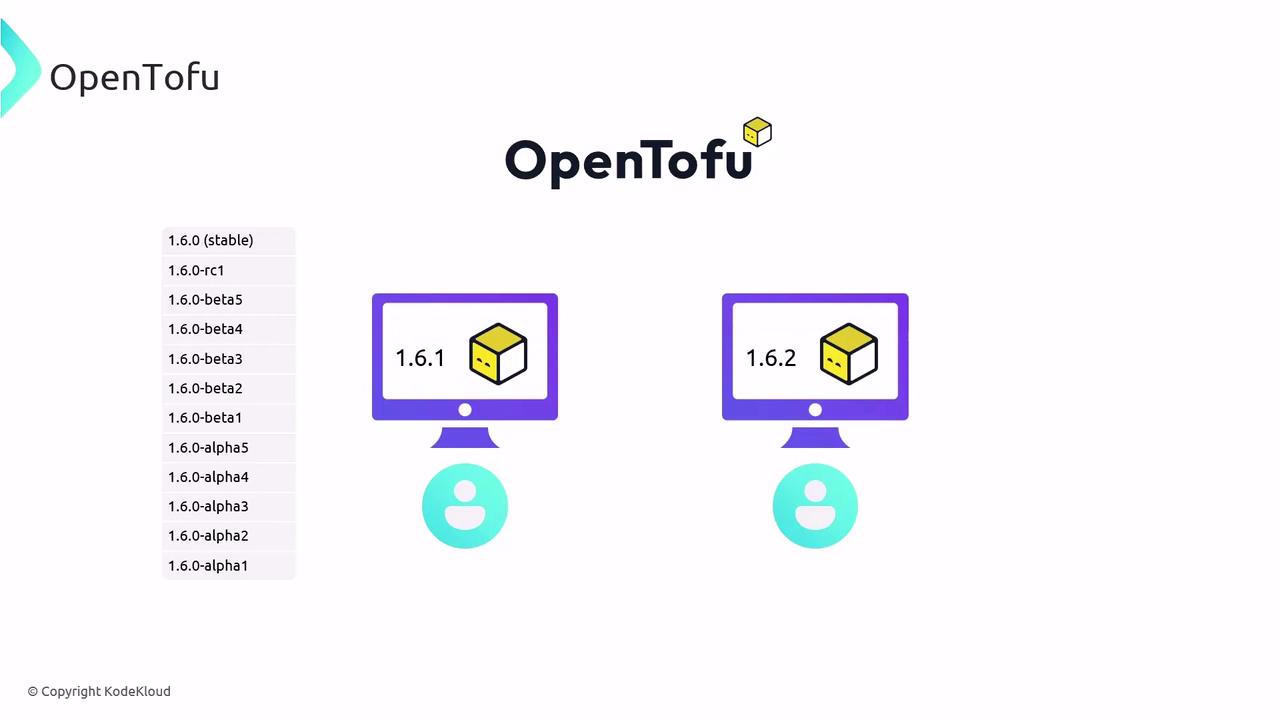
OpenTofu follows semantic versioning, progressing from alpha/beta to stable GA releases. Below is an overview of the major releases:| Version | Release Stage | Status |
|---|---|---|
| 1.6.0 | GA | Stable |
| 1.6.1 | Patch | Stable (recommended) |
| 1.6.2 | Patch | Stable |
| 1.7.0 | Minor | Beta |
| 1.8.0 | Minor | Alpha |