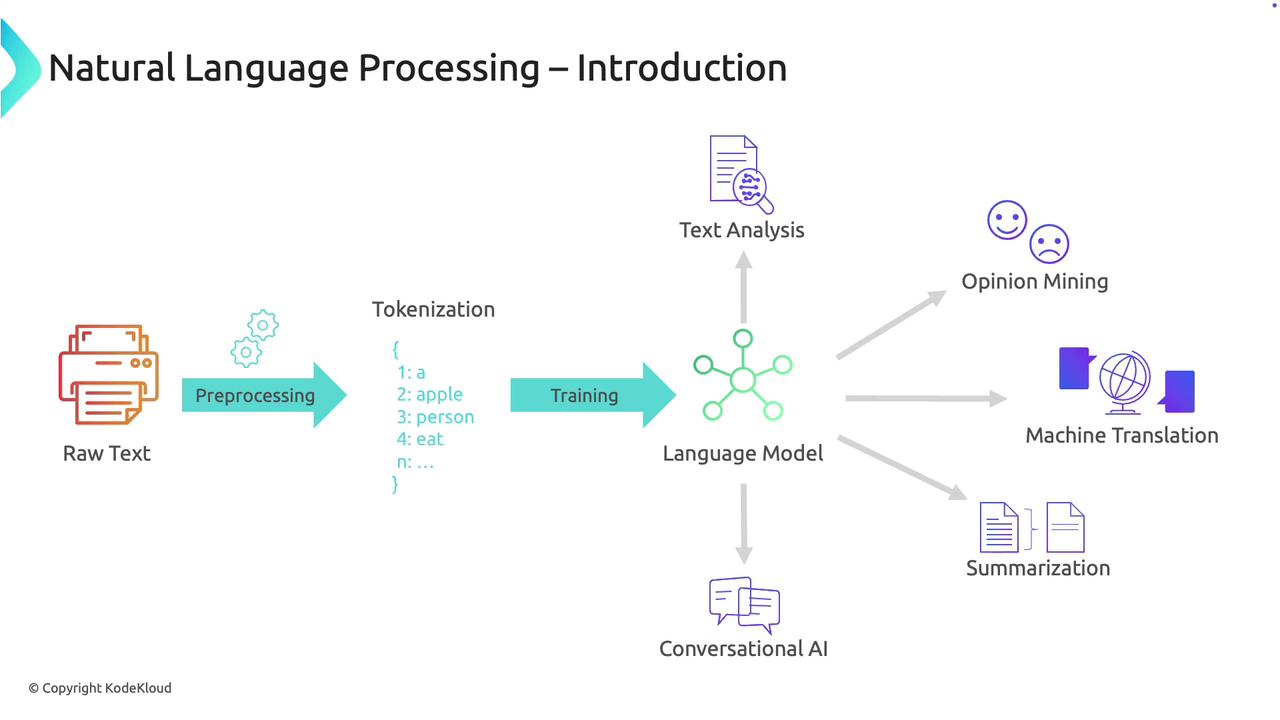
Raw Text
The journey begins with raw text—unprocessed language data gathered from sources such as emails, articles, reviews, and social media posts. Before this data can be effectively interpreted by machines, it must undergo cleaning and organization.Preprocessing
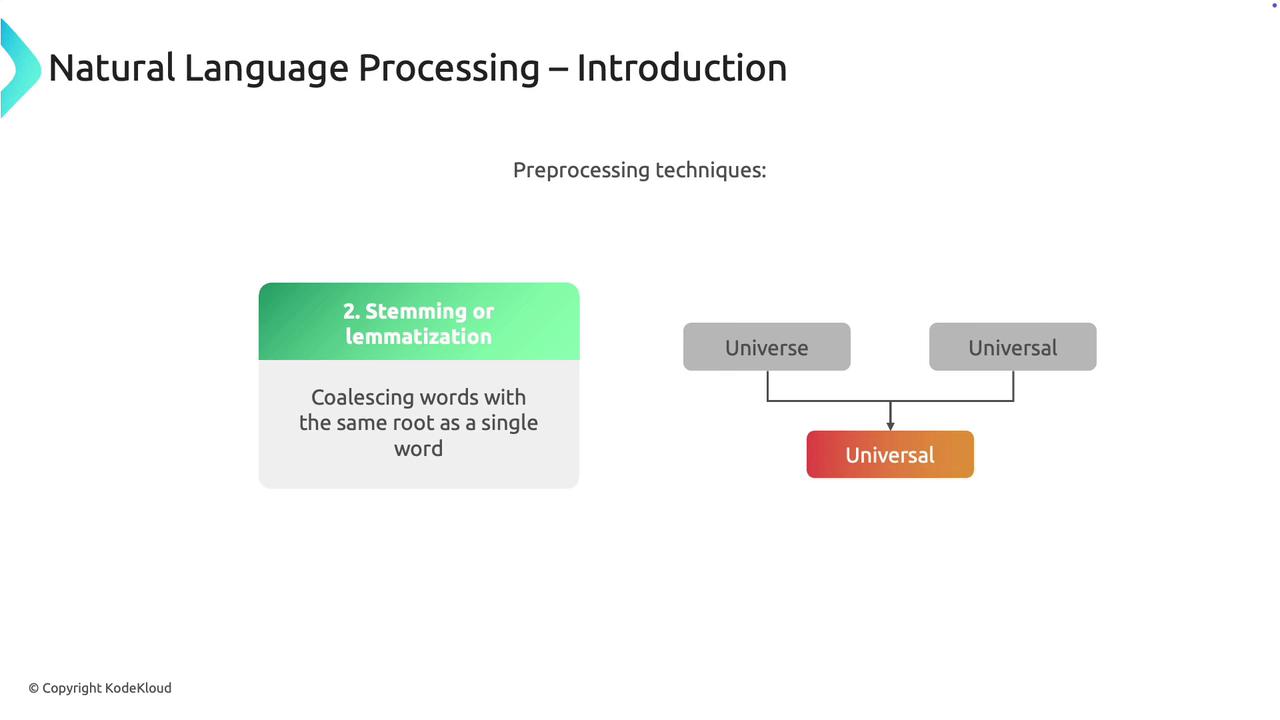
Preprocessing is the essential step that prepares raw text for detailed analysis. During this stage, non-essential words like “the” or “and”—known as stop words—are removed to enhance clarity. Additionally, techniques such as stemming and lemmatization are applied to reduce words to their root forms. For instance, words like “universe” and “universal” are simplified to “universal,” thus streamlining the text for better focus on key concepts.
Tokenization
Once the text has been preprocessed, the next step is tokenization. In this process, the text is segmented into smaller, manageable pieces known as tokens. Tokens may represent individual words or phrases and are assigned unique identifiers. This organized collection of tokens forms the vocabulary required for training the language model.Training the Language Model
With tokenization complete, the prepared tokens are used to train the language model. During training, the model learns to identify patterns and relationships between words. Depending on the application, the model may specialize in sentiment analysis—which detects positive, negative, or neutral sentiments—or machine translation, which converts text from one language to another. This training phase is crucial as it equips the model with the ability to understand and process language effectively.Text Analysis
Text analysis involves examining documents to identify key phrases or entities such as names, dates, and locations. For example, businesses might leverage text analysis to scan news articles for mentions of their products or competitors. Additionally, opinion mining, a subset of sentiment analysis, reveals the underlying sentiment within a text. This enables organizations to gauge customer opinions from reviews or social media feedback.Machine Translation and Summarization
NLP also plays a pivotal role in breaking down language barriers and summarizing content.- Machine Translation: This process translates text from one language to another, much like popular tools such as Google Translate.
- Summarization: This technique condenses lengthy text into concise summaries that highlight the key points, making it easier to quickly understand lengthy reports or articles. This capability is increasingly integrated into platforms like Outlook and Teams to summarize long email threads.
Conversational AI
Conversational AI powers chatbots and virtual assistants by interpreting user queries and generating relevant responses. By understanding user intent, these systems facilitate interactive and dynamic conversations, making them an integral part of modern communication strategies.Conclusion
In summary, Natural Language Processing comprises a series of critical steps—from managing raw text and performing preprocessing to tokenizing data and training sophisticated language models—that enable computers to understand and process human language. This groundbreaking capability supports a myriad of applications, from customer service and language translation to opinion mining and conversational interfaces.Now that you have an overview of NLP, explore how to implement NLP solutions using Microsoft Azure to leverage advanced AI capabilities in your projects.