Prediction and Pattern Recognition
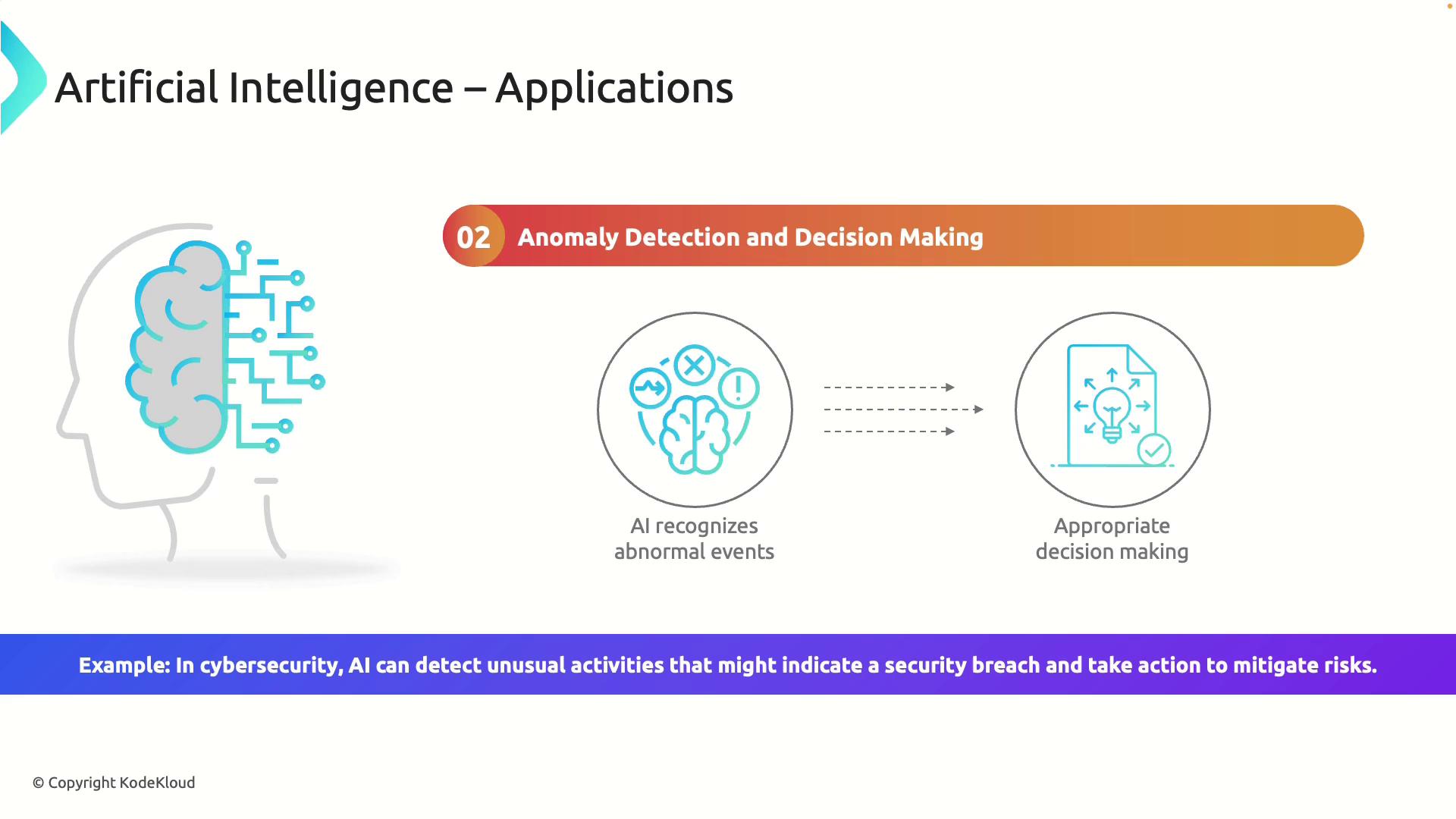
One of the most impactful applications of AI is its ability to analyze historical data to identify patterns and predict future trends. In business, AI systems can forecast future sales by analyzing past sales data and market trends. Similarly, in equipment maintenance, AI can analyze performance data to predict when a machine may require service.This predictive capability is essential in industries such as retail, manufacturing, and finance, where data-driven decision-making can optimize operations.
Anomaly Detection and Decision-Making
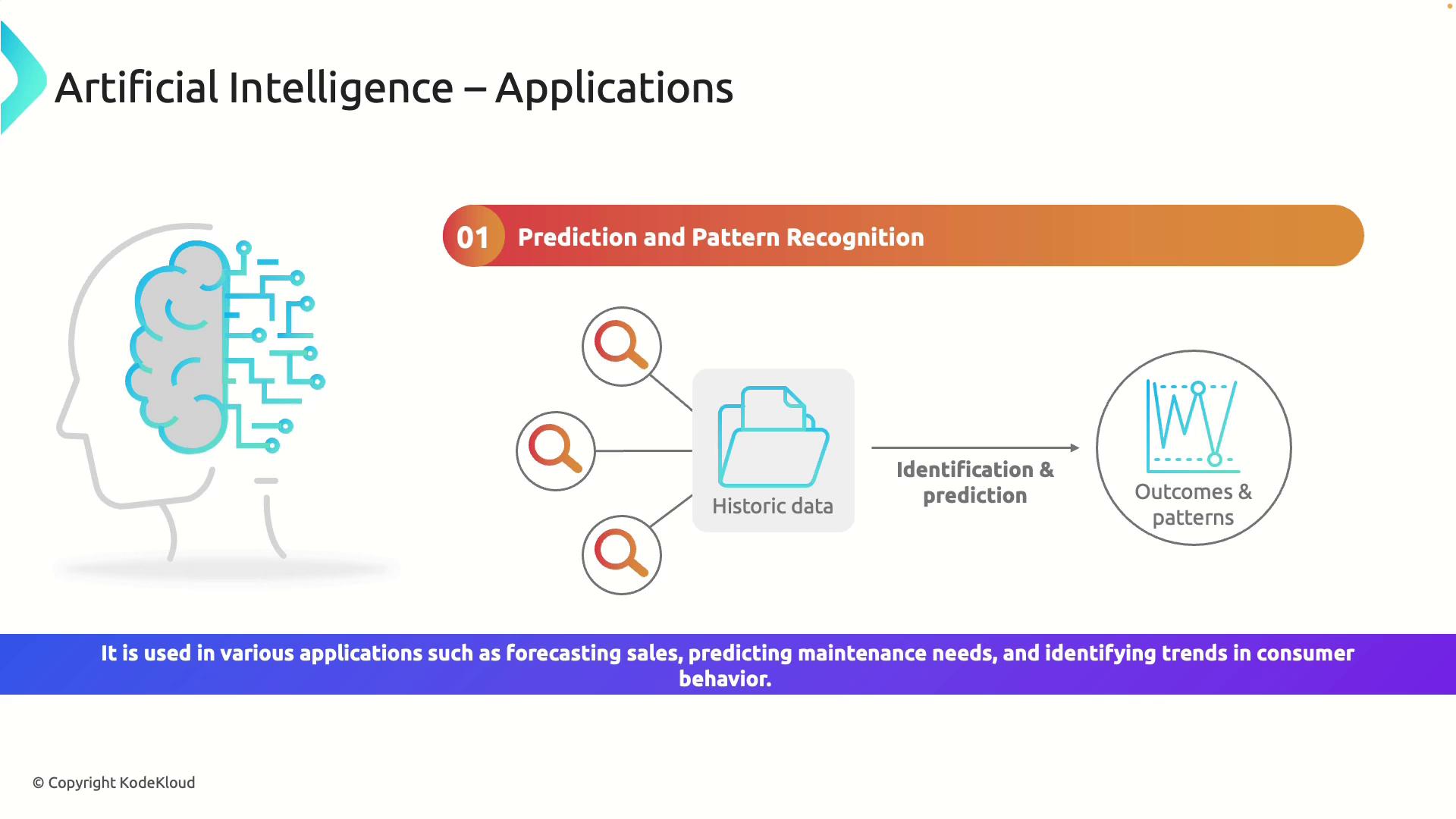
AI excels in detecting anomalies—those unusual occurrences that deviate from expected behavior—in various systems. For instance, in cybersecurity, AI monitors network activities to spot irregular behaviors that might indicate a breach. Once detected, AI systems can immediately take action, such as blocking suspicious activities or alerting security personnel.In fields like finance and healthcare, early anomaly detection is critical. In finance, it can prevent fraud by flagging unusual transactions, while in healthcare, it can prompt early interventions for abnormal health indicators.
Visual Interpretation
Visual interpretation is transforming many sectors by enabling machines to process and analyze visual data. In medicine, AI systems interpret medical images like X-rays and MRIs to assist in disease diagnosis. Similarly, in the realm of autonomous driving, AI processes real-time video data to identify and respond to objects on the road, including vehicles, pedestrians, and traffic signals. Facial recognition systems powered by AI further highlight its ability to interpret complex visual data.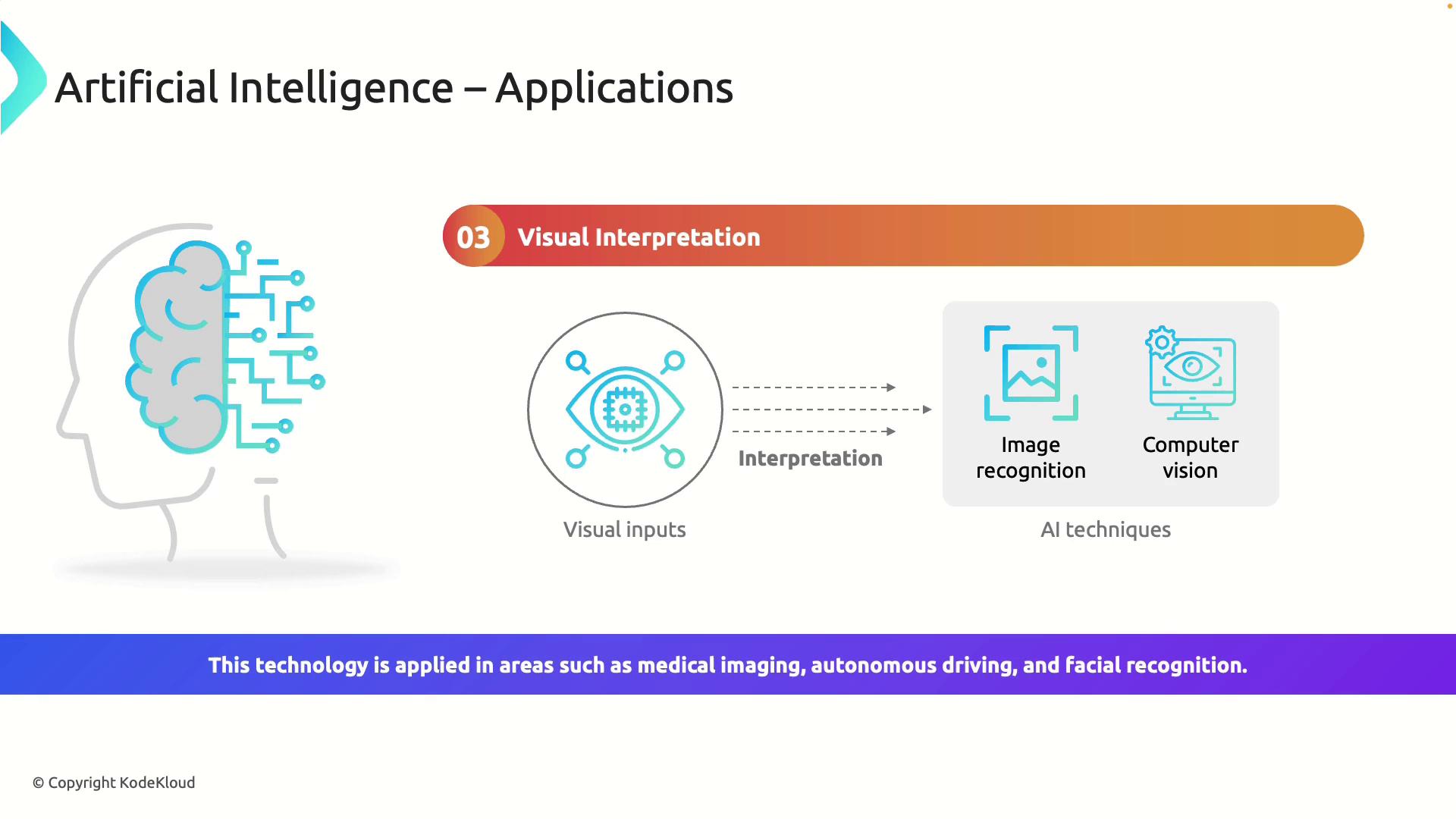
Natural Language Processing (NLP)
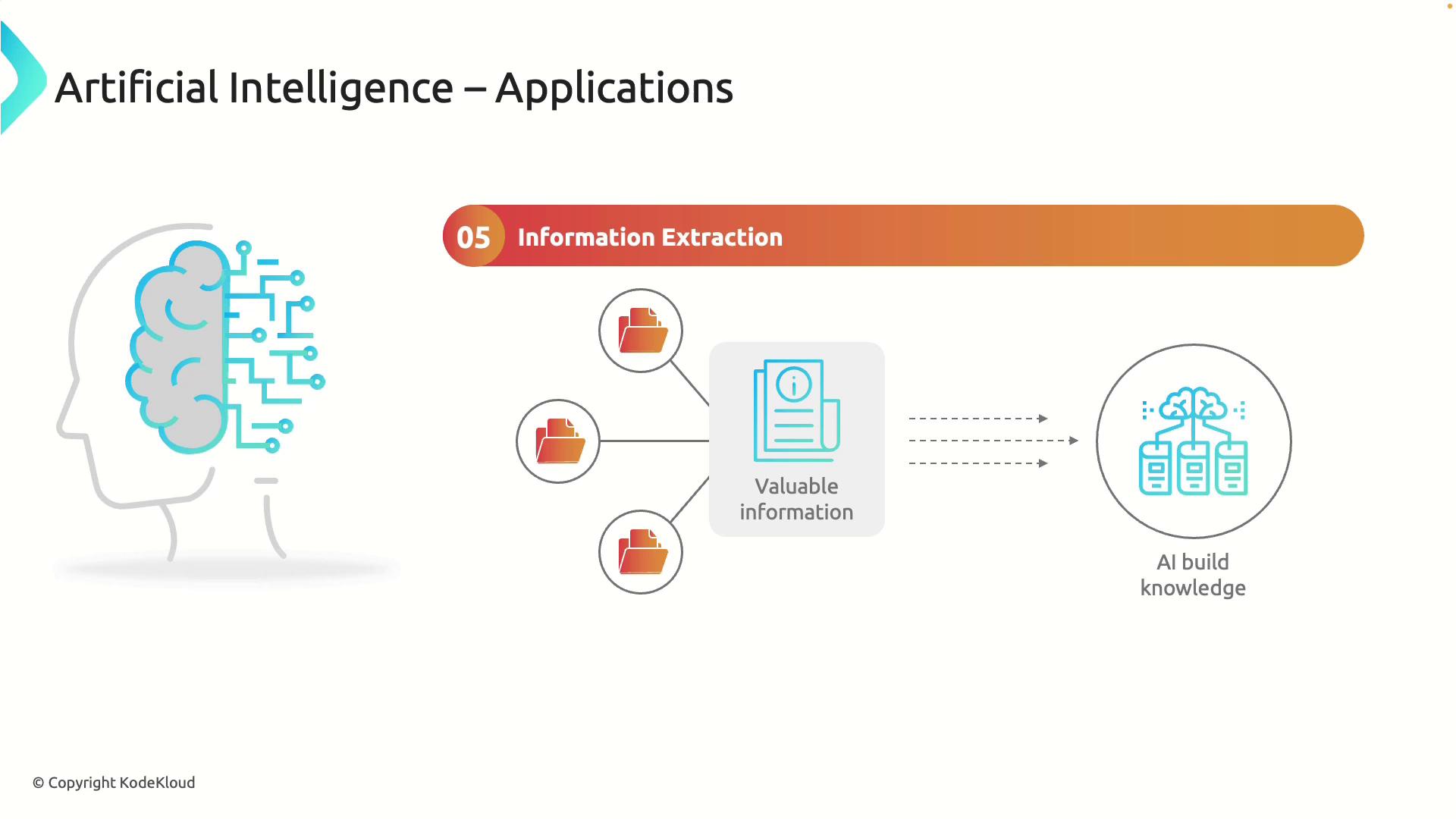
Another critical capability of AI is Natural Language Processing (NLP), which empowers systems to understand and interact with human language. NLP is behind virtual assistants such as Siri and Alexa, enabling them to process spoken commands to perform tasks like setting reminders, playing music, or answering queries. Through NLP, the gap between human communication and machine interaction is steadily diminishing, making technology more accessible.Information Extraction
AI’s robust data analysis abilities extend to information extraction, where systems scan large volumes of text and data to identify and compile relevant insights. For example, an AI platform can analyze thousands of research articles or news items to extract key trends and information, proving invaluable in scientific research and market analysis.