Document Analysis Overview
The document analysis service transforms raw data into structured information, simplifying further processing. Instead of dealing with unorganized text, you work with data that’s immediately useful for analysis or direct database entry. The service intelligently detects key elements within documents—such as tables, headers, and footers—and understands the relationships between these regions. This is especially beneficial for complex documents like contracts or detailed reports, where preserving layout and structure is crucial.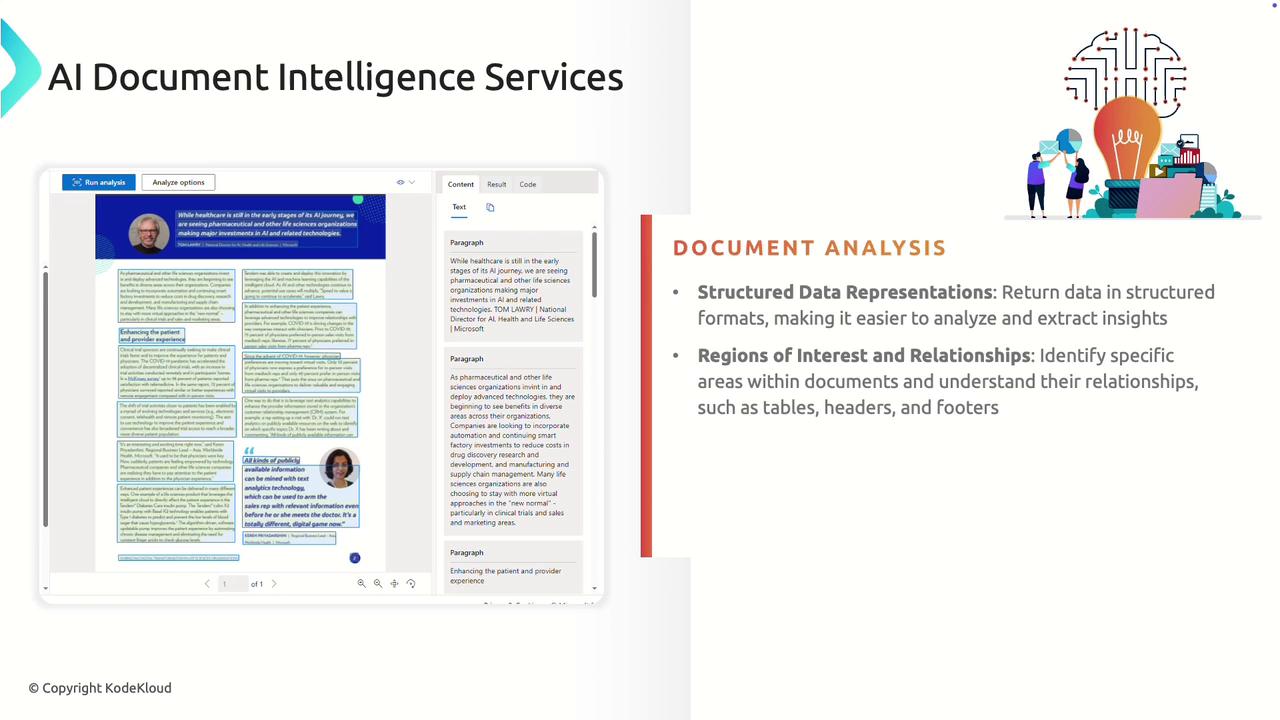
Pre-built Models
Azure provides a range of pre-built models for common document types, enabling quick and accurate data extraction. These models reduce manual data entry and streamline your workflow.Invoices
The pre-built invoice model automatically extracts essential details such as invoice amounts, dates, and vendor information. It is particularly effective when processing high volumes of invoices, as it efficiently captures total amounts and due dates to support financial operations.Receipts
The receipt model specializes in extracting key details like merchant name, total amount spent, and items purchased. This functionality greatly aids expense management by digitizing and organizing large numbers of receipts swiftly.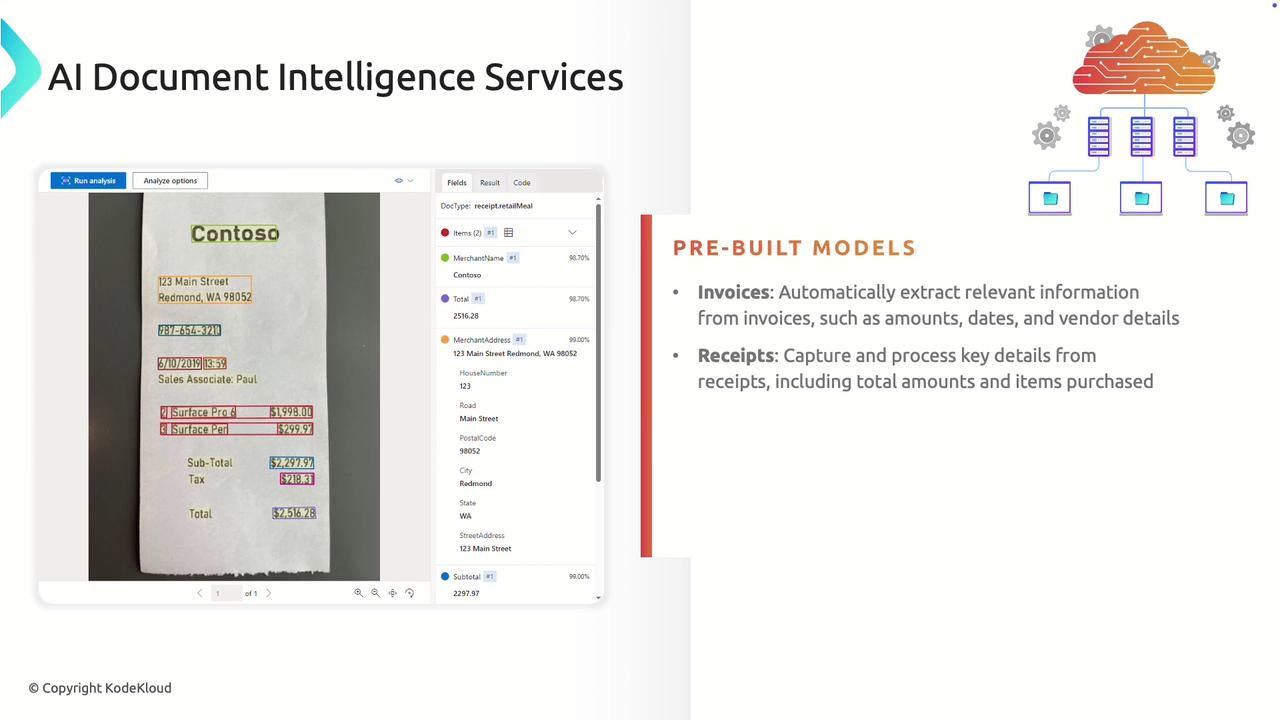
ID Documents
For identification documents such as passports and driving licenses, Azure’s model accurately extracts key-value pairs like name, date of birth, and ID number. This is ideal for onboarding and verification processes where accurate data capture is essential.Azure’s pre-built models are engineered to handle a diverse range of document formats, ensuring reliable data extraction across various use cases.
Custom Models
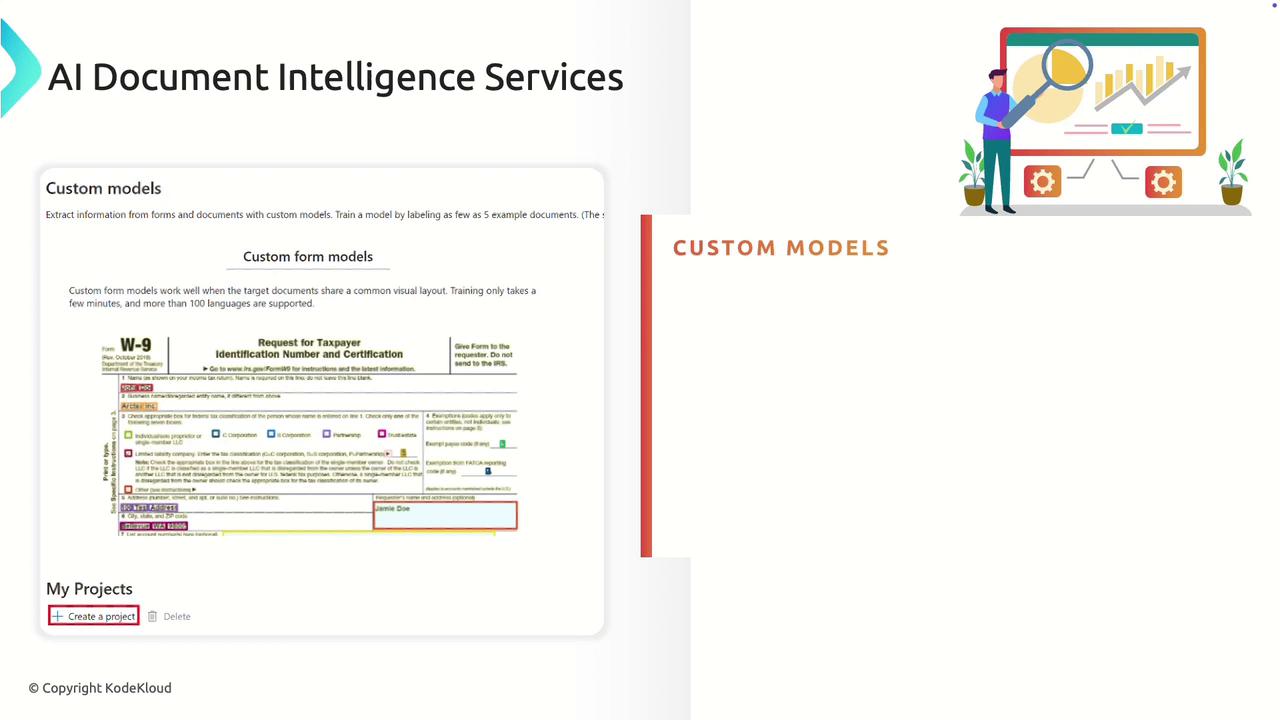
Custom models provide the flexibility to tailor document analysis to your organization’s specific needs. By providing at least five sample documents, you can train a model to recognize and extract unique fields critical to your operations. This capability is especially useful for specialized document types not addressed by standard models. For example, you might customize the model to extract specific fields—such as total income or taxable amounts from tax forms—to enhance data accuracy and relevance.