

Representing Images
An image is essentially an array of pixel values. For a grayscale image, each pixel value represents a shade of gray ranging from 0 (black) to 255 (white). On the other hand, color images are represented by three separate channels—red, green, and blue—with each channel containing its own array of pixel values.Applying Filters
Image processing techniques often rely on applying filters. Filters are typically composed of a kernel, which is a small matrix of weights. This kernel is convolved over the image: it moves across the image and, at each position, computes a new pixel value by combining the original pixel values with the kernel’s weights.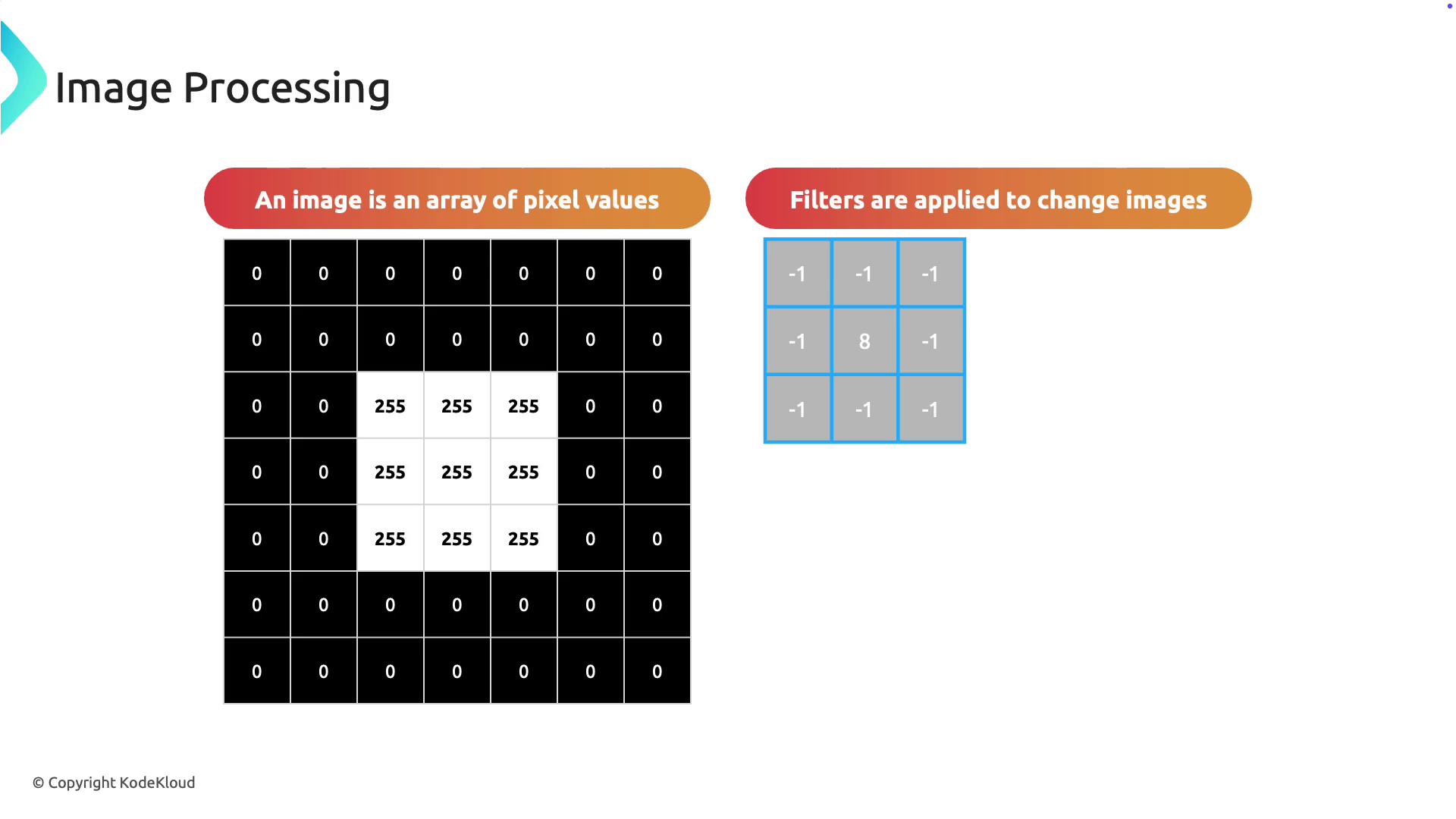
Example: Laplace Filter
A common filter used in image processing is the Laplace filter, which is highly effective for edge detection. As the Laplace kernel moves over the image, it accentuates regions with abrupt changes in pixel intensity, thus clearly defining the edges of objects within the image.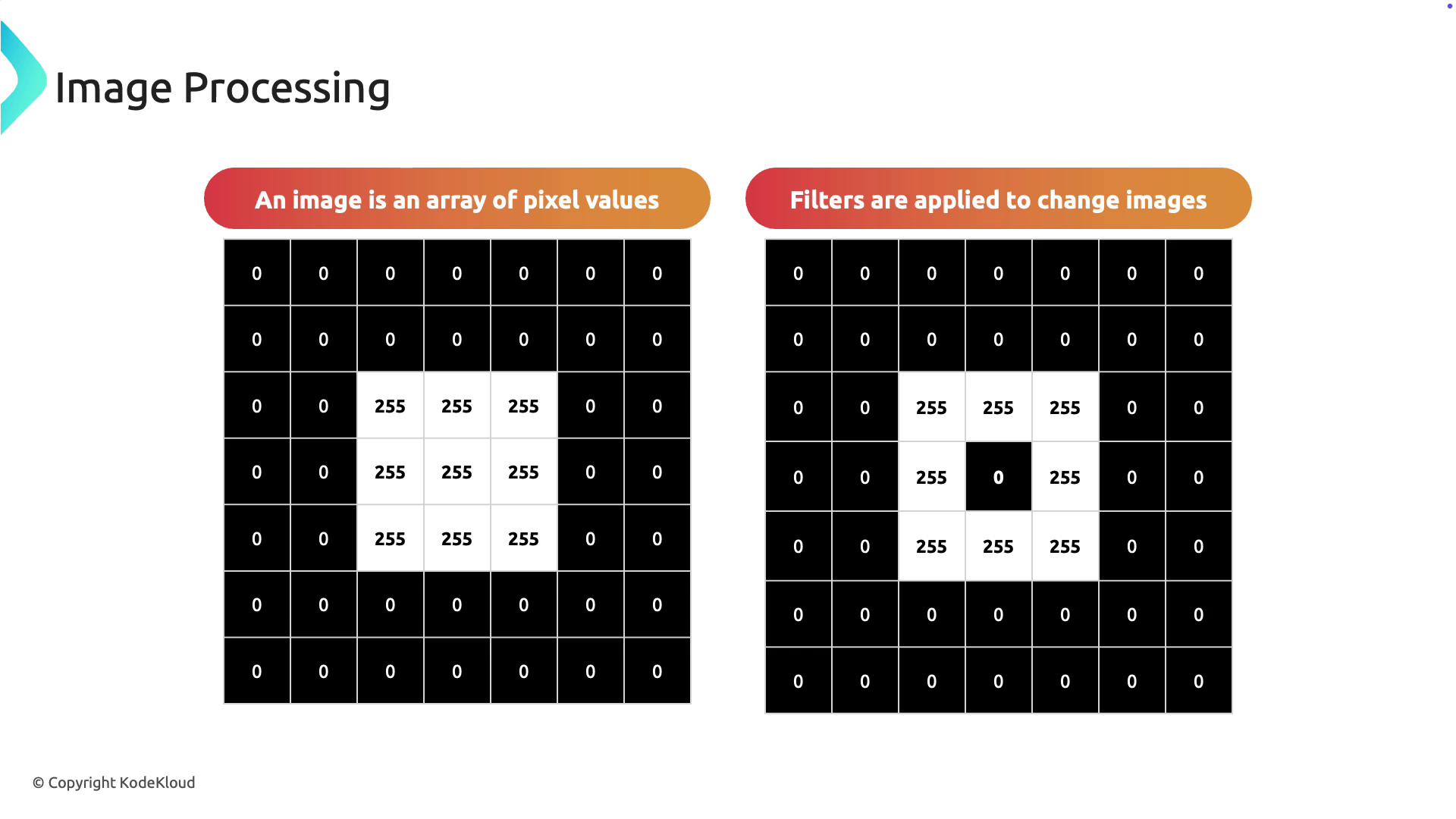
Understanding how filters modify an image is a crucial step in many computer vision applications. These techniques facilitate the extraction of important details from images, which can then be used in more advanced analyses.