

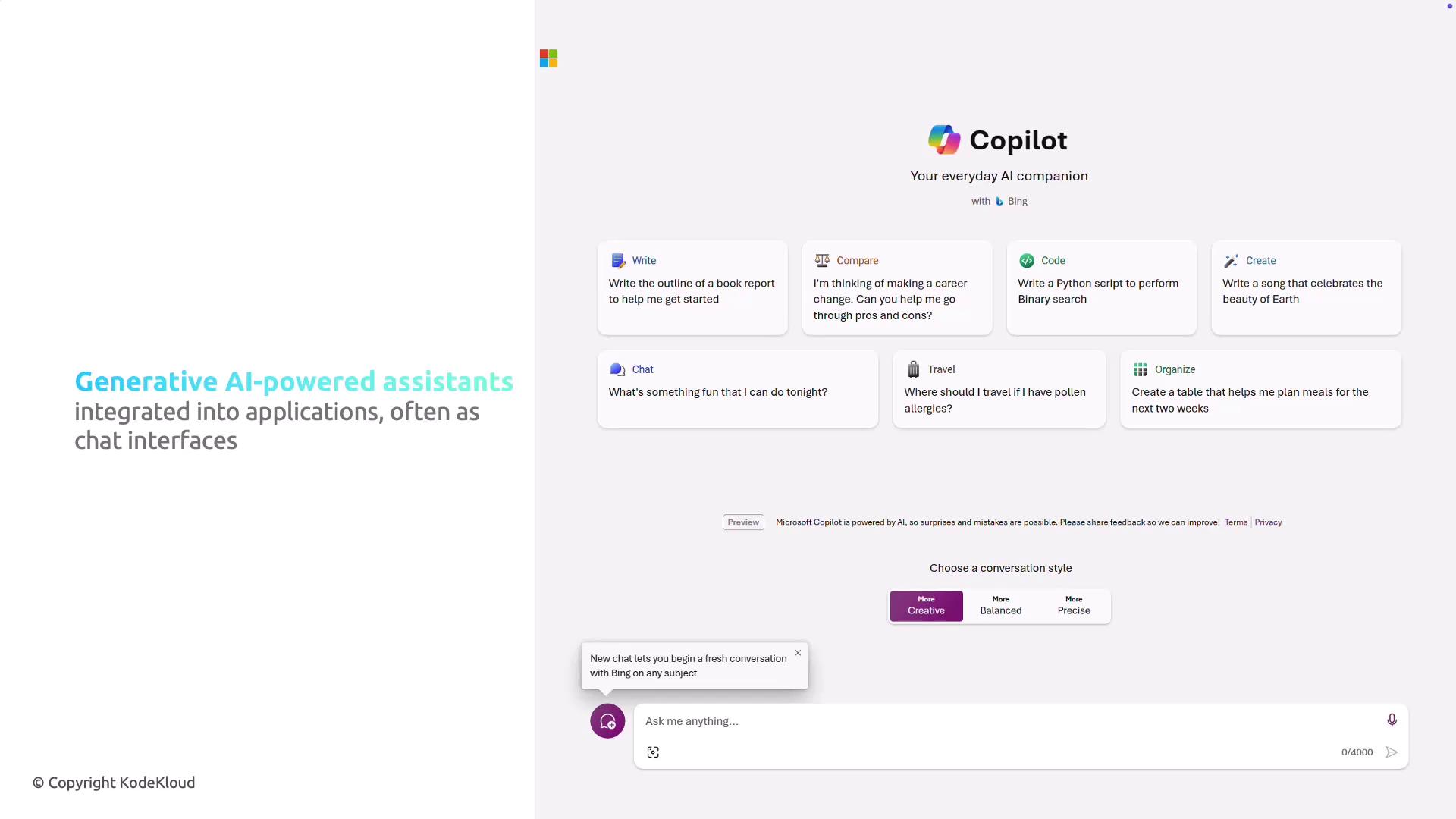
Functions of a Copilot
Copilots deliver contextual support for everyday tasks by automating repetitive processes and facilitating more strategic work. For instance, they can:- Draft emails
- Summarize documents
- Provide step-by-step instructions
Levels of Copilot Adoption
Organizations can implement copilots following a maturity model that evolves through three distinct levels:Level 1: Enhanced Productivity with AI Copilot
At the initial level, copilots are deployed to streamline daily operations and simplify tool usage. This phase emphasizes productivity improvement by automating routine tasks, such as scheduling meetings or drafting documents. As a result, employees can concentrate on creative problem-solving and prioritize strategic activities with the streamlined assistance of the copilot.Level 2: Extending AI Copilot with Custom Integrations
At the second level, organizations enhance copilot capabilities by integrating custom plugins that connect to specific business processes or systems. This enables the copilot to extract actionable insights from company data. For example, a third-party plugin might analyze customer feedback within a CRM tool to provide real-time, actionable recommendations.Level 3: Developing Personalized Copilots
At the highest level, organizations create fully personalized copilots that embed generative AI deeply into their workflows. This approach facilitates the development of unique, branded AI experiences. For instance, a retail company could develop a custom copilot that not only navigates the product catalog but also offers personalized recommendations. This highly tailored solution provides complete control over the design and functionality of the copilot, yielding a powerful tool specific to the business needs.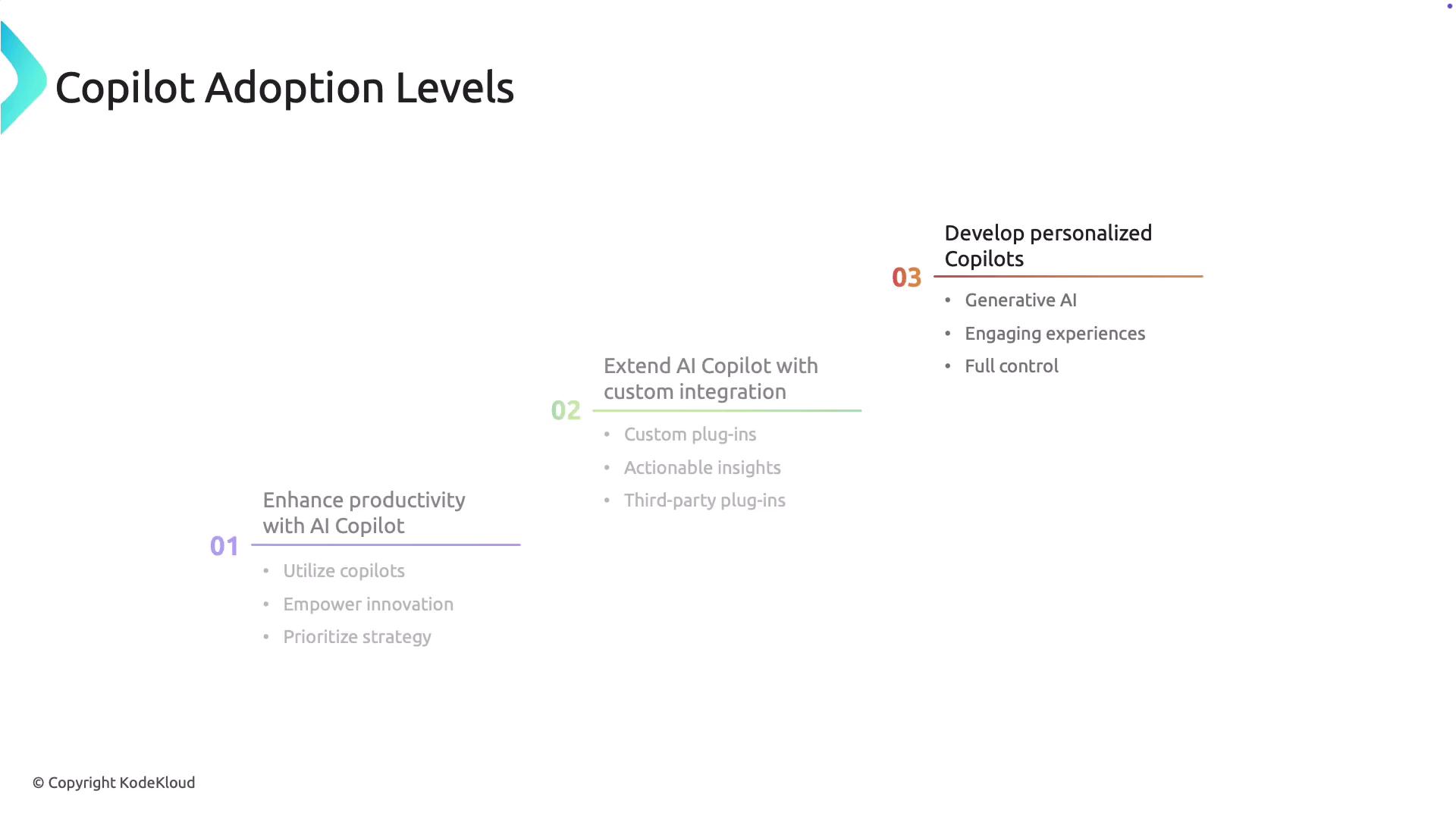
As organizations progress through these levels, they achieve deeper AI integration, enhanced personalization, and a greater overall impact from their copilot solutions.