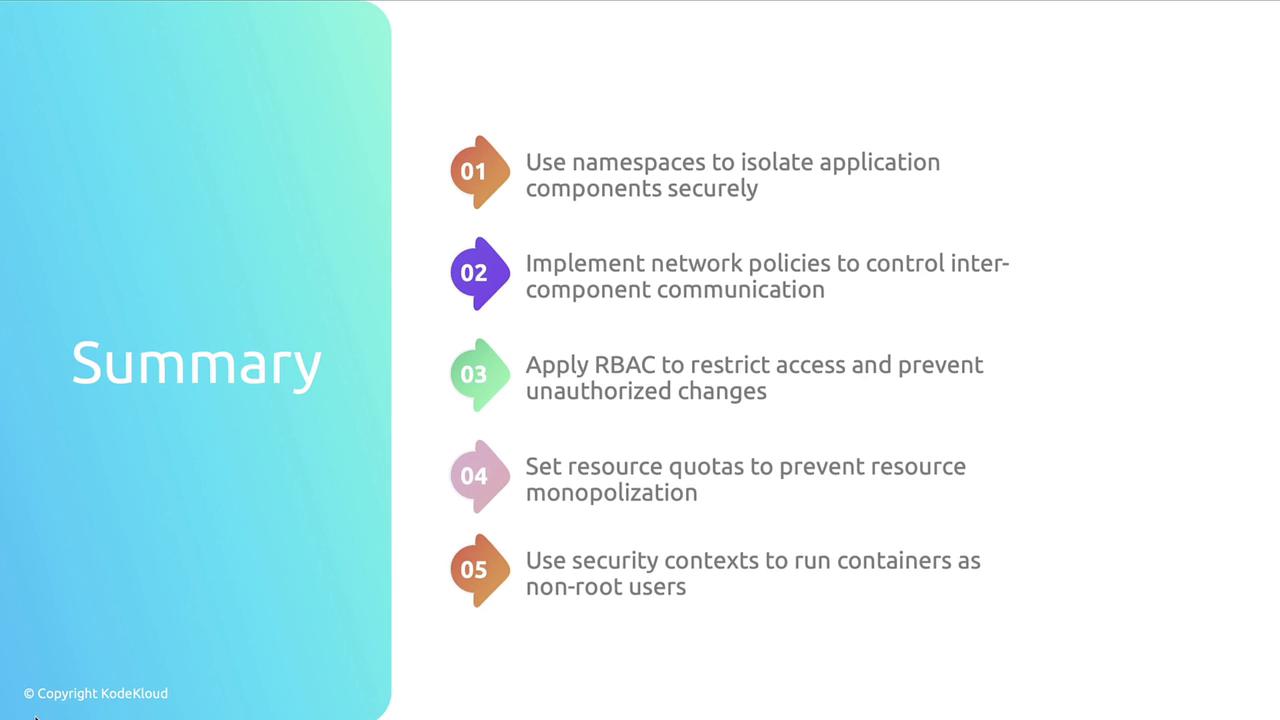
This guide walks through five key isolation strategies for maintaining security and stability in Kubernetes clusters.
Ensuring robust isolation within Kubernetes clusters is crucial for maintaining security and stability across production (prod), development (dev), and testing (test) environments. In multi-tenant clusters, proper isolation prevents one team’s workload from impacting another. This guide walks through five key isolation strategies.
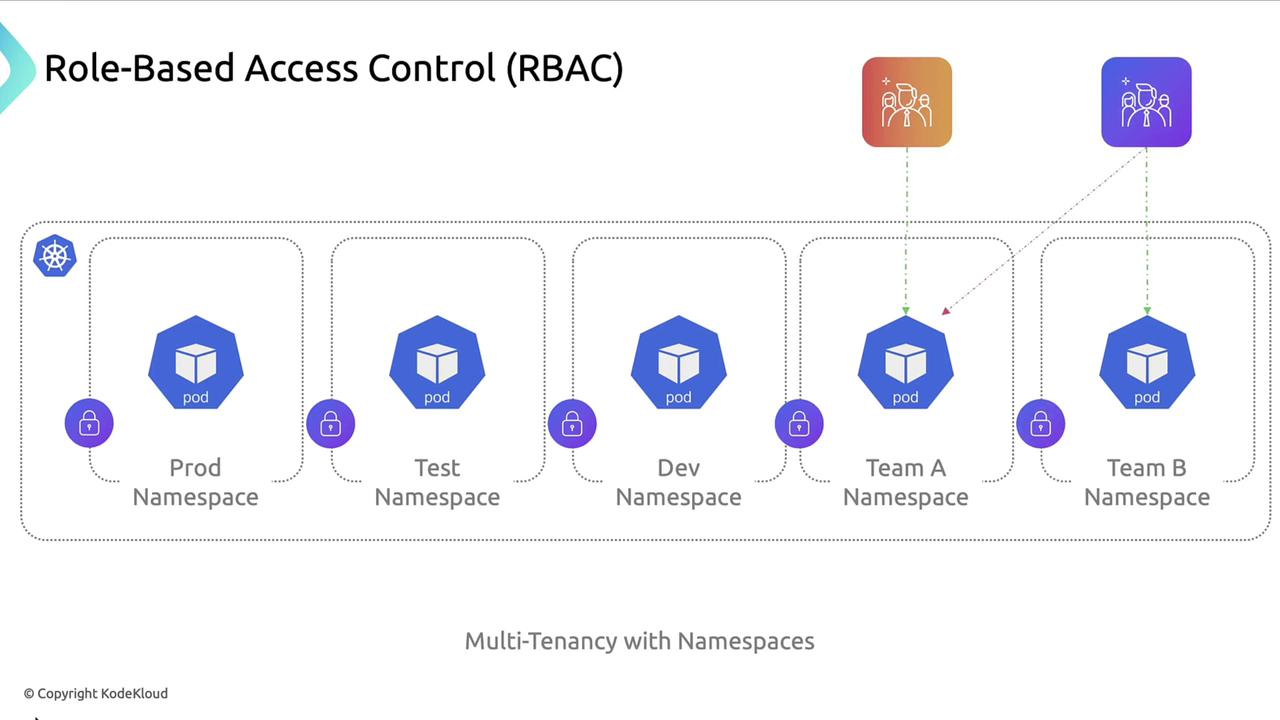
Namespaces partition cluster resources and faults, enabling logical separation and multitenancy. By isolating environments into distinct namespaces, you limit blast radius and simplify resource management.
By default, Pods can communicate across namespaces without restriction. Kubernetes NetworkPolicy resources let you define fine-grained ingress and egress rules.Example: Allow only Pods in the prod namespace to receive ingress traffic from peers within prod:
Copy
Ask AI
apiVersion: networking.k8s.io/v1kind: NetworkPolicymetadata: name: allow-internal-prod-namespace namespace: prodspec: podSelector: {} # Select all Pods in prod policyTypes: - Ingress ingress: - from: - podSelector: {} # Only Pods in the same namespace
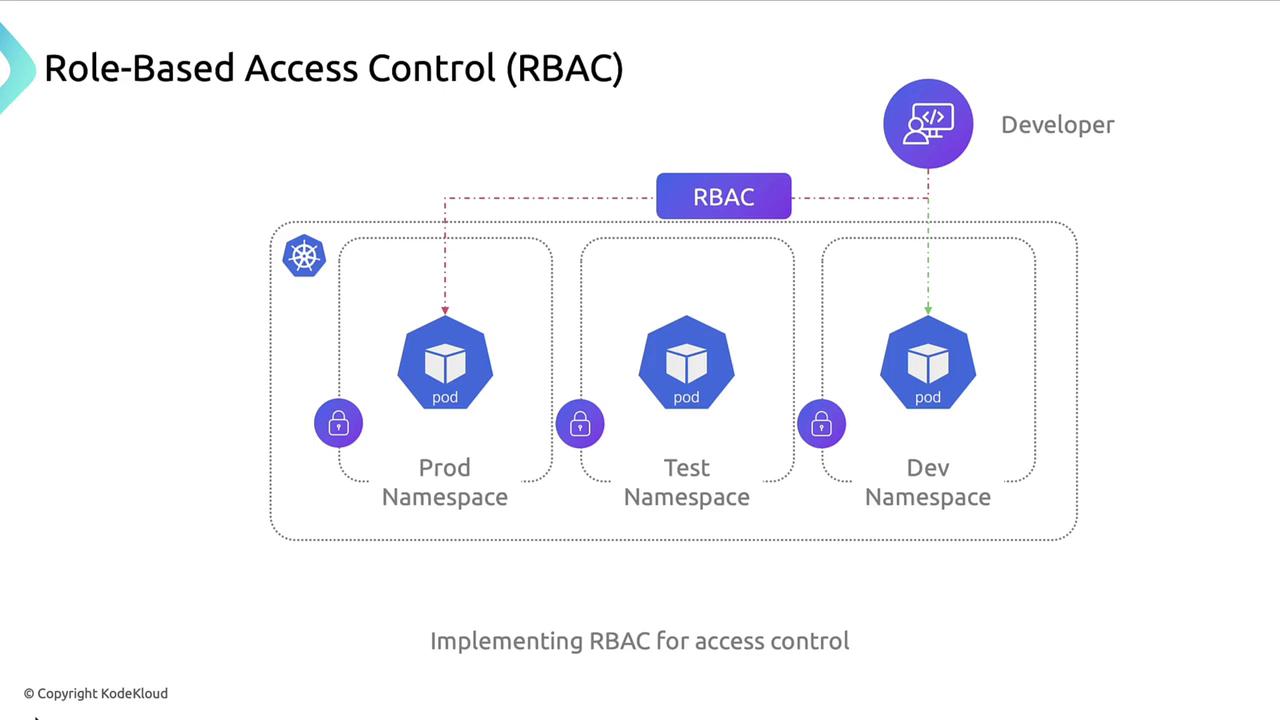
RBAC enforces the principle of least privilege, reducing accidental or malicious changes. Define Roles and RoleBindings to grant only the permissions required.
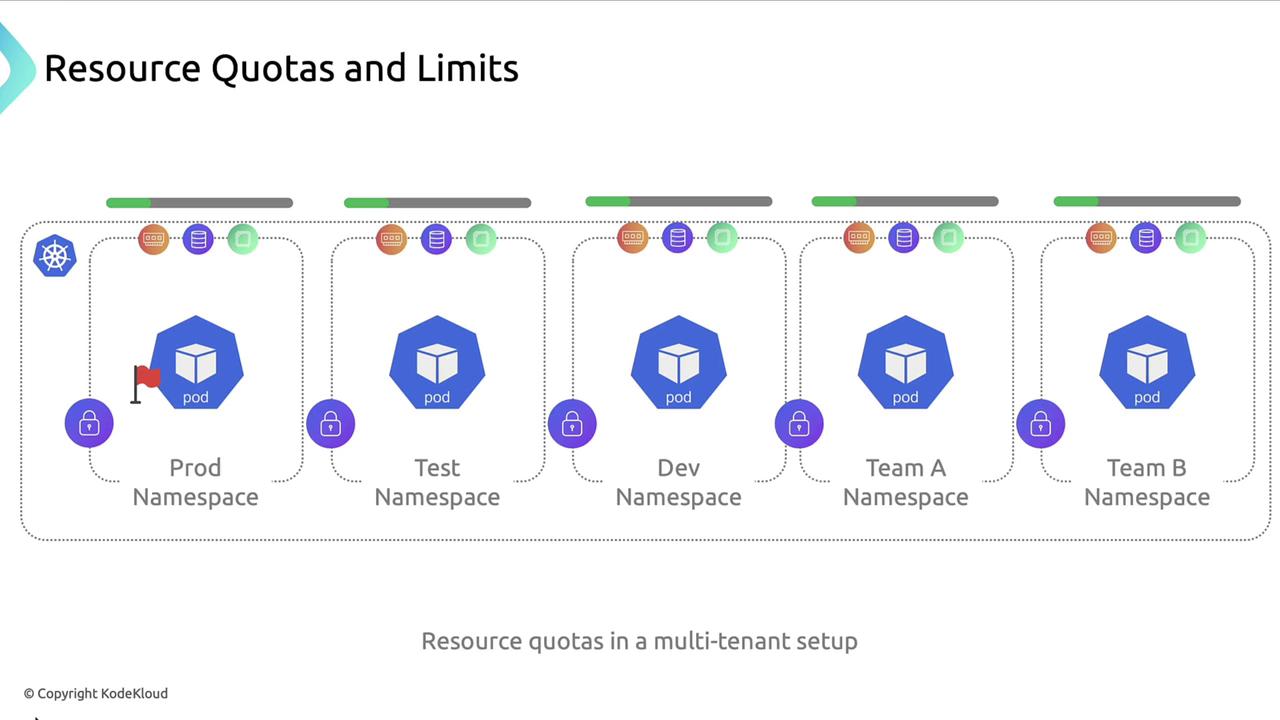
ResourceQuotas control overall resource consumption per namespace. Pod-level resource requests and limits prevent individual workloads from exhausting CPU or memory.
By default, containers may run as root, which heightens risk if compromised. Use a securityContext to enforce non-root execution and restrict privileges.