This lesson covers authenticating access to a Kubernetes cluster, detailing methods and configurations for securing API server interactions.
Welcome to this lesson on authenticating access to a Kubernetes cluster. A cluster consists of multiple physical or virtual nodes and several internal components working together to run your workloads. It’s crucial to secure management access by verifying identities for anyone or anything interacting with the API server.Actors interacting with the cluster:
Actor
Description
Examples
Administrators
Manage infrastructure and policies
Cluster operators, DevOps engineers
Developers
Deploy and maintain applications
CI/CD engineers, application owners
Robotic Clients
Automated systems accessing the API server
Monitoring tools, pipelines
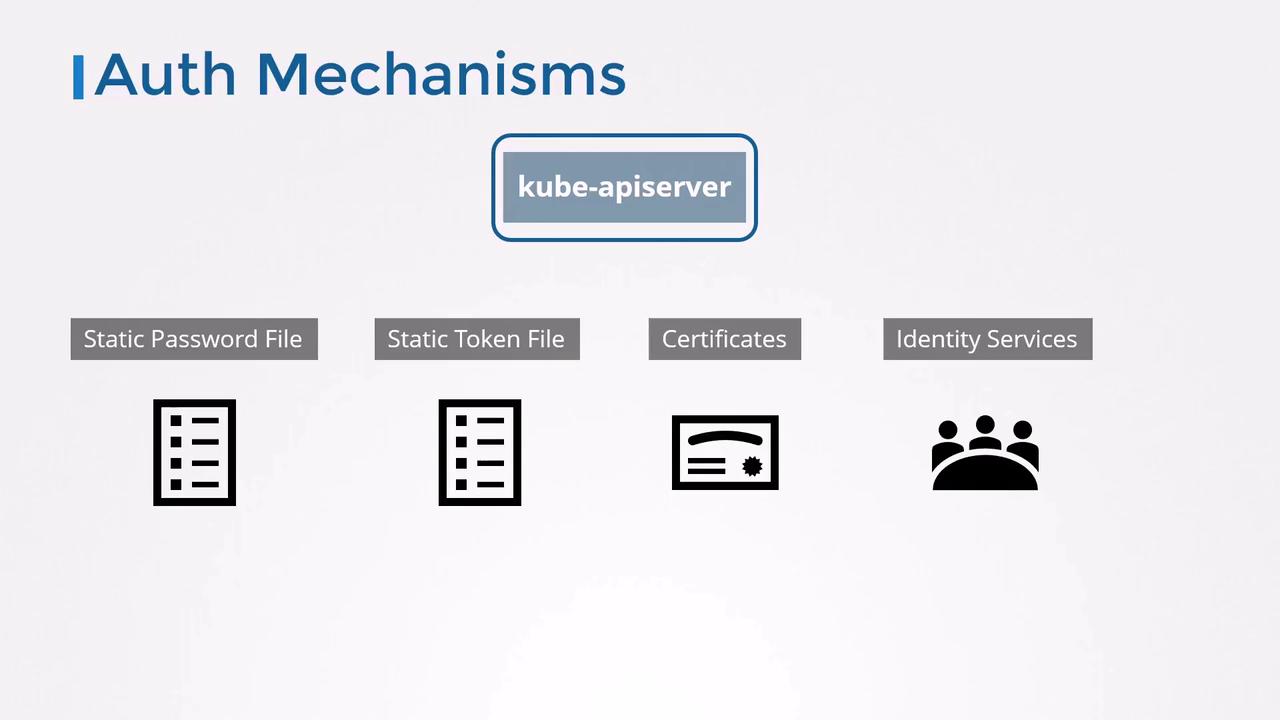
Kubernetes relies on external identity sources (files, certificates, identity services like LDAP or OIDC) for human user authentication, while it internally manages service accounts. All requests pass through the kube-apiserver, which authenticates before authorizing.Supported authentication methods:
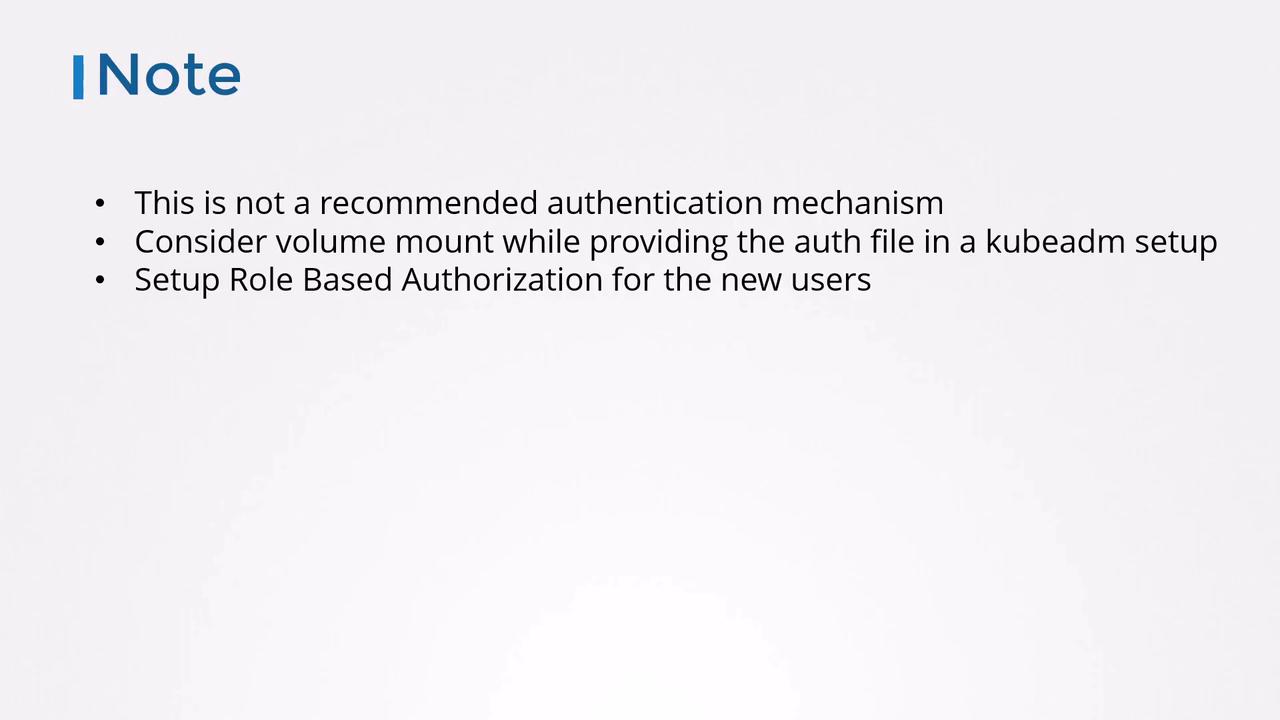
Storing usernames, passwords, or tokens in plain text is not recommended for production. Use secure vaults or external identity providers for sensitive environments.