

Controller Manager and Scheduler Roles
A Kubernetes cluster uses these control-plane components:-
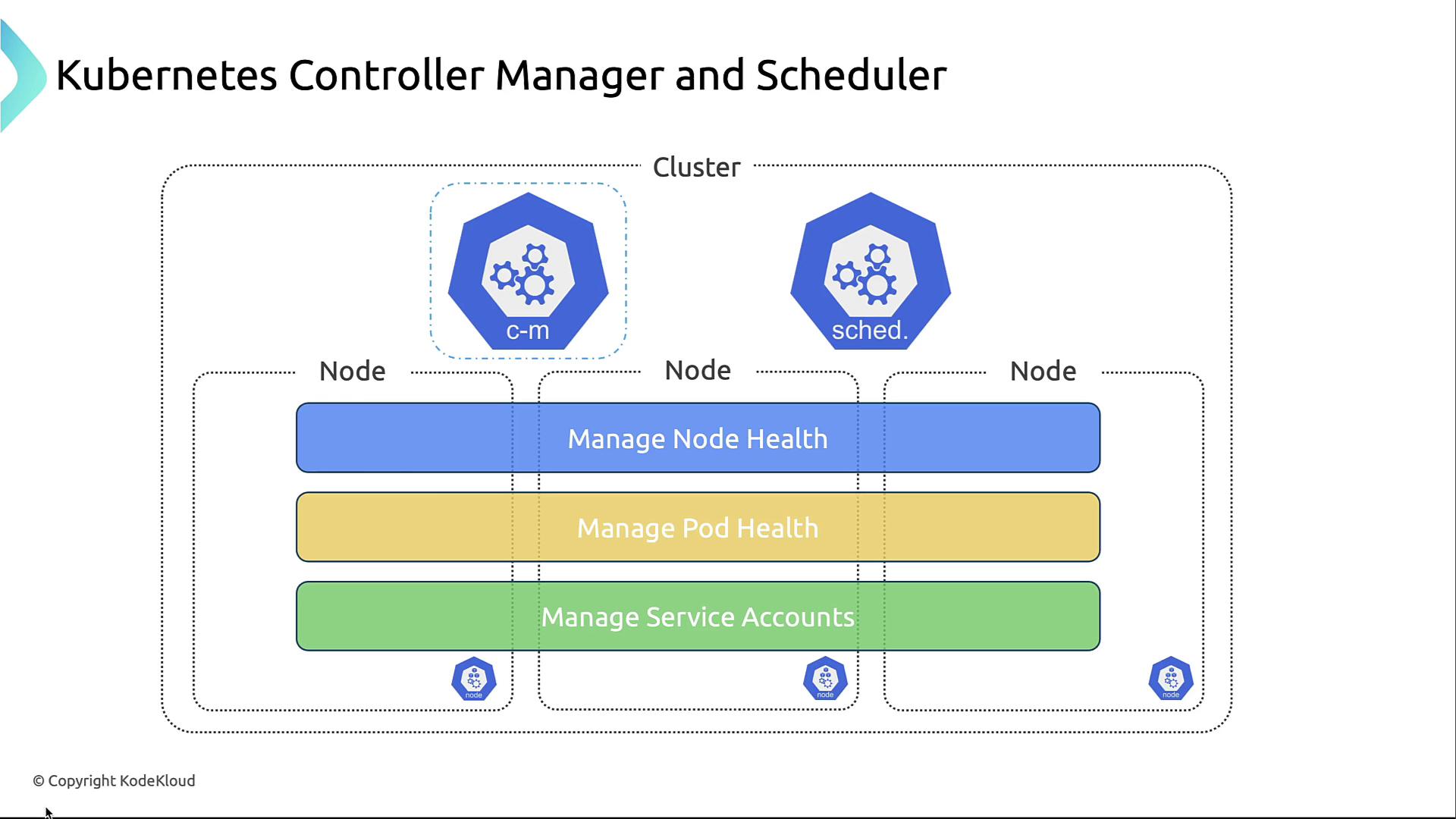
Controller Manager
- Monitors node and pod health
- Maintains the desired number of pod replicas
- Manages service accounts via controllers (e.g., ReplicationController, EndpointController, NamespaceController, ServiceAccountController)
-
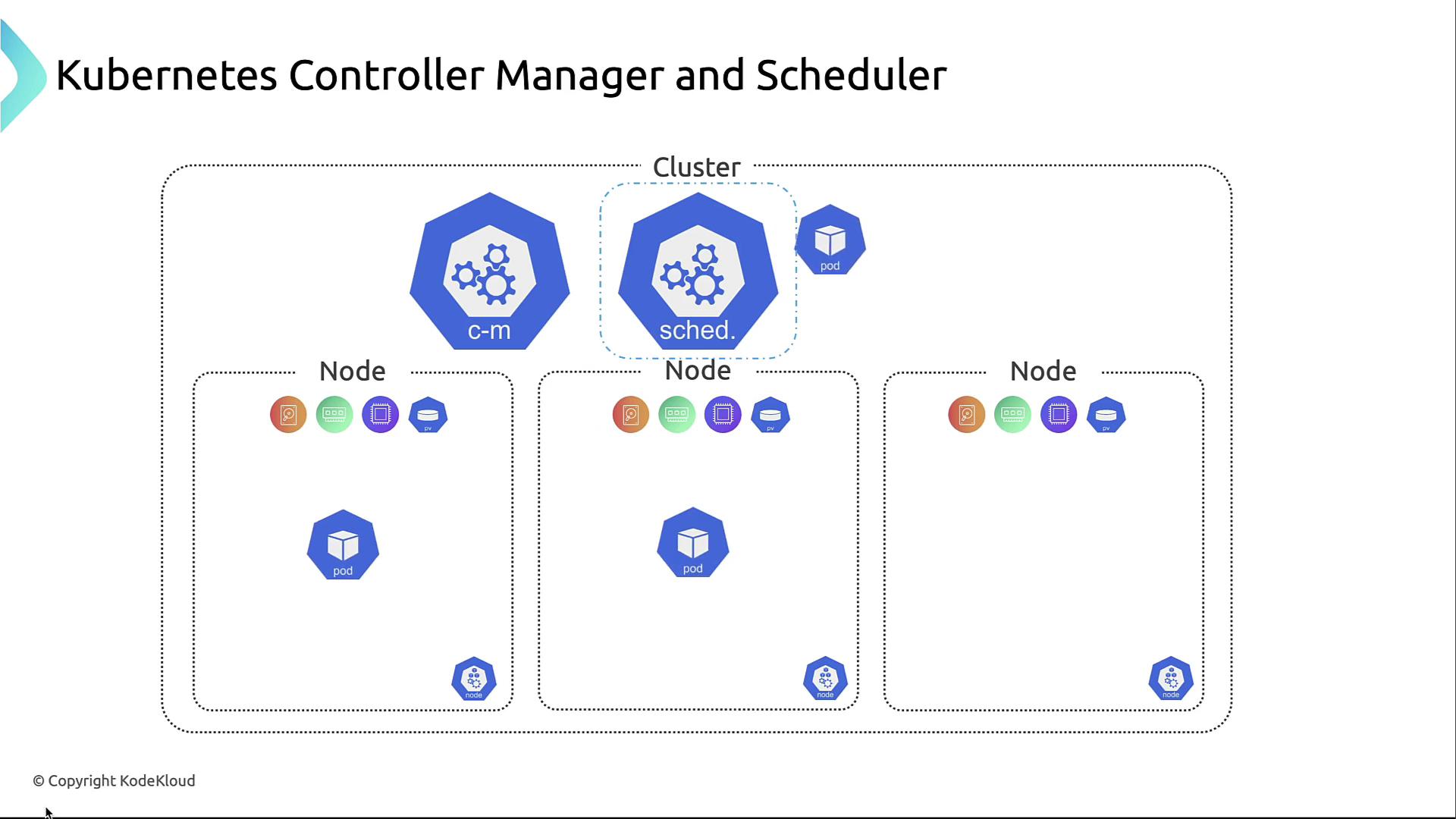
Scheduler
- Assigns pods to nodes based on resource availability and scheduling constraints
1. Isolation on Dedicated Nodes
Running the Controller Manager and Scheduler on isolated master nodes prevents compromised application pods from reaching critical control-plane components.- Dedicate nodes exclusively for control-plane services
- Taint master nodes to avoid scheduling regular workloads
- Monitor and patch these nodes independently
- You limit lateral movement if an application pod is breached
- You can apply updates and security patches without impacting user workloads
Use
kubectl taint nodes and node selectors to keep control-plane pods off worker nodes.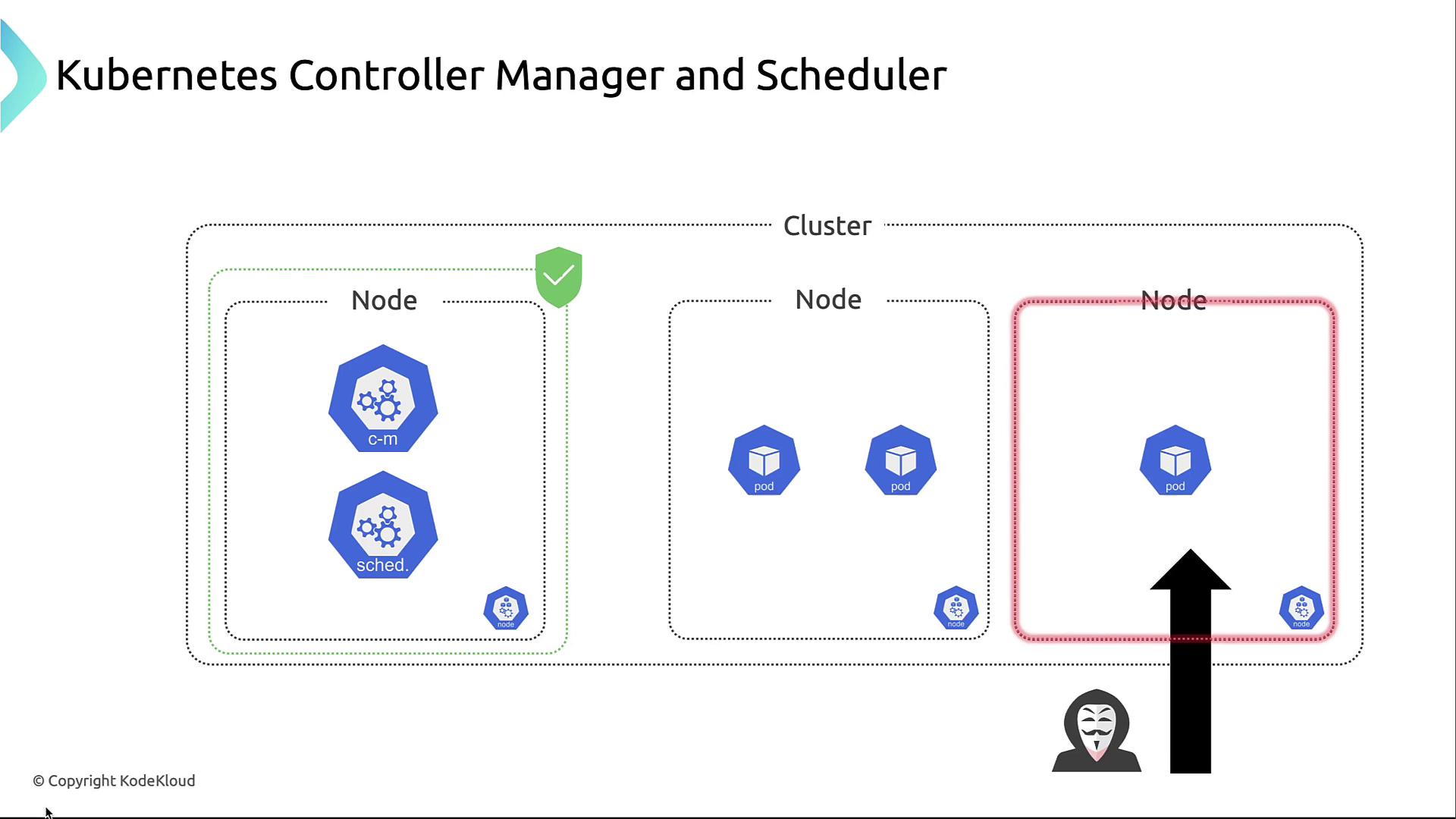
2. Role-Based Access Control (RBAC)
Adopt least-privilege RBAC policies so the Controller Manager and Scheduler only have access to the resources they need.| Component | Permissions Granted | Permissions Denied |
|---|---|---|
| Controller Manager | Manage ReplicaSets, Services, Endpoints | Secrets, NetworkPolicies, ConfigMaps |
| Scheduler | List and watch pods, nodes, bindings | Creating roles, accessing etcd directly |

Review the Kubernetes RBAC documentation when defining your ClusterRoles and RoleBindings.
3. Encrypting Communications with TLS
Ensure all communication between the Controller Manager, Scheduler, API Server, and etcd is encrypted:- Enable mutual TLS (mTLS) for client-server and server-server connections
- Use a reputable Certificate Authority (CA) or cert-manager
- Automate certificate renewal to avoid expired credentials
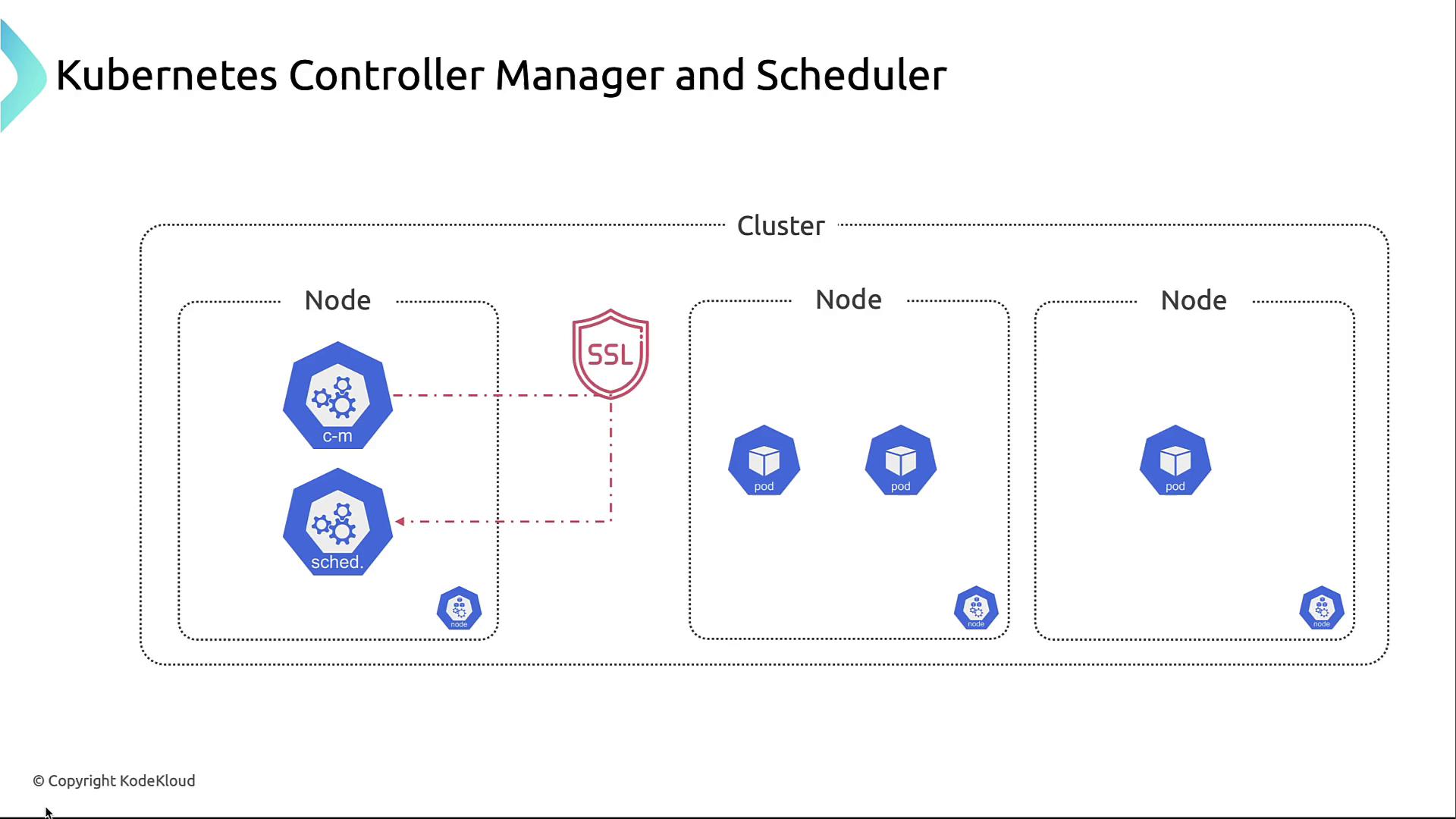
Expired certificates can silently fail, causing control-plane outages. Implement automated alerts to track upcoming expirations.
4. Audit Logging
Activate audit logging for both the Controller Manager and Scheduler to record every API request and response. These logs are essential for forensic analysis and anomaly detection.Summary of Best Practices
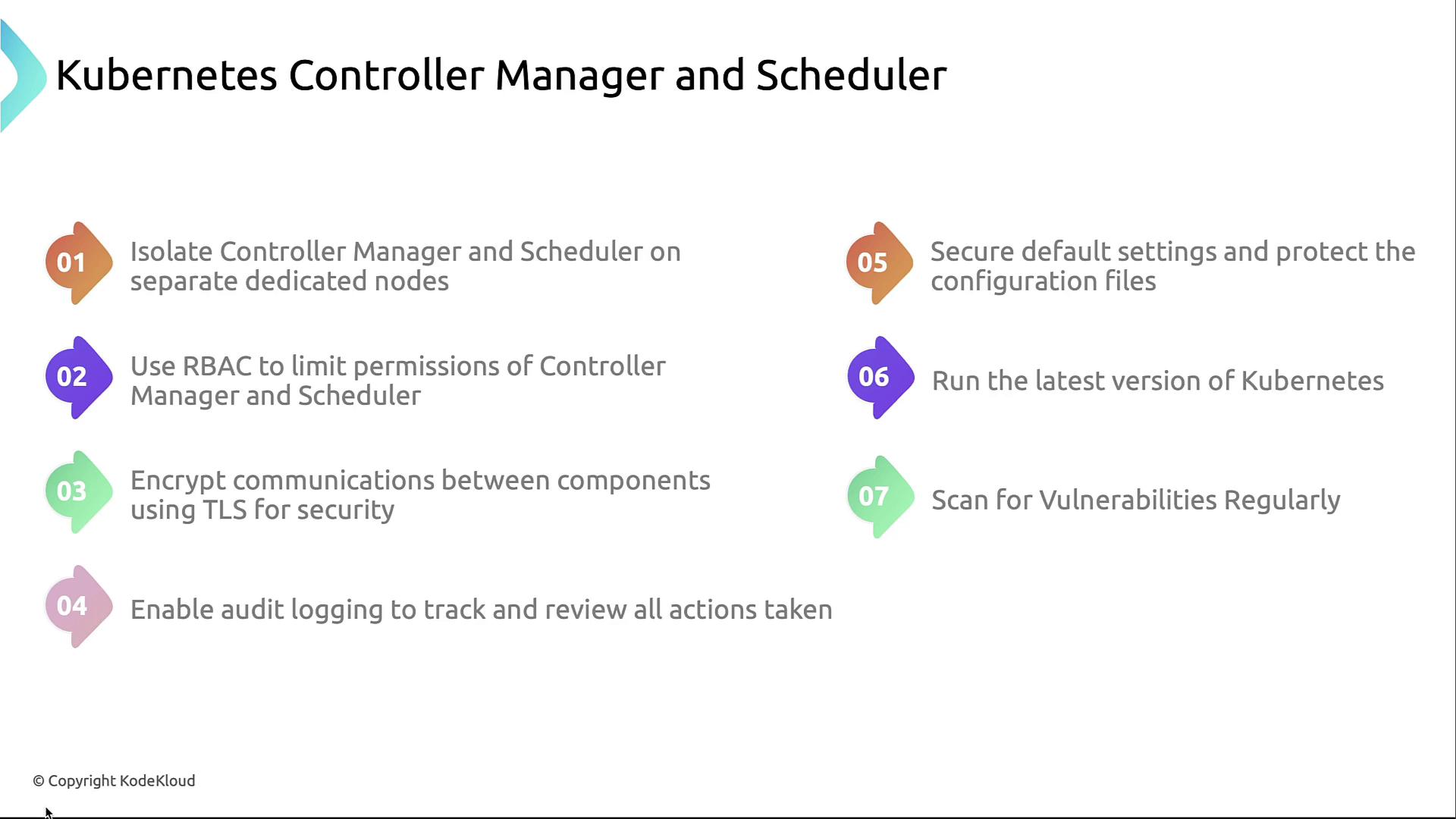
- Isolate Controller Manager and Scheduler on dedicated, tainted nodes
- Apply least-privilege RBAC policies
- Encrypt all control-plane traffic (TLS/mTLS)
- Enable detailed audit logging with real-time monitoring
- Secure default configurations and protect
kubeconfigfiles - Keep Kubernetes up to date with security patches
- Regularly scan for vulnerabilities and remediate promptly