

- Schema Enforcement
- Dead Letter Queue
- Retry Mechanism
- Message Filtering
1. Schema Enforcement Strategy
Ensuring every event matches a predefined schema drastically reduces malformed or unexpected data. Producers serialize messages against a schema stored in a registry, and consumers validate incoming events before processing.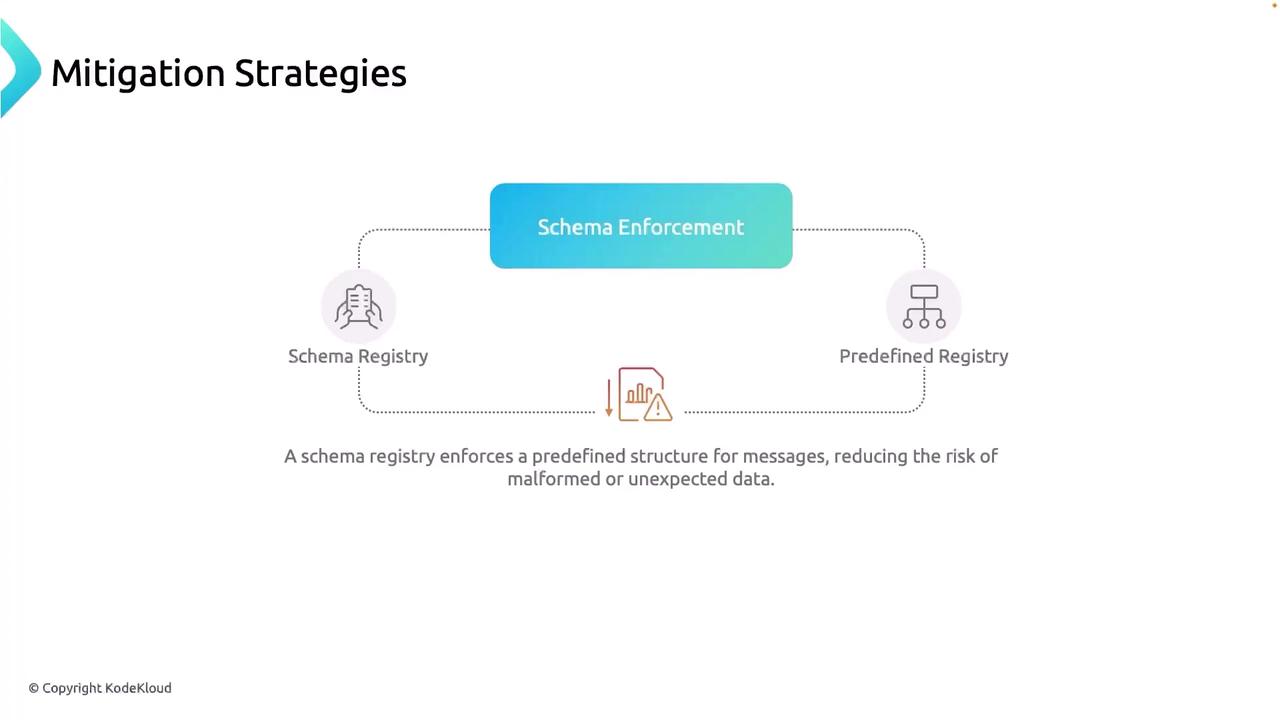
- Stronger data contracts
- Early detection of incompatible changes
- Reduced runtime errors
Plan for schema evolution (backward/forward compatibility) to avoid deployment disruptions.
2. Dead Letter Queue
A Dead Letter Queue (DLQ) isolates unprocessable events into a separate Kafka topic. Instead of blocking the main flow, failed messages get redirected for offline analysis or manual intervention.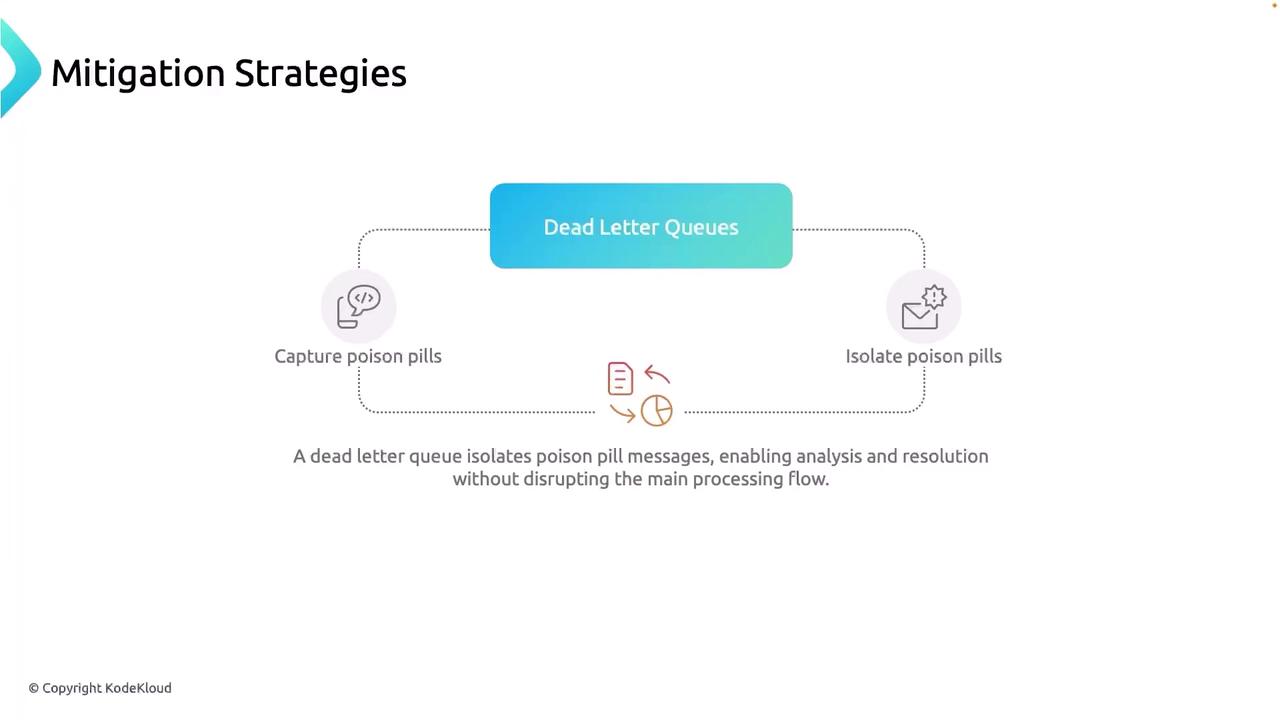
- Keeps primary topics clean
- Simplifies debugging
- Enables targeted reprocessing
Monitor DLQ growth closely—unchecked queues can consume significant storage.
3. Retry Mechanism
Transient errors—like temporary network glitches—can often be resolved with retries. Implement a backoff strategy, then escalate to a DLQ if attempts fail.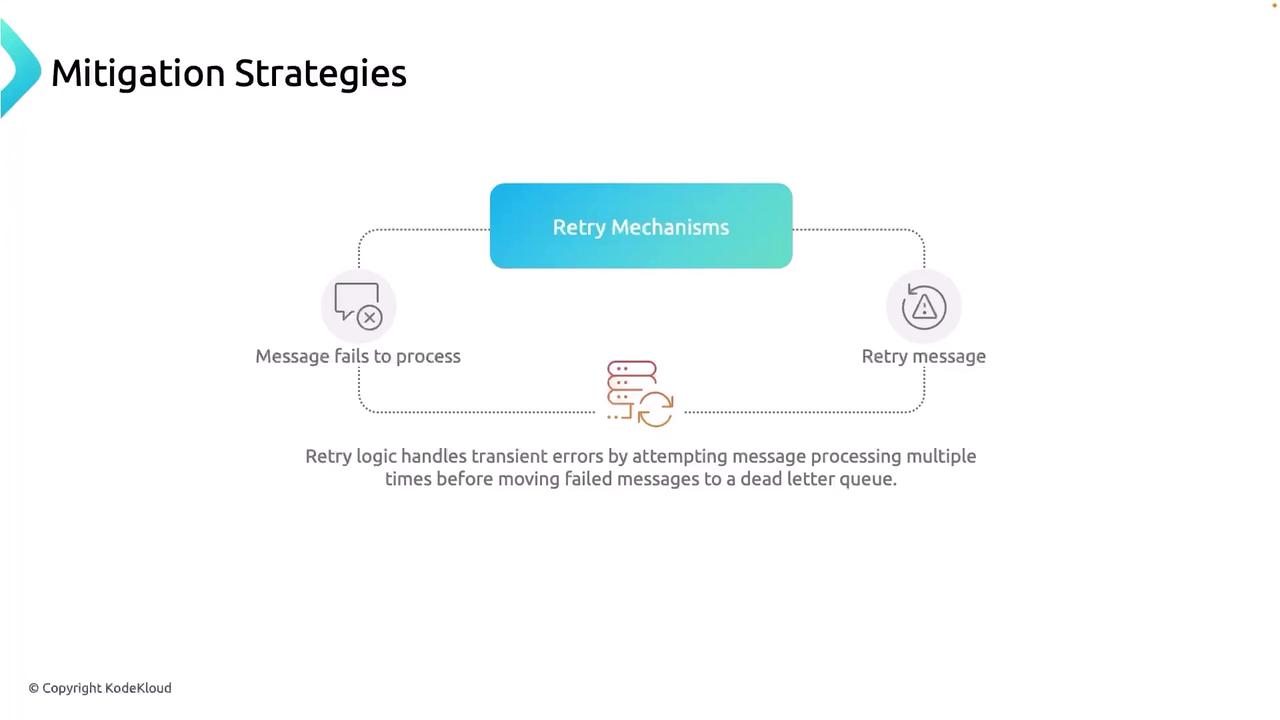
- Use exponential backoff intervals
- Limit maximum retry count
- Fallback to DLQ after exhaustion
4. Message Filtering
When only specific fields are needed, filter out irrelevant or harmful data before full processing. For example, drop an invalid JSON key causing failures.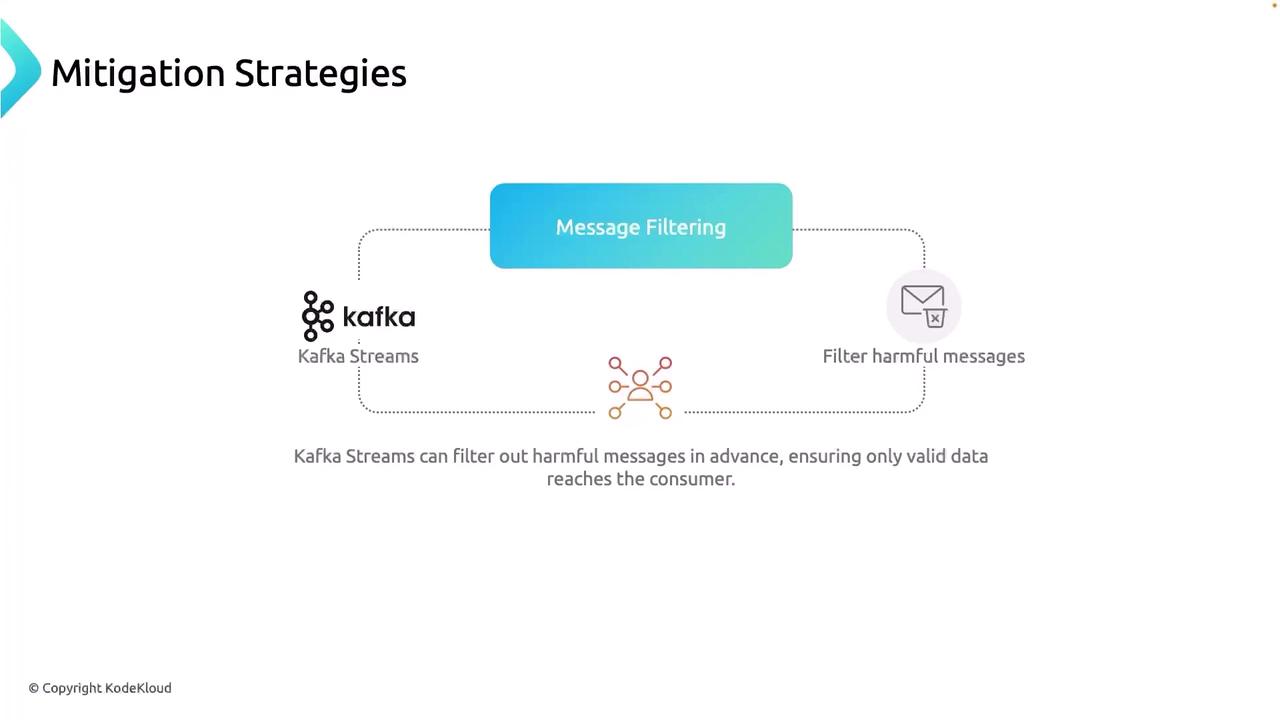
Message filtering should not replace schema enforcement when dropped fields are critical to business logic.
Summary of Strategies
| Strategy | Use Case | Benefit |
|---|---|---|
| Schema Enforcement | Guarantee data structure compliance | Early error detection, strict contracts |
| Dead Letter Queue | Isolate unprocessable events | Cleaner main flow, easier debugging |
| Retry Mechanism | Handle transient failures | Automated recovery, fewer false positives |
| Message Filtering | Exclude non-essential or harmful data | Lighter payloads, fewer parse errors |