

Introduction
Welcome to this lesson on Kafka Raft (KRaft), the next evolution of Apache Kafka’s architecture. By integrating a native Raft-based consensus protocol, KRaft streamlines cluster operations and removes the need for an external coordination layer.Challenges with ZooKeeper
Apache Kafka has long relied on ZooKeeper to manage metadata, broker states, and leader elections. While reliable, this approach introduces several pain points: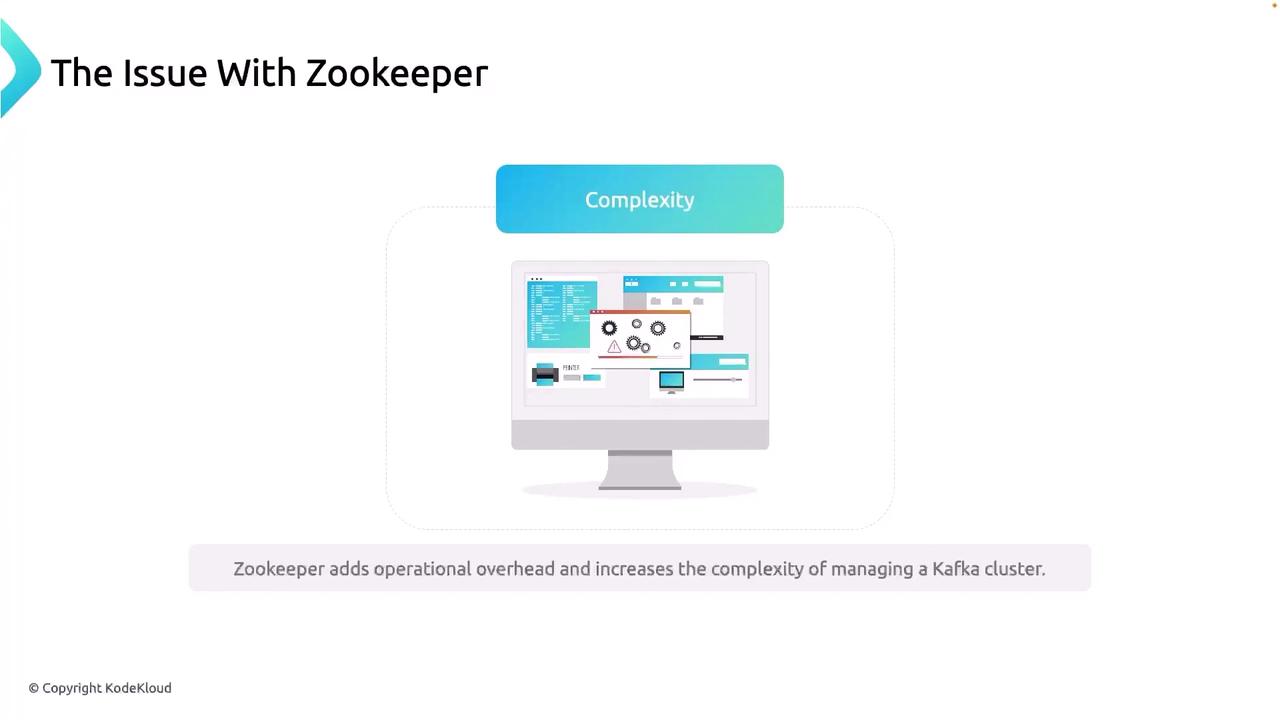
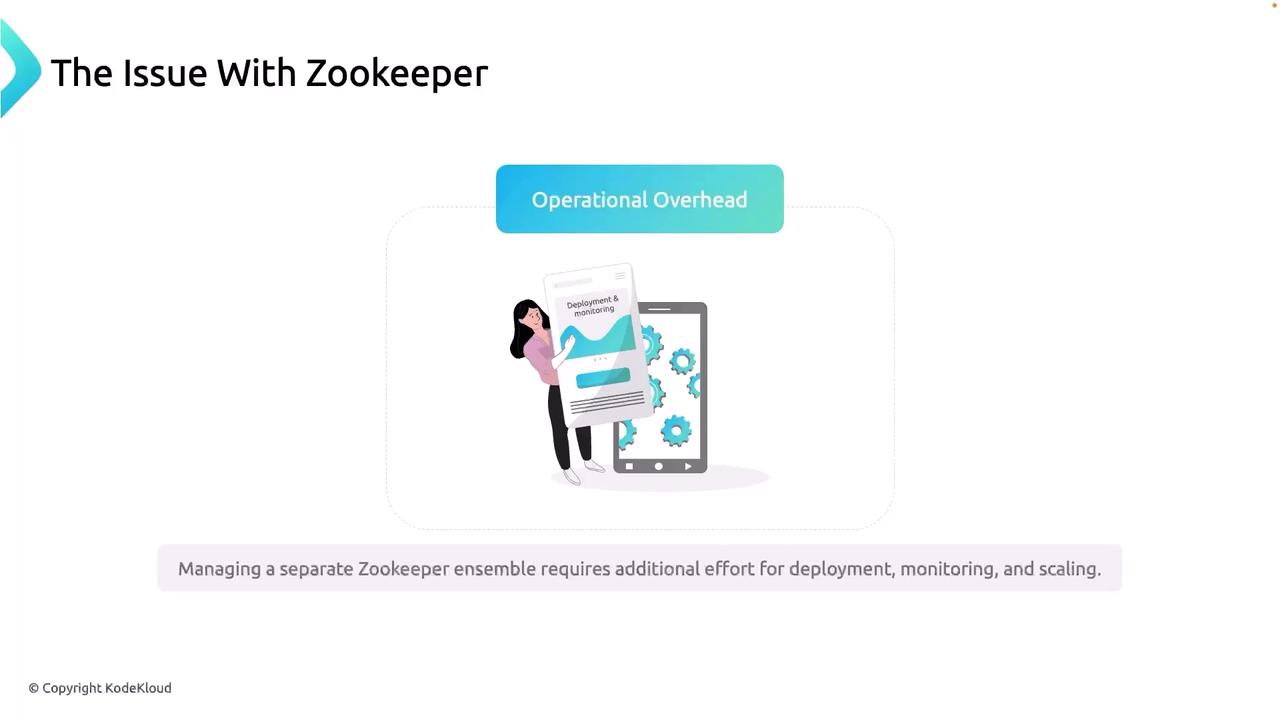
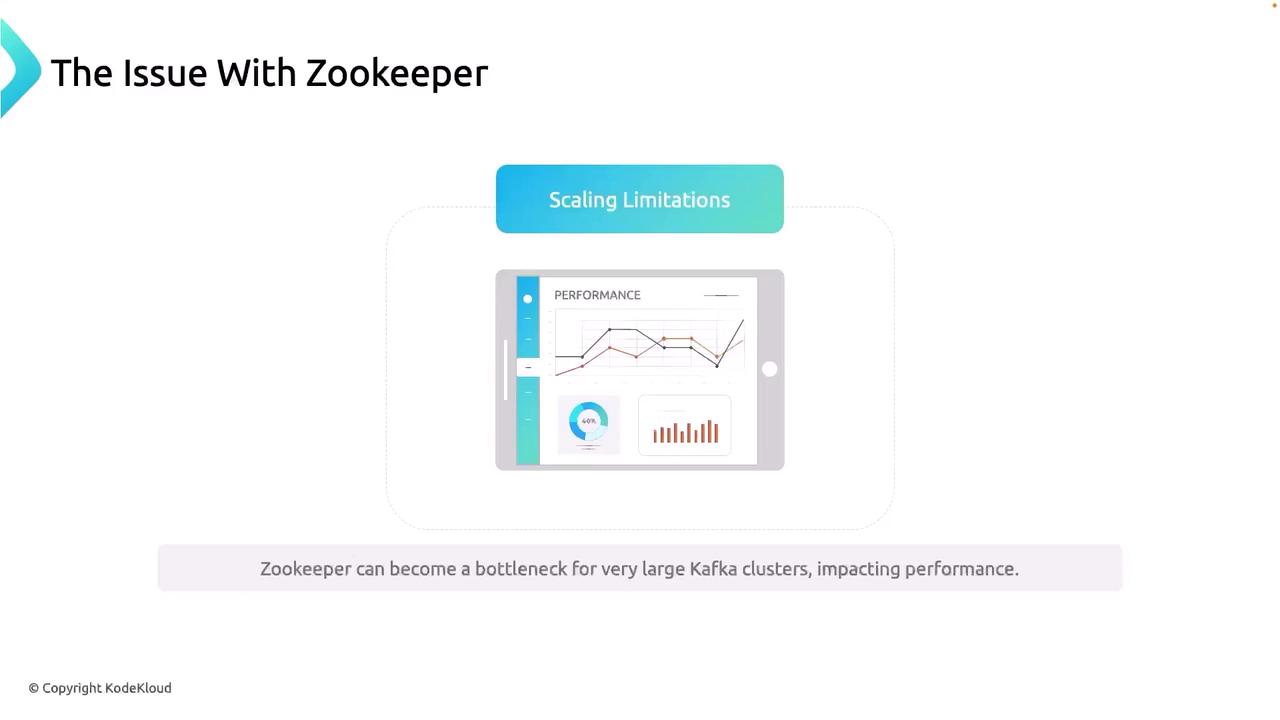
ZooKeeper coordination requires careful tuning of session timeouts, leader election parameters, and quorum sizes to maintain cluster health.
Introducing Kafka Raft (KRaft)
Kafka Raft, or KRaft, embeds the Raft consensus algorithm directly into Kafka brokers. This eliminates the external ZooKeeper dependency and brings metadata management in-house:- Simplified architecture: no separate ensemble to provision.
- Lower operational overhead: fewer components to monitor.
- Improved scalability: built-in governance for partition metadata.
Benefits of KRaft
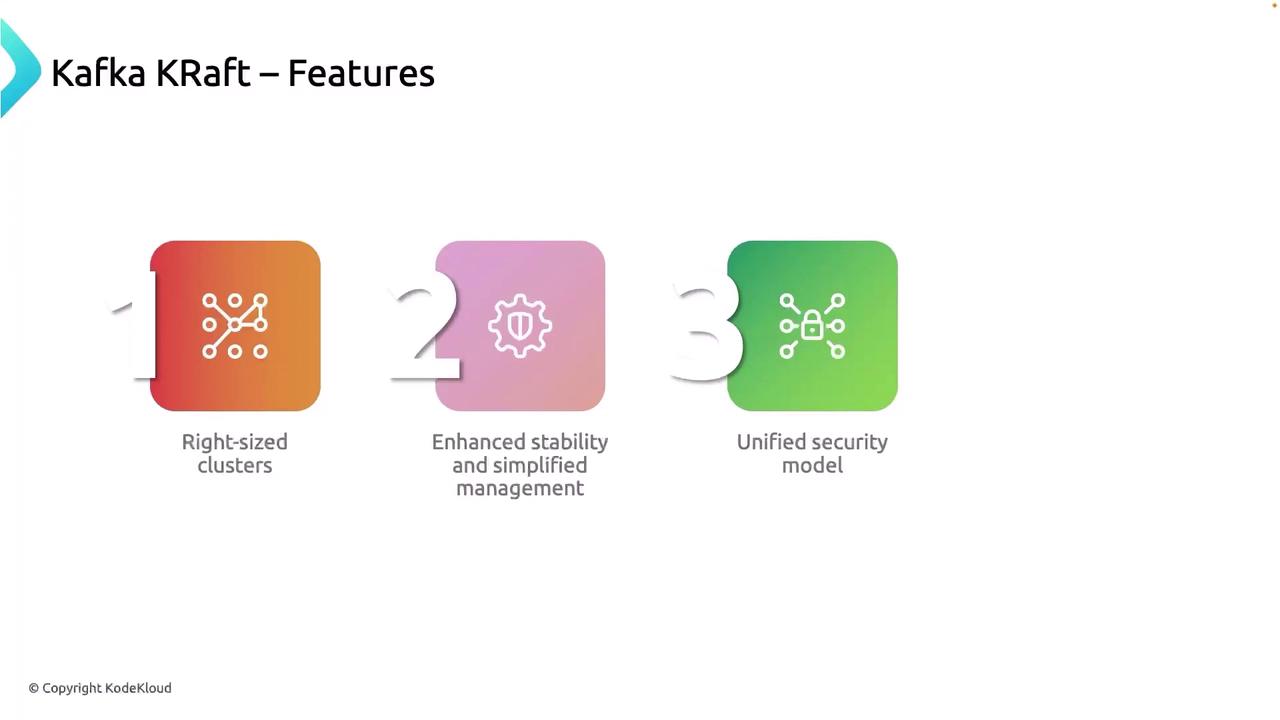
- Right-sized clusters: Only the Kafka brokers you need—no extra ZooKeeper nodes.
- Enhanced stability: A single control plane reduces failure points and downtime.
- Unified security: Consistent authentication, authorization, and encryption across brokers.
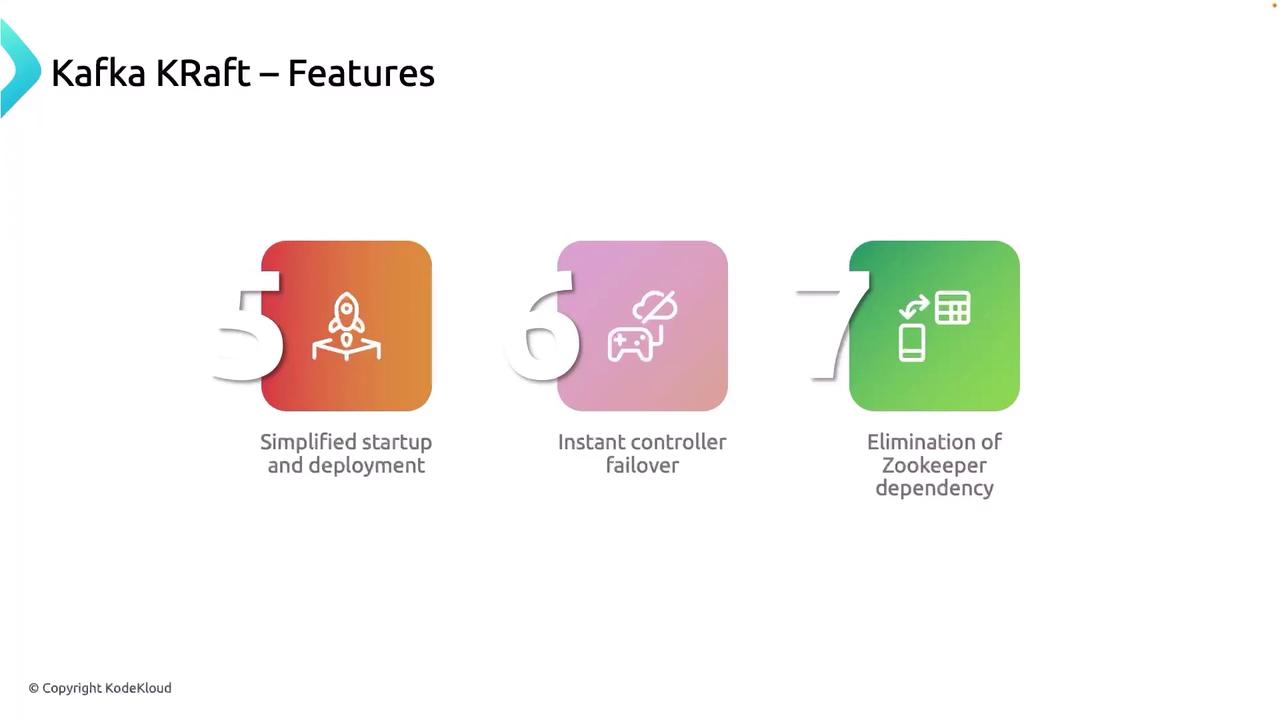
- Simplified deployment: Start brokers in KRaft mode without bootstrapping an external service.
- Instant controller failover: Automatic Raft leader election ensures high availability.
- No ZooKeeper: One less moving part in your data streaming pipeline.
Architecture Transformation
Below is a side-by-side view of the old and new Kafka architectures:| Aspect | ZooKeeper-based Kafka | KRaft-based Kafka |
|---|---|---|
| Coordination Service | External ZooKeeper ensemble | Internal Raft consensus |
| Deployment Units | Kafka brokers + ZK nodes | Kafka brokers only |
| Failover | Separate ZooKeeper election | Instant Raft leader election |
| Scalability | ZK bottlenecks at scale | Distributed metadata management |
| Security Model | Two config domains | Unified broker configuration |
Do not mix ZooKeeper-based brokers with KRaft brokers in the same cluster. Plan your migration carefully to avoid compatibility issues.
Next Steps
In the following lesson, we will walk through:- Initializing a Kafka cluster in KRaft mode
- Configuring controller and broker roles
- Adding and removing brokers dynamically
- Best practices for monitoring and scaling