

EV Charging Use Case
In our EV charging example, charging stations and IoT sensors act as producers, publishing events (e.g., charge start, energy usage) to Kafka topics. Downstream consumers—such as monitoring services or dashboards—subscribe to these topics, processing events to deliver real-time station availability and usage analytics to end users.What Is a Kafka Broker?
A Kafka broker is a server node in a Kafka cluster that:- Receives and stores messages from producers
- Persists messages on disk ( HDD or SSD ) for durability
- Serves messages to consumers on demand
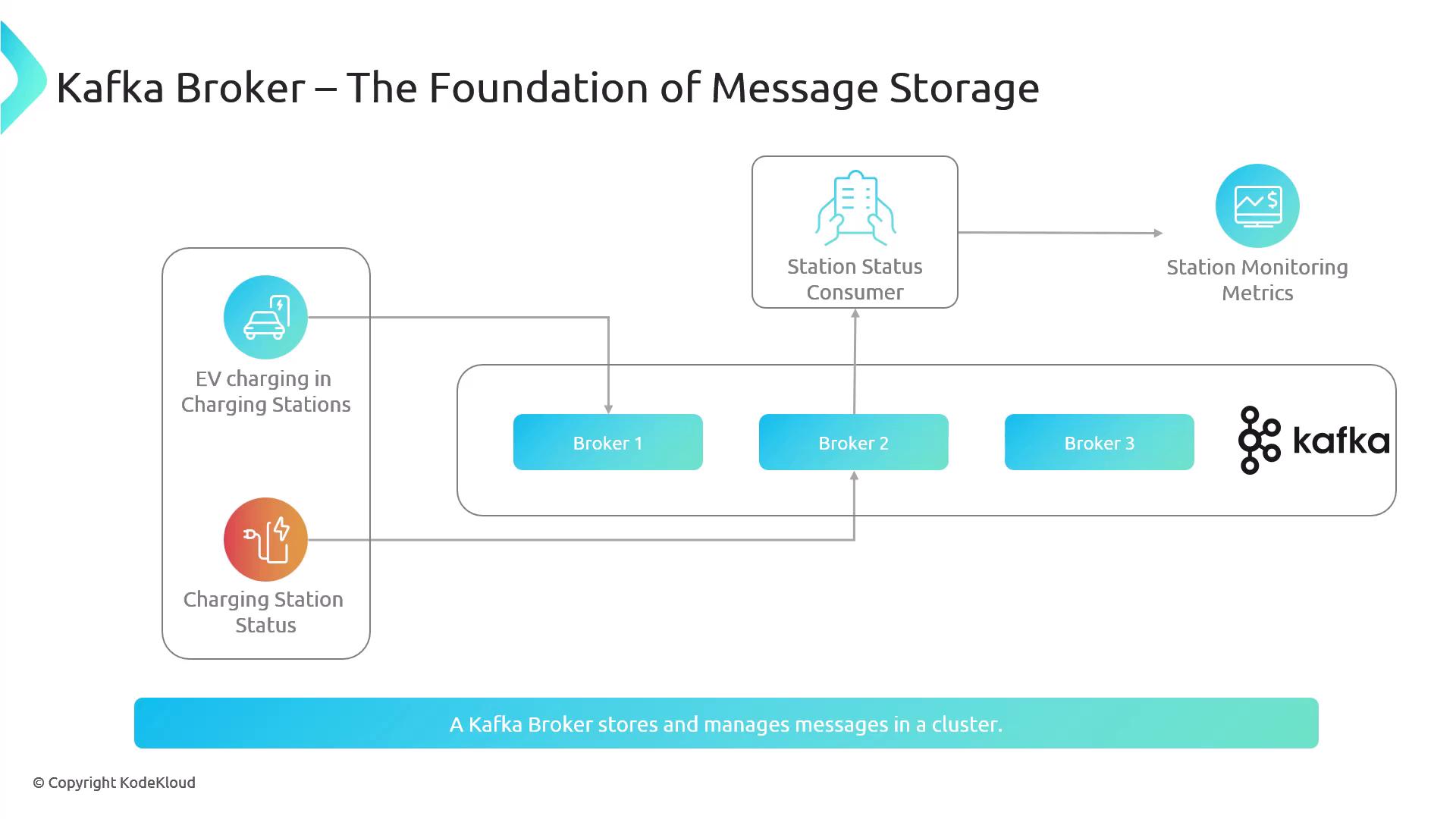
Each broker maintains partitions for topics. Partitions are the unit of parallelism and replication in Kafka.
- Ingest messages from producers
- Persist events to local disk for replay and fault tolerance
- Dispatch messages to subscribed consumers
Core Characteristics of Kafka Brokers
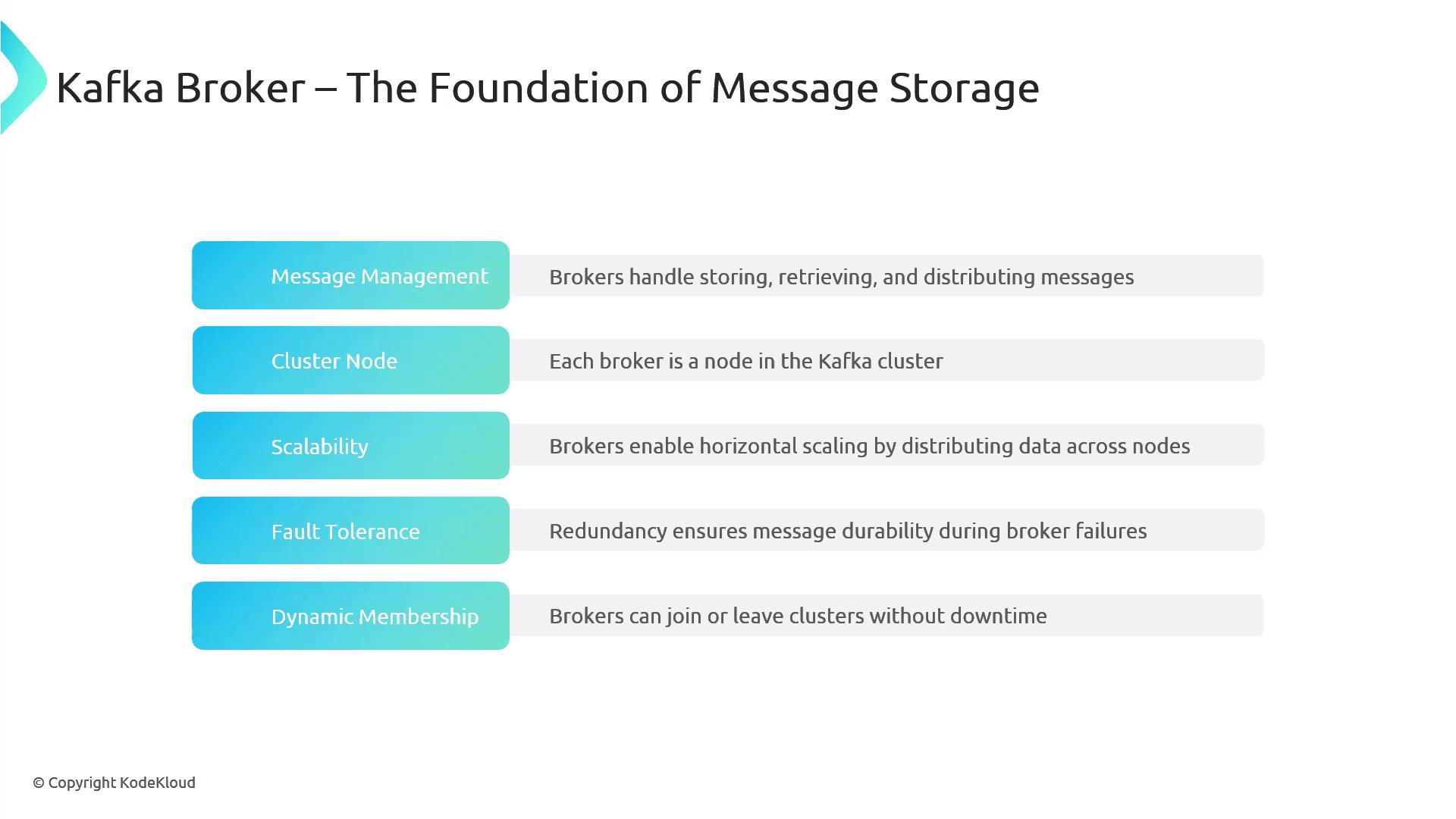
Kafka brokers are built for massive throughput, reliability, and seamless scaling. Key attributes include:| Feature | Description | Benefit |
|---|---|---|
| Message Management | Stores, indexes, and retrieves event streams | Guarantees reliable, ordered delivery |
| Cluster Node | Forms a distributed cluster with other brokers | Balances load and prevents hotspots |
| Scalability | Horizontal growth by adding more brokers | Maintains low latency under load |
| Fault Tolerance | Replicates partitions across multiple brokers | Ensures no data loss on failure |
| Dynamic Membership | Brokers can join or leave without downtime | Simplifies upgrades and maintenance |
Real-World Deployments
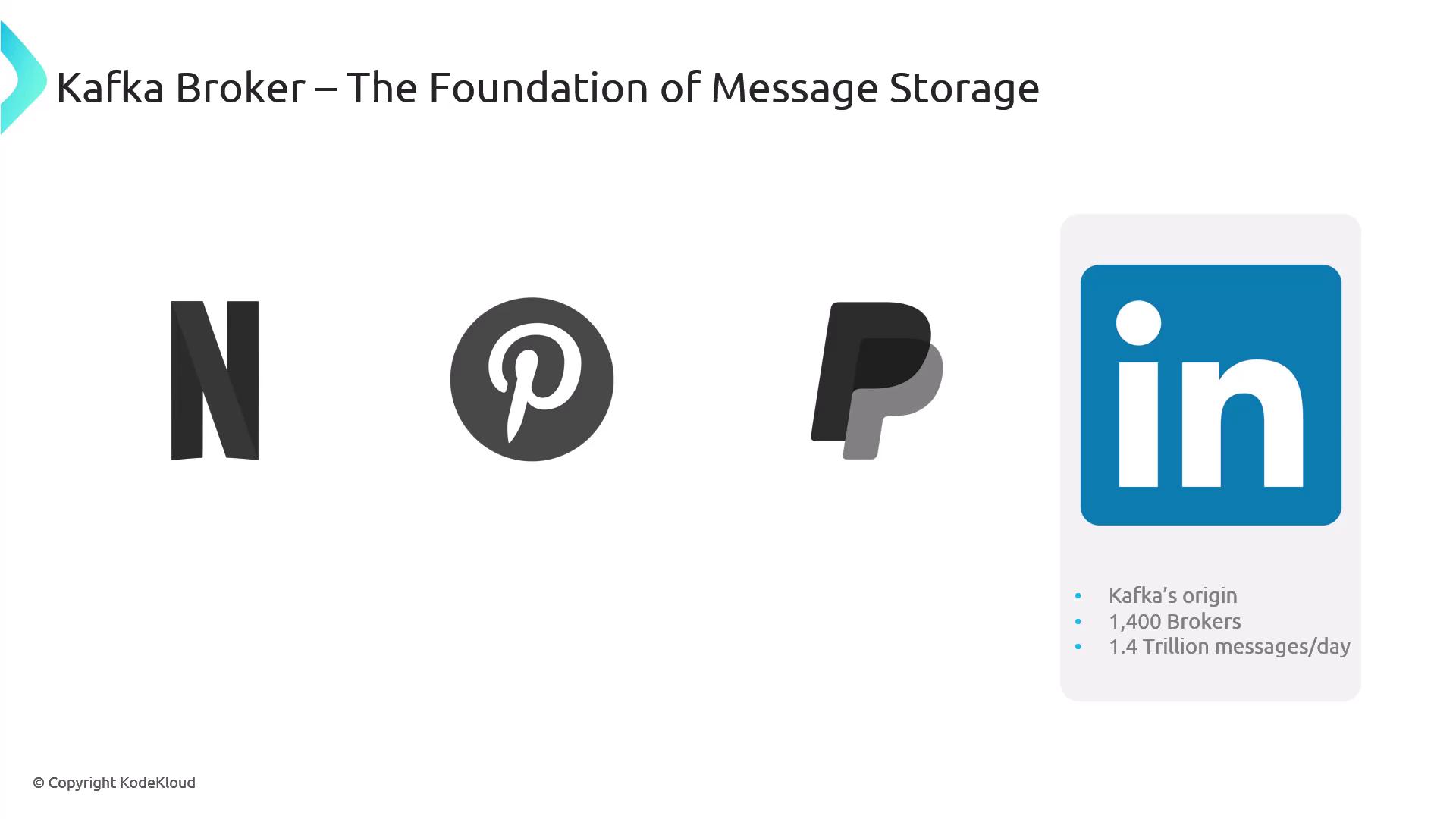
Kafka’s proven at massive scale. Here are a few examples:| Company | Brokers | Messages/Day | Highlights |
|---|---|---|---|
| Netflix | ~4,000 | >1 trillion | Powers streaming telemetry across 50 clusters |
| – | ~4 trillion @ 50 GB/s | Stores exabytes of events in Amazon S3 | |
| PayPal | ~1,500 | – | Maintains 99.99% uptime for global transactions |
| ~1,400 | ~1.4 trillion | Kafka’s originator—drives core data pipelines |
Under-provisioning brokers can lead to throttling or data loss. Always plan capacity based on peak throughput and replication factor.
In this lesson, you’ve learned how Kafka brokers form the bedrock of message storage, ensuring durable, scalable, and reliable event streaming. In the next chapter, we’ll explore Kafka topics and partitions in depth.