This article explains Pod Identity on Amazon EKS, a method for assigning AWS IAM roles to Kubernetes pods, improving permissions management and integration.
Pod Identity—often called IRSA v2—is the latest, native EKS method for assigning AWS IAM roles to Kubernetes pods. In this guide, you’ll learn how Pod Identity improves on Kube2IAM and IRSA by streamlining permissions management, removing annotation overhead, and integrating role mappings directly into the EKS control plane.
Before diving into Pod Identity, here’s a quick comparison of earlier approaches:
Approach
Mechanism
Drawbacks
Kube2IAM
iptables intercept to metadata endpoint + proxy
Complex setup, relies on node IAM role
IRSA
OIDC provider + mutating webhook + service account annotations
Requires OIDC provider management and pod annotations
Kube2IAM uses iptables rules to redirect 169.254.169.254 traffic to a proxy, which then fetches credentials based on pod annotations. IRSA introduced an OIDC identity provider and webhook that injects AWS_WEB_IDENTITY_TOKEN_FILE and AWS_ROLE_ARN into pod environments—trading complexity of iptables for OIDC setup.
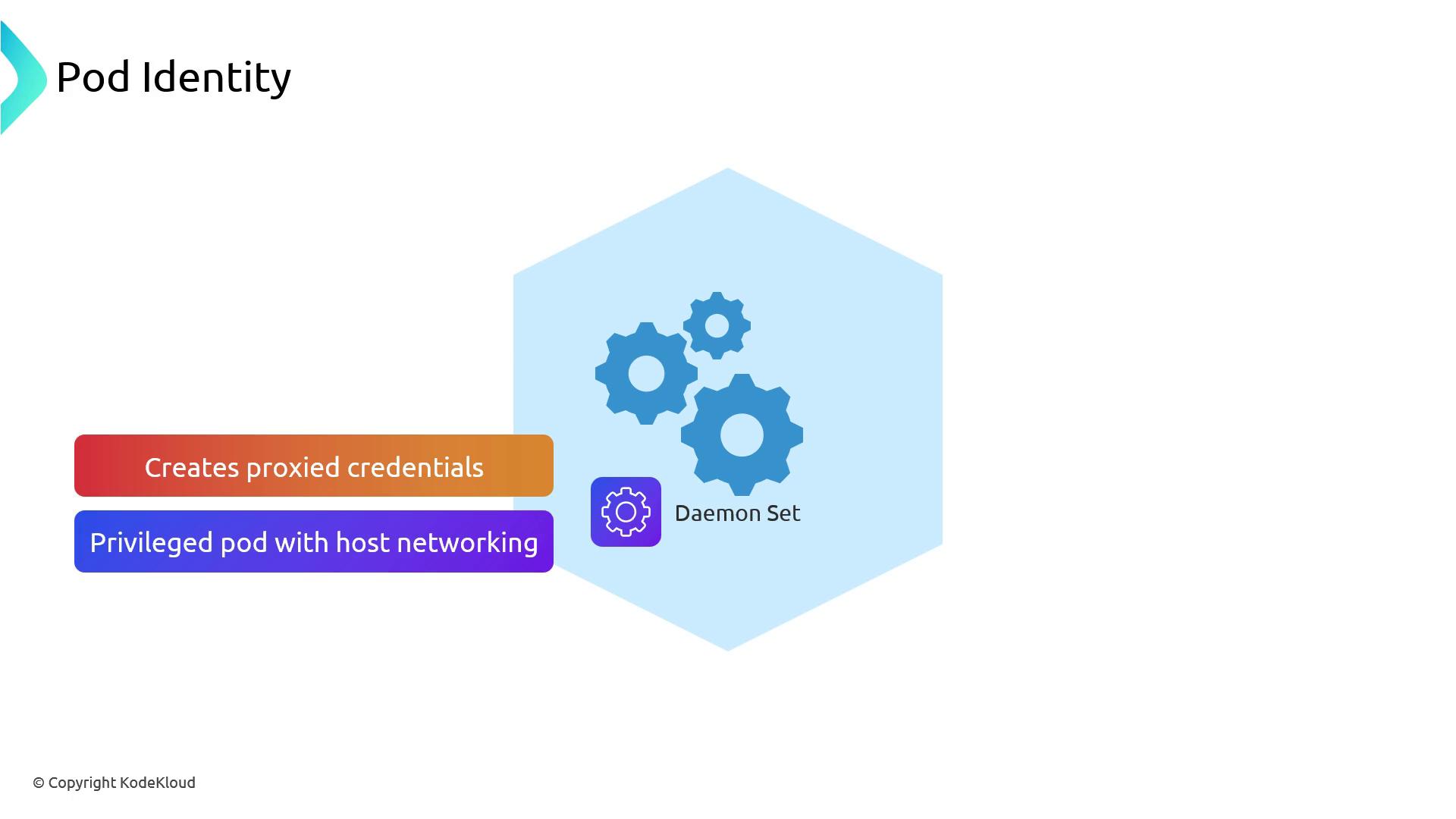
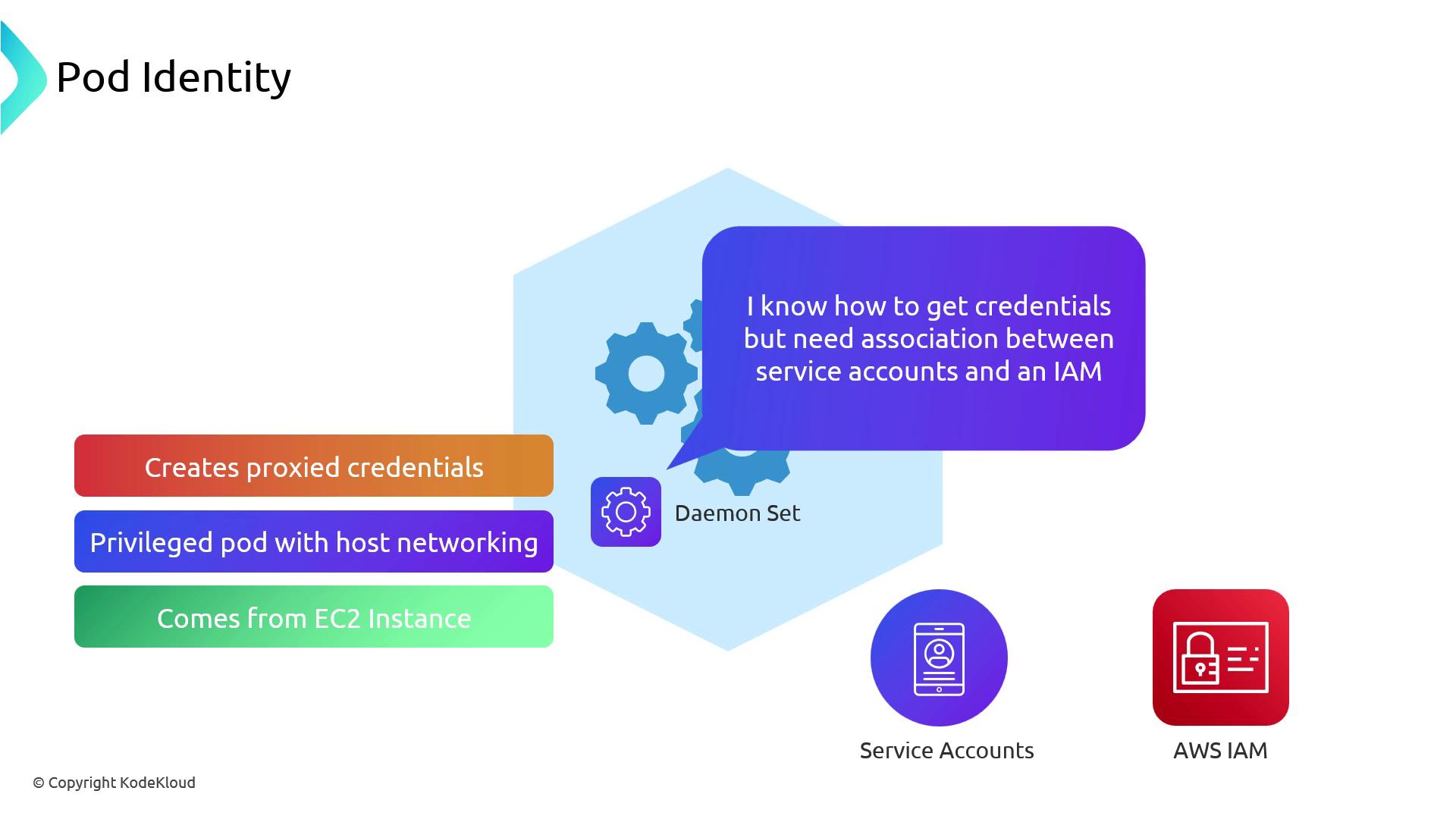
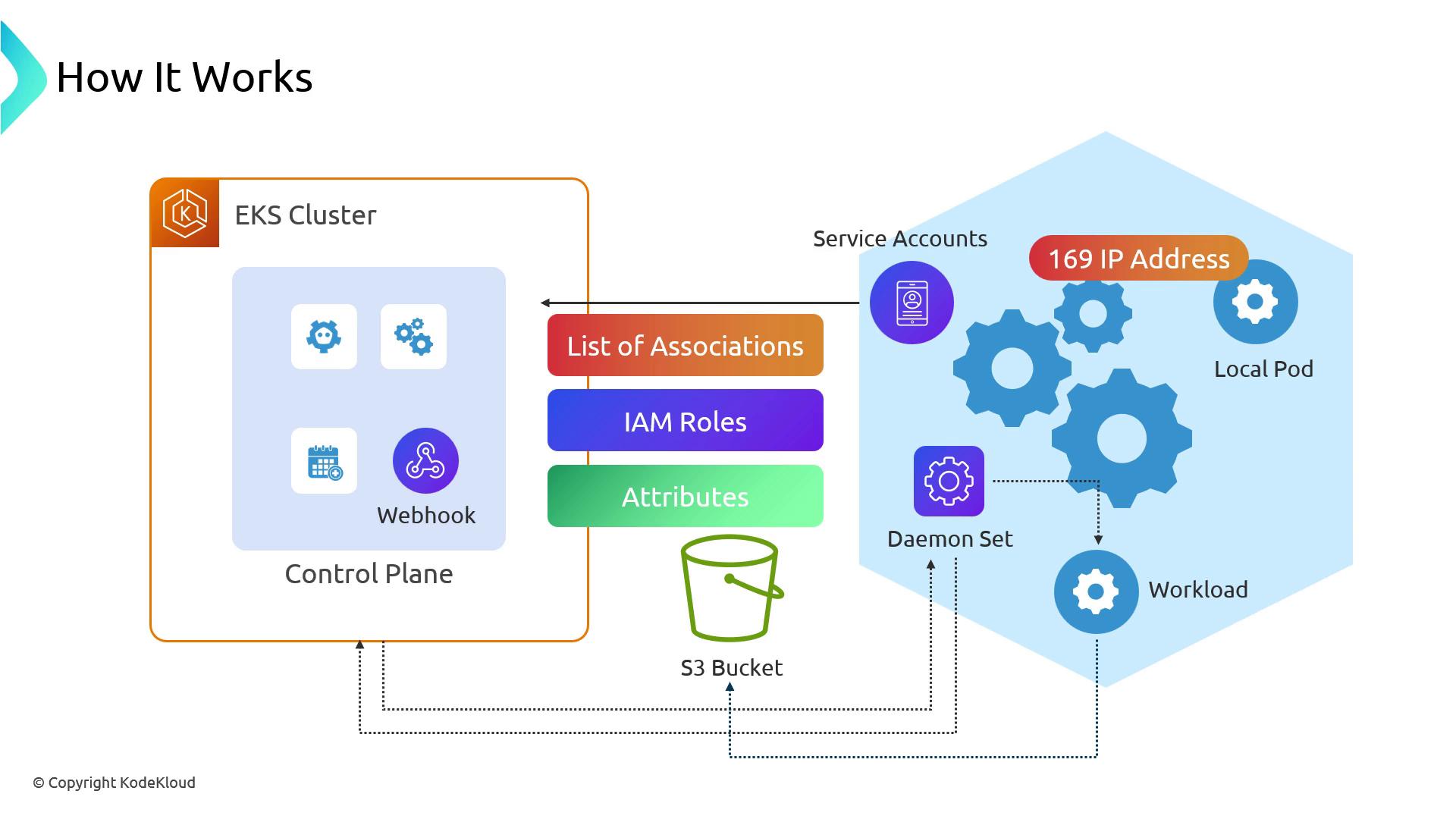
Pods continue calling the AWS SDK normally. A mutating webhook in the EKS control plane injects environment variables pointing to a local, node-hosted proxy. A privileged DaemonSet uses host networking to listen for SDK requests, then interacts with the EKS API to issue temporary credentials.
This proxy authenticates using the node’s EC2 instance role and retrieves the correct IAM role for each service account.
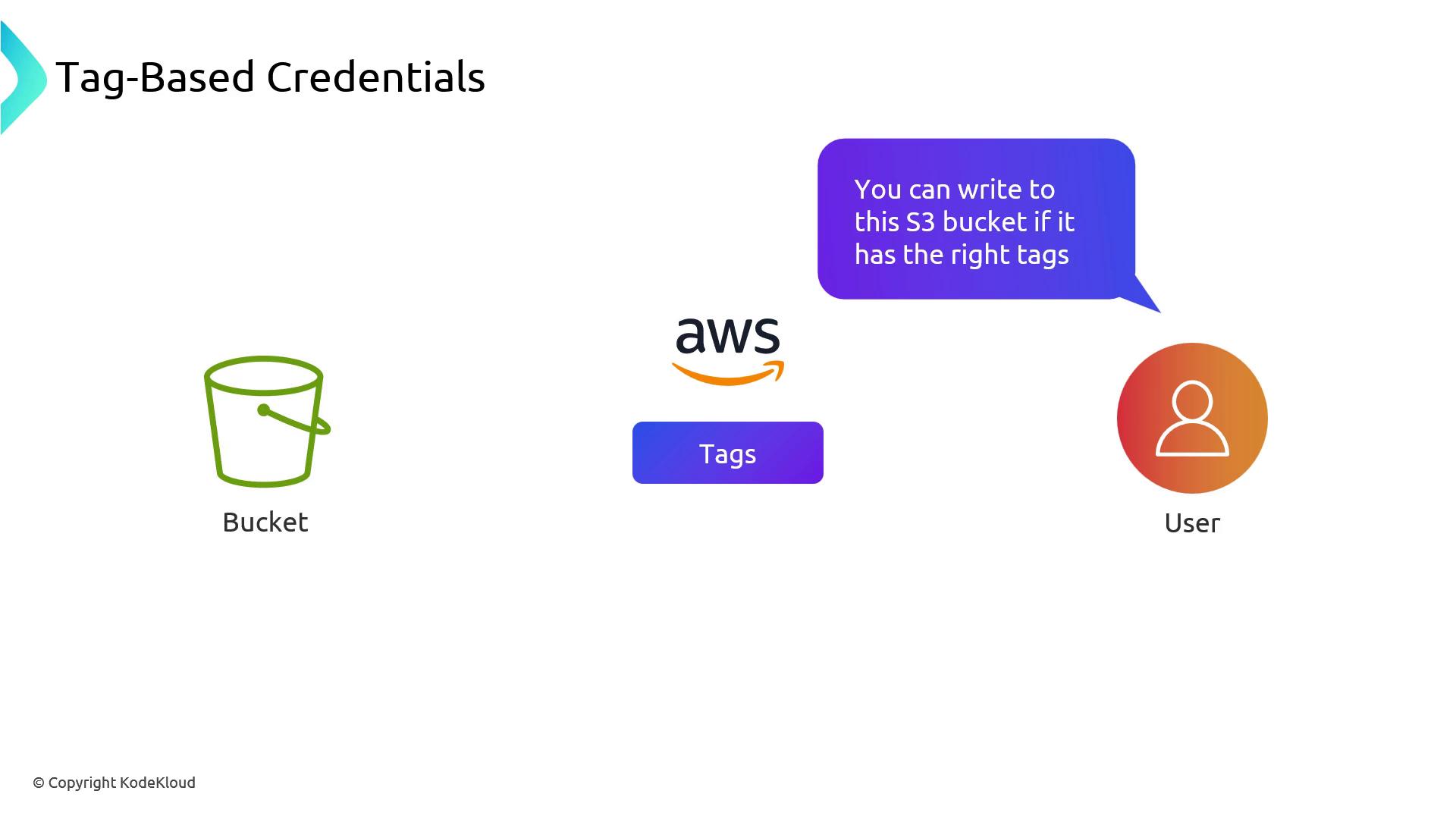
Pod Identity fully supports AWS attribute-based access control. Tag your AWS resources (for example, Environment=dev on an S3 bucket) and reference those tags in your IAM policies. At credential time, EKS evaluates both:
Pod Identity is exclusive to EKS. If you operate Kubernetes on EC2 without the EKS control plane, continue using Kube2IAM or similar solutions.
You can run both IRSA and Pod Identity in the same cluster. EKS will prioritize Pod Identity for credential injection but still support IRSA workloads during your migration.