This article discusses Kubernetes Network Policies using AWS VPC CNI and eBPF for enhanced Pod traffic control and security.
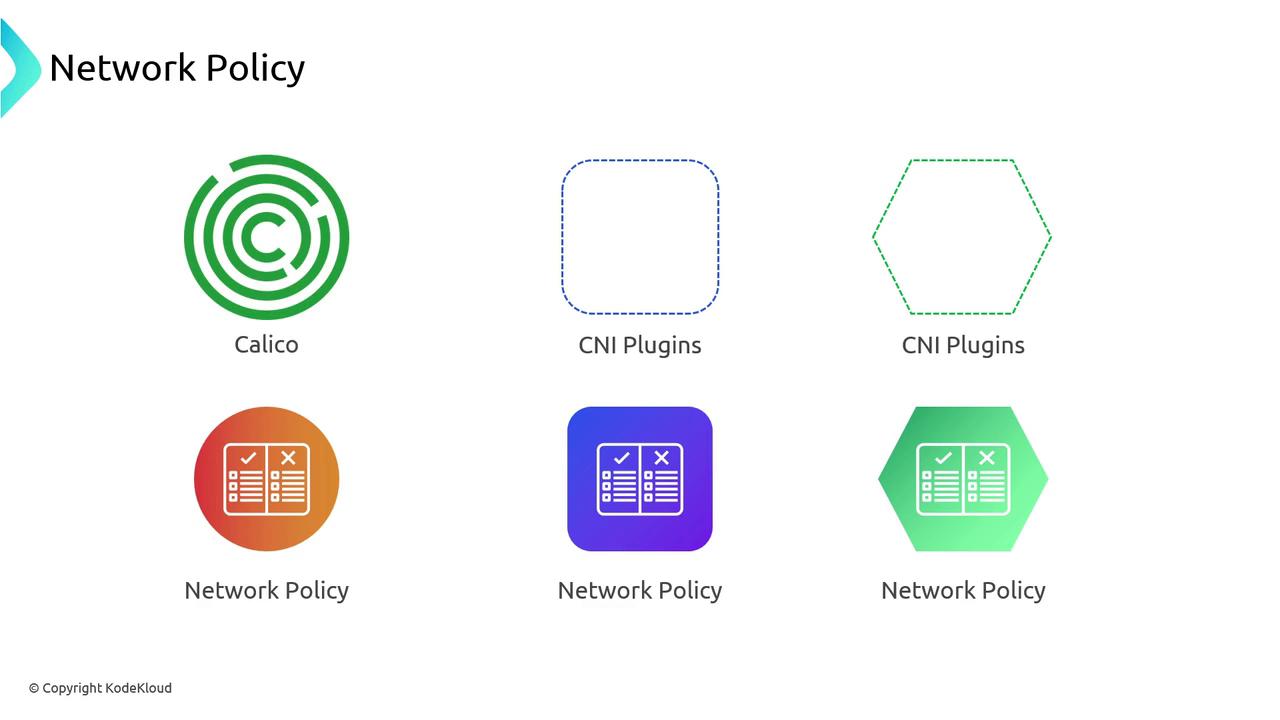
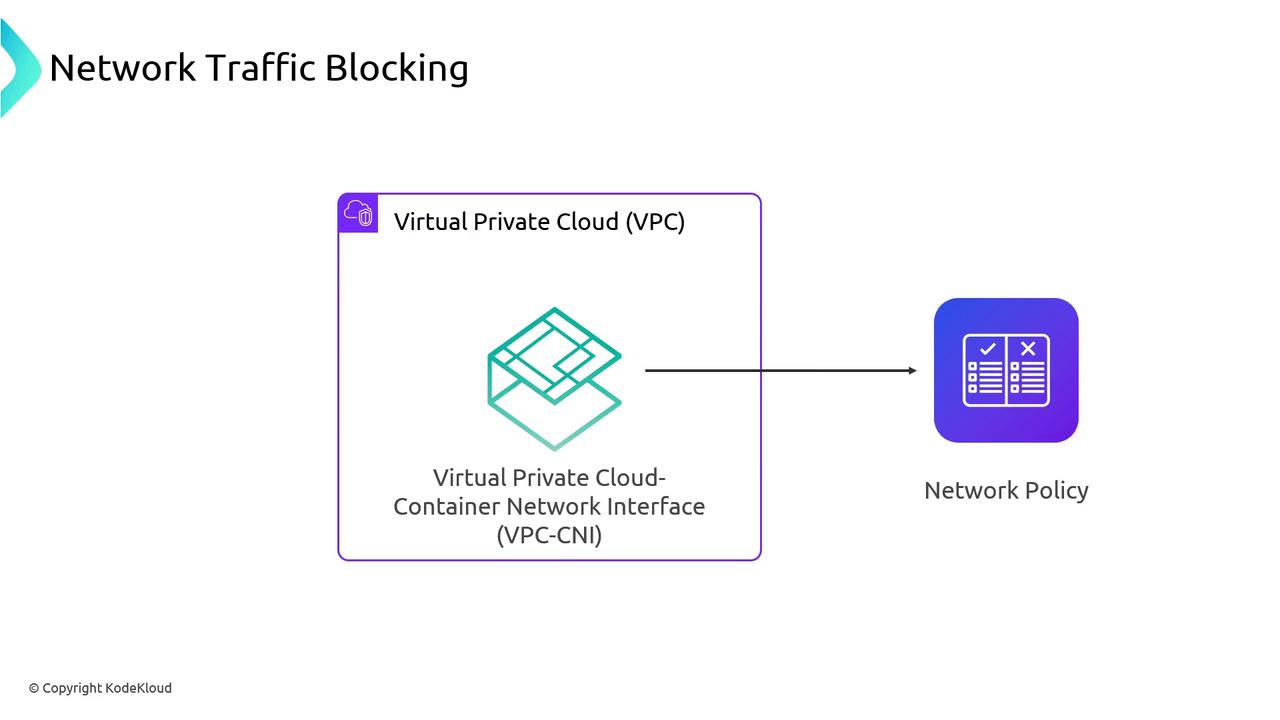
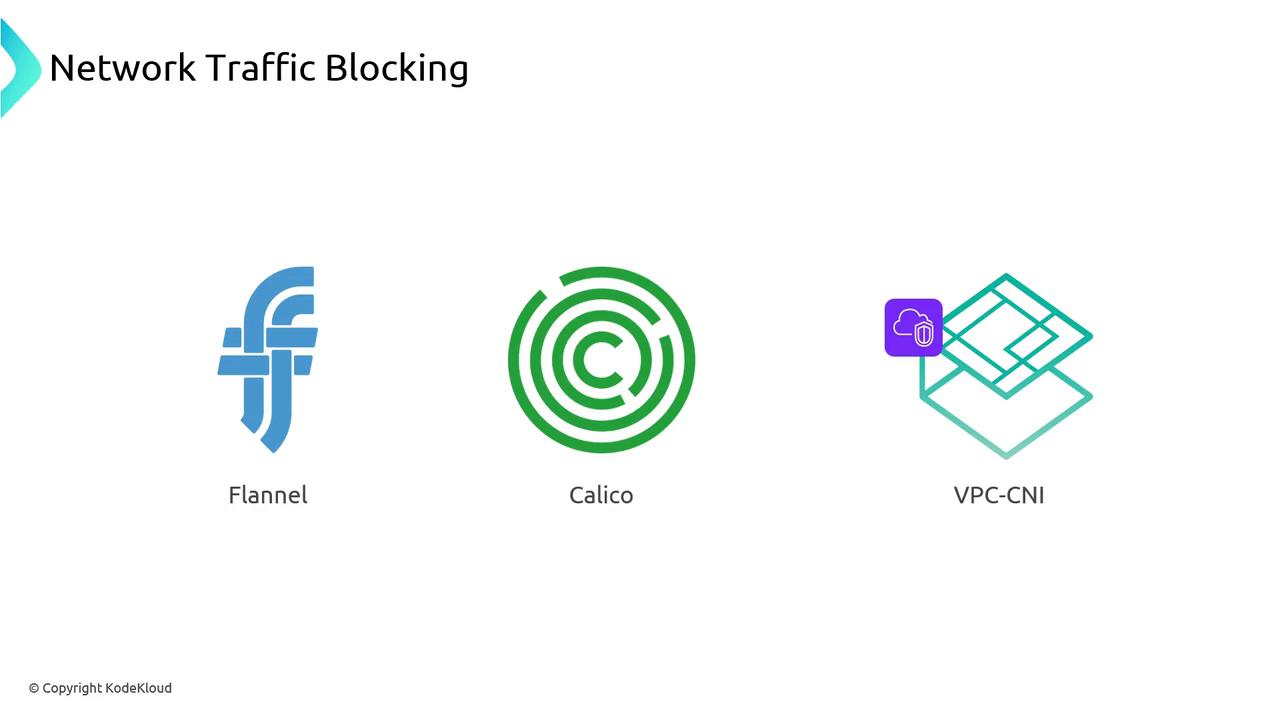
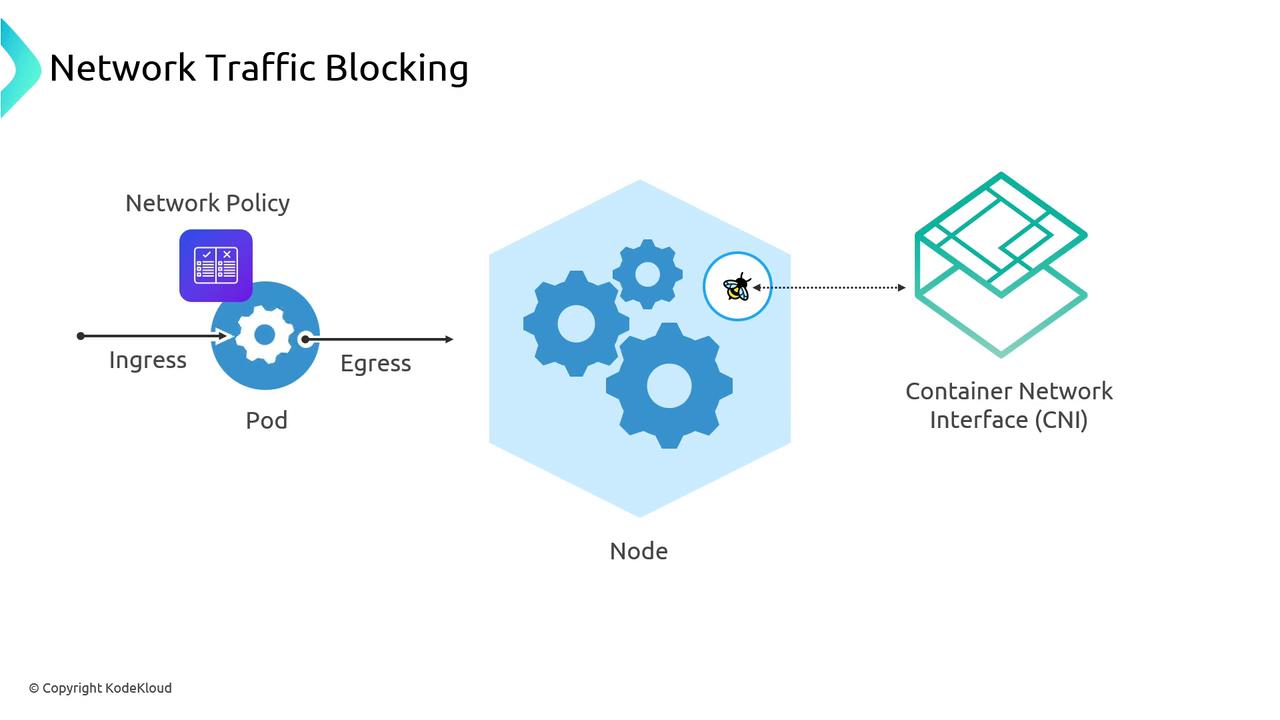
Kubernetes Network Policies enable fine-grained control over Pod-to-Pod traffic (ingress and egress). While some CNI plugins like Calico pioneered policy enforcement, AWS VPC CNI now supports native NetworkPolicies using eBPF in the node kernel—bringing security rules closer to your application manifests.
By embedding network rules alongside your Deployment YAML, you avoid external firewall tickets or manual IP table edits. As your application stack grows—databases, caches, external services—the same declarative NetworkPolicy objects evolve with it.
{"level":"info","msg":"Pod has an Ingress hook attached","progFD":16,"mapName":"ingress_map"}{"level":"info","msg":"Pod has an Egress hook attached","progFD":18,"mapName":"egress_map"}{"level":"info","msg":"Successfully attached Ingress TC probe","pod":"alpine-xxxxx","namespace":"default"}{"level":"info","msg":"Successfully attached Egress TC probe","pod":"alpine-xxxxx","namespace":"default"}
These eBPF probes enforce your NetworkPolicy at the kernel level—packets are dropped before reaching the container.
By combining Kubernetes Network Policies with AWS VPC CNI’s eBPF enforcement, you achieve an application-centric firewall that lives alongside your manifests—no extra tickets, no manual IP tables, just declarative security.