

Event-Driven Architecture Overview
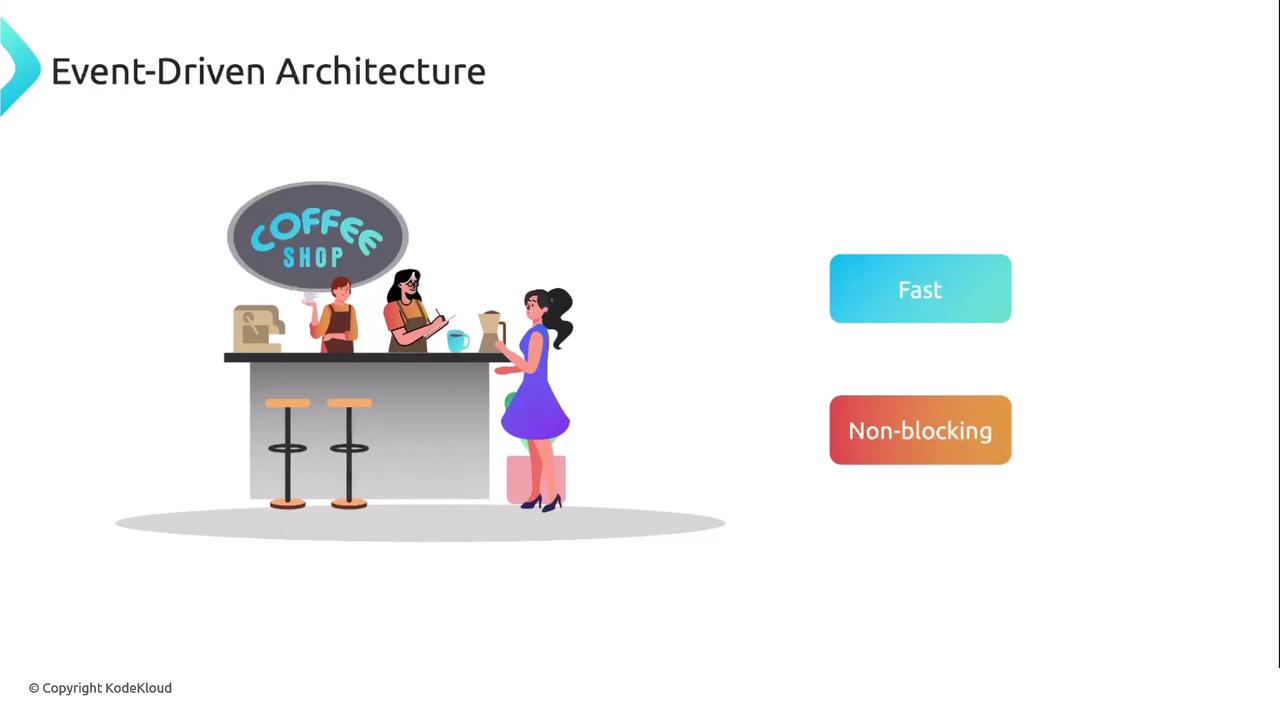
Imagine stepping into a busy coffee shop:- One barista takes orders.
- Another barista prepares drinks.
- Neither barista waits idle—they coordinate tasks asynchronously.
How Nginx Manages Asynchronous Processing
Under the hood, Nginx uses non-blocking I/O and a single-threaded event loop per worker to juggle connections efficiently: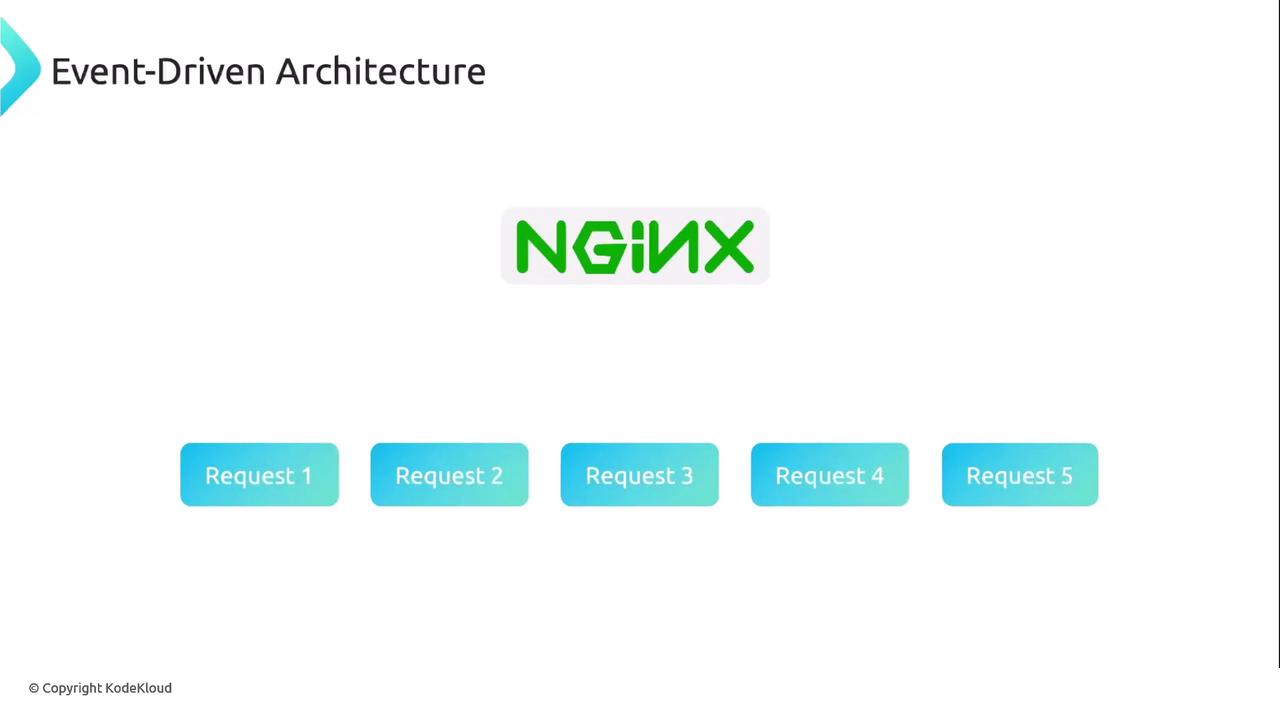
Nginx’s asynchronous event loop ensures that while one request awaits data (disk I/O, upstream response), the worker can serve other clients without delay.
The Restaurant Analogy: Mapping Requests to Events
A busy restaurant operates much like Nginx:- Waiter (Event Loop) takes multiple orders without waiting for dishes.
- Chef (Worker Process) prepares meals and notifies the waiter when each is ready.

- Incoming Request
The client issues an HTTP/S request. - Event Loop
Nginx accepts the connection and returns immediately to monitor other events. - Processing Event
The worker reads files, queries databases, or proxies to an upstream server. If I/O is required, it switches context to serve another request. - Response Sent
Once processing completes, Nginx replies to the client and continues the loop.
Event Handling Sequence in Nginx
The diagram below outlines how a worker process manages multiple requests simultaneously: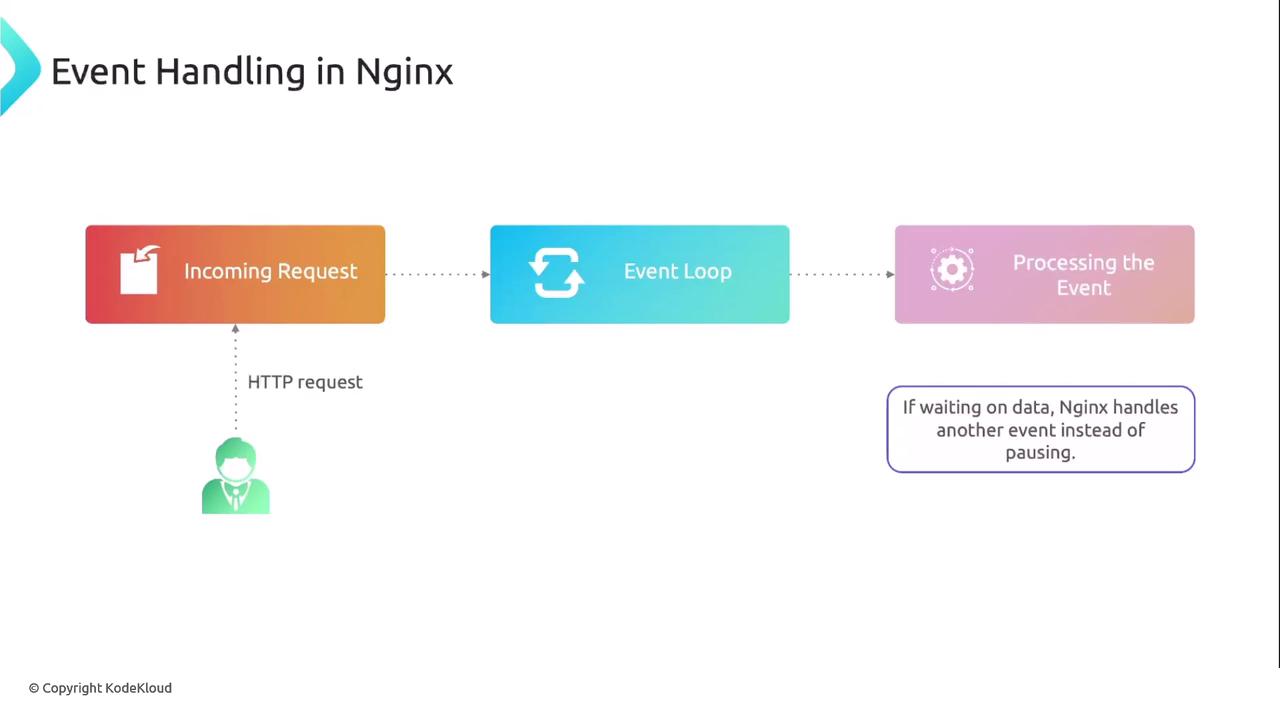
Step-by-Step Flow
- Accept: New connection arrives.
- Register: Connection is added to the event loop.
- Dispatch: Worker processes available events.
- I/O Wait: If blocked, event loop switches to another request.
- Complete: Response is sent when processing is done.
Master and Worker Processes
To leverage multi-core CPUs and isolate failures, Nginx uses a master–worker architecture: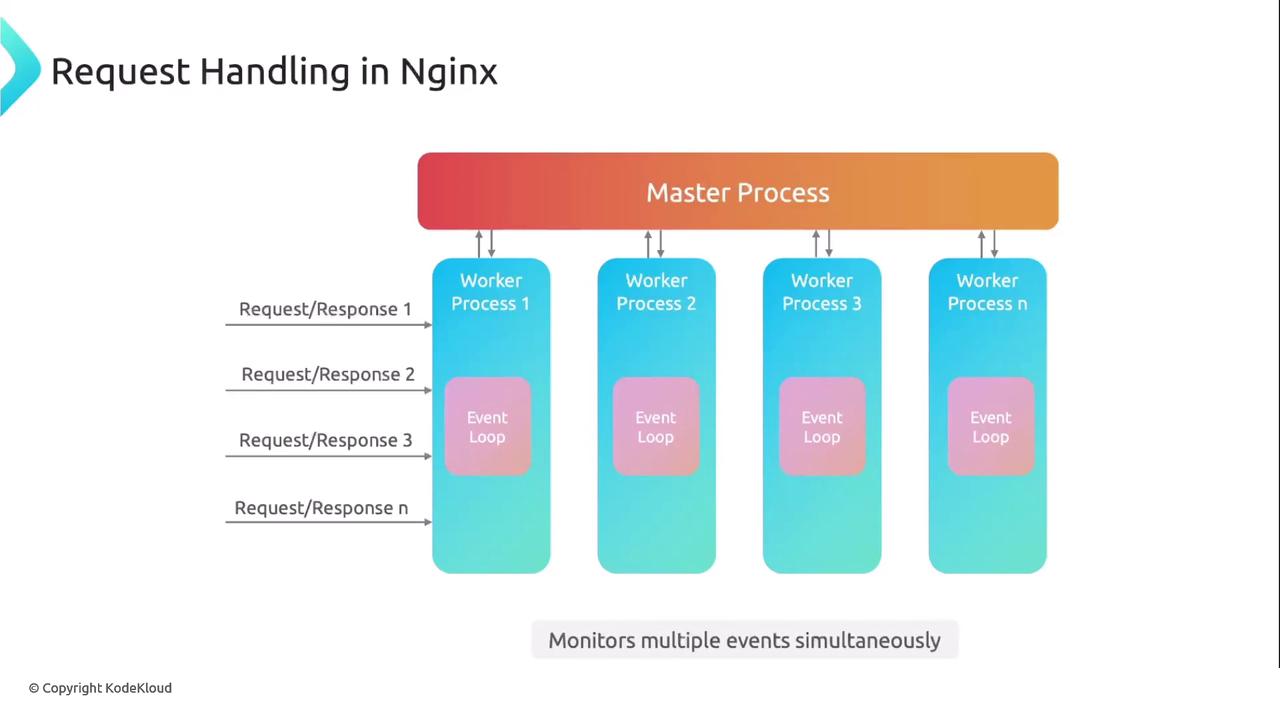
| Process Type | Responsibility | Handles Client Requests? |
|---|---|---|
| Master | Reads configuration, spawns/reloads worker processes | No |
| Worker | Runs event loop, accepts connections, processes requests | Yes |
Master Process
- Supervises worker lifecycle
- Reloads configuration without downtime
- Never blocks on I/O or client handling
Worker Processes
- Each runs an independent, single-threaded event loop
- Handles connection acceptance, reading, writing, and multiplexing
- Scales across CPU cores by running multiple workers
Further Reading and References
- Official Nginx Documentation
- Event-driven architecture on Wikipedia
- High Performance Browser Networking