The Evolution of AI From Rule Based Systems to Deep Learning
This article explores the progression of artificial intelligence from rule-based systems to advanced deep learning models.
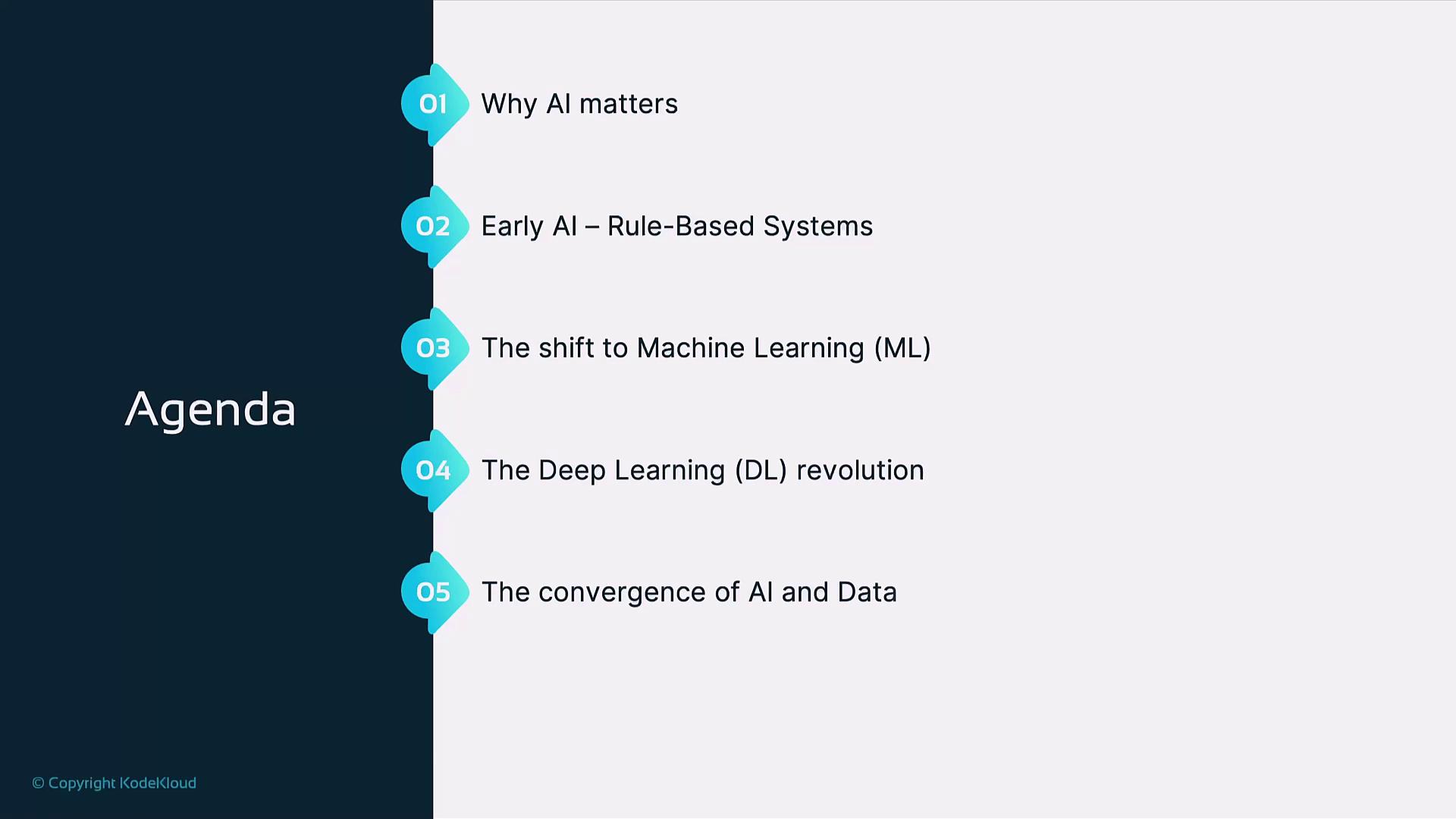
In this article, we explore how artificial intelligence (AI) has progressed from simple rule-based systems to the sophisticated deep learning models that power today’s technologies. We’ll cover five key phases:
Understanding AI’s evolution reveals both its potential impact and the challenges that lie ahead. From deterministic rule engines to adaptive neural nets, each advancement has unlocked new capabilities across industries—from healthcare diagnostics to autonomous vehicles.
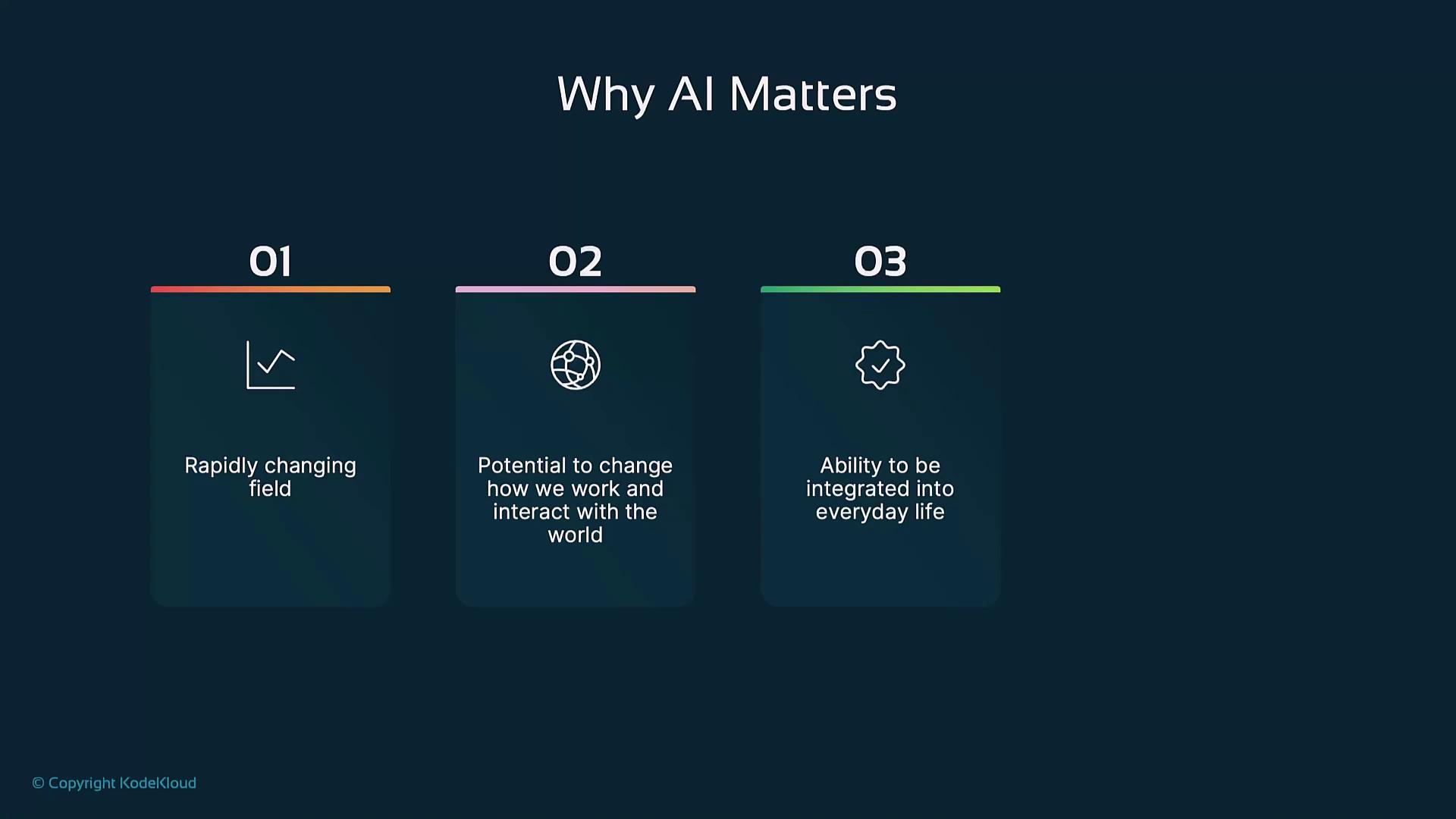
AI adoption accelerates innovation—organizations that leverage data-driven insights gain competitive advantage.
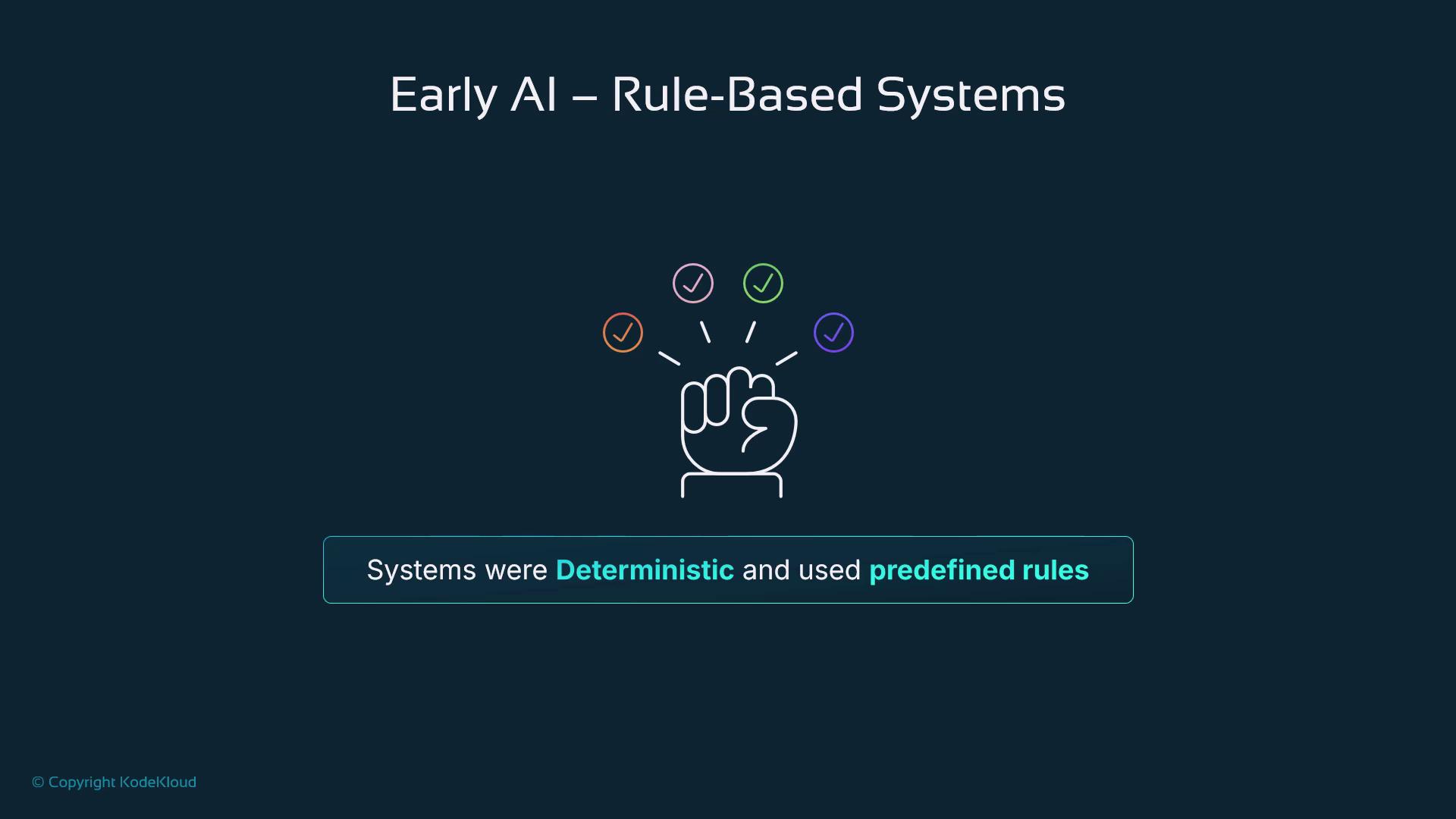
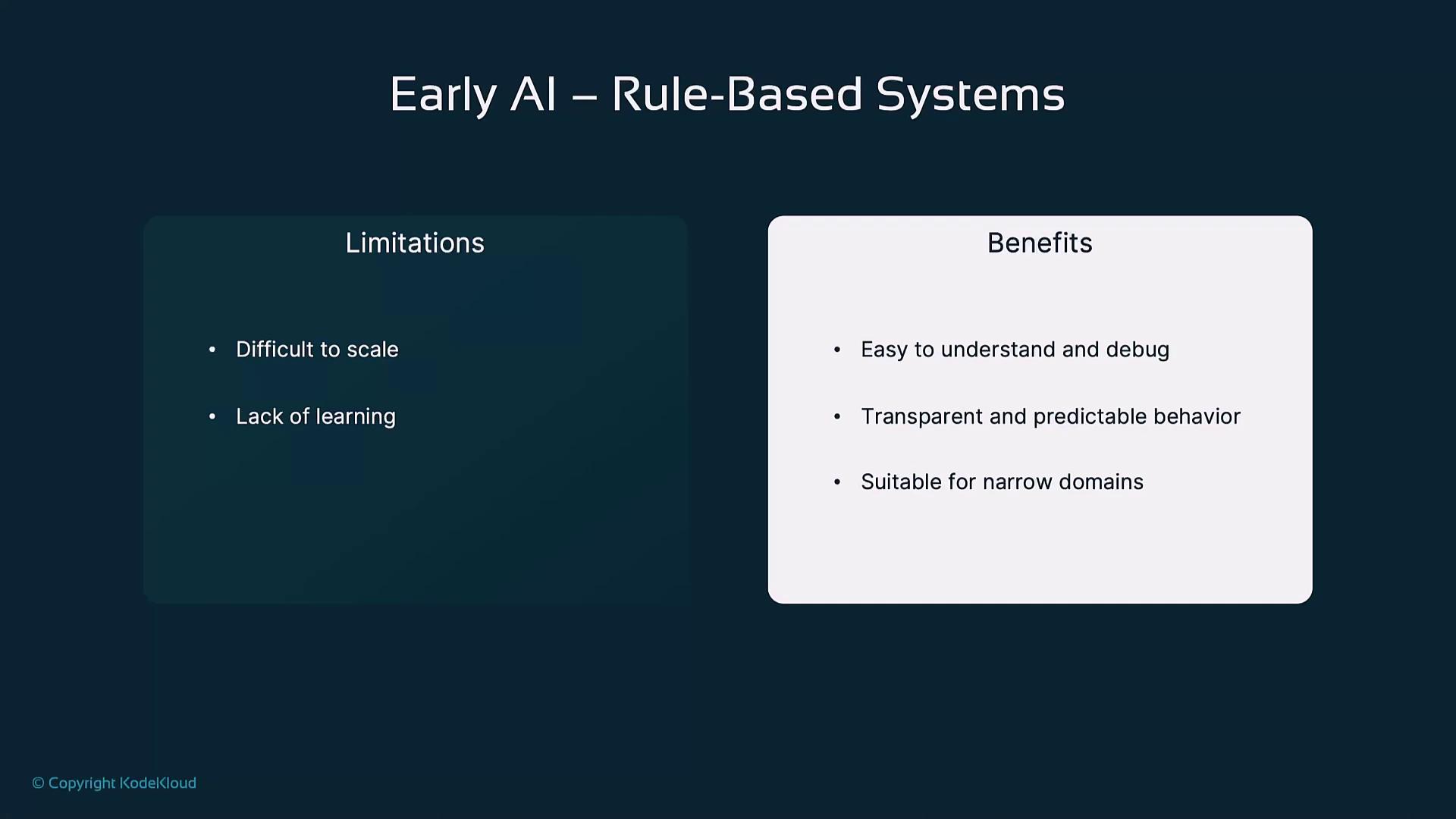
Rule-based systems were the first widely deployed AI applications. They use symbolic reasoning: expert-defined “if–then” rules that drive deterministic outputs.
Key components:
Component
Description
Knowledge Base
Expert-curated rules (if–then statements)
Inference Engine
Applies rules to input data to generate conclusions
Example rule format:
Copy
Ask AI
IF symptom X is presentTHEN test for condition Y
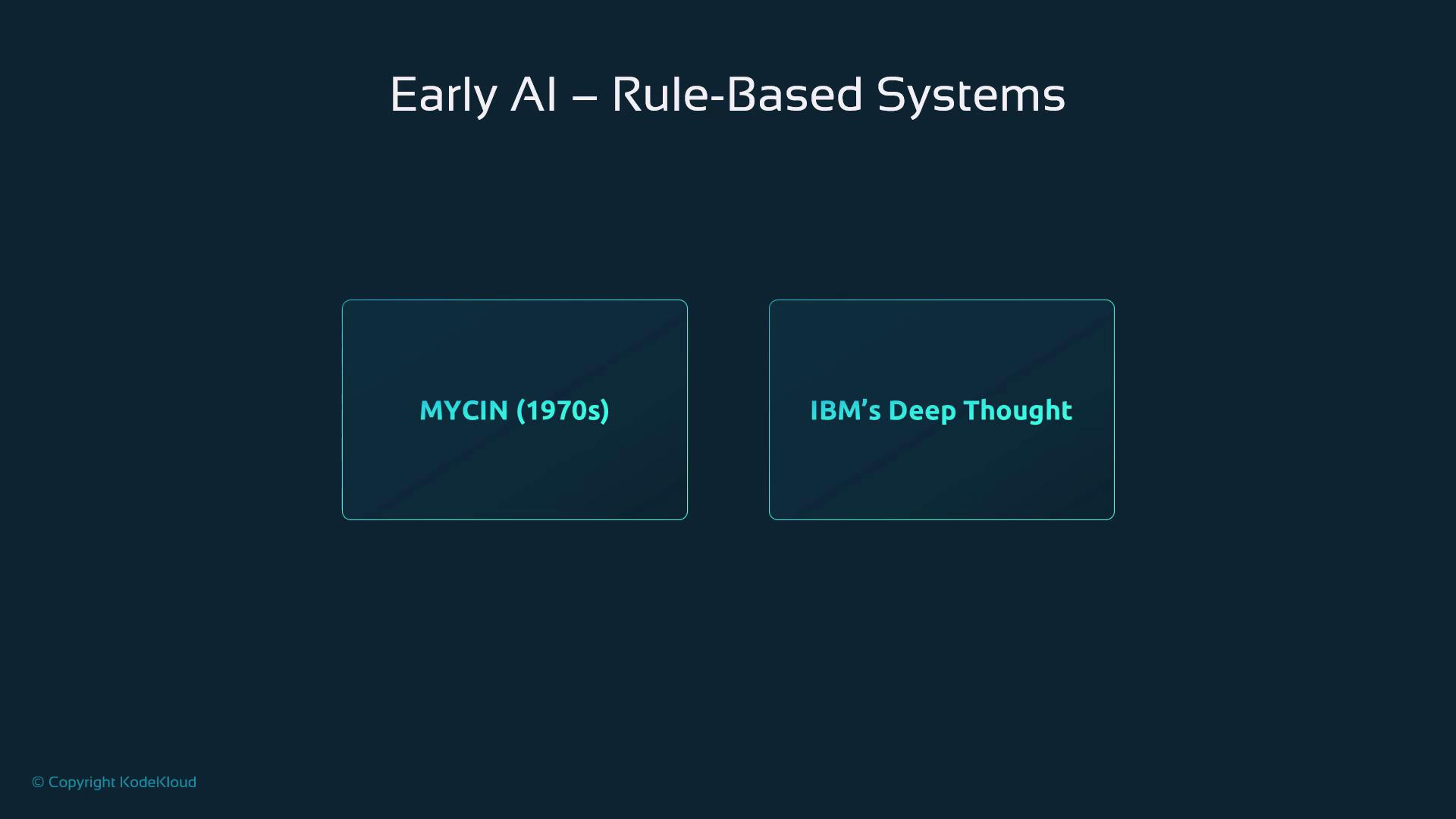
Notable Examples
MYCIN (1970s): Expert system diagnosing blood infections with ~600 rules
IBM Deep Thought: Chess engine using handcrafted evaluation functions
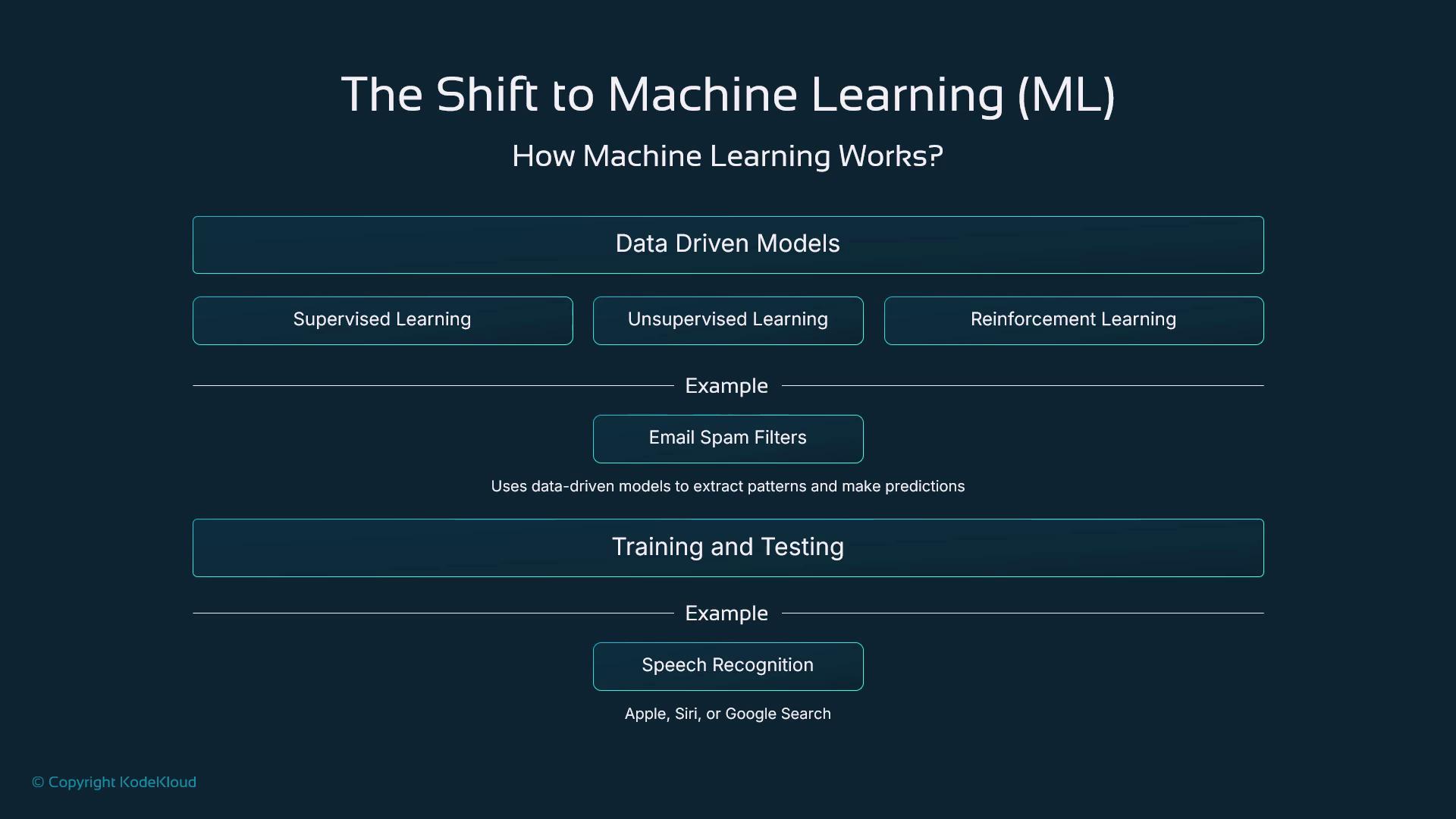
Machine learning (ML) enabled systems to learn from data rather than depend on hardcoded logic. By training on historical examples, ML models generalize to new inputs.
Primary ML paradigms:
Approach
Description
Example
Supervised Learning
Learns from labeled input–output pairs
Email spam filter
Unsupervised Learning
Discovers patterns in unlabeled data
Customer segmentation (clustering)
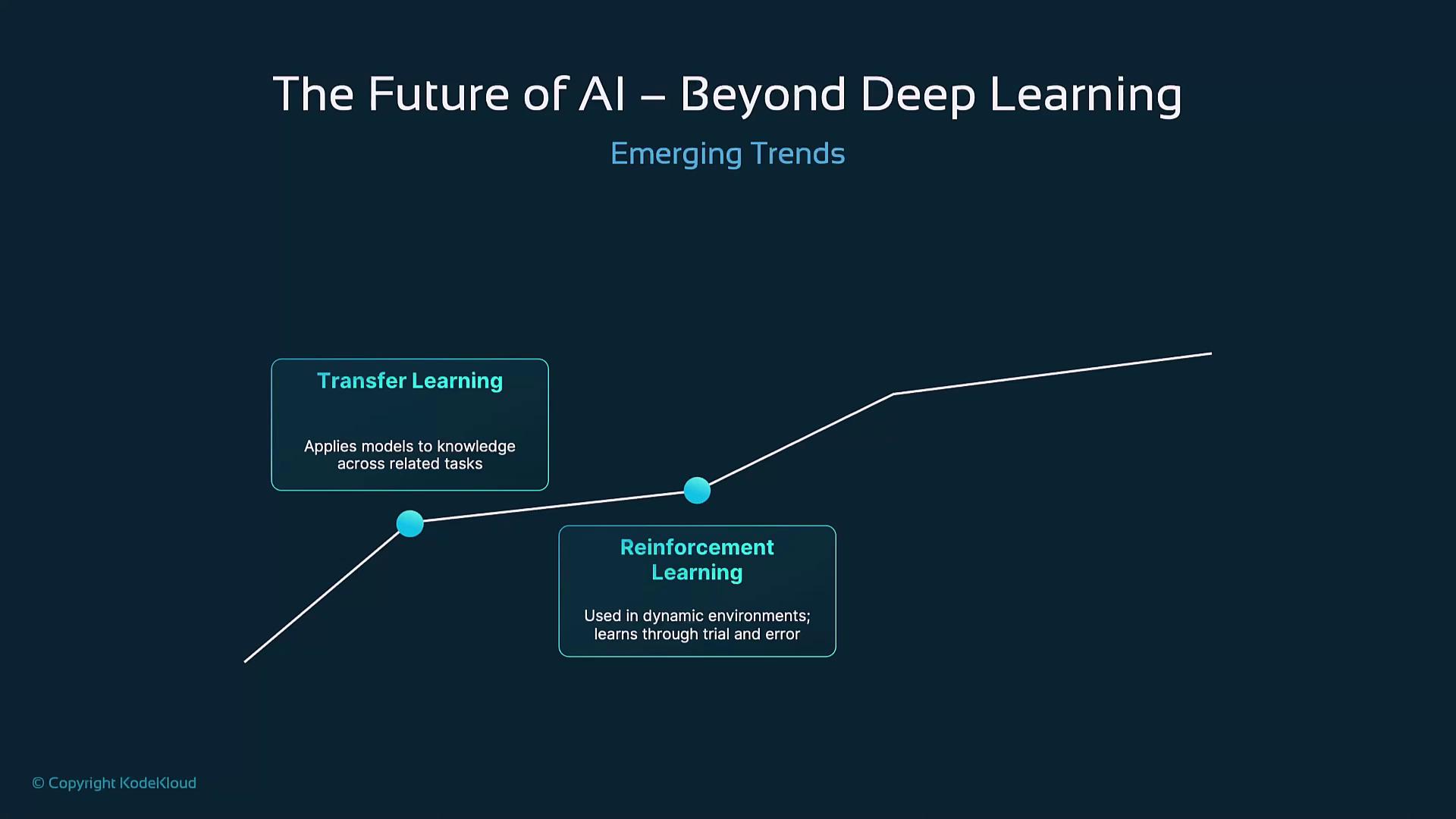
Reinforcement Learning
Learns via rewards/penalties in dynamic environments
Game-playing agents (e.g., AlphaGo)
Example Workflow
Train on a labeled dataset → Validate on a separate test set → Deploy the model for real-time predictions.ML Benefits vs. Limitations
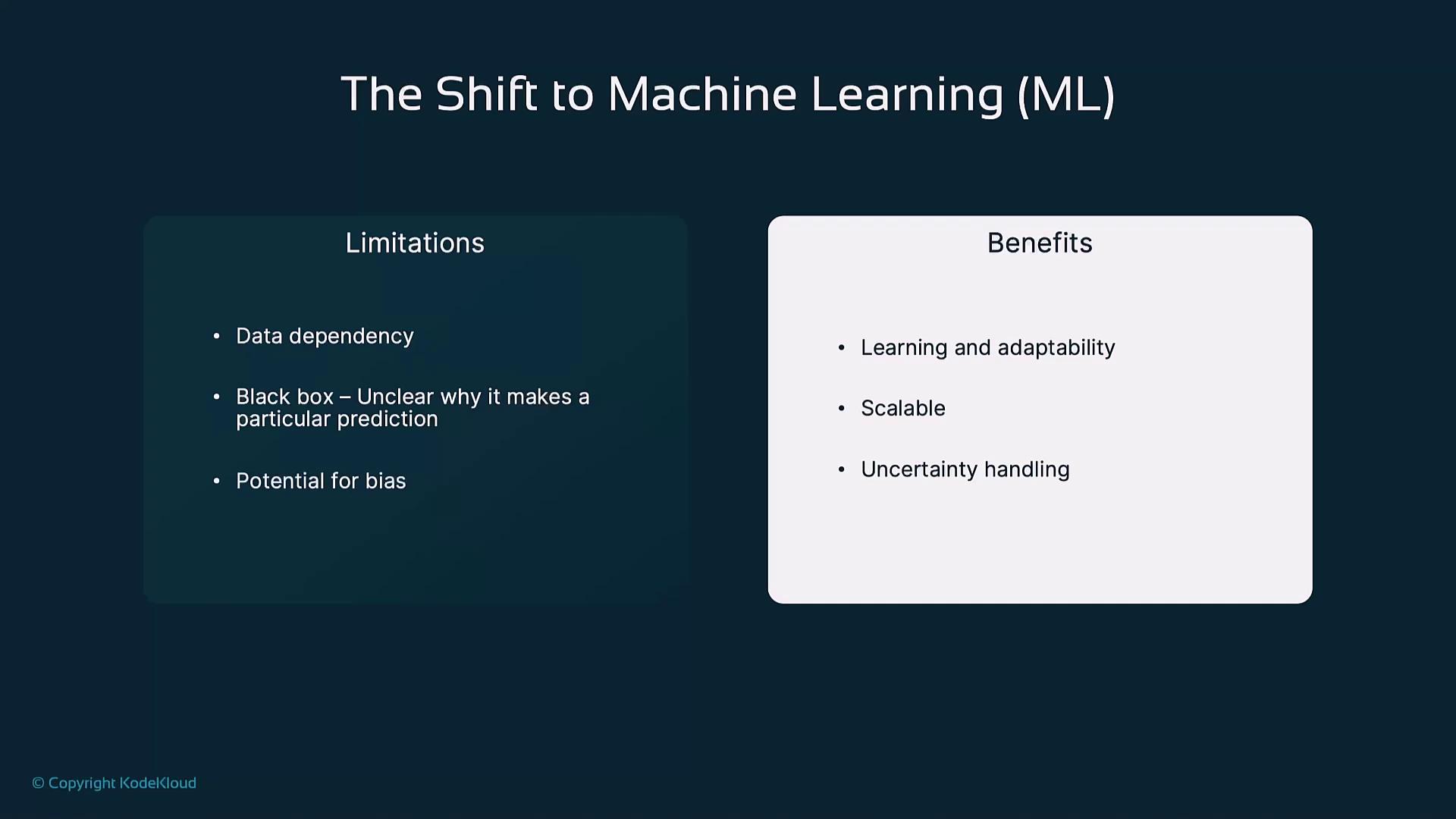
Benefits
Limitations
Adapts and improves with more data
Requires large, high-quality datasets
Scales to complex, dynamic environments
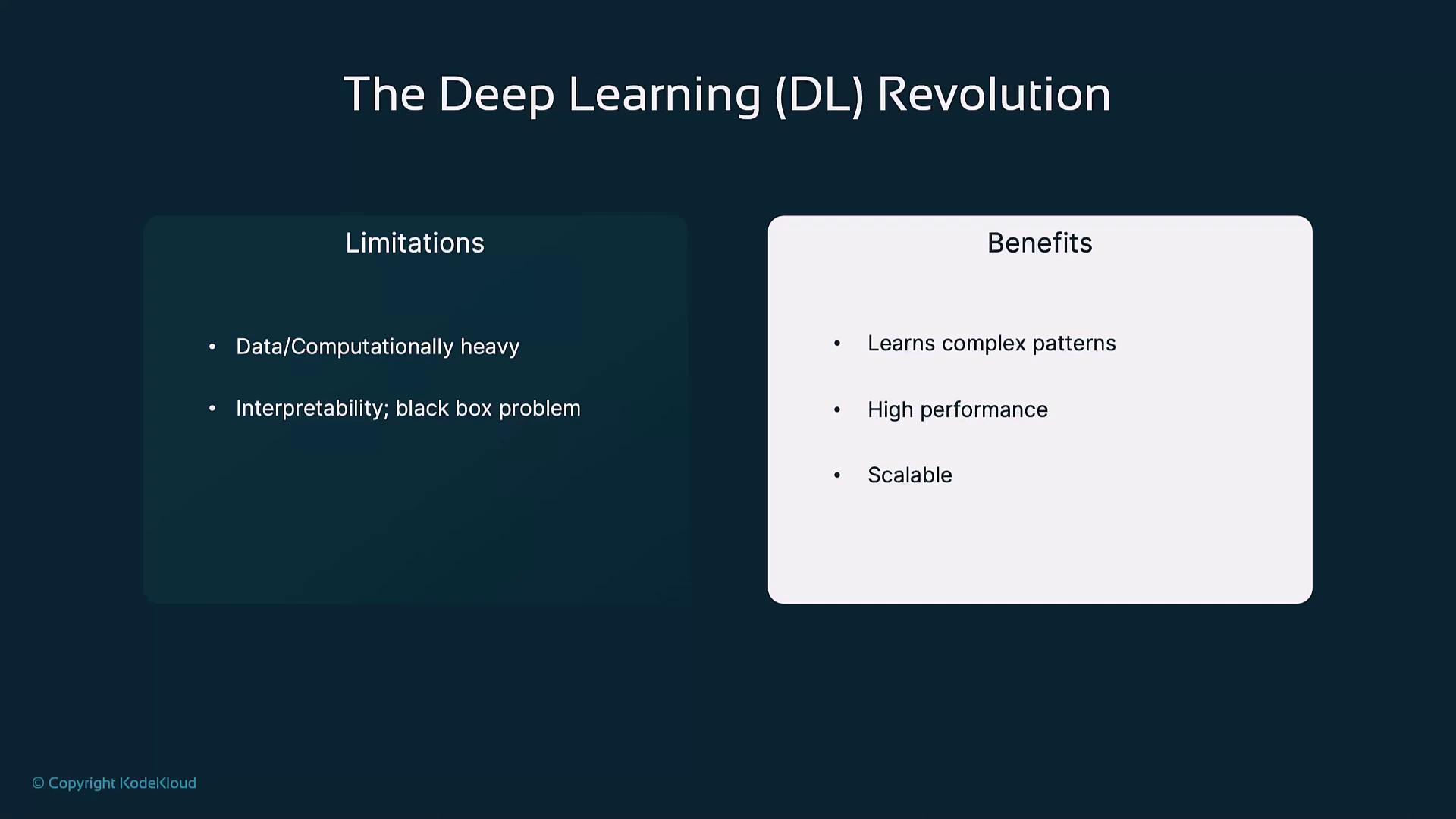
Often operates as a “black box”
Handles uncertainty better than rule-based systems