Explore advanced OpenAI features for automating tasks, analyzing data, and creating interactive experiences in real-world applications.
Harness the power of OpenAI’s most advanced features to automate tasks, analyze data, and create interactive experiences. In this guide, we’ll dive into:
Advanced Feature
Use Case
Reinforcement Learning from Human Feedback (RLHF)
Align customer support responses with brand tone
External Data Sources
Real-time financial or weather reports
Multi-Turn Conversations
Stateful chatbots for support
Multi-Step Function Calling
Workflow automation (appointments, forms)
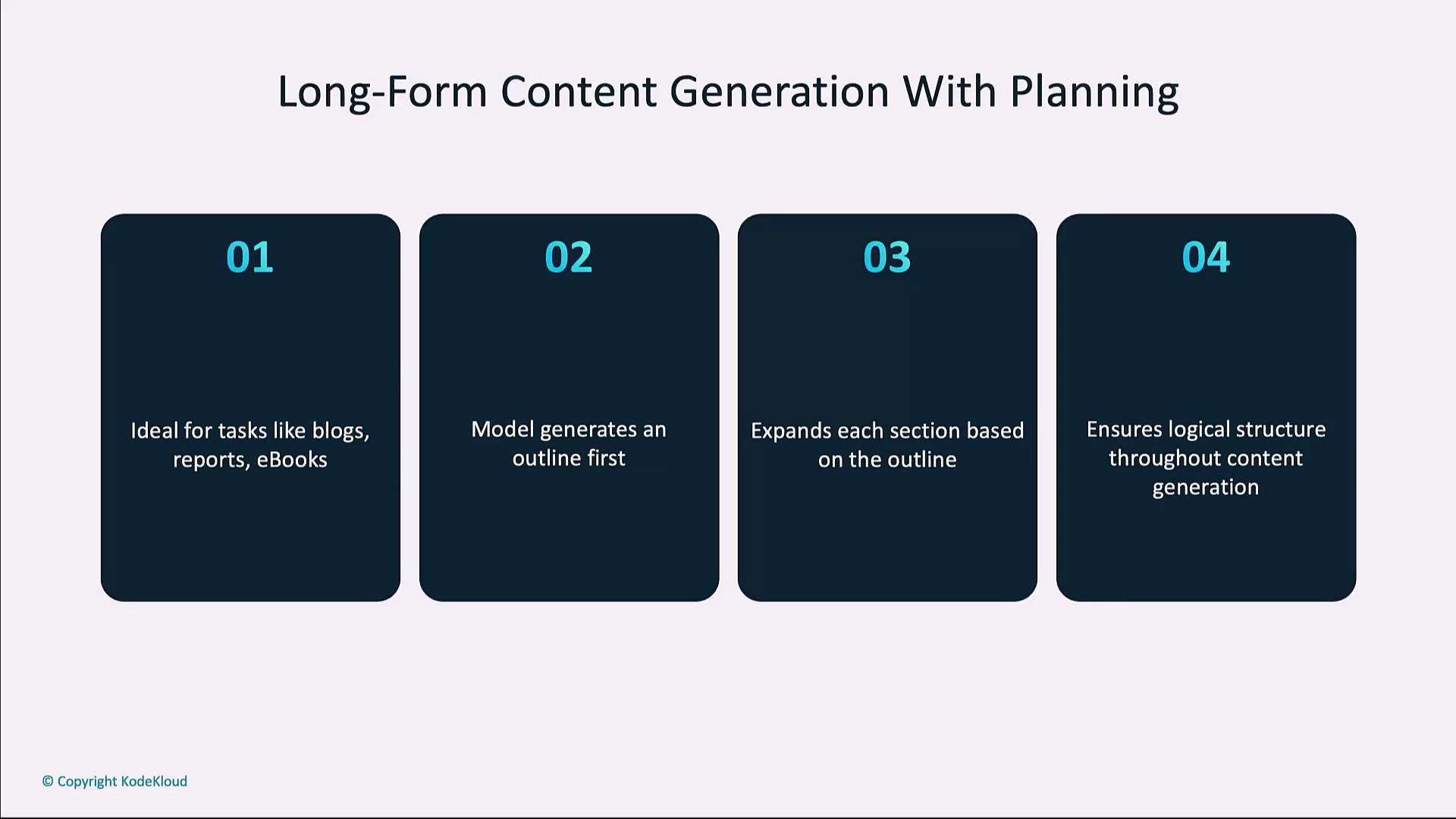
Long-Form Content Generation with Planning
Blog posts, reports, eBooks
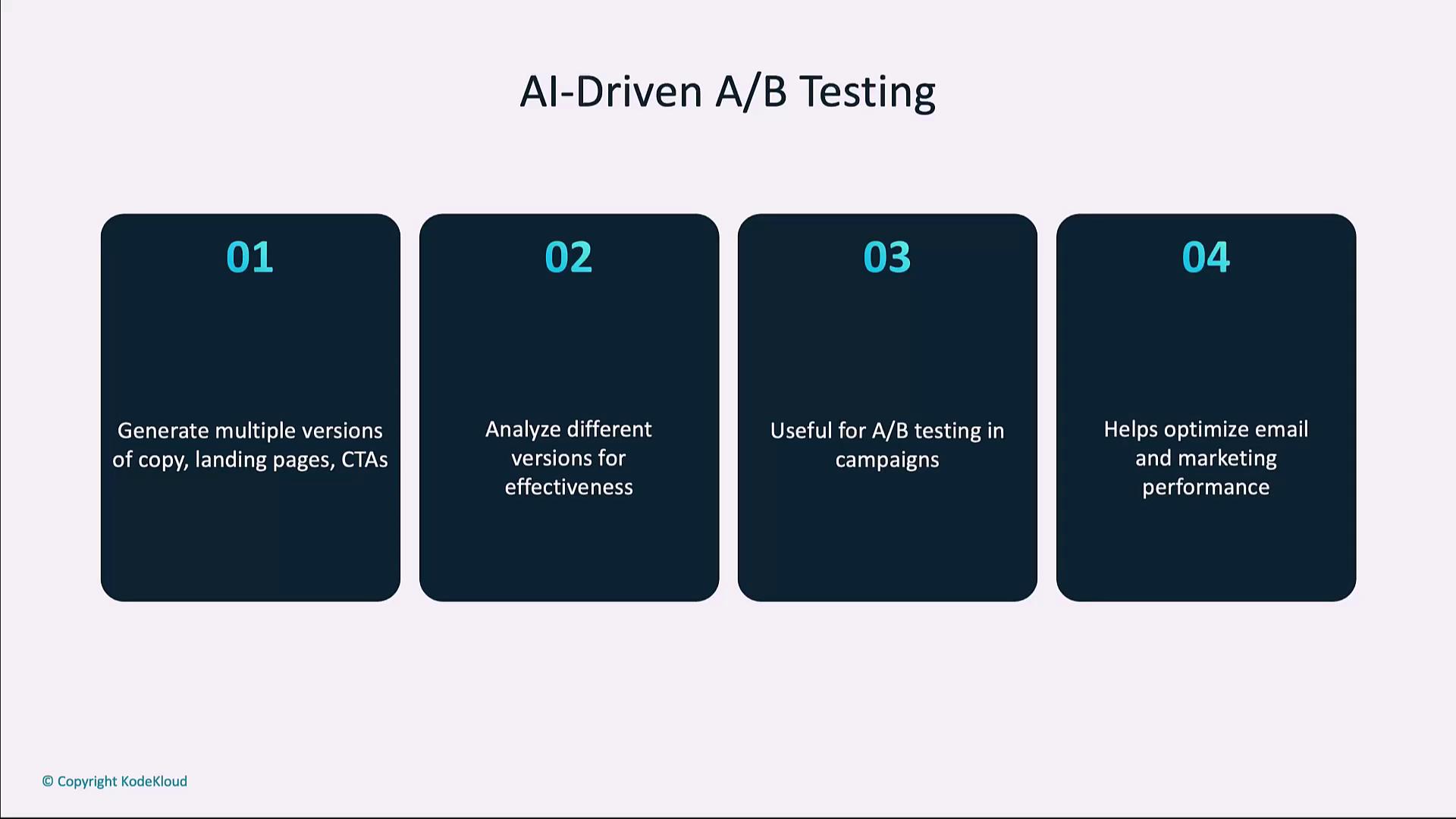
AI-Driven A/B Testing
Marketing copy optimization
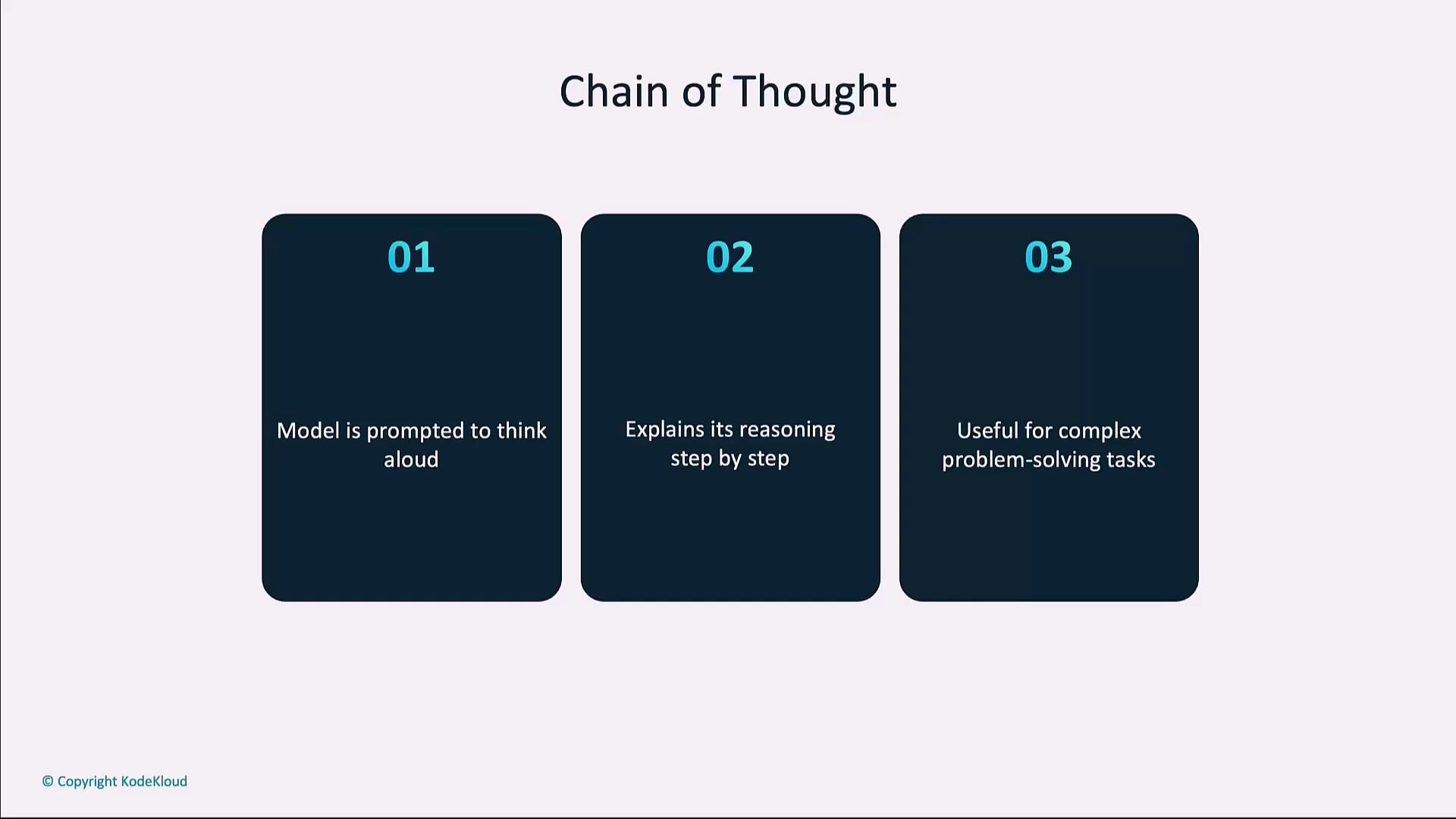
Chain of Thought Prompting
Complex problem-solving explanations
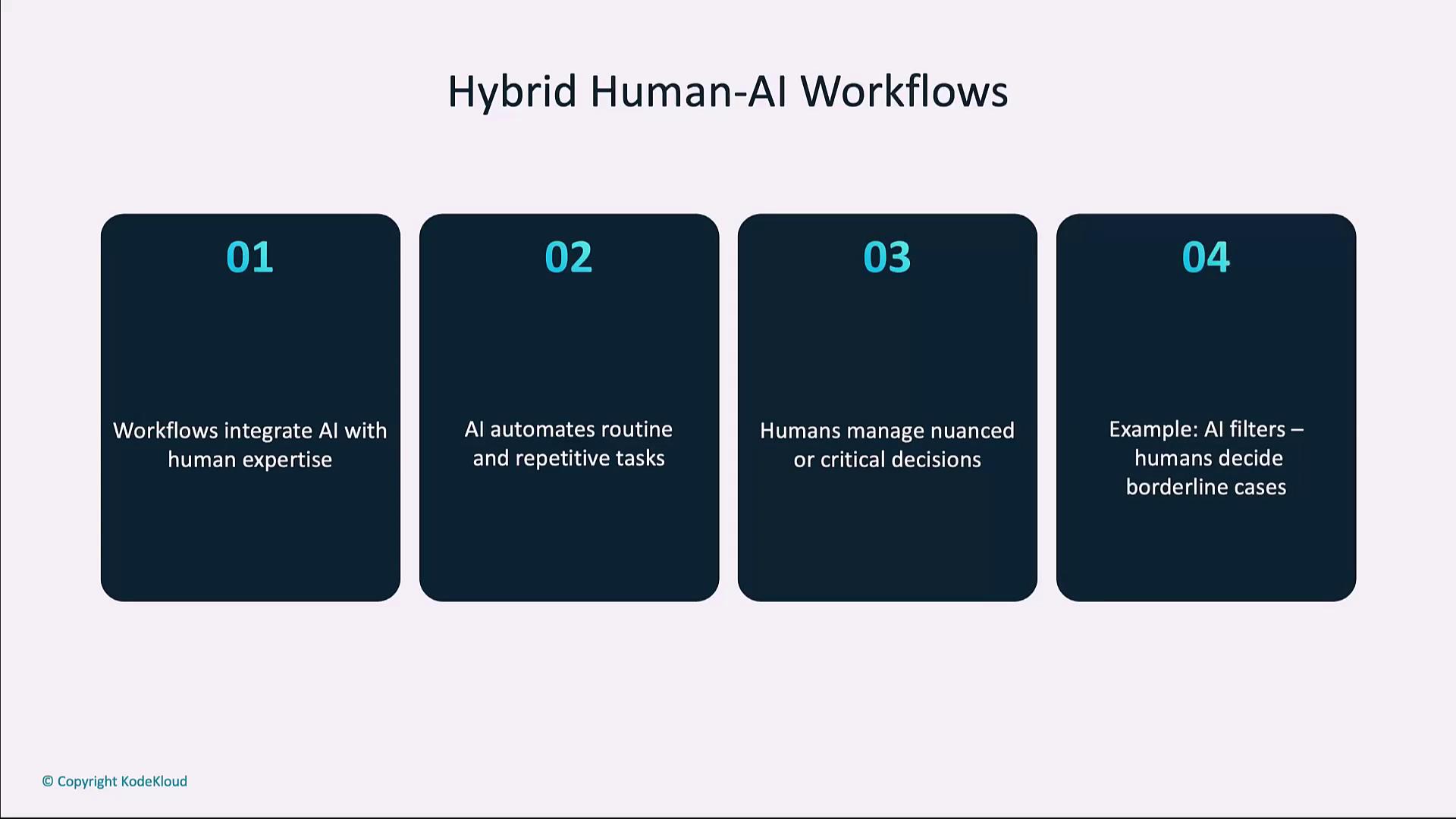
Hybrid Human–AI Workflows
Content moderation pipelines
Understanding these techniques will help you maximize GPT-4’s capabilities in real-world applications.
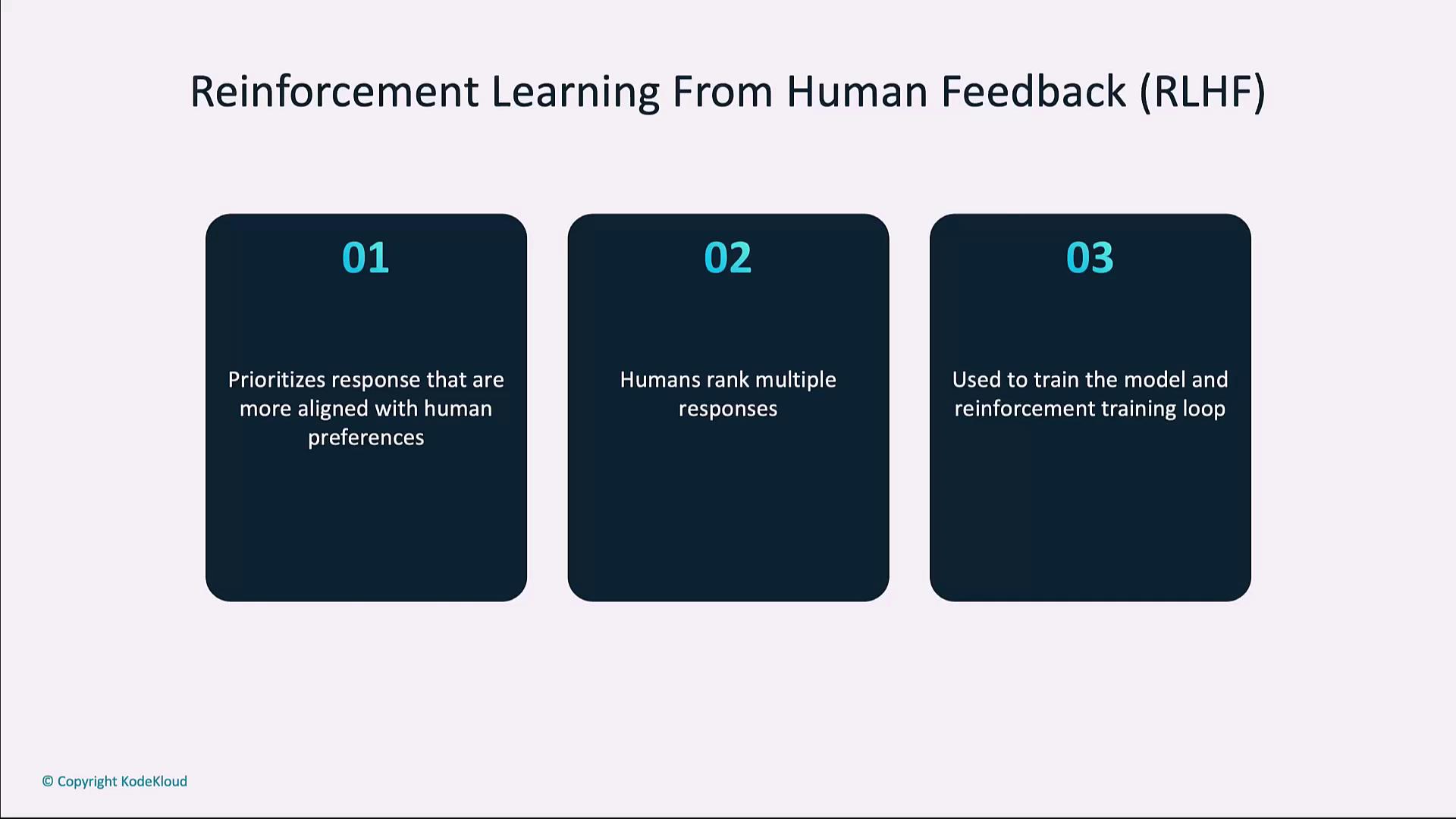
Reinforcement Learning from Human Feedback fine-tunes a base model by training a reward model on human rankings of model outputs. This alignment technique improves subjective tasks—like empathetic customer support or brand-safe content moderation—by incorporating real user preferences.
High-quality, diverse human feedback is critical for an effective reward model. Ensure your evaluators represent your end users’ perspectives.
RLHF Workflow Steps
Generate multiple responses for a prompt.
Have human evaluators rank or rate each response.
Train a reward model on those rankings.
Fine-tune the base model using reinforcement learning guided by the reward model.
Copy
Ask AI
# Simplified RLHF flow (conceptual)import openai# 1. Generate multiple responsesresponses = [ openai.ChatCompletion.create(model="gpt-4", messages=[{"role": "user", "content": "Tell me a joke"}], max_tokens=50) for _ in range(2)]# 2. Human evaluators rank the responsesrankings = {"response_1": 1, "response_2": 2} # Example feedback# 3. Train reward model and fine-tunereward_model = train_reward_model(rankings)fine_tuned_model = reinforce_model(reward_model)
Integrate GPT-4 with external APIs or databases to retrieve up-to-the-minute information—ideal for financial dashboards, weather apps, or dynamic reporting tools.Use case: build a financial assistant that fetches live stock prices, then generates an expert analysis.
Copy
Ask AI
import openai, requestsdef get_stock_analysis(symbol): # Fetch real-time stock quote resp = requests.get(f"https://financialmodelingprep.com/api/v3/quote/{symbol}?apikey=YOUR_API_KEY") data = resp.json()[0] price = data['price'] # Generate AI analysis chat = openai.ChatCompletion.create( model="gpt-4", messages=[{ "role": "user", "content": f"The current price of {symbol} is ${price}. Provide a detailed analysis." }], max_tokens=150, temperature=0.6 ) return chat.choices[0].message.content.strip()print(get_stock_analysis("AAPL"))
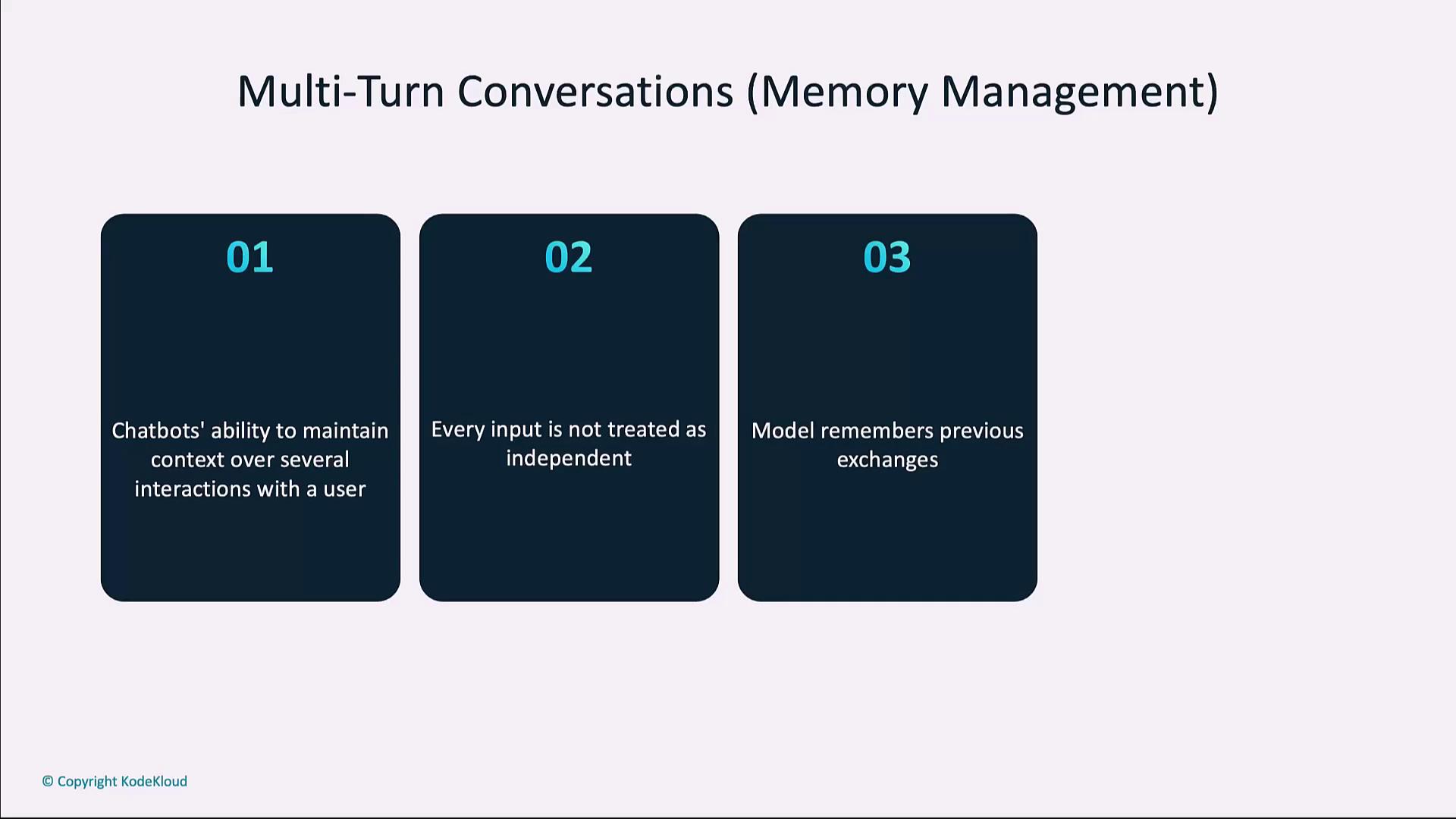
Maintain context across multiple user–AI exchanges to create natural, conversational experiences for virtual assistants, support bots, and educational tools.
Copy
Ask AI
import openaihistory = []def chat_with_ai(user_input): history.append({"role": "user", "content": user_input}) response = openai.ChatCompletion.create( model="gpt-4", messages=history, max_tokens=120, temperature=0.7 ) ai_reply = response.choices[0].message.content history.append({"role": "assistant", "content": ai_reply}) return ai_reply# Example dialogueprint(chat_with_ai("Hi, I need help with my order."))print(chat_with_ai("I didn't receive my package."))print(chat_with_ai("It's been delayed by 2 days."))
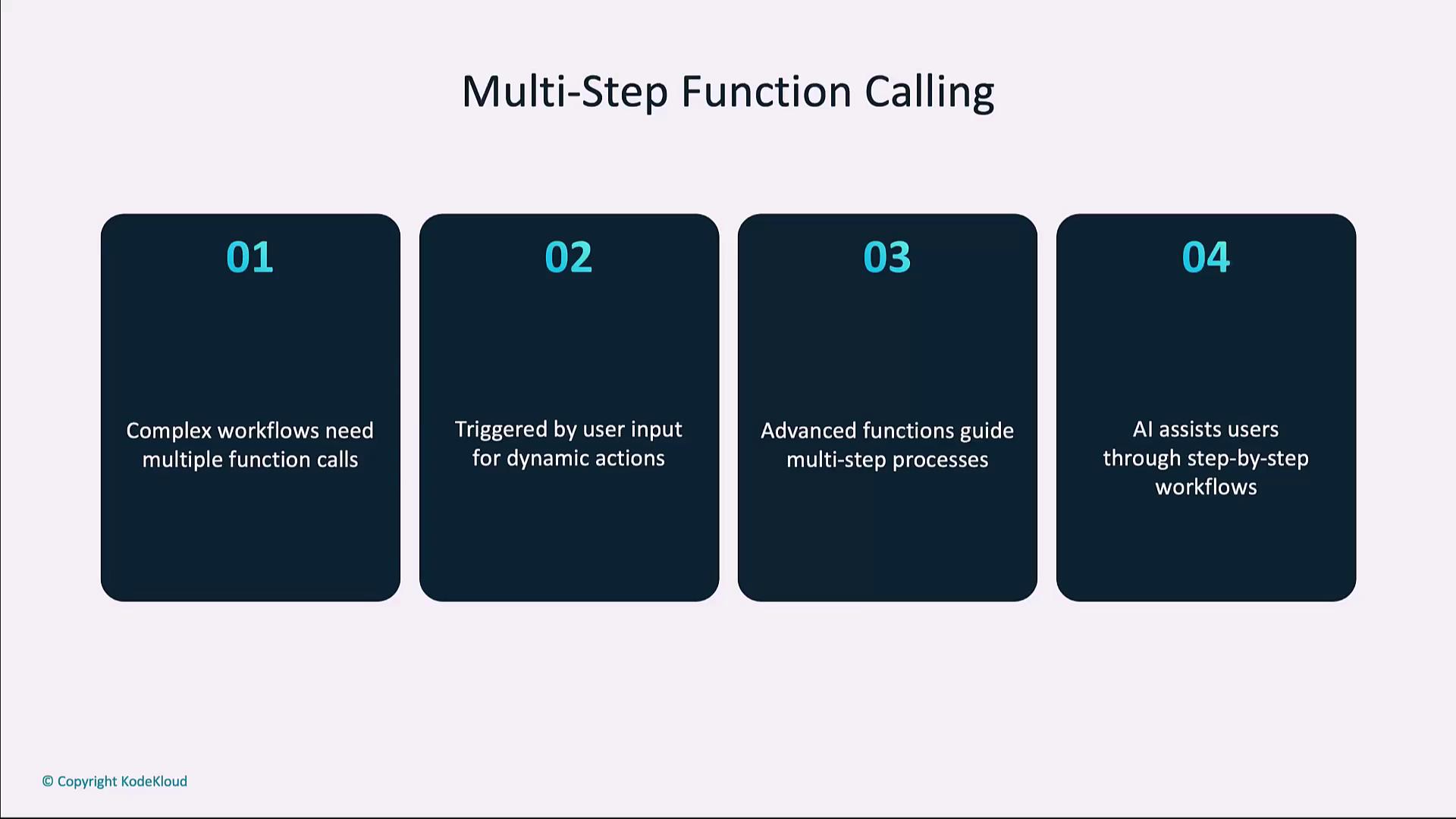
Enable GPT-4 to orchestrate complex workflows that involve multiple function calls, data validation, and conditional logic—perfect for booking systems, form wizards, or automated pipelines.
Copy
Ask AI
def step_one(user_info): # Collect initial details return f"Step 1: Received {user_info}. What's next?"def step_two(user_info, extra): # Finalize using additional data return f"Step 2: Used {user_info} and {extra}. Workflow complete."# Simulationprint(step_one("User data"))print(step_two("User data", "Additional details"))
For in-depth articles, reports, or ebooks, start by generating an outline, then expand each section. This two-phase approach keeps your content structured and coherent.
Copy
Ask AI
import openai# 1. Create an outlineoutline_resp = openai.ChatCompletion.create( model="gpt-4", messages=[{"role": "user", "content": "Outline an article on AI applications in healthcare"}], max_tokens=80)outline = outline_resp.choices[0].message.content.split("\n")# 2. Expand each pointsections = []for item in outline: exp = openai.ChatCompletion.create( model="gpt-4", messages=[{"role": "user", "content": f"Expand on: {item}"}], max_tokens=120 ) sections.append(exp.choices[0].message.content)# 3. Combine into final draftarticle = "\n\n".join(sections)print(article)
Generate multiple versions of marketing copy—emails, headlines, ads—and measure engagement metrics (click-through, conversions) to optimize performance.
Copy
Ask AI
import openaivariants = [ "Announce our new product in a friendly tone.", "Announce our new product in a professional tone."]results = []for idx, prompt in enumerate(variants, 1): resp = openai.ChatCompletion.create( model="gpt-4", messages=[{"role": "user", "content": prompt}], max_tokens=100, temperature=0.7 ) results.append((f"Variant {idx}", resp.choices[0].message.content))for title, text in results: print(f"{title}:\n{text}\n")
Encourage the model to “think aloud” by detailing intermediate reasoning steps. This is invaluable for solving math puzzles, logical challenges, or any task where transparency matters.
Chain of Thought prompts can increase token usage. Monitor your costs when enabling verbose reasoning.
Copy
Ask AI
import openairesponse = openai.ChatCompletion.create( model="gpt-4", messages=[{"role": "user", "content": "Explain step by step how to solve 2x + 5 = 15."}], max_tokens=150)print(response.choices[0].message.content)
Combine AI’s speed with human oversight to achieve both efficiency and quality. Automate routine tasks—like filtering or drafting—and have humans review edge cases or critical decisions.
Use case: AI flags potentially inappropriate content; human moderators review and make final decisions.